
Franz Ludwig Catel
Illustration — Self-portrait, circa 1810. Franz Ludwig Catel (22 February 1778 – 19 December 1856) was a German painter. He spent most of his career in Rome.
Also recorded as franz catel · f. catel
Franz Ludwig Catel
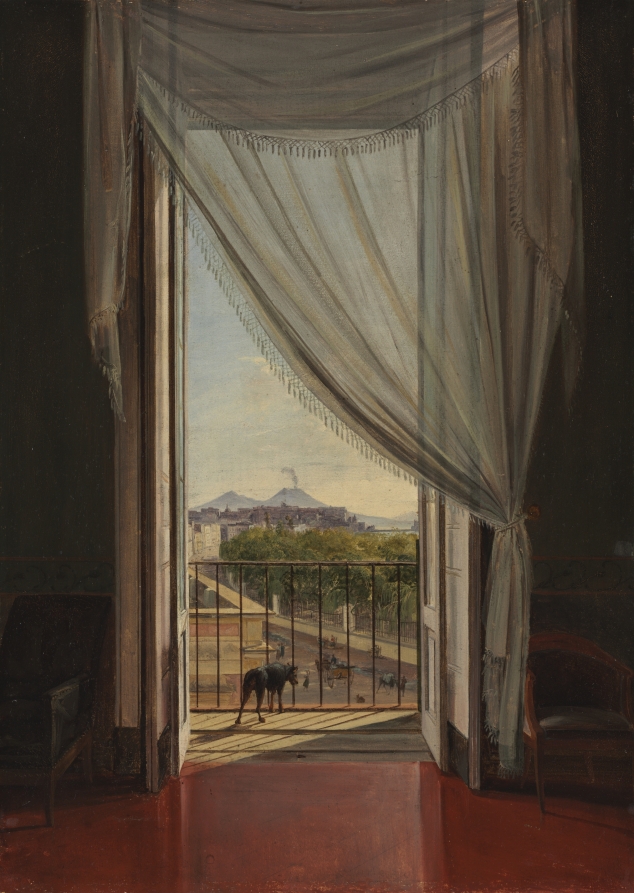
Franz Ludwig Catel · The Cleveland Museum of Art · Mr. and Mrs. William H. Marlatt Fund · CC0
- Born
- 1778 · Berlin.
- Died
- 1856 · Rome.
- Nationality
- Kingdom of Prussia
- Occupation
- painter · sculptor
- Fields
- landscape · genre
- Education
- Prussian Academy of Arts · Académie des beaux-arts
- Languages
- German
VALÉORINE Encyclopedia
VALÉORINE documentary reading
Documentary summary
Illustration — Self-portrait, circa 1810. Franz Ludwig Catel (22 February 1778 – 19 December 1856) was a German painter. He spent most of his career in Rome.
Admitted source layer · organised and presented by VALÉORINE
Reference Check
Propose documentary evidence for Franz Ludwig Catel. A contribution is never written directly as fact: identity, source, rights and evidence gates still decide.
Sign in to contribute
World of VALÉORINE
Documentary connections
Only confirmed graph relationships appear here. Images are shown only when their identity and reuse rights both pass the documentary gate.
Documentary evidence
Documentary basis
Authority files
wikidata · Q879031 · wikipedia · Franz Ludwig Catel
In this article
Biography
Biography
Franz Ludwig Catel studied at Prussian Academy of Arts and Académie des beaux-arts. The recorded working language is German. Subjects and genres recorded for the work are landscape and genre. Work by Franz Ludwig Catel is recorded in the collections of Art Institute of Chicago, Alte Nationalgalerie, Neue Pinakothek, Metropolitan Museum of Art and Cleveland Museum of Art.
• Illustration — Crown Prince Ludwig in the Spanish Wine Tavern in Rome Catel was born at Berlin in 1778. He began his artistic career by carving in wood, and then designed book illustrations, including, in 1799, ten plates for Goethe's Hermann and Dorothea. He then worked in Indian ink and water-colours, producing in 1806 a large piece in the latter medium, representing The Death of Nicholas of Bernau, which gained him admission into the Berlin Academy. In 1807 he went to Paris, where he studied oil painting. The year 1812 found him at Rome, where his education as an artist was much advanced by his connection with Koch, Overbeck, Schadow, and Cornelius. His inclination led him more especially in the direction of painting landscapes with prominent architectural details or figures in the foreground often moving into the territory of genre painting. He attached himself to the new classic school of landscape, labouring especially to make his perspective tell effectively, and to gain a great mastery over light and shade. His ideas gained much in point of breadth from a visit to Sicily, which he made in company with Prince Golitsuin in 1818. • Illustration — Commemorative plaque in Piazza di Spagna
Success
Success
In 1824 he painted Crown Prince Ludwig at the Spanish Wine Tavern in Rome (Neue Pinakothek, Munich) a work commissioned by the prince himself, who is shown at an informal gathering of artists, mostly German, with a view of the Aventine Hill visible through an open door. He settled at Macerata in 1830, but returned home on a visit in 1840, on which occasion a professorship was bestowed on him by the King of Prussia. Catel's landscape subjects included The Moonlight View of the Colonnade of St. Peter's, and The Storm on Mount Etna. In the Berlin Gallery are two Neapolitan views, both painted in 1822, and in the New Pinakothek, Munich, are eight works by him, views in Italy. The success of his paintings made him prosperous enough to be able to set up and entirely finance a fund for young artists in Rome. He died at Rome in 1856.
Life and career
Dated record
Life and career
The full dated record · 2 entries
1778
Franz Ludwig Catel born at Berlin.
1856
Franz Ludwig Catel died at Rome.
Places
Named by the record
Places
Only places the record itself states, plotted where the house gazetteer settles their coordinates. Nothing is inferred from a name or a nationality.
Berlin.
Birth place
Rome.
Death place
Selected paintings
• Illustration — Scene from René by Chateaubriand • Illustration — Walk in Palermo • Illustration — View From Ariccia Toward The Sea • Illustration — Isle on the Tiber • Illustration — Garden of the Villa Doria Pamphili in Rome • Illustration — Vesuvius
Notes from the source article
Cited by Wikipedia
Notes from the source article
These works are cited by the source article, in its own numbering. They are recorded as its citations, not as sources VALÉORINE has verified.
- 1.Monique Moser-Verrey, « rencontres gravées pour Hermann und Dorotea de Goethe et Trois femmes d'Isabelle de Charrière », in Jean Pierre Dubost (dir.), Topographie de la rencontre dans le roman européen, PU Blaise Pascal, 2008, p.365.
- 2.France Nerlich et Bénédicte Savoy (dir.), Paris Lehrjahre, ein Lexikon duz Ausbildung deutscher Maler in der französischen Hauptstadt, tome 1 : 1793-1843, De Gruyter, 2012, p.327 : « Du frimaire [an 7] [ ] François Louis Catel [Catel, Franz Ludwig], P[eintre]. natif de Berlin, âgé de 20 ans, présenté par le C[itoy]en Houdon, demeurant rue André des Arts n°88, a justifié de son passeport ».
- 3.Bénédicte Savoy : « Peintres berlinois à Paris », in Marie-Claude Chaudonneret (dir), Les artistes étrangers à Paris : de la fin du Moyen Age aux années 1920, Peter Lang, 2007, p.167.
- 4.Guide de Berlin, de Potsdam et des environs, Berlin, Frédéric Nicolai libraire, édition de 1802, p. 146.
- 5.La Peinture allemande à l'époque du romantisme, Éditions des Musées nationaux, 1976, p.26.
- 6.Katharina Kulke, « La création du Cabinet Étrusque de Potsdam et l’influence de la publication de la collection Hamilton sur le décor intérieur autour de 1800 », dans Le vase grec et ses destins, Biering and Brinkmann, 2003, p. 245-256.
- 7.Ornements de l'Antiquité.
- 8.Anna Maria D'Achille, Antonion Iacobini et Sandro Gennaro, Le voyage en Italie d'Aubin-Louis Millin 1811-1813 : un archéologue dans l'Italie napoléonienne, Gourcuff Gradenigo, 2014, chapitre sur « L'œil de Millin : Franz Ludwig Catel, "artiste prussien et paysagiste distingué" », p.27-31.
- 9.Bénédicte Savoy, « Peintres berlinois à Paris », in Marie-Claude Chaudonneret (dir), Les artistes étrangers à Paris : de la fin du Moyen Age aux années 1920, Peter Lang, 2007, p. 165.
- 10.Aubin-Louis Millin de Grandmaison, Description des tombeaux qui ont été découverts à Pompeï dans l'année 1812, Naples, Imprimerie Royale, 1813, 100 p.
- 11.site de la Fondazione Catel.
Bibliography printed in the source article · 6
- Frères Haag, La France protestante, Cherbuliez, tome III, 1853, p.247-248 (en ligne).
- Herrmann Julius Meyer. Meyers Großes Konversations-Lexikon. bibliographisches Institut. 1844.
- Elena Di Maio (dir.), Franz Ludwig Catel e i suoi amici a Roma : un album di disegni dell'Ottocento, Turin, Galleria nazionale d'arte moderna, 1996.
- Anna Ottani Cavina, Paysages d'Italie : les peintres du plein air, 1780-1830, Réunion des musées nationaux, 2001.
- Viviane Rosen-Prest, La colonie huguenote de Prusse de 1786 à 1815, La fin d’une diaspora ?, Honoré Champion, 2019, p.273-276. .
- Friedrich Noack. Catel, Franz Ludwig. 180. 181.
References
Citations
References
Each reference names the institution holding it, so a reader may go to the document itself.
reference work
Secondary witnessreference work
Wikidata, structured authority record Q879031: Franz Ludwig CatelWikimedia Foundation
Secondary witness
The Encyclopedia exists whether or not anything is for sale. Corrections are recorded rather than overwritten, and every version of this record is kept. Published 16 August 2026.
Elsewhere in Paintings
18,623 published records in this field, each with its sources named.
- Franz Innocenz Josef KobellArtist
- Franz IttenbachArtist
- Franz Joseph SpieglerArtist
- Franz KlineArtist
- Franz MarcArtist
- Franz MeertsArtist
- Franz MeyerheimArtist
- Franz Niklaus KönigArtist
Best supported in this field
For owners
Own a work by Franz Ludwig Catel?
A specialist will read what you send and tell you what the house can establish, what it cannot, and whether the object is suited to sale. There is no charge and no obligation. The object stays with you throughout; nothing is shipped to us unless it is arranged in writing beforehand.