
John Henry Twachtman
John Henry Twachtman (August 4, 1853 – August 8, 1902) was an American painter best known for his impressionist landscapes, though his painting style varied widely through his career. Art historians consider Twachtman's style of American Impressionism to be among the more personal and experimental of his generation. He was a member of "The Ten," a loosely-allied group of American artists dissatisfied with professional art organizations, who banded together in 1898 to exhibit their works as a stylistically unified group.
Also recorded as John Twachtman · John Henry Twatchman · John H. Twachtman · j.H. twachtman
John Henry Twachtman
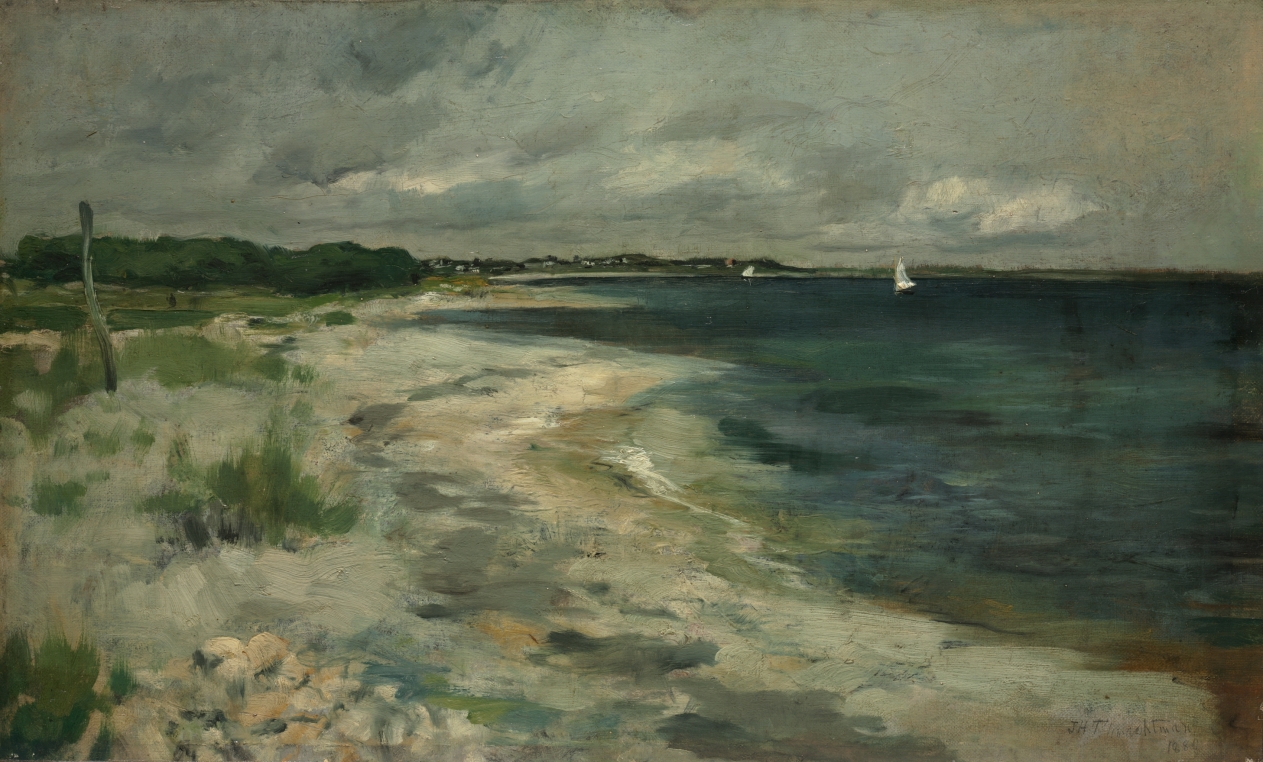
John Henry Twachtman · The Cleveland Museum of Art · Gift of Mrs. Henry A. Everett for the Dorothy Burnham Everett Memorial Collection · CC0
- Name
- John Henry Twachtman
- Born
- 4 August 1853
- Birthplace
- Cincinnati, Ohio, US
- Died
- 8 August 1902
- Place of death
- Gloucester, Massachusetts, US
- Field
- Impressionism, Landscape art
- Training
- Frank Duveneck; Royal Academy, Munich; Académie Julian, Paris
- Nationality
- United States
- Occupation
- painter · graphic artist
- Fields
- Impressionism · painting · graphics
- Movements
- Impressionism
- Education
- Academy of Fine Arts and Munich · Académie Julian
VALÉORINE Encyclopedia
VALÉORINE documentary reading
Documentary summary
John Henry Twachtman (August 4, 1853 – August 8, 1902) was an American painter best known for his impressionist landscapes, though his painting style varied widely through his career. Art historians consider Twachtman's style of American Impressionism to be among the more personal and experimental of his generation. He was a member of "The Ten," a loosely-allied group of American artists dissatisfied with professional art organizations, who banded together in 1898 to exhibit their works as a stylistically unified group.
Admitted source layer · organised and presented by VALÉORINE
Note VALÉORINE
No house-authored Note is published until its assertions and sources pass the VALÉORINE evidence contract. The documentary article remains available in full while that enrichment is being consolidated.
Documentary enrichment in progress · no unsupported statement published
Reference Check
Propose documentary evidence for John Henry Twachtman. A contribution is never written directly as fact: identity, source, rights and evidence gates still decide.
Sign in to contribute
World of VALÉORINE
Documentary connections
Only confirmed graph relationships appear here. Images are shown only when their identity and reuse rights both pass the documentary gate.
Documentary evidence
Evidence Panel
not yet certified
- Identity
- resolved
- Independent source families
- 0
- Admitted assertions
- 0
- Open conflicts
- 0
Authority files
wikidata · Q1342683 · wikipedia · John Henry Twachtman
In this article
Biography
Biography
John Henry Twachtman studied at Academy of Fine Arts, Munich and Académie Julian. The recorded working language is English. The field of work recorded is Impressionism, painting and graphics. James McNeill Whistler and Jules Bastien-Lepage are recorded as an influence. Works named in the authority record are Horseneck Brook. Work by John Henry Twachtman is recorded in the collections of Minneapolis Institute of Art, Art Institute of Chicago, The Nelson-Atkins Museum of Art, Thyssen-Bornemisza Museum and Metropolitan Museum of Art.
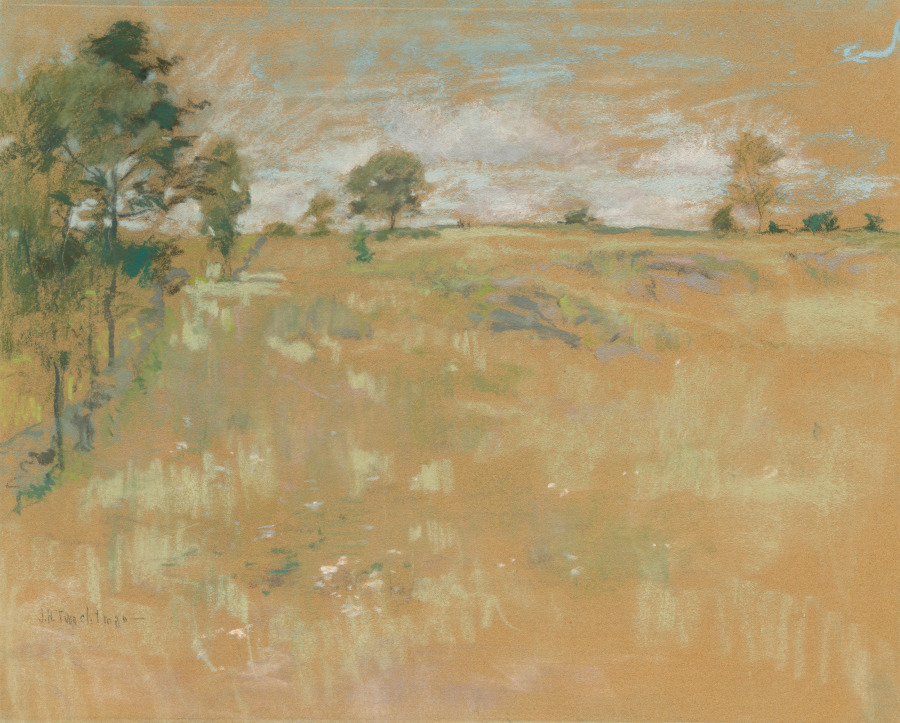
Pastures, Branchville, Connecticut, c. 1888–91, by John Henry Twachtman
John Henry Twachtman · The Cleveland Museum of Art · Gift of E. R. Brumley
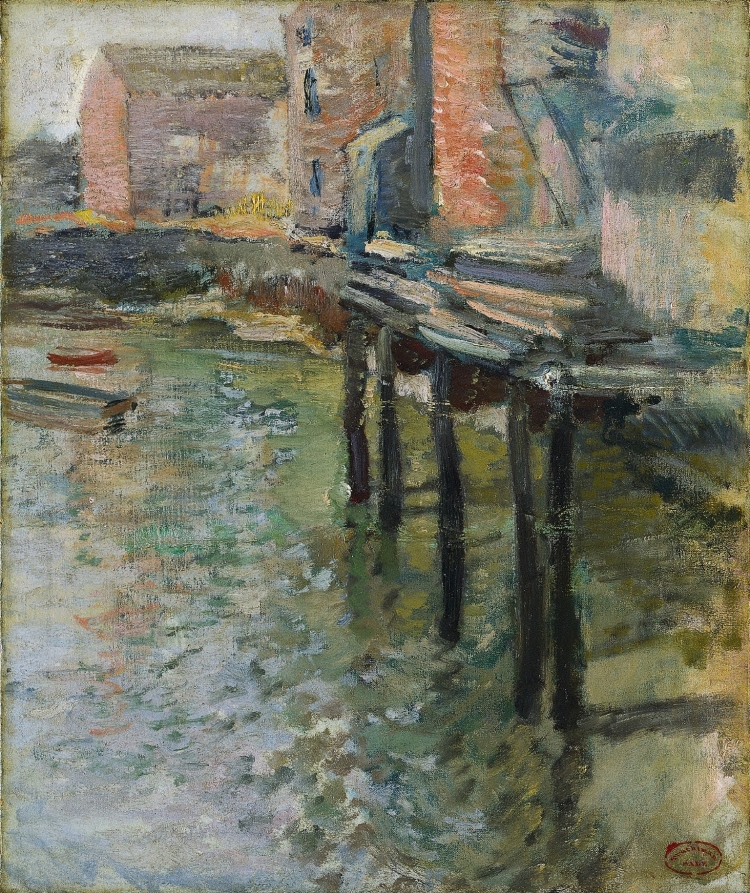
Deserted Wharf (The Old Mill at Cos Cob), before 1899, by John Henry Twachtman
John Henry Twachtman · The Cleveland Museum of Art · Bequest of Julia Morgan Marlatt
Key facts
Key facts
• Name — John Henry Twachtman • Born — 4 August 1853 • Birthplace — Cincinnati, Ohio, US • Died — 8 August 1902 • Place of death — Gloucester, Massachusetts, US • Field — Impressionism, Landscape art • Training — Frank Duveneck; Royal Academy, Munich; Académie Julian, Paris
Studies
Studies
• Illustration — The White Bridge, ca. 1895, Minneapolis Institute of Arts Twachtman was born in Cincinnati, Ohio and received his first art training there, including studying under Frank Duveneck. Like many other gifted and driven artists of his generation, including Henry Ossawa Tanner and Diego Rivera, he sought his training in Europe. He enrolled in the Academy of Fine Arts in Munich in 1875 and visited Venice with Duveneck and William Merritt Chase in 1878. His landscapes from this time exhibit the loosely brushed, shadowy technique taught at Munich. Twachtman also learned etching, and sometimes carried etching plates with him that he could use to spontaneously record a scene. After a brief return to America, Twachtman studied from 1883 to 1885 at the Académie Julian in Paris, and his paintings dramatically shifted towards a soft, gray and green tonalist style. During this time he painted what some art historians consider to be his greatest masterpieces, including Arques-la-Bataille, in the collection of the Metropolitan Museum of Art in New York, and Springtime, in the collection of the Cincinnati Art Museum.
Later life
Later life
• Illustration — Wild Cherry Tree, oil on canvas, c. 1901, Albright-Knox Art Gallery In 1886 he returned to America. In 1890, he bought a farm in Greenwich. He often painted and exhibited with fellow artist Julian Alden Weir, and spent considerable time at the art colony in Cos Cob. His presence was vital to the colony, says art historian Susan G. Larkin: "Twachtman's temperament—by turns gregarious and introspective, restless and serene—was a major factor in preventing the Cos Cob art colony from becoming a backwater of nostalgic complacency. Ironically, his lack of commercial success contributed to his artistic independence, freeing him from the temptation of producing salable pictures according to a proven formula. His art, conversation, and teaching fueled the creative fires of his friends and students in Cos Cob." In addition to his oil paintings, Twachtman produced drawings in pastel. He taught painting at the Art Students League from 1889 until his death in 1902. Twachtman was close friends with Julian Alden Weir and the two often painted together. In Connecticut his painting style shifted again, this time to a highly personal impressionist technique. Twachtman painted many landscapes of his farm and garden in Greenwich, often depicting the snow-covered landscape. He executed dozens of paintings of a small waterfall on his property, capturing the scene in different seasons and times of day. In the summers of 1900–1902, Twachtman visited Gloucester, Massachusetts, another center of artistic activity in the era, and produced a series of vibrant scenes that anticipated a more modernist style yet to gain prominence in American art. • Illustration — 1890s American Art Poster lithograph • Illustration — Fishing Boats at Gloucester, 1901, Smithsonian Museum of American Art Twachtman died of a brain aneurysm on August 8, 1902, aged 49, at Addison Gilbert Hospital in Gloucester, Massachusetts. His works are in many museum collections including the Metropolitan Museum of Art, New York City; the National Gallery of Art, Washington, D.C.; and the Museum of Fine Arts, Boston.
Life and career
Dated record
Life and career
The full dated record · 2 entries
1853
John Henry Twachtman born at Cincinnati.
1902
John Henry Twachtman died at Gloucester.
Places
Named by the record
Places
Only places the record itself states, plotted where the house gazetteer settles their coordinates. Nothing is inferred from a name or a nationality.
Cincinnati.
Birth place
Gloucester.
Death place
Primary material
Documents and archives
reference work
- Wikidata, structured authority record Q1342683: John Henry Twachtman
Reputable secondary · Wikimedia Foundation
- “John Henry Twachtman”, English Wikipedia, consulted as further reading
Reputable secondary · Wikipedia
scholarly publication
- Twachtman, John Henry (1853-1902), painter, American National Biography Online, 2000
Scholarly · Crossref registry · 2000
References
Citations
References
Each reference names the institution holding it, so a reader may go to the document itself.
scholarly publication
Twachtman, John Henry (1853-1902), painter, American National Biography Online, 2000Crossref registry
Verifiedreference work
Wikidata, structured authority record Q1342683: John Henry TwachtmanWikimedia Foundation
Partially resolvedreference work
Partially resolved
Further particulars
Held on the record
Further particulars
Open the remaining particulars
The authorities additionally record the headings John Twachtman, John Henry Twatchman, John H. Twachtman, j.H. twachtman and twachtman J.H. His recorded language was English. He married Martha Scudder Twachtman. Formation and teaching. Twachtman studied at Academy of Fine Arts, Munich and Académie Julian. His recorded influences include James McNeill Whistler and Jules Bastien-Lepage. Twachtman worked in Impressionism, painting and graphics. His work is associated with Impressionism. He belonged to Ten American Painters and American Academy of Arts and Letters. Recorded as having studied at Academy of Fine Arts, Munich and Académie Julian.
Identity and origins
Career and activity
Recognition and collections
Work by John Henry Twachtman is
Minneapolis Institute of Art, Art Institute of Chicago, The Nelson-Atkins Museum of Art and Thyssen-Bornemisza Museum
Activity and practice
The Encyclopedia exists whether or not anything is for sale. Corrections are recorded rather than overwritten, and every version of this record is kept. Published 14 August 2026.
Elsewhere in Paintings
18,717 published records in this field, each with its sources named.
- John HayterArtist
- John Henry DolphArtist
- John Henry LorimerArtist
- John Henry NiemeyerArtist
- John Herbert Evelyn PartingtonArtist
- John HesseliusArtist
- John HimmelfarbArtist
- John HoskinsArtist
Best supported in this field
For owners
Own a work by John Henry Twachtman?
A specialist will read what you send and tell you what the house can establish, what it cannot, and whether the object is suited to sale. There is no charge and no obligation. The object stays with you throughout; nothing is shipped to us unless it is arranged in writing beforehand.