
John Constable
John Constable (11 June 1776 – 31 March 1837) was an English landscape painter in the Romantic tradition. John Constable was born in Suffolk, he is known principally for revolutionising the genre of landscape painting with his pictures of Dedham Vale, the area on the borderland of Suffolk and north Essex surrounding his home – now known as "Constable Country" – which he invested with an intensity of affection. "I should paint my own places best", he wrote to his friend John Fisher in 1821, "painting is but another word for feeling." Constable's most famous paintings include Wivenhoe Park (1816), Dedham Vale (1828) and The Hay Wain (1821).
Also recorded as Dzhon Konsteblʹ · Dzhon Konstabŭl · R. A. John Constable · Kʻang-ssŭ-tʻê-pu-êrh
John Constable
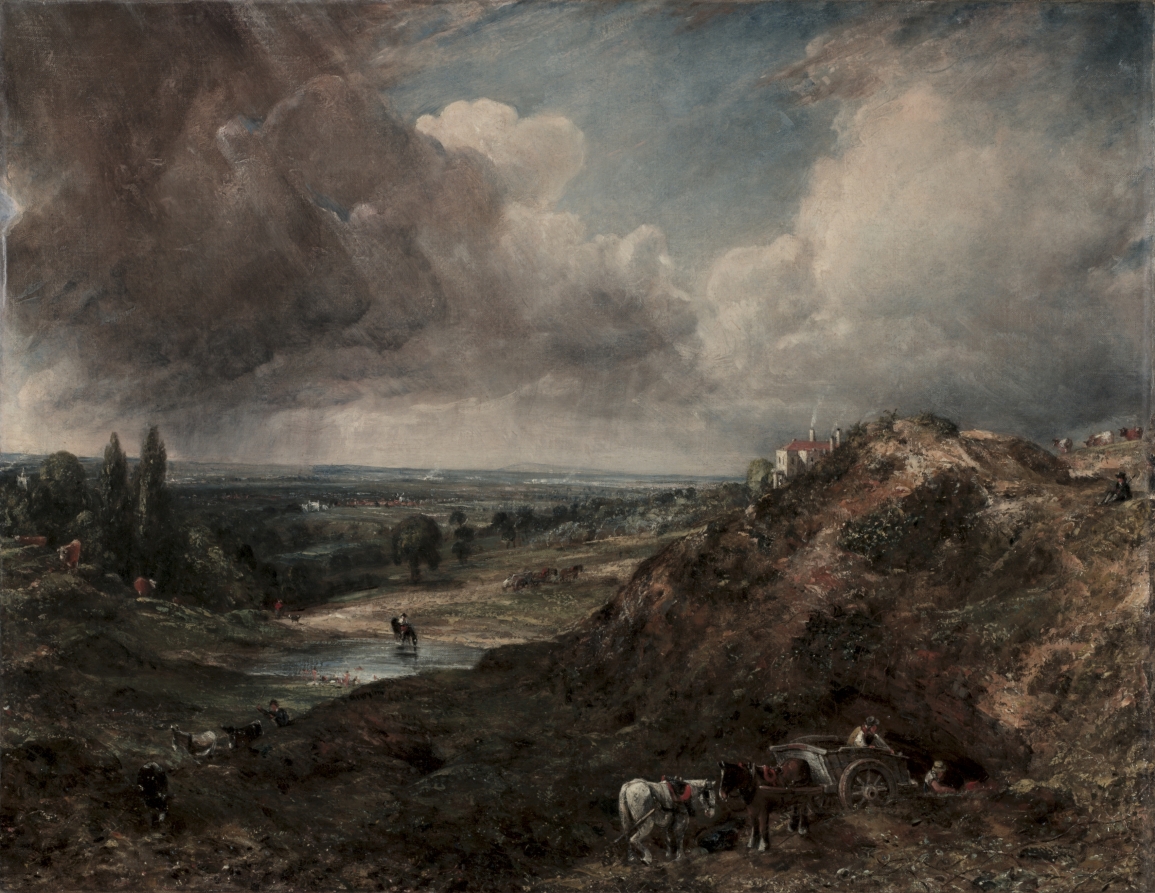
John Constable · The Cleveland Museum of Art · Leonard C. Hanna Jr. Fund · CC0
- Name
- John Constable
- Born
- 11 June 1776
- Birthplace
- East Bergholt, Suffolk, England
- Died
- 31 March 1837
- Place of death
- London, England
- Field
- Landscape painting
- Movement
- Romanticism
- Spouse
- Maria Elizabeth Bicknell (m. 1816, died 1828)
- Nationality
- Kingdom of Great Britain · United Kingdom of Great Britain and Ireland · United Kingdom
- Occupation
- painter · architectural drafter · artist
- Fields
- landscape · genre art · marine art · portrait · religious art · still life
- Movements
- realism · Romanticism
VALÉORINE Encyclopedia
VALÉORINE documentary reading
Documentary summary
John Constable (11 June 1776 – 31 March 1837) was an English landscape painter in the Romantic tradition. John Constable was born in Suffolk, he is known principally for revolutionising the genre of landscape painting with his pictures of Dedham Vale, the area on the borderland of Suffolk and north Essex surrounding his home – now known as "Constable Country" – which he invested with an intensity of affection. "I should paint my own places best", he wrote to his friend John Fisher in 1821, "painting is but another word for feeling." Constable's most famous paintings include Wivenhoe Park (1816), Dedham Vale (1828) and The Hay Wain (1821).
Admitted source layer · organised and presented by VALÉORINE
Reference Check
Propose documentary evidence for John Constable. A contribution is never written directly as fact: identity, source, rights and evidence gates still decide.
Sign in to contribute
World of VALÉORINE
Documentary connections
Only confirmed graph relationships appear here. Images are shown only when their identity and reuse rights both pass the documentary gate.
Born In · outgoing
East Bergholt
Place
Citizen Of · outgoing
Kingdom of Great Britain
Place
Has Genre · outgoing
landscape painting
Term
Associated With · outgoing
realism
Term

Educated At · outgoing
Royal Academy of Arts
Organisation
This file was donated to Wikimedia Commons as part of a project by the Metropolitan Museum of Art . See the Image and Data Resources Open Access Policy
Citizen Of · outgoing
United Kingdom
Place
Documentary evidence
Documentary basis
Authority files
bnf · getty · gnd · loc · wikidata · Q159297 · wikipedia · John Constable
In this article
Biography
Biography
Constable worked between 1776 and 1837 across painter, landscape painter, architectural drafter, visual artist and artist. The registers place that work in landscape painting, genre art, marine art, portrait, religious art and still life. Every statement below returns to a source shown in the evidence panel; where the record is silent or divided, the article says so instead of resolving it.
John Constable studied at Royal Academy of Arts and figure drawing. The recorded working language is English. Subjects and genres recorded for the work are landscape, genre art, marine art and portrait. Places of work recorded in the authority are London, Dedham and Hampton. Employment is recorded with University of Cambridge. Works named in the authority record are Salisbury Cathedral from the Meadows, Salisbury Cathedral from the Bishop's Grounds and Dedham Lock and Mill. Work by John Constable is recorded in the collections of Art Institute of Chicago, The Nelson-Atkins Museum of Art, Auckland Art Gallery, Tate and National Gallery of Victoria. Distinctions recorded are Royal Academician.
Key facts
Key facts
• Name — John Constable • Born — 11 June 1776 • Birthplace — East Bergholt, Suffolk, England • Died — 31 March 1837 • Place of death — London, England • Field — Landscape painting • Movement — Romanticism • Works — The Hay Wain Dedham Vale • Resting Place — St John-at-Hampstead, London • Spouse — Maria Elizabeth Bicknell (m. 1816, died 1828) • Children — 7, including Charles Golding Constable, Lionel Constable
Early career
Early career
• Illustration — John Constable, Self-portrait 1806, pencil on paper, Tate Gallery London. His only indisputable self-portrait, drawn by an arrangement of mirrors. • Illustration — Plaque in East Bergholt marking the site of Constable's childhood home John Constable was born in East Bergholt, a village on the River Stour in Suffolk, to Golding and Ann (Watts) Constable. His father was a wealthy corn merchant, owner of Flatford Mill in East Bergholt and, later, Dedham Mill in bordering Essex. Golding Constable owned a small ship, The Telegraph, which he moored at Mistley on the Stour estuary, and used to transport corn to London. He was a cousin of the London tea merchant, Abram Newman. Although Constable was his parents' second son, his older brother was intellectually disabled and John was expected to succeed his father in the business. After a brief period at a boarding school in Lavenham, he was enrolled in a day school in Dedham, Essex. Constable worked in the corn business after leaving school, but his younger brother Abram eventually took over the running of the mills. In his youth, Constable embarked on amateur sketching trips in the surrounding Suffolk and Essex countryside, which was to become the subject of a large proportion of his art. These scenes, in his own words, "made me a painter, and I am grateful"; "the sound of water escaping from mill dams etc., willows, old rotten planks, slimy posts, and brickwork, I love such things." He was introduced to George Beaumont, a collector, who showed him his prized Hagar and the Angel by Claude Lorrain, which inspired Constable. Later, while visiting relatives in Middlesex, he was introduced to the professional artist John Thomas Smith, who advised him on painting but also urged him to remain in his father's business rather than take up art professionally. • Illustration — The Vale of Dedham (1828). Scottish National Gallery, Edinburgh In 1799, Constable persuaded his father to let him pursue a career in art, and Golding granted him a small allowance. Entering the Royal Academy Schools as a probationer, where he came under the tutelage of Joseph Farington, he attended life classes and anatomical dissections, and studied and copied old masters. Constable together with fellow Farington protégé, Samuel Lane worked closely with Farington to develop their own styles until Farington death in 1821. Among works that particularly inspired him during this period were paintings by Thomas Gainsborough, Claude Lorrain, Peter Paul Rubens, Annibale Carracci and Jacob van Ruisdael. He also read widely among poetry and sermons, and later proved a notably articulate artist. In 1802 he refused the position of drawing master at Great Marlow Military College (now Sandhurst), a move which Benjamin West (then master of the RA) counselled would mean the end of his career. In that year, Constable wrote a letter to John Dunthorne in which he spelled out his determination to become a professional landscape painter: His early style has many qualities associated with his mature work, including a freshness of light, colour and touch, and reveals the compositional influence of the old masters he had studied, notably of Claude Lorrain. Constable's usual subjects, scenes of ordinary daily life, were unfashionable in an age that looked for more romantic visions of wild landscapes and ruins. He made occasional trips farther afield. By 1803, he was exhibiting paintings at the Royal Academy. In April he spent almost a month aboard the East Indiaman as it visited south-east ports while sailing from London to Deal before leaving for China. In 1806 Constable undertook a two-month tour of the Lake District. He told his friend and biographer, Charles Robert Leslie, that the solitude of the mountains oppressed his spirits, and Leslie wrote: His nature was peculiarly social and could not feel satisfied with scenery, however grand in itself, that did not abound in human associations. He required villages, churches, farmhouses and cottages. Constable adopted a routine of spending winter in London and painting at East Bergholt in summer. In 1811 he first visited John Fisher and his family in Salisbury, a city whose cathedral and surrounding landscape were to inspire some of his greatest paintings. • Illustration — Wivenhoe Park (1816). National Gallery of Art, Washington. To make ends meet, Constable took up portraiture, which he found dull, though he executed many fine portraits. He also painted occasional religious pictures but, according to John Walker, "Constable's incapacity as a religious painter cannot be overstated." • Illustration — The Wheat Field, 1816, oil on canvas. Clark Art Institute, gift of the Manton Art Foundation in memory of Sir Edwin and Lady Manton Another source of income was country house painting. In 1816, he was commissioned by Major-General Francis Slater Rebow to paint his country home, Wivenhoe Park, Essex. The Major-General also commissioned a smaller painting of the fishing lodge in the grounds of Alresford Hall, which is now in the National Gallery of Victoria. Constable used the money from these commissions towards his wedding with Maria Bicknell. This period of Constable's painting is heavily populated with idyllic country scenes with heavy detail, notably his 1816 work The Wheat Field.
Marriage
Marriage
• Illustration — Portrait of Maria Constable, 1816. Tate Britain. From 1809, his childhood friendship with Maria Elizabeth Bicknell developed into a deep, mutual love. Their marriage in 1816 when Constable was 40 was opposed by Maria's grandfather, Dr. Rhudde, rector of East Bergholt. He considered the Constables his social inferiors and threatened Maria with disinheritance. Maria's father, Charles Bicknell, solicitor to George IV and the Admiralty, was reluctant to see Maria throw away her inheritance. Maria pointed out to John that a penniless marriage would detract from any chances he had of making a career in painting. Golding and Ann Constable, while approving the match, held out no prospect of supporting the marriage until Constable was financially secure. After they died in quick succession, Constable inherited a fifth share in the family business. • Illustration — Osmington Bay, 1816, oil on canvas. Clark Art Institute, gift of the Manton Art Foundation in memory of Sir Edwin and Lady Manton. John and Maria's marriage in October 1816 at St Martin-in-the-Fields (with Fisher officiating) was followed by time at Fisher's vicarage and a honeymoon tour of the south coast. The sea at Weymouth and Brighton stimulated Constable to develop new techniques of brilliant colour and vivacious brushwork. At the same time, a greater emotional range began to be expressed in his art. While on honeymoon, Constable began to experiment with works exploring nature's grandeur, characterized by dominating skies, such as Osmington Bay. Constable was passionate about his objective of painting truthful pictures of nature and he usually painted on location (en plain air). But during all of his early career, he was unable to persuade others of their value. At the time, landscapes were not considered an "important" category, at the same level of historical or mythological themes. Also, the small size of his canvases made them easy to miss in the Royal Exhibition, with walls filled from ceiling to floor with larger and more imposing paintings. In 1804 he did not present any paintings, sharing his frustrations with his friend Joseph Farington, noting that nothing could be gained by putting his pictures 'in competition with works which are extravagant in colour & bad taste wanting truth. Even though since the start of his career in the early 19th century he compared himself with Turner, it would be many years until anybody else did. That changed the moment he started painting his famous 'six-footers'.
The 'Six-Footers'
Later life
Later life
Constable's pleasure at his own success was dampened after his wife started displaying symptoms of tuberculosis. Her growing illness meant that Constable took lodgings for his family in Brighton from 1824 until 1828, in the hope the sea air could restore her health. During this period Constable split his time between Charlotte Street in London and Brighton. This change saw Constable move away from large scale Stour scenes in favour of coastal scenes. He continued painting six-foot canvases, although he was initially unsure of the suitability of Brighton as a subject for painting. In a letter to Fisher in 1824 he wrote The magnificence of the sea, and its (to use your own beautiful expression) everlasting voice, is drowned in the din & lost in the tumult of stage coaches - gigs - "flys" &c. -and the beach is only Piccadilly (that part of it where we dined) by the sea-side. In his lifetime, Constable sold only 20 paintings in England, but in France he sold more than 20 in just a few years. Despite this, he refused all invitations to travel internationally to promote his work, writing to Francis Darby: "I would rather be a poor man [in England] than a rich man abroad." In 1825, perhaps due partly to the worry of his wife's ill-health, the uncongeniality of living in Brighton ("Piccadilly by the seaside"), and the pressure of numerous outstanding commissions, he quarreled with Arrowsmith and lost his French outlet. • Illustration — Hadleigh Castle (1829). Yale Center for British Art. Chain Pier, Brighton was his only ambitious six-foot painting of a Brighton subject, it was exhibited in 1827. The Constables persevered in Brighton for five years to aid Maria's health, but to no avail. After the birth of their seventh child in January 1828, they returned to Hampstead where Maria died on 23 November at the age of 41. Intensely saddened, Constable wrote to his brother Golding, "hourly do I feel the loss of my departed Angel—God only knows how my children will be brought up...the face of the World is totally changed to me". Thereafter, he dressed in black and was, according to Leslie, "a prey to melancholy and anxious thoughts". He cared for his seven children alone for the rest of his life. The children were John Charles, Maria Louisa, Charles Golding, Isobel, Emma, Alfred, and Lionel. Only Charles Golding Constable produced offspring. Several of Constable's children also painted, notably his son Lionel. While Lionel eventually gave up painting for photography, several of his works are within the collection of the Clark Art Institute. Shortly before Maria died, her father had also died, leaving her £20,000. Constable speculated disastrously with the money, paying for the engraving of several mezzotints of some of his landscapes in preparation for a publication. He was hesitant and indecisive, nearly fell out with his engraver, and when the folios were published, could not interest enough subscribers. Constable collaborated closely with mezzotinter David Lucas on 40 prints after his landscapes, one of which went through 13 proof stages, corrected by Constable in pencil and paint. Constable said, "Lucas showed me to the public without my faults", but the venture was not a financial success. • Illustration — Salisbury Cathedral from the Meadows (1831). Tate Britain. This period saw his art move from the serenity of its earlier phase, to a more broken and accented style. The turmoil and distress of his mind is clearly seen in his later six-foot masterpieces Hadleigh Castle (1829) and Salisbury Cathedral from the Meadows (1831), which are amongst his most expressive pieces. He was elected to the Royal Academy in February 1829, at the age of 52. In 1831 he was appointed Visitor at the Royal Academy, where he seems to have been popular with the students. He began to deliver public lectures on the history of landscape painting, which were attended by distinguished audiences. In a series of lectures at the Royal Institution in 1836, Constable proposed a three-fold thesis: firstly, painting "is scientific as well as poetic"; secondly, "that imagination never did, and never can" produce art to bear comparison with reality; and thirdly, "that no great painter was ever self taught". He also spoke against the new Gothic Revival movement, which he considered mere "imitation". In 1835, his last lecture to students of the Royal Academy, in which he praised Raphael and called the Academy the "cradle of British art", was "cheered most heartily". He died on the night of 31 March 1837, apparently from heart failure, and was buried with Maria in the graveyard of St John-at-Hampstead Church in Hampstead in London. (His children John Charles Constable and Charles Golding Constable are also buried in this family tomb.) His friend Charles Robert Leslie published his influential biography Memoirs of the Life of John Constable in 1843.
Locations
Locations
Bridge Cottage is a National Trust property, open to the public. Nearby Flatford Mill and Willy Lott's Cottage (the house visible in The Hay Wain) are used by the Field Studies Council for courses. The largest collection of original Constable paintings outside London is on display at Christchurch Mansion in Ipswich. Somerville College, Oxford is in possession of a portrait by Constable. Constable's daughter Isabel donated a large collection of his work to the British Museum In 1888. A 2026 exhibition was largely drawn from this donation, showing primarily the artist's graphic work during his later career in the 1820s and 1830s.
Art
Art
• Illustration — The Cornfield (1826). National Gallery, London. Constable quietly rebelled against the artistic culture that taught artists to use their imagination to compose their pictures rather than nature itself. He told Leslie, "When I sit down to make a sketch from nature, the first thing I try to do is to forget that I have ever seen a picture." Constable attributed his gift 'to all that lay on the Stour river', however, biographer Anthony Bailey attributed his artistic development to the influence of his well to do relative, Thomas Allen and the London contacts he introduced Constable to. Although Constable produced paintings throughout his life for the "finished" picture market of patrons and R.A. exhibitions, constant refreshment in the form of on-the-spot studies was essential to his working method. He was never satisfied with following a formula. "The world is wide," he wrote, "no two days are alike, nor even two hours; neither were there ever two leaves of a tree alike since the creation of all the world; and the genuine productions of art, like those of nature, are all distinct from each other." Constable painted many full-scale preliminary sketches of his landscapes to test the composition in advance of finished pictures. These large sketches, with their free and vigorous brushwork, were revolutionary at the time, and they continue to interest artists, scholars and the general public. The oil sketches of The Leaping Horse and The Hay Wain, for example, convey a vigour and expressiveness missing from Constable's finished paintings of the same subjects. Possibly more than any other aspect of Constable's work, the oil sketches reveal him in retrospect to have been an avant-garde painter, one who demonstrated that landscape painting could be taken in a totally new direction. • Illustration — Stonehenge (1835). Victoria and Albert Museum, London. Constable's watercolours were also remarkably free for their time: the almost mystical Stonehenge, 1835, with its double rainbow, is often considered to be one of the greatest watercolours ever painted. When he exhibited it in 1836, Constable appended a text to the title: "The mysterious monument of Stonehenge, standing remote on a bare and boundless heath, as much unconnected with the events of past ages as it is with the uses of the present, carries you back beyond all historical records into the obscurity of a totally unknown period." In addition to the full-scale oil sketches, Constable completed numerous observational studies of landscapes and clouds, determined to become more scientific in his recording of atmospheric conditions. The power of his physical effects was sometimes apparent even in the full-scale paintings which he exhibited in London; The Chain Pier, 1827, for example, prompted a critic to write: "the atmosphere possesses a characteristic humidity about it, that almost imparts the wish for an umbrella". • Illustration — Seascape Study with Rain Cloud (c.1824). Royal Academy of Arts, London. The sketches themselves were the first ever done in oils directly from the subject in the open air, with the notable exception of the oil sketches Pierre-Henri de Valenciennes made in Rome around 1780. To convey the effects of light and movement, Constable used broken brushstrokes, often in small touches, which he scumbled over lighter passages, creating an impression of sparkling light enveloping the entire landscape. One of the most expressionistic and powerful of all his studies is Seascape Study with Rain Cloud, painted about 1824 at Brighton, which captures with slashing dark brushstrokes the immediacy of an exploding cumulus shower at sea. Constable also became interested in painting rainbow effects, for example in Salisbury Cathedral from the Meadows, 1831, and in Cottage at East Bergholt, 1833. To the sky studies he added notes, often on the back of the sketches, of the prevailing weather conditions, direction of light, and time of day, believing that the sky was "the key note, the standard of scale, and the chief organ of sentiment" in a landscape painting. In this habit he is known to have been influenced by the pioneering work of the meteorologist Luke Howard on the classification of clouds; Constable's annotations of his own copy of Researches About Atmospheric Phaenomena by Thomas Forster show him to have been fully abreast of meteorological terminology. "I have done a good deal of skying", Constable wrote to Fisher on 23 October 1821; "I am determined to conquer all difficulties, and that most arduous one among the rest". Constable once wrote in a letter to Leslie, "My limited and abstracted art is to be found under every hedge, and in every lane, and therefore nobody thinks it worth picking up". He could never have imagined how influential his honest techniques would turn out to be. Constable's art inspired not only contemporaries like Géricault and Delacroix, but the Barbizon School, and the French impressionists of the late nineteenth century. In 2019 two drawings by Constable were found among the possessions of the late playwright and poet, Christopher Fry; the drawings later sold for £60,000 and £32,000 at auction.
Gallery
Gallery
• Illustration — Flatford Mill from the Lock, oil on canvas, 1812, Private collection • Illustration — Boat-Building Near Flatford Mill, oil on canvas, 1815, Victoria and Albert Museum, London • Illustration — Flatford Mill, c. 1816, oil on canvas, Tate Britain, London • Illustration — Anne and Mary Constable, oil on canvas, 1818, The Huntington Library, Art Museum, and Botanical Gardens • Illustration — Stratford Mill, 1820, oil on canvas, National Gallery, London • Illustration — Harwich Lighthouse, oil on canvas, 1820, Yale Center for British Art, New Haven, Connecticut • Illustration — Waterloo Bridge, oil on canvas, 1820, Cincinnati Art Museum, Cincinnati, Ohio • Illustration — Hampstead Heath with the Salt Box, oil on canvas, c.1820, Tate Britain, London • Illustration — Malvern Hall (1821), oil on canvas, 21 5/16 x 30 13/16 in. (54.1 x 78.3 cm), Clark Art Institute, Williamstown, Massachusetts • Illustration — Distant View of Salisbury Cathedral (1821), oil on panel, 6 13/16 x 10 1/16 in. (17.3 x 25.6 cm), Clark Art Institute, Williamstown, Massachusetts • Illustration — View on the Stour near Dedham, 1822, oil on canvas, Huntington Library, Los Angeles County, California • Illustration — The Leaping Horse, 1825, oil on canvas, Royal Academy of Arts, London • Illustration — Branch Hill Pond, Hampstead Heath, oil on canvas, 1825, Virginia Museum of Fine Arts, Richmond, Virginia • Illustration — Salisbury Cathedral from the Bishop's Grounds, oil on canvas, c. 1825. As a gesture of appreciation for John Fisher, the Bishop of Salisbury, who commissioned this painting, Constable included the Bishop and his wife in the bottom left corner. Frick Collection, New York City • Illustration — Parham Mill, 1826, oil on canvas, Yale Center for British Art, New Haven, Connecticut • Illustration — Chain Pier, Brighton, 1826–27, oil on canvas, Tate Britain, London • Illustration — Vale of Health, Hampstead, oil on canvas, c. 1827, Victoria and Albert Museum, London • Illustration — Gillingham Bridge, Dorset, oil on canvas, 1823, Tat Britain, London • Illustration — The Opening of Waterloo Bridge, oil on canvas, c. 1832. Tate Britain, London • Illustration — Sir Richard Steele's Cottage, Hampstead, oil on canvas, 1832, Yale Center for British Art, New Haven, Connecticut • Illustration — Arundel Mill and Castle, oil on canvas, 1837, Toledo Museum of Art, Toledo, Ohio • Illustration — A detail of The Hay Wain, oil on canvas, 1821, National Gallery, London
Early life and training
Early life and training
John Constable was born on 11 June 1776 in East Bergholt. Constable held the nationality of Kingdom of Great Britain, United Kingdom of Great Britain and Ireland and United Kingdom. Constable was educated at Royal Academy of Arts and figure drawing. Married to: Maria Bicknell. Recorded father: Golding Constable. Recorded mother: Ann Watts. Recorded child: Charles Golding Constable, Lionel Bicknell Constable and Isabel Constable.
Career and working life
Career and working life
Constable worked as painter, landscape painter, architectural drafter and visual artist, and the authority record catalogues a further 1 occupations under the same name, among them artist. Constable worked in London, Dedham, Hampton and Lavenham. Constable was employed by University of Cambridge. The fields Constable worked in include landscape painting, genre art, marine art, portrait, religious art and still life. Constable worked in English. Constable is placed by the collections within realism and Romanticism.
Last years and death
Last years and death
Constable died on 31 March 1837 in Charlotte Street. Constable is buried at St John-at-Hampstead.
Places
Named by the record
Places
Only places the record itself states, plotted where the house gazetteer settles their coordinates. Nothing is inferred from a name or a nationality.
East Bergholt.
Birth place
Charlotte Street.
Death place
Writings and published texts, 1730–2025
Catalogued output
Writings and published texts, 1730–2025
These are catalogued publications carrying the name — editions and printings, distinct from the works they contain and from writing about the subject. The 2010s are the densest part of the run, with 21 titles, and that concentration is a fact about what the registers have catalogued rather than a judgement on the work itself. They belong to a run of 60 titles in all, from 1730 to 2025. Correspondence V. Suffolk Records Society. Wherein All His Arguments Are Fully Answered, and the Invalidity of the English Ordinations..
54 editions carry dates between 1730 and 2025
The run opens with Remarks upon F. Le Courayer's book in defence of the English ordinations and closes with Truth about Anton Van Zyl
The entries follow Open Library
Remarks upon F. Le Courayer's book in defence of the English ordinations
1730
John Constable and the Fishers
1952
Volume XI
1967
Reflections upon accuracy of style
1970
Correspondence (Suffolk Records Society)
1975
Weymouth bay 1816
1977
Landscapes in Miniature
1984
Landscapes in Miniature P
1984
Correspondence and Discourses of John Constable, R.A
1986
The complete catalogue · 51
54 editions carry dates between 1730 and 2025
The run opens with Remarks upon F. Le Courayer's book in defence of the English ordinations and closes with Truth about Anton Van Zyl
The entries follow Open Library
Remarks upon F. Le Courayer's book in defence of the English ordinations
1730
John Constable and the Fishers
1952
Volume XI
1967
Reflections upon accuracy of style
1970
Correspondence (Suffolk Records Society)
1975
Weymouth bay 1816
1977
Landscapes in Miniature
1984
Landscapes in Miniature P
1984
Correspondence and Discourses of John Constable, R.A
1986
The Making of British Managers
1987
John Constable's Sketchbooks of 1813 and 1814
1991
Shamanic Plays (Modern Playwrights)
1997
The Southwark Mysteries
2000
Landscapes From Brueghel To Kandinsky
2001
Coleridge on the Imagination: Volume 6, I.A Richards
2001
Collected Papers of I.A. Richards 1919-1938: Volume 9, I.A Richards
2001
Foundations of Aesthetics: Volume 1, I.A Richards
2001
Richards and his Critics
2001
The Meaning of Meaning: Volume 2, I.A Richards
2001
Mencius on the Mind: Volume 5, I.A Richards
2001
Understanding Cottages
2002
Secret Bankside
2008
History of the Lodge of Tranquillity, No. From Its Origin to the Present Time
2010
Memoirs of the Life of John Constable, Esq., R. A
2013
Princ Literary Criticism V3
2013
Principles of Literary Criticism V3
2013
Foundations of Aesthetics
2013
Foundations Aesthetics V 1
2013
Spark In The Dark
2014
Collected Shorter Writings V9
2014
Coleridge on Imagination V 6
2014
Interpretation in Teaching V 8
2014
I a Richards and His Critics V10
2014
Mencius on the Mind V 5
2014
Meaning of Meaning V 2
2014
Mencius on the Mind
2014
Philosophy Rhetoric V 7
2018
Conversation of Gentlemen Considered in Most of the Ways, That Make Their Mutual Company Agreeable, or Disagreeable. In Six Dialogues. The Second Edition
2018
Practical Methods of Performing the Ordinary Actions of a Religious Life with Fervour of Spirit
2018
History of the Lodge of Tranquillity, No. With a Complete List of Members from 1787 To 1874
2018
Reflections Upon Accuracy of Style. In Five Dialogues
Containing the Chief Rules to Be Observed for Obtaining an Accurate Style.. With Brief.. The Whole, on Aristotle the Second Edition
2018
Proved. By Clerophilus Alethes
2018
Hydrogen
2020
Chanteuse from Cape Town
2020
Nova Revelação
2021
Conversation of Gentlemen Considered in Most of the Ways, That Make Their Mutual Company Agreeable, or Disagreeable
2023
Truth about Anton Van Zyl
2025
Writings and published texts without a settled date
Catalogued output
Writings and published texts without a settled date
6 further editions are catalogued under Constable's name without a date the collections agree on, which is why they are set apart from the dated run rather than placed in it. Coast scene at Brighton, evening May 22, 1828. Correspondence (Suffolk Records Society S.). View at Hampstead, looking due East.
The mill of Dedham
Selected paintings
Selected paintings
• Dedham Vale (1802) – Victoria and Albert Museum, London • The Stour (1810) – Philadelphia Museum of Art • Landscape: Two Boys Fishing (1813) – Anglesey Abbey, Cambs, NT • Landscape: Ploughing Scene in Suffolk (1814, revised c. 1816 and 1831) – Yale Center for British Art, New Haven • The Mill Stream, Flatford (1814) – Christchurch Mansion, Ipswich • The Stour Valley And Dedham Village (1814–1815) – Museum of Fine Arts, Boston • Boat-Building Near Flatford Mill (1815) – Victoria and Albert Museum, London • Golding Constable's Flower Garden (1815) – Christchurch Mansion, Ipswich • Golding Constable's Kitchen Garden (1815) – Christchurch Mansion, Ipswich • Portrait of Maria Bicknell, Mrs. John Constable (1816) – Tate Britain, London • Wivenhoe Park, Essex (1816) – National Gallery of Art, Washington, D.C. • The Quarters behind Alresford Hall (1816) – National Gallery of Victoria, Melbourne • Flatford Mill (original title Scene on a Navigable River) (1816) – Tate Britain, London • Two Donkeys (1816) – Philadelphia Museum of Art • Weymouth Bay: Bowleaze Cove and Jordon Hill (1816–17) – National Gallery, London • A Cottage in a Cornfield (1817) – National Museum Cardiff • Weymouth Bay with Approaching Storm (1819) – Louvre, Paris • The White Horse (A Scene on the River Stour) (1819) – Frick Collection, New York City • Harwich- The Low Lighthouse and Beacon Hill (1820) – Yale Center for British Art, New Haven • Hampstead Heath (1820) – Fitzwilliam Museum, Cambridge • Dedham Lock and Mill (1820) – Victoria and Albert Museum, London • Stratford Mill (1820) – National Gallery, London • The Hay Wain (original title Landscape: Noon; 1821) – National Gallery, London • The Grove, or the Admiral's House in Hampstead (1821–22) – Alte Nationalgalerie, Berlin • View on the Stour near Dedham (1822) – The Huntington Library, San Marino, CA • Salisbury Cathedral from the Bishop's Grounds (1823) – Victoria and Albert Museum, London • The Lock (1824) – Private Collection • Seascape Study with Rain Clouds (1824–25) – Royal Academy of Arts, London • Brighton Beach (c. 1824–26) – Dunedin Public Art Gallery, Dunedin • The Leaping Horse (1825) – Royal Academy of Arts, London • Salisbury Cathedral from the Bishop's Grounds (1825) – Frick Collection, New York City • The Cornfield (1826) – National Gallery, London • Chain Pier, Brighton (1827) – Tate Britain, London • The Vale of Dedham (1828) – National Gallery of Scotland, Edinburgh • Hadleigh Castle (1829) – Yale Center for British Art and sketch Tate Britain • Salisbury Cathedral from the Meadows (1831) – Tate Britain, London • Sir Richard Steele's Cottage, Hampstead (1832) – Yale Center for British Art • The Opening of Waterloo Bridge (1832) – Tate Britain, London • The Valley Farm (1835) – Tate Britain, London • Stonehenge (1835) – Victoria and Albert Museum, London • Hampstead Heath with a Rainbow (1836) – Tate Britain, London • Cenotaph to the Memory of Sir Joshua Reynolds (1836) – National Gallery, London • Arundel Mill and Castle (c. 1836–37) – Toledo Museum of Art, Toledo, OH
Paintings, drawings and prints, 1790–1819
Catalogued output
Paintings, drawings and prints, 1790–1819
These are objects catalogued as visual works, each held or recorded by the institution named against it. 96 works carry dates between 1790 and 1819. The 1810s are the densest part of the run, with 54 titles, and that concentration is a fact about what the registers have catalogued rather than a judgement on the work itself. They belong to a run of 324 titles in all, from 1790 to 1900. A selection is set out below and the complete run may be opened beneath it.
The run opens with Landscape Study (verso) and closes with Branch hill Pond, Hampstead
Landscape Study (verso)
1790
The Valley of the Stour with Dedham in the Distance
1800
Rural Scene with a Cottage
1800
Helmingham- The Silent Pool
1800
Landscape with Windmill
1800
Windmills in landscape
1801
Trentham Hall
1801
Study of an Ash Tree
1801
Dedham Vale
1802
Lane near Dedham
1802
A Wood
1802
Valley Scene with Trees
1802
Dedham Vale, Evening
1802
The complete catalogue · 60
The run opens with Landscape Study (verso) and closes with Branch hill Pond, Hampstead
Landscape Study (verso)
1790
The Valley of the Stour with Dedham in the Distance
1800
Rural Scene with a Cottage
1800
Helmingham- The Silent Pool
1800
Landscape with Windmill
1800
Windmills in landscape
1801
Trentham Hall
1801
Study of an Ash Tree
1801
Dedham Vale
1802
Lane near Dedham
1802
A Wood
1802
Valley Scene with Trees
1802
Dedham Vale, Evening
1802
Portrait of a Gentleman (unfinished)
1803
Captain Richard Gubbins
1804
The Bridges Family
1804
Group Portrait
1804
River Stour Looking towards Manningtree
1804
An Autumnal Landscape at East Bergholt
1805
View in the Stour Valley looking towards Langham Church from Dedham
1805
Landscape at East Bergholt
1805
Susannah Lloyd
1806
A Country Girl in the Lake District
1806
Borrowdale- Evening after a Fine Day, 1 October 1806
1806
On the River Mole at Dorking
1806
Shipping in the Orwell, near Ipswich
1807
View near East Bergholt Showing Langham Church, Stratford Church and Stoke-by-Nayland Church
1807
Portrait of Master Crosby
1808
Laura Moubray, neé Hobson (born 1788)
1808
Jane Anne Inglis, née Mason (b.c.1792)
1808
Landscape with Cottages
1809
A Hilltop (His Native Village)
1809
East Bergholt Church
1809
Mary Freer
1809
View at Epsom
1809
East Bergholt House
1809
Early Morning
1809
Stoke-by-Nayland
1810
The Stour
1810
View toward the Rectory, East Bergholt
1810
Barge below Flatford Lock
1810
Flatford Lock
1810
The Mill Stream
Night Scene with Bridge
1810
The Church Porch, East Bergholt
1810
Study of a Girl in a Cloak and Bonnet
1810
Porch of East Bergholt Church
1810
View of Dedham from the Lane Leading from East Bergholt Church to Flatford
1810
Willy Lott's House, near Flatford Mill
1810
The Ruined Tower at the West End
1810
Fen Lane, East Bergholt
1811
A Shepherd in a Landscape looking across Dedham Vale towards Langham
1811
West Lodge, East Bergholt, with a hatchment
1811
A pond in the woods
1811
Landscape Study — 3 catalogued parts
1812
The Lane from East Bergholt to Flatford
1812
West Lodge, East Bergholt
1813
East Bergholt
1813
View Towards the Rectory, East Bergholt
1813
A further 31 recorded entries stand behind this article and are held on the record.
Paintings, drawings and prints, 1820–1829
Catalogued output
Paintings, drawings and prints, 1820–1829
104 works carry dates between 1820 and 1829.
The run opens with Dedham Lock and Mill and closes with Fording the river Avon
Dedham Lock and Mill
1820
The Old Mill
1820
View of Salisbury
1820
Salisbury Cathedral from Lower Marsh Close
1820
Water Meadows near Salisbury
1820
Malvern Hall, Warwickshire
1820
Harnham Gate, Salisbury
1820
Sketch for "The Haywain"
1820
The Low Lighthouse and Beacon Hill
1820
Salisbury Cathedral and Leadenhall from the River Avon
1820
Harwich Lighthouse
1820
The complete catalogue · 60
The run opens with Dedham Lock and Mill and closes with Fording the river Avon
Dedham Lock and Mill
1820
The Old Mill
1820
View of Salisbury
1820
Salisbury Cathedral from Lower Marsh Close
1820
Water Meadows near Salisbury
1820
Malvern Hall, Warwickshire
1820
Harnham Gate, Salisbury
1820
Sketch for "The Haywain"
1820
The Low Lighthouse and Beacon Hill
1820
Salisbury Cathedral and Leadenhall from the River Avon
1820
Harwich Lighthouse
1820
Maria Constable with Two of her Children
Copy after Teniers
1820
The Hay Wain
1821
The Grove, or the Admiral's House in Hampstead
1821
Hampstead Heath with Bathers
1821
Stormy Sunset
1821
Hampstead Heath
1821
Rushes by a pool
1821
A Cloud Study, Sunset
1821
Cloud Study
1821
Cloud Study with Tree
1821
Extensive Landscape with Grey Cloud
1821
The Grove, or Admiral's House, Hampstead
1821
Hampstead Heath Looking West towards Harrow I
1821
View from Hampstead Heath, Looking Towards Harrow
1821
Hampstead Heath, with Pond and Bathers
1821
Hampstead Heath Looking Towards Harrow
1821
Undergrowth
1821
Cloud Study, Early Morning, Looking East from Hampstead
1821
The Grove, Hampstead
1821
A Bank on Hampstead Heath
1821
Trees on Hampstead Heath at Sunset
1821
View on the River Stour near Dedham
1821
A View on Hampstead Heath with Harrow in the Distance
1822
Clouds
1822
Road to the Spaniards, Hampstead
1822
Sketch for A Boat Passing a Lock
1822
Hampstead Heath, with a Bonfire
1822
Study of Clouds
1822
A View at Hampstead, Evening
1822
A View at Hampstead with Trees and Figures
1822
View of Lower Terrace, Hampstead
1822
Branch Hill Pond, Evening
1822
Study of Cirrus Clouds
1822
Salisbury Cathedral from the Bishop's Grounds
1823
Helmingham Dell (Louvre)
1823
Study of A boat passing a lock
1823
Landscape with goatherd and goats (after Claude)
1823
Study of a House among Trees, Evening
1823
View at Hampstead, Looking Due East
1823
Bardon Hill, Coleorton Hall
1823
Gillingham Bridge, Dorset
1823
The Lock
1824
View of Hampstead Heath
1824
A Windmill near Brighton
1824
Brighton Beach
1824
Moonlight at Brighton
1824
Brighton Beach, with Fishing Boat and Crew
1824
A further 45 recorded entries stand behind this article and are held on the record.
Paintings, drawings and prints, 1830–1900
Catalogued output
Paintings, drawings and prints, 1830–1900
39 works carry dates between 1830 and 1900. The 1830s are the densest part of the run, with 33 titles, and that concentration is a fact about what the registers have catalogued rather than a judgement on the work itself.
The run opens with A River Scene with a Farmhouse near the Water's Edge and closes with Water Gate
A River Scene with a Farmhouse near the Water's Edge
1830
A Country Road with Trees and Figures (recto)
1830
A Sluice (perhaps on the Stour)
1830
A Country Road and a Sandbank
1830
Stoke-by-Nayland, Suffolk
1830
Willy Lott's House (verso)
1830
The Glebe Farm
1830
Half-size Sketch for The Opening of Waterloo Bridge (“Whitehall Stairs, June 18, 1817”)
1830
A View at Hampstead with Stormy Weather
1830
Landscape with Windmills near Haarlem, after Jacob van Ruisdael
1830
On the Stour (Reverse: Study of Cows)
1830
The complete catalogue · 38
The run opens with A River Scene with a Farmhouse near the Water's Edge and closes with Water Gate
A River Scene with a Farmhouse near the Water's Edge
1830
A Country Road with Trees and Figures (recto)
1830
A Sluice (perhaps on the Stour)
1830
A Country Road and a Sandbank
1830
Stoke-by-Nayland, Suffolk
1830
Willy Lott's House (verso)
1830
The Glebe Farm
1830
Half-size Sketch for The Opening of Waterloo Bridge (“Whitehall Stairs, June 18, 1817”)
1830
A View at Hampstead with Stormy Weather
1830
Landscape with Windmills near Haarlem, after Jacob van Ruisdael
1830
On the Stour (Reverse: Study of Cows)
1830
The Dell at Helmingham Park (Nelson-Atkins)
1830
Rough Sea
1830
Salisbury Cathedral from the Meadows
1831
Sir Richard Steele's Cottage, Hampstead
1831
Study of Poppies
1832
The Opening of Waterloo Bridge (‘Whitehall Stairs, June 18th, 1817’)
1832
Cottage at East Bergholt
1833
Netley Abbey
1833
The Cottage in a Cornfield
1833
Portrait of Second Son, Charles Golding
1834
On the River Stour
1834
Valley Farm
1835
Arundel Mill
1835
The Valley Farm (sketch)
1835
Stonehenge
1835
Cenotaph to the Memory of Sir Joshua Reynolds
1836
Stonehenge at Sunset
1836
A Cottage among Trees with a Sandbank
1836
Hampstead Heath with a Rainbow
1836
Dedham Vale with the River Stour in Flood from the Grounds of Old Hall, East Bergholt
1837
The Watermill
1850
Donkeys in the stable
1850
On the Stour
1863
A Summer Storm
1863
A Rainy Day
1863
Water Gate
1900
Paintings, drawings and prints without a settled date
Catalogued output
Paintings, drawings and prints without a settled date
85 further works are catalogued under Constable's name without a date the collections agree on, which is why they are set apart from the dated run rather than placed in it.
West End Fields, Hampstead, noon
Portrait of a Woman
Branch Hill Pond, Hampstead Heath
Coast Scene, Brighton
Dell at Helmingham Park (Philadelphia)
Gandish Cottage, Suffolk
Landscape (possibly the Stour valley)
Landscape with a Lock
Landscape with a River
Landscape with Brushwood
Near Bergholt Common
Portrait of a Girl
The complete catalogue · 60
West End Fields, Hampstead, noon
Portrait of a Woman
Branch Hill Pond, Hampstead Heath
Coast Scene, Brighton
Dell at Helmingham Park (Philadelphia)
Gandish Cottage, Suffolk
Landscape (possibly the Stour valley)
Landscape with a Lock
Landscape with a River
Landscape with Brushwood
Near Bergholt Common
Portrait of a Girl
Sketch for The Marine Parade and Chain Pier, Brighton
View across the Thames at Twickenham
A Suffolk Landscape
A View in Suffolk
Noon, West End Fields, Hampstead, London (sketch)
A Corner of Hampstead Ponds, London
Avenue of Trees
A Herald Angel
Distant View of the Grove, Hampstead
The Water Meadows, Salisbury, Wiltshire
Dedham Vale, Suffolk
Arundel Castle, West Sussex
Landscape near Norwich
Harwich Beach, Essex
Study of Cumulus Clouds
Landscape with Two Horses and a Brook
Brighton, East Sussex
On the Stour near East Bergholt, Sufffolk
West End Fields Looking to Harrow, London
Hampstead Heath, London
At East Bergholt, Colchester
Cornfield (Country Lane)
Landscape near Dedham
London from Hampstead Heath
Landscape, Mill and Water
Harnham Bridge, Salisbury
Barge on the Canal
The Artist's Daughter
Trunk and Lower Branches of a Tree
Near East Bergholt, Suffolk
Landscape with a Fisherman on a Bridge
Landscape (Stream with a Bank of Trees)
Near Haddon, Derbyshire (?)
Landscape with Shepherd, Driving Home the Flock (Derbyshire)
On the Wye, Herefordshire
A Windmill above a River
River Scene with a Barge and Cottages
Wooded Valley with a Stream and Houses on a Hillside
The Valley Farm
A Country Road
The Field by the Wood
A Lock on the Stour
Landscape with Barges on a River
House by the Road
A Windy Day
The Hon. And Rev
George Bridgeman (1765–1832)
Reverend Thomas Lechmere Grimwood (1740–1809), DD, Headmaster of Dedham Grammar School
A further 6 recorded entries stand behind this article and are held on the record.
Primary material
Documents and archives
institutional register
- Bibliothèque nationale de France authority file 121780151
General reference · Bibliothèque nationale de France
- Discogs authority file 2593082
General reference · Discogs
- FAST authority file 49014
General reference · FAST
- GND (German National Library) authority file 118521934
General reference · GND (German National Library)
- IdRef (French universities) authority file 030345952
General reference · IdRef (French universities)
- ISNI authority file 0000000122770039
General reference · ISNI
reference work
- “John Constable”, English Wikipedia, consulted as further reading
Reputable secondary · Wikipedia
Literature
Further cited scholarship
3 scholarly and reference publications are cited here, each one identified by title and by the publication, publisher or institution that carried it, with its year where the register states one. The cited literature runs from 1987 to 2022, which is a measure of how long Constable has been a subject of scholarship rather than of how much has been written. The publications represented include Masterpieces from the Clowes Collection: Paintings and Huntington Library Quarterly. The Encyclopedia cites this literature and does not summarise the arguments of works it has not read in full.
John Constable, The Cornfield, Masterpieces from the Clowes Collection: Paintings, 2022
Two Unpublished Letters by John Constable at the Huntington Library, Huntington Library Quarterly, 1987
Authority records
References
Citations
References
Each reference names the institution holding it, so a reader may go to the document itself.
institutional register
Bibliothèque nationale de France authority file 121780151Bibliothèque nationale de France
Secondary witnessinstitutional register
Secondary witnessinstitutional register
Secondary witnessinstitutional register
GND (German National Library) authority file 118521934GND (German National Library)
Secondary witnessinstitutional register
IdRef (French universities) authority file 030345952IdRef (French universities)
Secondary witnessinstitutional register
Secondary witnessinstitutional register
Library of Congress authority file n80007977Library of Congress
Secondary witnessinstitutional register
Secondary witness
Every cited source · 14
- 01
Bibliothèque nationale de France authority file 121780151
institutional register · General reference · Bibliothèque nationale de France
Consult the source - 02
Discogs authority file 2593082
institutional register · General reference · Discogs
Consult the source - 03
- 04
GND (German National Library) authority file 118521934
institutional register · General reference · GND (German National Library)
Consult the source - 05
IdRef (French universities) authority file 030345952
institutional register · General reference · IdRef (French universities)
Consult the source - 06
ISNI authority file 0000000122770039
institutional register · General reference · ISNI
Consult the source - 07
Library of Congress authority file n80007977
institutional register · General reference · Library of Congress
Consult the source - 08
MusicBrainz authority file
institutional register · General reference · MusicBrainz
Consult the source - 09
National Library of Australia authority file 35030672
institutional register · General reference · National Library of Australia
Consult the source - 10
RKDartists authority file 17996
institutional register · General reference · RKDartists
Consult the source - 11
Union List of Artist Names authority file 500115382
institutional register · General reference · Union List of Artist Names
Consult the source - 12
- 13
Wikidata, structured authority record Q159297: John Constable
institutional register · General reference · Wikimedia Foundation
Consult the source - 14
“John Constable”, English Wikipedia, consulted as further reading
reference work · Reputable secondary · Wikipedia
Consult the source
People, houses and institutions
Knowledge graph
People, houses and institutions
Teachers, collaborators, publishers and institutions recorded against this person, each on a stated basis.
Studied at
1- Royal Academy of ArtsOrganisation
Established from a fact already recorded on a verified source.
The Encyclopedia exists whether or not anything is for sale. Corrections are recorded rather than overwritten, and every version of this record is kept. Published 17 August 2026.
Elsewhere in Paintings
19,183 published records in this field, each with its sources named.
- John ClymerArtist
- John CollettArtist
- John CollierArtist
- John ComerfordArtist
- John CopleyArtist
- John CopnallArtist
- John Crawford BrownArtist
- John CromeArtist
Best supported in this field
For owners
Own a work by John Constable?
A specialist will read what you send and tell you what the house can establish, what it cannot, and whether the object is suited to sale. There is no charge and no obligation. The object stays with you throughout; nothing is shipped to us unless it is arranged in writing beforehand.