
John Collier
John Maler Collier (27 January 1850 – 11 April 1934) was an English painter and writer. He was one of the most prominent portrait painters of his generation, and also created history paintings that were usually imaginary portraits of one or two figures from literature, myth, or history. Both of his marriages were to daughters of Thomas Henry Huxley.
Also recorded as John Maler Collier · Hon. Collier · John, Hon. Collier · Hon. John Collier
John Collier
John Collier · Wellcome Collection, London · Wellcome Collection · Public Domain Mark
- Name
- John Collier
- Birth Name
- John Maler Collier
- Born
- 27 January 1850
- Birthplace
- Paddington, Middlesex
- Died
- 11 April 1934
- Place of death
- Eton Avenue, London
- Known for
- Painter
- Training
- Eton; Slade School of Fine Art
- Movement
- Pre-Raphaelite; Orientalism
- Spouse
- * Marian Huxley
- Nationality
- United Kingdom of Great Britain and Ireland · United Kingdom
- Occupation
- painter · screenwriter · writer · actor · artist
VALÉORINE Encyclopedia
VALÉORINE documentary reading
Documentary summary
John Maler Collier (27 January 1850 – 11 April 1934) was an English painter and writer. He was one of the most prominent portrait painters of his generation, and also created history paintings that were usually imaginary portraits of one or two figures from literature, myth, or history. Both of his marriages were to daughters of Thomas Henry Huxley.
Admitted source layer · organised and presented by VALÉORINE
Reference Check
Propose documentary evidence for John Collier. A contribution is never written directly as fact: identity, source, rights and evidence gates still decide.
Sign in to contribute
Documentary evidence
Documentary basis
Authority files
wikidata · Q453972
In this article
Biography
Biography
He was educated at Eton College, and he studied painting in Paris with Jean-Paul Laurens and at the Munich Academy starting in 1875.
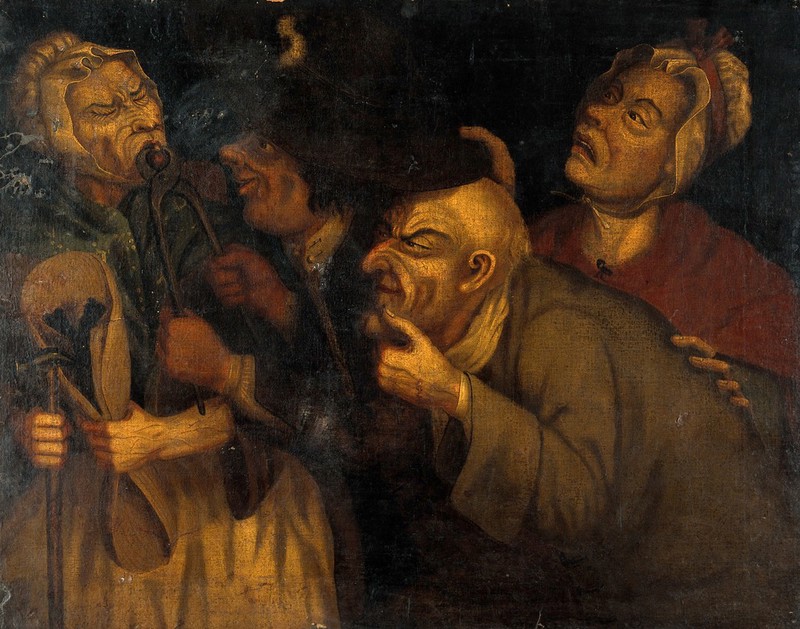
A blacksmith extracting a tooth. Oil painting in the style of John Collier, known as "Tim Bobbin"., by John Collier
John Collier · Wellcome Collection, London · Wellcome Collection
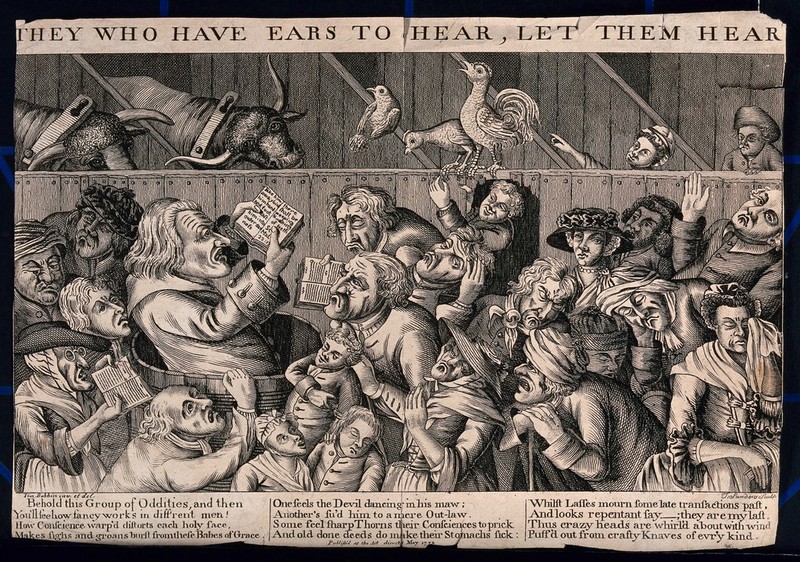
A preacher standing inside a barrel and preaching repentance arouses guilt, alarm and confusion in the minds of his audience. Engraving by T. Sanders after Tim Bobbin (John Collier)., May 1773, by John Collier
John Collier · Wellcome Collection, London · Wellcome Collection
Key facts
Key facts
• Name — John Collier • Honorific Suffix — OBE RP ROI • Birth Name — John Maler Collier • Born — 27 January 1850 • Birthplace — Paddington, Middlesex • Died — 11 April 1934 • Place of death — Eton Avenue, London • Known for — Painter • Training — Eton; Slade School of Fine Art • Movement — Pre-Raphaelite; Orientalism • Honorific Prefix — The Honourable • Spouse — * Marian Huxley • Ethel Huxley
Family
Family
Collier was from a talented and successful family. His grandfather, John Collier, was a Quaker merchant who became a member of parliament. His father, Robert (a member of parliament, Attorney General and, for many years, a full-time judge of the Privy Council) was created the first Lord Monkswell. Collier was a member of the New Society of Artists as well as the Royal Society of British Artists. He had artists' studios in his home at 7 Chelsea Embankment for the use of John and his wife Marion. John Collier's elder brother, the second Lord Monkswell, was Under-Secretary of State for War and Chairman of the London County Council. • Illustration — Collier's first wife, Marian Huxley, painted by her husband in 1883 In due course, Collier became an integral part of the family of Thomas Henry Huxley PC, President of the Royal Society from 1883 to 1885. Collier married two of Huxley's daughters and was "on terms of intimate friendship" with his son, the writer Leonard Huxley. Collier's first wife, in 1879, was Marian Huxley (Mady). She was a painter who studied, like her husband, at the Slade and exhibited at the Royal Academy and elsewhere. In 1881, the couple settled in Tite Street, Chelsea, in a purpose-built studio house, alongside their friend Anna Lea Merritt. After the birth of their only childa daughter, JoyceMarian suffered severe post-natal depression and was taken to Paris for treatment where, however, she contracted pneumonia and died in 1887. Joyce became a portrait miniaturist and was a member of the Royal Society of Miniature Painters. In 1889 Collier married Mady's younger sister Ethel Huxley. Until the Deceased Wife's Sister's Marriage Act 1907 such a marriage was not possible in England, so the ceremony took place in Norway. By his second wife he had a daughter and a son, Sir Laurence Collier, who was the British ambassador to Norway 1941–1951.
Subjects
Subjects
Collier's range of portrait subjects was broad. In 1893, for example, his subjects included Lovelace Stamer, Bishop of Shrewsbury; Sir John Lubbock FRS; A N Hornby (Captain of the Lancashire Eleven); Edward Augustus Inglefield (Admiral and Arctic explorer). • Illustration — Lady Godiva (1898) Herbert Art Gallery & Museum • Illustration — Circe (1885) the seductive enchantress from Homer's Odyssey His commissioned portrait of the Duke of York (later George V) as Master of Trinity House in 1901, and the Prince of Wales (later Edward VIII) were his major royal portraits. The latter work was hung in Durbar Hall, Jodhpur, Rajputana. Other subjects included two Lord Chancellors (the Earl of Selborne in 1882 and the Earl of Halsbury) in 1897; The Speaker of the House of Commons, William Gully, (1897); senior legal figures the Lord Chief Justice Lord Alverstone (1912) and the Master of the Rolls Sir George Jessel (1881). • Illustration — Angela McInnes by Collier, 1914 Rudyard Kipling (1891); the painter Sir Lawrence Alma-Tadema (1884); the actors J.L. Toole (1887) and Madge Kendal, Ellen Terry and Herbert Beerbohm Tree (in The Merry Wives of Windsor) (1904); heads of educational institutions such as the Master of Balliol Edward Caird (1904), the Warden of Wadham G.E. Thorley (1889) and the Provost of Eton (1897) were also subjects for Collier. His portraits also include those of soldiers such as Field Marshal Lord Kitchener of Khartoum (1911) and Field Marshal Sir Frederick Haines (1891); two Indian maharajahs, including the Maharajah of Nepal (1910); and scientists including Charles Darwin (1882), the artist's father-in-law Professor Huxley (1891), William Kingdom Clifford, James Prescott Joule and Sir Michael Foster (1907). Clark reports a total of thirty-two Huxley family portraits during the half-century after his first marriage. A photocopy of John Collier's Sitters Book (made in 1962 from the original in the possession of the artist's son) can be consulted in the Heinz Archive and Library, National Portrait Gallery. This is the artist's own handwritten record of all his portraits, including name of subject, date, fee charged, and details of any major exhibitions of the picture in question.
Views on ethics and religion
Views on ethics and religion
• Illustration — In the Venusberg (1901) • Illustration — Lilith, (1887) now held at the Atkinson Art Gallery in Southport, Merseyside. Collier's views on religion and ethics have been compared with the views of Thomas and Julian Huxley, both of whom gave Romanes lectures on that subject. Collier (1926) explains • "It [the book The Religion of an Artist] is mostly concerned with ethics apart from religion... I am looking forward to a time when ethics will have taken the place of religion... My religion is really negative. [The benefits of religion] can be attained by other means which are less conducive to strife and which put less strain upon the reasoning faculties." On secular morality: • "My standard is frankly utilitarian. As far as morality is intuitive, I think it may be reduced to an inherent impulse of kindliness towards our fellow citizens." His views on ethics, then, were very close to the agnosticism of T.H. Huxley and the humanism of Julian Huxley. On the idea of God: • "People may claim without much exaggeration that the belief in God is universal. They omit to add that superstition, often of the most degraded kind, is just as universal." And • "An omnipotent Deity who sentences even the vilest of his creatures to eternal torture is infinitely more cruel than the cruellest man." And on the Church: • "To me, as to most Englishmen, the triumph of Roman Catholicism would mean an unspeakable disaster to the cause of civilization." And on non-conformists: • "They have a superstitious belief in the actual words of the Bible which is very dangerous".
Gallery
Gallery
• Illustration — The Last Voyage of Henry Hudson (1881) • Illustration — The Pharaoh's Handmaidens (1883) • Illustration — Cassandra (1885) • Illustration — The Death of Cleopatra (1890) • Illustration — Priestess of Delphi (1891) • Illustration — In the Forest of Arden (or Touchstone and Audrey) (1892) • Illustration — All Hallowe'en (1895) • Illustration — Fire (c. 1900) • Illustration — Queen Guinevre's Maying (1900) • Illustration — Egg dance (1903) • Illustration — Lewis Waller as Monsieur Beaucaire (1903) • Illustration — Eve (1911) • Illustration — A Fallen Idol (1913) • Illustration — For King and Country (1916) • Illustration — Pomps and Vanities (1917) • Illustration — Portrait of George Bernard Shaw (1927)
Identity and origins
Identity and origins
The authorities additionally record the headings John Maler Collier, Hon. Collier, John, Hon. His recorded language was English. He was the child of Robert Collier, 1st Baron Monkswell and Isabella Rose Rose. 3 children are recorded: Laurence Collier, Joyce Collier and Joan Collier.
Work and production
Work and production
Works recorded as notable number 3: Godiva, Charles Darwin and The Last Voyage of Henry Hudson. His recorded genres are portrait and history.
Life and career
Dated record
Life and career
The full dated record · 2 entries
1850
John Collier was born in 1850.
1934
John Collier died at London.
Publications
• A primer of art • A Manual of Oil Painting, 1886 • The Art of Portrait Painting, 1905 • The religion of an artist, 1926
Posthumous reputation
• Illustration — North House at 69 Eton Avenue in Belsize Park. Built for Collier in 1890 by Frederick S. Waller. • Illustration — Clytemnestra after the Murder (1882) • Illustration — A glass of wine with Caesar Borgia (1893) Collier died in 1934. His entry in the Dictionary of National Biography (volume for 1931–40, published 1949) compares his work to that of Frank Holl because of its solemnity. This is only true, however, of his many portraits of distinguished old men – his portraits of younger men, women and children, and his so-called "problem pictures", covering scenes of ordinary life, are often very bright and fresh. His entry in the Dictionary of Art (1996 vol 7, p569), by Geoffrey Ashton, refers to the invisibility of his brush strokes as a "rather unexciting and flat use of paint" but contrasts that with "Collier's strong and surprising sense of colour" which "created a disconcerting verisimilitude in both mood and appearance". The Dictionary of Portrait Painters in Britain up to 1920 (1997) describes his portraits as "painterly works with a fresh use of light and colour".
Public collections
Public collections
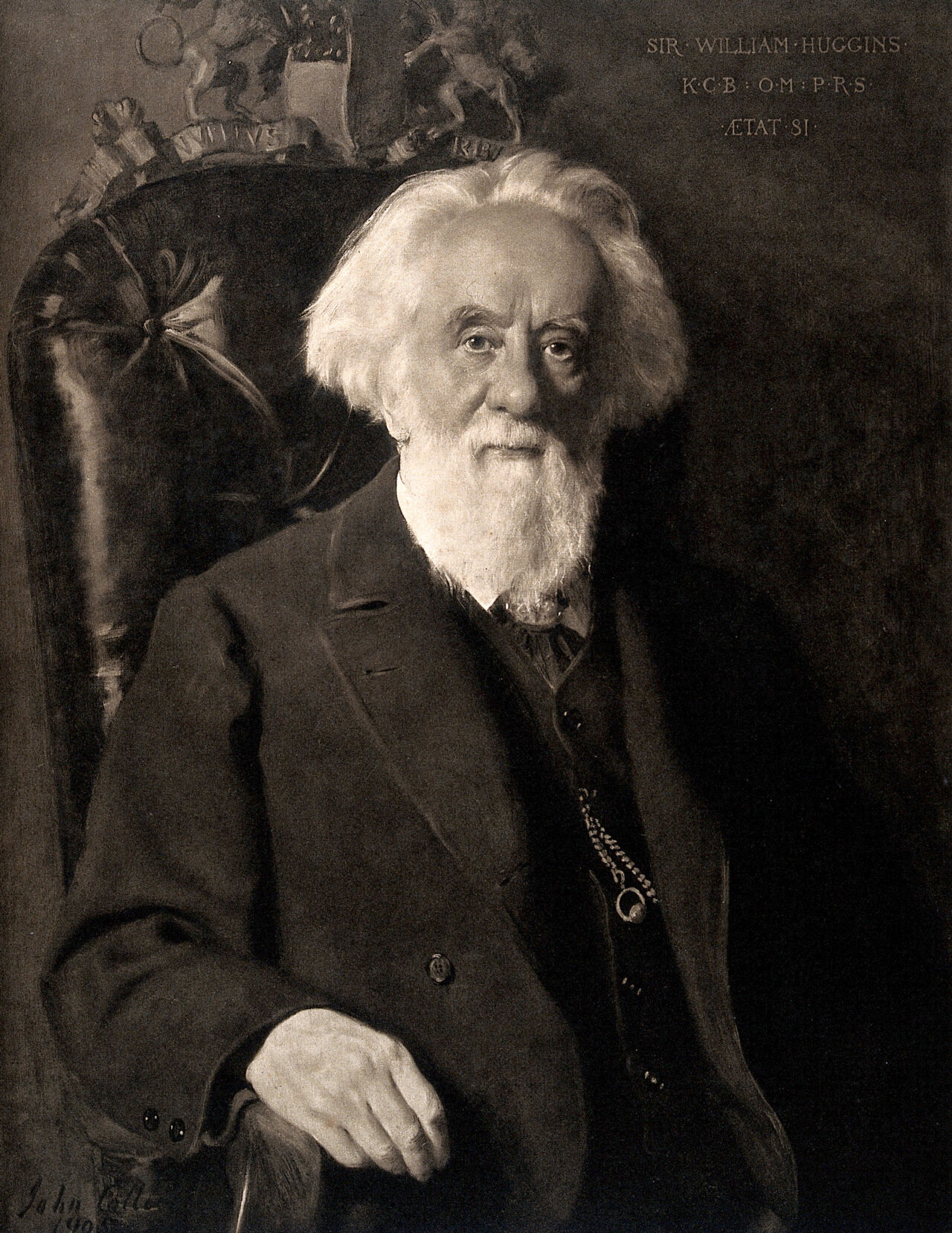
Sixteen of John Collier's paintings are now in the collections of the National Portrait Gallery in London, and two are in the Tate Gallery. Four of the National Portrait Gallery paintings were in December 1997 on display: John Burns, Sir William Huggins, Thomas Huxley (the artist's father in law) and Charles Darwin (copies of the last two are also prominently displayed at the top of the staircase at the Athenaeum Club in London). A 1907 self-portrait has been preserved in the Uffizi in Florence which presumably commissioned it as part of its celebrated collection of artists' self-portraits. Other pictures may be seen in houses and institutions open to the public: his Clytemnestra, a large and striking painting of the mythical figure, is in the Guildhall Gallery of the City of London. Another version, in which Clytemnestra has committed the murder and stands half-naked by the bath with a bloody sword is in the Worcester City Art Gallery & Museum. Sentence of Death was given by the widow of the artist to Wolverhampton Art Gallery. His portrait of the Earl of Onslow (1903), is at Clandon Park, Surrey (National Trust). His full-length portrait of Sir Charles Tertius Mander, first baronet, is at Owlpen Manor, Gloucestershire, with another version in the collection of the National Trust at Wightwick Manor, and his Lady Godiva is in the Herbert Art Gallery and Museum. A glass of wine with Caesar Borgia (1893) can be seen hanging in the atrium of Ipswich Town Hall. Reproductions of many others, from various collections, may be consulted in the John Collier box in the National Portrait Gallery Heinz Archive and Library, and a good selection is published in The Art of the Honourable John Collier by W.H. Pollock (1914). His work was also included in the Great Victorian Pictures exhibition mounted by the Arts Council in 1978 (catalogue, p27).
Holdings and surviving copies
Where the work is held
Holdings and surviving copies
Where material relating to John Collier is held. Historical and Familiar Essays, on the Scriptures of the Old Testament: By John Collier,
Documents and archives
Primary material
Documents and archives
scholarly publication
- Collier, John, Benezit Dictionary of Artists, 2011
Scholarly · Crossref registry · 2011
reference work
- Wikidata, structured authority record Q453972: John Collier
Reputable secondary · Wikimedia Foundation
Literature
Literature
Literature
Collier, John, Benezit Dictionary of Artists, 2011
Collier, John, Oxford Art Online, 2003
Collier, John (1850–1934), Oxford Dictionary of National Biography, 2018
John Collier’s Paintings of Clytemnestra, Studies in Ancient Art and Civilization, 2024
Scholarly footprint
Literature
Scholarly footprint
A count of publications is evidence of attention, not of standing, and is given here only as a measure.
Notes from the source article
Cited by Wikipedia
Notes from the source article
These works are cited by the source article, in its own numbering. They are recorded as its citations, not as sources VALÉORINE has verified.
- 1.Browne, Janet 2002. Charles Darwin: the power of place. Cape, London p. 487–488.
- 2.Victoria County History, 2004. Settlement and building: Artists and Chelsea Pages 102-106 A History of the County of Middlesex: Volume 12, Chelsea. British History Online.
- 3.Collier, Hon. John. Who's Who. 59. 362. 1907.
- 4.Here and elsewhere, the source is Collier's notebook, in the archives of the National Portrait Gallery, London.
- 5.Clark R.W. 1968. The Huxleys. p98
- 6.John Collier. National Portrait Gallery.
- 7.In search of John Collier. The Painters Keys. 2009-03-17.
- 8.Collier, J. The Religion of an Artist. Watts. October 2020.
References
Citations
References
Each reference names the institution holding it, so a reader may go to the document itself.
scholarly publication
Collier, John, Benezit Dictionary of Artists, 2011Crossref registry
Institutional witnessreference work
Wikidata, structured authority record Q453972: John CollierWikimedia Foundation
Secondary witness
Further particulars
Held on the record
Further particulars
Open the remaining particulars
John Collier studied at Academy of Fine Arts, Munich, Eton College and Slade School of Fine Art. He trained under Edward Poynter.
The Encyclopedia exists whether or not anything is for sale. Corrections are recorded rather than overwritten, and every version of this record is kept. Published 14 August 2026.
Elsewhere in Paintings
18,717 published records in this field, each with its sources named.
- John Cleveley the YoungerArtist
- John ClostermanArtist
- John ClymerArtist
- John CollettArtist
- John ComerfordArtist
- John ConstableArtist
- John CopleyArtist
- John CopnallArtist
Best supported in this field
For owners
Own a work by John Collier?
A specialist will read what you send and tell you what the house can establish, what it cannot, and whether the object is suited to sale. There is no charge and no obligation. The object stays with you throughout; nothing is shipped to us unless it is arranged in writing beforehand.