
Edward Matthew Ward
Edward Matthew Ward, (14 July 1816 – 15 January 1879) was a British painter who specialised in historical genre. He is best known for his murals in the Palace of Westminster depicting episodes in British history from the English Civil War to the Glorious Revolution.
Also recorded as E. M. Ward · E.M. Ward
Edward Matthew Ward
Edward Matthew Ward · Wellcome Collection, London · Wellcome Collection · Public Domain Mark
- Name
- Edward Matthew Ward
- Born
- 14 July 1816
- Birthplace
- Pimlico, Middlesex, United Kingdom
- Died
- 15 January 1879
- Place of death
- Windsor, Berkshire, United Kingdom
- Known for
- Painting
- Movement
- The Clique
- Spouse
- Henrietta Ward
- Nationality
- United Kingdom of Great Britain and Ireland
- Occupation
- painter
- Fields
- history
- Education
- Royal Academy of Arts
VALÉORINE Encyclopedia
VALÉORINE documentary reading
Documentary summary
Edward Matthew Ward, (14 July 1816 – 15 January 1879) was a British painter who specialised in historical genre. He is best known for his murals in the Palace of Westminster depicting episodes in British history from the English Civil War to the Glorious Revolution.
Admitted source layer · organised and presented by VALÉORINE
Reference Check
Propose documentary evidence for Edward Matthew Ward. A contribution is never written directly as fact: identity, source, rights and evidence gates still decide.
Sign in to contribute
World of VALÉORINE
Documentary connections
Only confirmed graph relationships appear here. Images are shown only when their identity and reuse rights both pass the documentary gate.
Has Genre · outgoing
history painting
Term

Born In · outgoing
London
Place
Pencil sketch by George Henry Harlow, 1814, http://www.npg.org.uk/collections/search/largerimage.php?mkey=mw05495

Educated At · outgoing
Royal Academy of Arts
Organisation
This file was donated to Wikimedia Commons as part of a project by the Metropolitan Museum of Art . See the Image and Data Resources Open Access Policy
Died In · outgoing
Windsor
Place
Documentary evidence
Documentary basis
Authority files
wikidata · Q386392 · wikipedia · Edward Matthew Ward
In this article
Biography
Biography
Edward Matthew Ward studied at Royal Academy of Arts. The recorded working language is English. Subjects and genres recorded for the work are history. Work by Edward Matthew Ward is recorded in the collections of Art Institute of Chicago, Tate, National Gallery of Victoria, Museum of New Zealand Te Papa Tongarewa and Philadelphia Museum of Art.
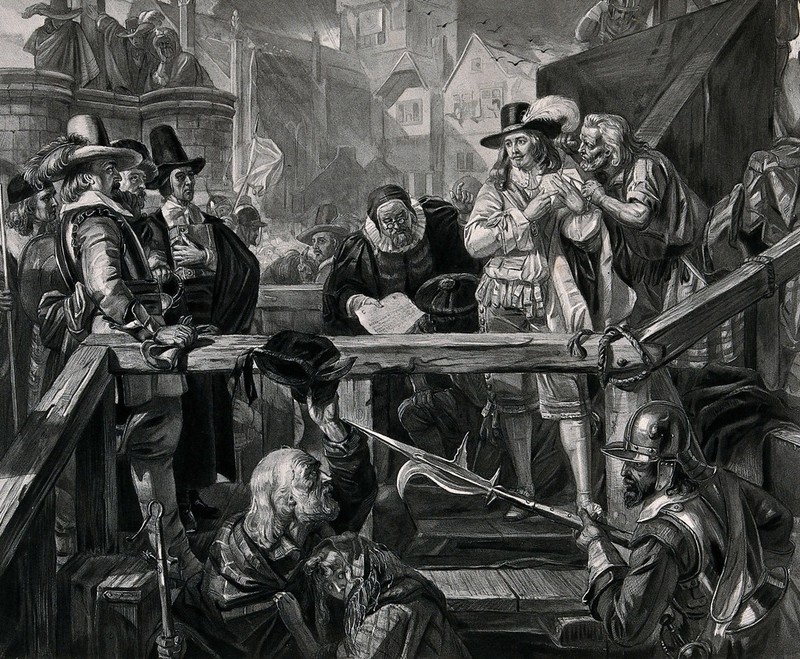
James Graham Marquess of Montrose on the way to his execution in the marketplace of Edinburgh. Process print after E. M. Ward., by Edward Matthew Ward
Edward Matthew Ward · Wellcome Collection, London · Wellcome Collection
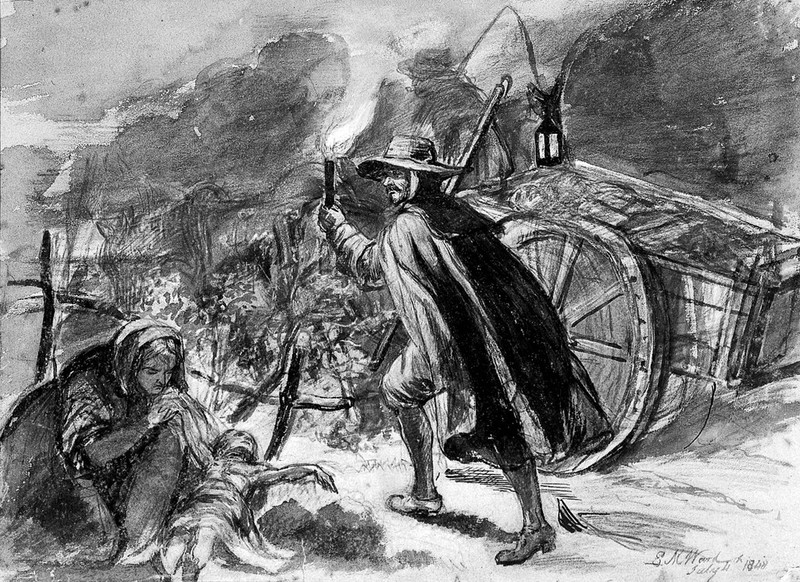
A man with a torch walking alongside a cart of plague victims; a woman is holding a dead child. Chalk drawing by E.M. Ward, 1848., 1848, by Edward Matthew Ward
Edward Matthew Ward · Wellcome Collection, London · Wellcome Collection
Key facts
Key facts
• Name — Edward Matthew Ward • Born — 14 July 1816 • Birthplace — Pimlico, Middlesex, United Kingdom • Died — 15 January 1879 • Place of death — Windsor, Berkshire, United Kingdom • Known for — Painting • Movement — The Clique • Spouse — Henrietta Ward
Early career
Early career
Ward was born in Pimlico, London. As a youth, he created illustrations for the well-known book Rejected Addresses, written by his uncles James and Horace Smith. He also illustrated the papers of Washington Irving. In 1830, he won the "silver palette" from the Society of Arts. With support from David Wilkie and Francis Leggatt Chantrey, he became a student at the Royal Academy Schools. In 1836 he travelled to Rome, where in 1838 he gained a silver medal from the Academy of St Luke for his Cimabue and Giotto, which in 1839 was exhibited at the Royal Academy. While a student at the Schools, Ward became a member of The Clique, a group of painters, led by Richard Dadd. Like other members of the Clique, Ward saw himself as a follower of Hogarth and Wilkie, considering their styles distinctly national. Many of his early paintings were set in the eighteenth century and were on Hogarthian subjects. He also painted episodes from seventeenth-century history, influenced by the thinking of his friend the historian Thomas Babington Macaulay. He also painted subjects from the history of the French Revolution. In 1843, he entered the Palace of Westminster cartoon competition and failed to win a prize. • Illustration — Self-portrait by Ward, in which he is depicted working on a portrait of one of his daughters • Illustration — The South Sea Bubble (1847), a Hogarthian subject in the Tate Gallery • Illustration — Leicester and Amy Robsart at Cumnor Hall (1866), after Walter Scott's novel Kenilworth
Opposition to Pre-Raphaelitism
Opposition to Pre-Raphaelitism
In the 1850s Ward came into conflict with the Pre-Raphaelites, especially Millais, whose style of art he considered un-British. Ward's painting of Charlotte Corday being led to execution beat Millais's Ophelia for a prize at Liverpool, leading to much debate at the time. His historical paintings led to Ward's commission to paint eight scenes in the corridor leading into the House of Commons, despite the fact that he had won nothing at the original 1843 competition. These were to depict parallel episodes on the Royalist and Parliamentary sides in the Civil War. Ward's paintings depict the opposed figures as if confronting one another across the corridor.
Later work and death
Later work and death
Ward continued to paint Hogarthian versions of episodes from British history throughout the 1860s, including Hogarth's Studio in 1739 (1863; York Art Gallery) and the Antechamber at Whitehall during the Dying Moments of Charles II (1865; Walker Art Gallery, Liverpool). He was happiest in the 17th to early 19th centuries, but painted some earlier subjects. In the 1870s, he painted some modern-life genre subjects. Towards the end of the 1870s, he began to suffer painful illness and depression. On 10 January 1879, he was found raving on the floor of his dressing room, his throat cut with a razor, shouting "I was mad when I did it; the devil prompted me". Medical help arrived, but he died on 15 January at his home, 3 Queens Villas, in Windsor. The inquest in Windsor on 17 January found that he committed suicide while temporarily insane.
Family
Family
In 1843, Ward met the 11-year-old Henrietta Ward (her maiden and married names were the same, but she was no relation); they married secretly in May 1848, shortly before her 16th birthday, after an elopement aided by Ward's friend Wilkie Collins. Henrietta's mother never forgave the elopement, and disinherited her. Collins may have based the plot of his 1852 novel Basil on the Ward engagement. Henrietta also became a successful painter. She became a notable art teacher after her husband's death and wrote two autobiographical memoirs about their life together. His son, Leslie, became a popular caricaturist for the magazine Vanity Fair, and later the journal The World, under the nickname "Spy".
Gallery
Gallery
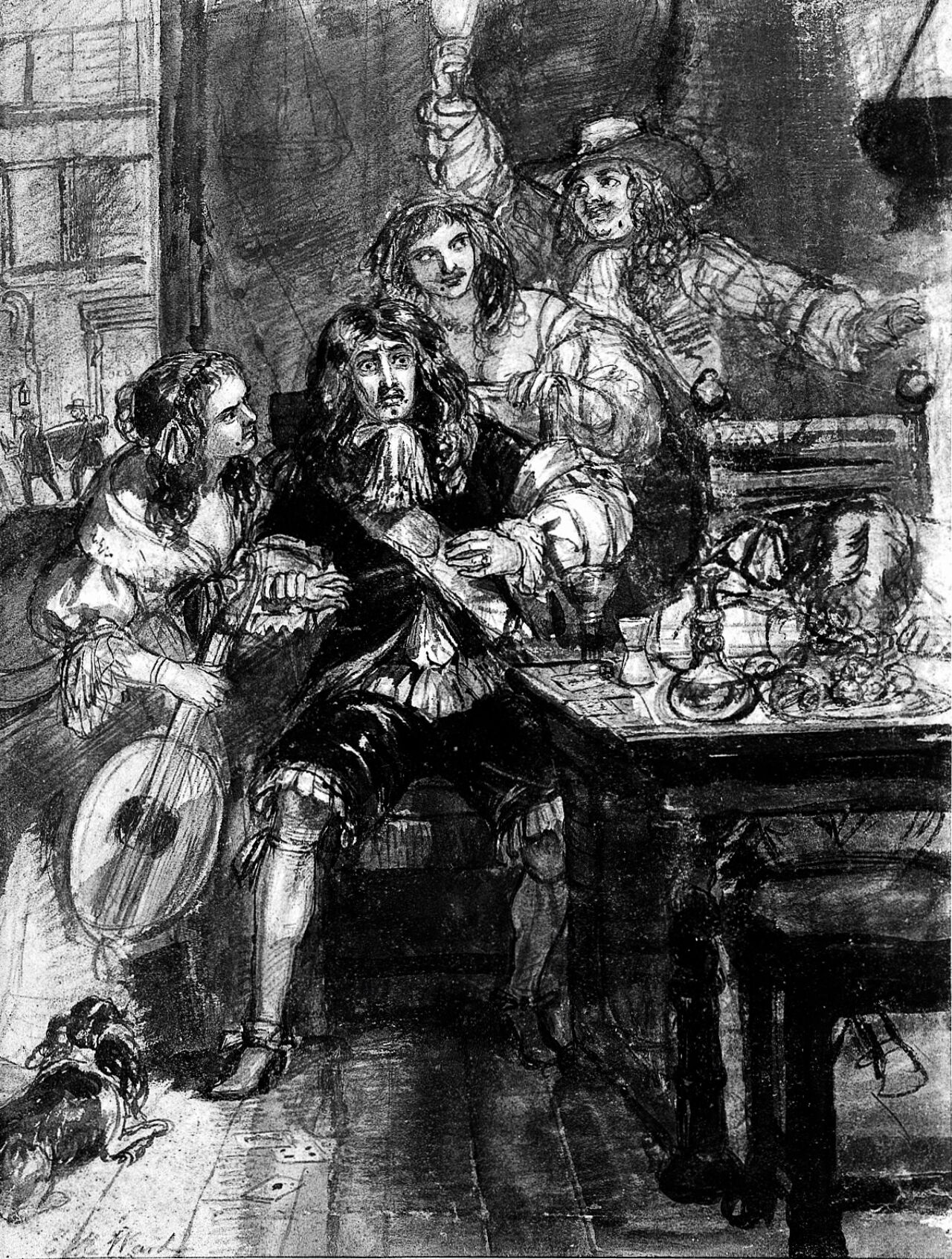
• Illustration — Napoleon in the Prison of Nice in 1794, 1841 • Illustration — The Disgrace of Lord Clarendon, 1846 • Illustration — Portrait of Daniel Maclise, 1846 • Illustration — King James Receiving News of the Landing of William of Orange, 1850 • Illustration — The Execution of the Marquis of Montrose, 1853 • Illustration — Portrait of Thomas Babington Macaulay, 1853 • Illustration — Josephine Signing the Act of Her Divorce, 1853 • Illustration — Charles II and Nell Gwyn, 1854 • Illustration — The Last Sleep of the Earl of Argyll, 1854 • Illustration — Byron's Early Love, 1856 • Illustration — The Last Parting of Marie Antoinette and Her Son, 1856 • Illustration — King Lear and Cordelia, 1857 • Illustration — The Investiture of Napoleon III with the Order of the Garter, 1860 • Illustration — Queen Victoria at the Tomb of Napoleon, 1860 • Illustration — Hogarth's Studio in 1739, 1863 • Illustration — Anne Boleyn at the Queen's Stairs (of the Tower of London, after her sentence), 1871
Life and career
Dated record
Life and career
The full dated record · 2 entries
1816
Edward Matthew Ward was born on 14 July 1816.
1879
Edward Matthew Ward died on 15 January 1879.
Places
Named by the record
Places
Only places the record itself states, plotted where the house gazetteer settles their coordinates. Nothing is inferred from a name or a nationality.
London.
Birth place
Windsor.
Death place
Primary material
Documents and archives
reference work
- “Edward Matthew Ward”, English Wikipedia, consulted as further reading
Reputable secondary · Wikipedia
authority record
- Wikidata, structured authority record Q386392: Edward Matthew Ward
General reference · Wikidata
Notes from the source article
Cited by Wikipedia
Notes from the source article
These works are cited by the source article, in its own numbering. They are recorded as its citations, not as sources VALÉORINE has verified.
- 1.Ward, Edward Matthew. 28. 319.
- 2.The complex history of the decoration is best summarized by T. S. R. Boase, The Decorations of the New Palace of Westminster 1841–1863, in Journal of the Warburg and Courtauld Institutes 17:1954, pp. 319–358.
- 3.The Times, 18 January 1879, p. 11
- 4.Wellcombe Library Catalogue
- 5.Wilkie Collins, The Woman in White, Edited and with an Introduction and Notes by Matthew Sweet, London, Penguin Classics, 2003; Introduction, p. xxiii.
References
Citations
References
Each reference names the institution holding it, so a reader may go to the document itself.
reference work
Secondary witnessauthority record
General reference
People, houses and institutions
Knowledge graph
People, houses and institutions
Teachers, collaborators, publishers and institutions recorded against this person, each on a stated basis.
Studied at
1- Royal Academy of ArtsOrganisation
Established from a fact already recorded on a verified source.
Further particulars
Held on the record
Further particulars
Open the remaining particulars
Edward Matthew Ward is recorded as a citizen of United Kingdom of Great Britain and Ireland. Classed in the genre history painting. Recorded with the occupation painter. Connected to 2 other published records in the VALÉORINE Encyclopedia.
Recognition and collections
Work by Edward Matthew Ward is
Art Institute of Chicago, Tate, National Gallery of Victoria and Museum of New Zealand Te Papa Tongarewa
Within the Encyclopedia
The Encyclopedia exists whether or not anything is for sale. Corrections are recorded rather than overwritten, and every version of this record is kept. Published 16 August 2026.
Elsewhere in Paintings
18,717 published records in this field, each with its sources named.
- Edward L. MooneyArtist
- Edward Lamson HenryArtist
- Edward LuckhausArtist
- Edward Mateusz Jan RömerArtist
- Edward Middleton ManigaultArtist
- Edward MoranArtist
- Edward PortieljeArtist
- Edward PoynterArtist
Best supported in this field
For owners
Own a work by Edward Matthew Ward?
A specialist will read what you send and tell you what the house can establish, what it cannot, and whether the object is suited to sale. There is no charge and no obligation. The object stays with you throughout; nothing is shipped to us unless it is arranged in writing beforehand.