
Hans Meyer
Illustration — Hans Meyer • Illustration — Memorial recognizing Meyer's ascent of Mount Kilimanjaro in Kilimanjaro National Park, Tanzania • Illustration — Gravestone of Hans Meyer in Leipzig Hans Heinrich Josef Meyer (22 March 1858 – 5 July 1929) was a German geographer from Hildburghausen, who was the son of publisher Herrmann Julius Meyer (1826–1909). Credited with being the first to reach the summit of Mount Kilimanjaro at 5,895 m (19,341 ft) in modern day Moshi District of Kilimanjaro Region in Tanzania. Kilimanjaro has three peaks: Shira, 3,962 m (12,999 ft); Mawenzi, 5,149 m (16,893 ft); and Kibo, whose summit was reached by Meyer in 1889.
Also recorded as Hans Heinrich Josef Meyer · H. Meyer · H. H. J. Meyer
Hans Meyer
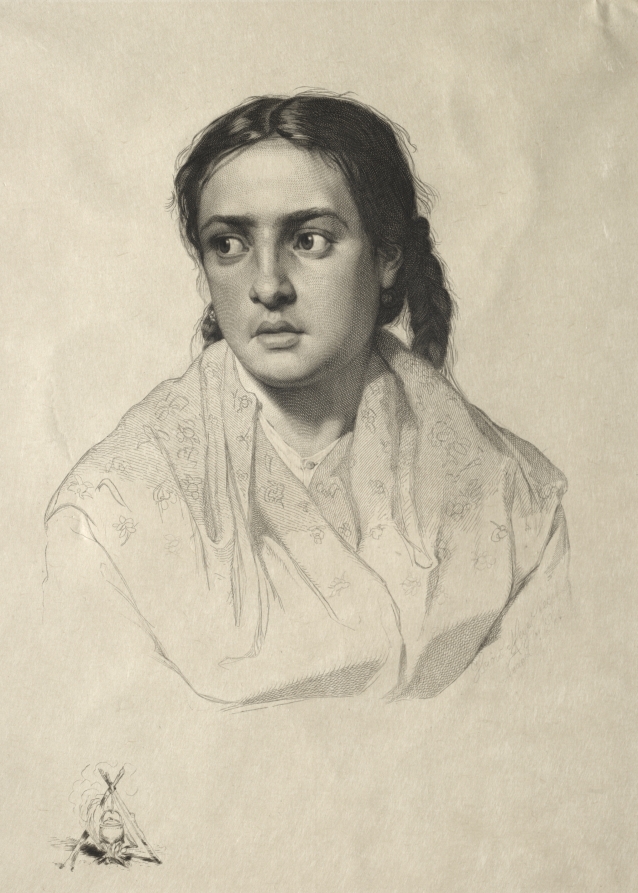
Hans Meyer · The Cleveland Museum of Art · Gift of John Lyman · CC0
- Born
- 1858.
- Died
- 1929.
- Nationality
- German Empire · Weimar Republic
- Occupation
- explorer · publisher · university teacher · geologist · naturalist · botanical collector · cartographer · philologist · Africanist · geographer
VALÉORINE Encyclopedia
VALÉORINE documentary reading
Documentary summary
Illustration — Hans Meyer • Illustration — Memorial recognizing Meyer's ascent of Mount Kilimanjaro in Kilimanjaro National Park, Tanzania • Illustration — Gravestone of Hans Meyer in Leipzig Hans Heinrich Josef Meyer (22 March 1858 – 5 July 1929) was a German geographer from Hildburghausen, who was the son of publisher Herrmann Julius Meyer (1826–1909). Credited with being the first to reach the summit of Mount Kilimanjaro at 5,895 m (19,341 ft) in modern day Moshi District of Kilimanjaro Region in Tanzania. Kilimanjaro has three peaks: Shira, 3,962 m (12,999 ft); Mawenzi, 5,149 m (16,893 ft); and Kibo, whose summit was reached by Meyer in 1889.
Admitted source layer · organised and presented by VALÉORINE
Note VALÉORINE
No house-authored Note is published until its assertions and sources pass the VALÉORINE evidence contract. The documentary article remains available in full while that enrichment is being consolidated.
Documentary enrichment in progress · no unsupported statement published
Reference Check
Propose documentary evidence for Hans Meyer. A contribution is never written directly as fact: identity, source, rights and evidence gates still decide.
Sign in to contribute
World of VALÉORINE
Documentary connections
Only confirmed graph relationships appear here. Images are shown only when their identity and reuse rights both pass the documentary gate.
Documentary evidence
Evidence Panel
wikipedia incomplete · checked 25 September 2026
- Identity
- resolved
- Independent source families
- 0
- Admitted assertions
- 0
- Open conflicts
- 0
Authority files
wikidata · Q70875
In this article
Biography
Biography
He studied sciences and history in Leipzig, Berlin and Straßburg, afterward traveling in India, North America and southern Africa. Subsequently he visited eastern Africa and South America. He entered the publishing house of his father, the Bibliographisches Institut at Leipzig, in 1884, and in the following year became one of the directors of the firm, but at intervals he continued his exploring expeditions. In 1887, during his first attempt to climb Kilimanjaro, Meyer reached the base of Kibo, but was forced to turn back. He did not have the equipment necessary to handle the deep snow and ice on Kibo. In 1888, alongside the Austrian cartographer Oscar Baumann, he explored the Usambara region, with designs of continuing on to Mount Kilimanjaro. However, the two explorers could not proceed on, due to events related with the so-called Abushiri Revolt. Baumann and Meyer, within a matter of days, were captured and held as prisoners. Only after a large ransom was paid to rebel leader Abushiri ibn Salim al-Harthi were the two men released. • Illustration — Yohane Kinyaha Lauwo, a Chagga man summited with Hans Meyer in 1889 In 1889 Meyer returned to Kilimanjaro with the celebrated Austrian mountaineer Ludwig Purtscheller and Yohane Lauwo, a Chagga guide for a third attempt. Their climbing team included two local headmen, nine porters, a cook, and a guide. After Meyer and Purtscheller pushed to near the crater rim on 3 October before retreating to the base of Kibo, they reached the summit on the southern rim of the crater on Purtscheller's 40th birthday, 6 October 1889. Meyer named this summit - now known as Uhuru Point- "Kaiser Wilhelm Spitze". After descending to the saddle between Kibo and Mawenzi, they attempted to climb Mawenzi next, but only reached a subsidiary peak (Klute Peak) before retreating due to illness. In Meyer's honor, the highest summit of Mawenzi nevertheless is known as Hans Meyer Peak. The summit of Kibo would not be climbed again until 20 years later, and the first ascent of Hans Meyer Peak was only in 1912. In 1899 he became a professor at the University of Leipzig, where in 1915 he was appointed director of the Institute for Colonial Geography. In addition to his African exploits, Meyer did extensive mountain climbing in the Canary Islands (1894) and Ecuador (1904). Meyer assembled a significant collection of ethnographic specimens during his visits to various nations and by trading with antiquities traders such as W. D. Webster. He donated his collection to Museum für Völkerkunde zu Leipzig (now the Grassi Museum of Ethnology).
Places
Named by the record
Places
Only places the record itself states, plotted where the house gazetteer settles their coordinates. Nothing is inferred from a name or a nationality.
Hans Meyer was born at Hildburghausen.
Birthplace
Hans Meyer died at Leipzig.
Deathplace
Selected publications
• Eine Weltreise (A Trip around the World), 1885 • Zum Schneedom des Kilima-Ndscharo, 1888 • Ostafrikanische Gletscherfahrten, 1890 (later translated into English by E.H.S. Calder as "Across East African Glaciers") • Die Insel Tenerife (The Island of Tenerife), 1896 • Der Kilima-Ndscharo (Kilimanjaro), 1900 • Die Eisenbahnen im tropischen Afrika (Railways in Tropical Africa), 1902 • In den Hoch-Anden von Ecuador: Chimborazo, Cotopaxi, etc. (In the High Andes of Ecuador; Chimborazo, Cotopaxi, etc.), two volumes 1907 • Niederländisch-Ostindien. Eine länderkundliche Skizze (The Netherlands Indies; Sketch of the Country), 1922
Notes from the source article
Cited by Wikipedia
Notes from the source article
These works are cited by the source article, in its own numbering. They are recorded as its citations, not as sources VALÉORINE has verified.
- 1.Moshi, Sebastian. Miaka 700 ya Wachagga. Moccony Printing Press. 12. 2022. 978-9912-40-484-7.
- 2.Alexander Stewart, Kilimanjaro. A complete trekker's guide., Cicerone Publishers, 2004-2011, pp. 81-84
- 3.https://books.google.com/books?id=padOAAAAIAAJ&dq=%22Hans+Meyer%22+Tenerife+mountain&pg=PA274 The Geographical journal, 1894
- 4.Museum of New Zealand Te Papa Tongarewa. W.D. Webster: Outward letter book, 1900-1901, by William Downing Webster. Te Papa (CA000233/001/0001). Collections Online.
- 5.Staatliche Kunstsammlungen Dresden GRASSI Museum für Völkerkunde zu Leipzig. History of the Collection.
References
Citations
References
Each reference names the institution holding it, so a reader may go to the document itself.
authority record
Unverified
The Encyclopedia exists whether or not anything is for sale. Corrections are recorded rather than overwritten, and every version of this record is kept. Published 14 August 2026.
Elsewhere in Maps and atlases
1,180 published records in this field, each with its sources named.
- GyōkiAuthor
- Gyula HegyiAuthor
- Hans BobekAuthor
- Hans Conrad Escher von der LinthAuthor
- Harry BeckAuthor
- Hartmann SchedelAuthor
- Hayashi ShiheiAuthor
- Heinrich BerghausAuthor
Best supported in this field
For owners
Own a work by Hans Meyer?
A specialist will read what you send and tell you what the house can establish, what it cannot, and whether the object is suited to sale. There is no charge and no obligation. The object stays with you throughout; nothing is shipped to us unless it is arranged in writing beforehand.