
Johann Adam Hiller
Illustration — Hiller, c. 1850 Johann Adam Hiller (25 December 1728 – 16 June 1804) was a German composer, conductor and writer on music, regarded as the creator of the Singspiel, an early form of German opera. In many of these operas he collaborated with the poet Christian Felix Weiße.
Johann Adam Hiller
German composer.
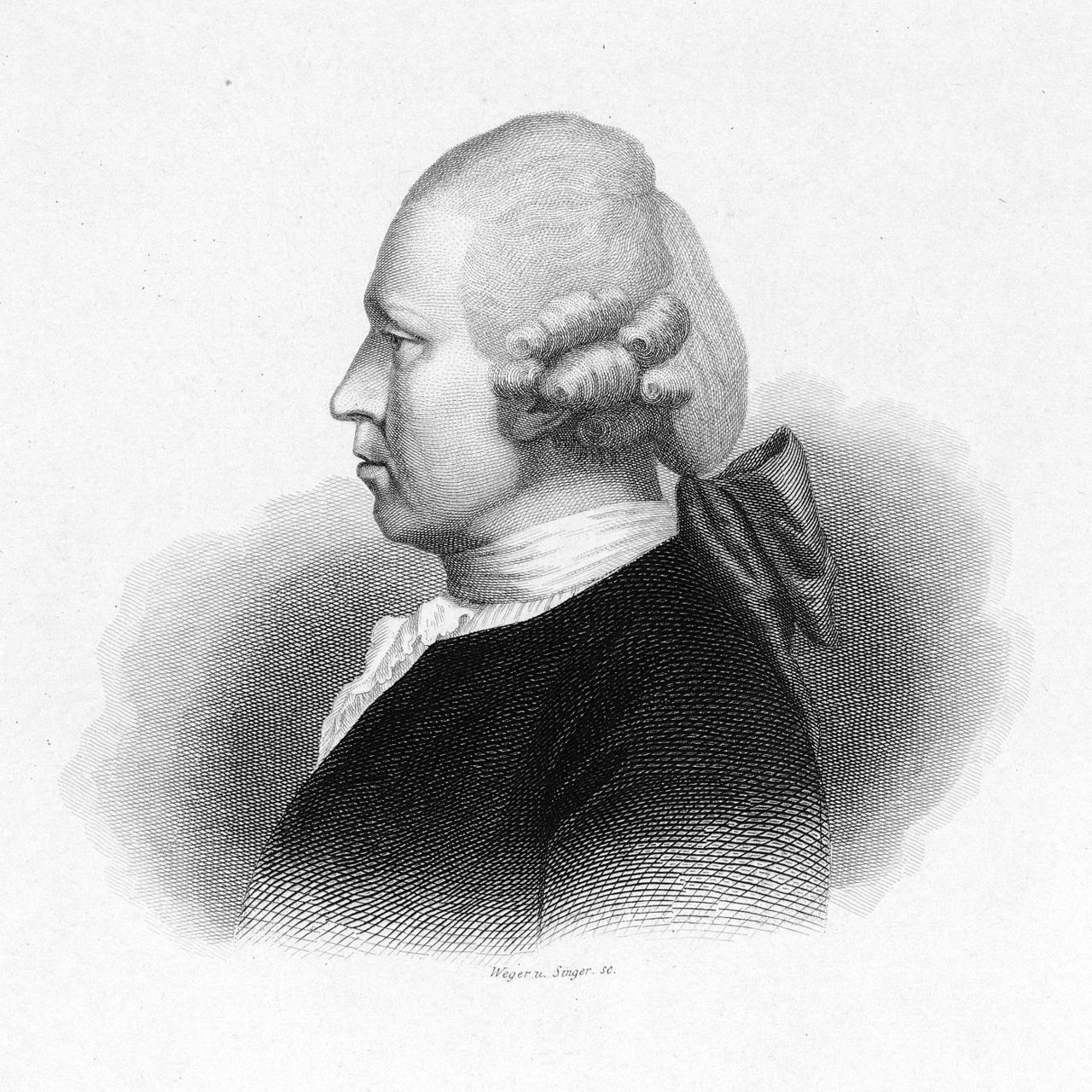
Johann Paul Singer · This file comes from Gallica Digital Library and is available under the digital ID btv1b84210050 · Public domain
- Born
- 1728 · Osiek Łużycki.
- Died
- 1804 · Leipzig.
- Nationality
- Germany
- Occupation
- composer · conductor · choir director · musicologist · music historian · music critic · independent publisher · music director
- Fields
- opera
- Movements
- Baroque music · First Viennese School
- Education
- Leipzig University · Kreuzschule
- Teachers
- Gottfried August Homilius
- Languages
- German
VALÉORINE Encyclopedia
VALÉORINE documentary reading
Documentary summary
Illustration — Hiller, c. 1850 Johann Adam Hiller (25 December 1728 – 16 June 1804) was a German composer, conductor and writer on music, regarded as the creator of the Singspiel, an early form of German opera. In many of these operas he collaborated with the poet Christian Felix Weiße.
Admitted source layer · organised and presented by VALÉORINE
Note VALÉORINE
No house-authored Note is published until its assertions and sources pass the VALÉORINE evidence contract. The documentary article remains available in full while that enrichment is being consolidated.
Documentary enrichment in progress · no unsupported statement published
Reference Check
Propose documentary evidence for Johann Adam Hiller. A contribution is never written directly as fact: identity, source, rights and evidence gates still decide.
Sign in to contribute
Documentary evidence
Evidence Panel
technical hold · checked 25 September 2026
- Identity
- resolved
- Independent source families
- 0
- Admitted assertions
- 0
- Open conflicts
- 0
Authority files
gnd · 1025123433 · museum · 30cfaebd-696e-4d83-8015-7c45b862a724 · wikidata · Q432299 · wikipedia · Johann Adam Hiller
In this article
Biography
Biography
Hiller was a teacher who encouraged musical education for women, his pupils including Elisabeth Mara and Corona Schröter.[1] He was Kapellmeister of Abel Seyler's theatrical company, and became the first Kapellmeister of the Leipzig Gewandhaus Orchestra.
Johann Adam Hiller studied at Leipzig University and Kreuzschule. Training under Gottfried August Homilius is recorded. Gertrud Elisabeth Mara, Christian Gottlob Neefe and Johann Samuel Schröter are recorded as having studied under Johann Adam Hiller. The recorded working language is German. Subjects and genres recorded for the work are opera. Positions recorded include chapelmaster.
By the death of his father in 1734, Hiller was left dependent to a large extent on the charity of friends.[2] He came from a musical family,[3] and also learned the basics of music from a school master in his home town, Wendisch-Ossig. From 1740 to 1745, he was a student at the Gymnasium in Görlitz, where his fine soprano voice earned him free tuition. In 1746 he went to study at the famous Kreuzschule in Dresden. There he took keyboard and basso continuo lessons with Gottfried August Homilius. In 1751, he enrolled in Leipzig University to study law, supporting himself by giving music lessons, and also by performing at concerts both on the flute and as a singer. Hiller immersed himself in the rich musical life of the town, and gradually adopted music as his sole profession. He took an active role in the Großes Concert, which was the leading concert undertaking in Leipzig. During that time he wrote several symphonies, church cantatas, and arias, as well as a fragmentary Singspiel entitled Das Orackle. Hiller also published an essay on the Mimesis of Nature in Music (Abhandlung über die Nachahmung der Natur in der Musik) in 1754. That year he got his first break when he became steward and tutor to the son of Count Brühl in Dresden. He accompanied the Count to Leipzig in 1758. He remained in that position until 1760 when health problems (depression) forced him to resign. It was during his stay there that he conceived the idea of reviving some subscription concerts, an attempt which ultimately led to the founding of the Leipzig Gewandhaus concerts of which he was the first conductor. Back in Leipzig, Hiller became the director of the Großes Concert, a position he held until 1771. That year he founded a singing school. Four years later, Hiller founded his own concert society, the Musikübende Gesellschaft. In his Leipzig school, he trained young musicians in singing and playing instruments. Two of his most famous students were Corona Schröter and Gertrud Elisabeth Mara née Schmeling, both acclaimed singers. He also taught organist and composer Daniel Gottlob Türk. In 1778 Hiller was appointed music director at the Paulinerkirche, the church of Leipzig University. During that time he also organized Concerts spirituels for Lent. To Hiller has been given the credit of being the originator of the Singspiel, the beginning of German comedy opera as distinct from the French and Italian developments. The most important of his operas were: Lottchen am Hofe (Lottie at court, 1760), Der Teufel ist los (The devil is loose, 1768), and Poltis, oder Das gerettete Troja (Poltis, or Troy rescued, 1782). The lyrics of all his Singspiele were of considerable musical value, and were long popular. Among his sacred compositions are: A Passion Cantata, Funeral Music in Honor of Hasse, a setting of the one hundredth Psalm; and a few symphonies. In the 1780s he acquired new positions with increased alacrity. In 1781 he became conductor of the Gewandhaus concerts. During the same year he visited the court of the Duke of Courland in Mitau, a journey that resulted in Hiller's appointment as Kapellmeister there four years later. In addition to his posts at the Gewandhaus and the Paulinerkirche, in 1783 he also became the music director of the Neukirche which made him a top authority on music in Leipzig. However, when taking up his new job in Mitau in 1785 he resigned all his posts in Leipzig. Due to the unstable political situation at the court of Courland he resigned from his position there after only one year. Since he no longer had any occupation in Leipzig he had to organize concerts to earn his living, but he was able to secure for himself the post of music director of the city of Breslau in 1787. He spent two years in Breslau and returned to Leipzig in 1789 to become cantor at the Thomaskirche, conducting the Thomanerchor, a position filled by Johann Sebastian Bach before. Hiller held the post until 1801 when he resigned due to his age. In addition, Hiller carried out notable work as an editor and publisher of other composers' output, and wrote considerably concerning musical topics. Indeed, he was one of the most important German musical scholars and writers of the eighteenth century. In 1803 he arranged and edited the score of Mozart's Der Messias, a version of Handel's Messiah.[4] He died at the age of 75 in Leipzig in 1804. He was the father of the composer Friedrich Adam Hiller (c. 1767–1812), but he was not related to the musician Ferdinand Hiller.
Operas
Operas
A theme from Hiller's opera Der Aerndtekranz (1771) was the basis for Max Reger's orchestral Variations and Fugue on a Theme by Hiller (1907).
Literary production
Literary production
Hiller's major contribution in this field include the Wöchentliche Nachrichten, a music journal in which he published reviews of performances, new music publications, and essays on various music related topics. From his articles in this journal it becomes clear that Hiller was open to new trends in music, and that he preferred Hasse over J. S. Bach and Gluck. Writings of Hiller on aesthetic issues include the Abhandlung über die Nachahmung der Natur in der Musik (1754) and Über die Musik und deren Wirkungen (1781), which is a translation from Michel Paul Guy de Chabanon's Observations sur la musique. As a historian, Hiller published a series of anecdotes and biographies, the Anecdoten zur Lebensgeschichte großer Regenten und berühmter Staatsmänner and Lebensbeschreibungen berühmter Musikgelehrten und Tonkünstler neuerer Zeit and the Lebensbeschreibungen berühmter Musikgelehrten und Tonkünstler neuerer Zeit. The majority of his writings concern pedagogy. In these publications Hiller presents himself as a highly competent teacher who regarded knowledge of music an essential part of everyone's education.
Identity
Identity
Johann Adam Hiller is recorded as composer, conductor, choir director, musicologist and music historian. Within the Encyclopedia. Connected to 1 other published record in the VALÉORINE Encyclopedia.

Johann Adam Hiller, Saxonia Museum fuer saechsische Vaterlandskunde IV 40
Museum für saechsische Vaterlandskunde · Google Books
Life and career
Dated record
Life and career
The full dated record · 2 entries
1728
Johann Adam Hiller born at Osiek Łużycki.
1804
Johann Adam Hiller died at Leipzig.
Places
Named by the record
Places
Only places the record itself states, plotted where the house gazetteer settles their coordinates. Nothing is inferred from a name or a nationality.
DE.
Country
Osiek Łużycki.
Birth place
Leipzig.
Death place
Writings
• "Abhandlung über die Nachahmung der Natur in der Musik" in Friedrich Wilhelm Marpurg: Historisch-kritische Beyträge zur Aufnahme der Musik, vol. 1 (Berlin, 1754) • Anecdoten zur Lebensgeschichte großer Regenten und berühmter Staatsmänner (Leipzig, 1766–72) • As an editor: Wöchentliche Nachrichten und Anmerkungen die Musik betreffend (Leipzig, 1766–70) • Anweisung zur Singekunst in der deutschen und italienischen Sprache (Frankfurt and Leipzig, 1773) • Musikalisches Handbuch für die Liebhaber des Gesanges und Claviers (Leipzig, 1773) • Anweisung zum musikalisch-richtigen Gesange (Leipzig, 1774, enlarged 1798) • Exempel-Buch der Anweisung zum Singen (Leipzig, 1774) • Anweisung zum musikalisch-zierlichen Gesange (Leipzig, 1780) • Lebensbeschreibungen berühmter Musikgelehrten und Tonkünstler neuerer Zeit (Leipzig, 1784). Includes autobiography. • Über Metastasio und seine Werke (Leipzig, 1786) • Nachricht von der Aufführung des Händelschen Messias, in der Domkirche zu Berlin den 19. May 1786(Berlin, 1786) • Fragmente aus Händels Messias, nebst Betrachtungen über die Aufführung Händelscher Singcompositionen (Leipzig, 1787) • Über Alt und Neu in der Musik (Leipzig, 1787) • Was ist wahre Kirchenmusik? (Leipzig, 1789) • Co-authored with J. A. Hasse: Beyträge zu wahrer Kirchenmusik (Leipzig, 2/1791) • Kurze und erleichterte Anweisung zum Singen (Leipzig, 1792) • Anweisung zum Violinspielen für Schulen und zum Selbstunterrichte (Leipzig, 1792) • Erinnerungen gegen das Melodien-Register in Freyes kleiner Lieder-Konkordanz (Leipzig, 1798)
Primary material
Documents and archives
reference work
- Wikidata, structured authority record Q432299: Johann Adam Hiller
Reputable secondary · Wikimedia Foundation
- “Johann Adam Hiller”, English Wikipedia, consulted as further reading
Reputable secondary · Wikipedia
Institutional database
- MusicBrainz artist record for Johann Adam Hiller
Scholarly · MetaBrainz Foundation
authority file
- Gemeinsame Normdatei 1025123433, Musikschulverein "Johann Adam Hiller".
Unverified · Deutsche Nationalbibliothek
Notes from the source article
Cited by Wikipedia
Notes from the source article
These works are cited by the source article, in its own numbering. They are recorded as its citations, not as sources VALÉORINE has verified.
- 1.Bowers. Women Making Music: The Western Art Tradition, 1150–1950. University of Illinois Press. 1986. 0-252-01204-6.
- 2.Hiller, Johann Adam.
- 3.1905.
- 4.Towe, Teri. George Frideric Handel: Messiah - Arranged by Mozart. Classical Net. 1996.
Bibliography printed in the source article · 7
- Thomas Bauman: North German Opera in the Age of Goethe (Cambridge, 1985).
- Georgy Calmus: Die ersten deutschen Singspiele von Standfuss und Hiller (Leipzig, 1908).
- Kyoko Kawada: Studien zu den Singspielen von Johann Adam Hiller (1728–1804), diss., University of Marburg, 1969.
- Carl Naumann: Johann Adam Hiller: eine bescheidene Würdigung seiner Verdienste als Mensch, Künstler und Schulmann (Leipzig, 1804).
- Karl Peiser: Johann Adam Hiller (Leipzig, 1894).
- Johann Friedrich Reichardt: Briefe eines aufmerksamen Reisenden die Musik betreffend, 1st vol. (Frankfurt and Leipzig, 1774), 2nd vol. (Frankfurt and Breslau, 1776).
- Friedrich Rochlitz: "Zum Andenken Johann Adam Hillers", in: Allgemeine musikalische Zeitung, vol. 6 (1803–4), pp. 845–58, 861–72.
References
Citations
References
Each reference names the institution holding it, so a reader may go to the document itself.
Institutional database
MusicBrainz artist record for Johann Adam HillerMetaBrainz Foundation
Verifiedauthority file
Gemeinsame Normdatei 1025123433, Musikschulverein "Johann Adam Hiller".Deutsche Nationalbibliothek
Partially resolvedreference work
Wikidata, structured authority record Q432299: Johann Adam HillerWikimedia Foundation
Partially resolvedreference work
Partially resolved
Further particulars
Held on the record
Further particulars
Open the remaining particulars
Johann Adam Hiller studied at Leipzig University and Kreuzschule. He trained under Gottfried August Homilius. Each of those relationships is stated by the authority record rather than inferred from style.
(MusicBrainz artist record for Johann Adam Hiller) • Country: DE (MusicBrainz artist record for Johann Adam Hiller) • Described As: German composer (MusicBrainz artist record for Johann Adam Hiller) • Kind Of Artist: person (MusicBrainz artist record for Johann Adam Hiller) • Born: Johann Adam Hiller was born in 1728 at Osiek Łużycki.
The Encyclopedia exists whether or not anything is for sale. Corrections are recorded rather than overwritten, and every version of this record is kept. Published 14 August 2026.
Elsewhere in Music memorabilia
42,108 published records in this field, each with its sources named.
- Johan WohlertPerson
- Johana HarrisPerson
- Johann Abraham Peter SchulzPerson
- Johann Adam BirkenstockPerson
- Johann Adam ReinckenPerson
- Johann Adolf HassePerson
- Johann Adolf ScheibePerson
- Johann Aegidius BachPerson
Best supported in this field
For owners
Own a work by Johann Adam Hiller?
A specialist will read what you send and tell you what the house can establish, what it cannot, and whether the object is suited to sale. There is no charge and no obligation. The object stays with you throughout; nothing is shipped to us unless it is arranged in writing beforehand.