
Hayashi Shihei
August 6, 1738 - July 28, 1793 was a Japanese military scholar and a retainer of the Sendai Domain. His name is sometimes transliterated (according to the Sino-Japanese reading) as Rin Shihei.
Also recorded as Rin Shihei
Hayashi Shihei
user:Akaniji · CC BY-SA 3.0
- Name
- Hayashi Shihei
- Born
- 6 August 1738
- Birthplace
- Edo, Japan
- Died
- 28 July 1793
- Place of death
- Sendai, Miyagi, Japan
- Occupation
- Scholar
- Nationality
- Japan.
- Known for
- Sangoku Tsūran Zusetsu and Kaikoku Heidan.
- Languages
- Japanese.
VALÉORINE Encyclopedia
VALÉORINE documentary reading
Documentary summary
August 6, 1738 - July 28, 1793 was a Japanese military scholar and a retainer of the Sendai Domain. His name is sometimes transliterated (according to the Sino-Japanese reading) as Rin Shihei.
Admitted source layer · organised and presented by VALÉORINE
Note VALÉORINE
Hayashi Shihei (1738–1793) was a cartographer, copper engraver and local government officer, among other activities, of Japanese nationality. The cartographer was born in Edo and died in Sendai.
Among the works are Kaikoku Heidan and Sangoku Tsūran Zusetsu. Languages used include Japanese.
Composed from admitted, traceable facts · 26 September 2026
VALÉORINE
Reference Check
Propose documentary evidence for Hayashi Shihei. A contribution is never written directly as fact: identity, source, rights and evidence gates still decide.
Sign in to contribute
Documentary evidence
Documentary basis
Authority files
gnd · 124834817 · wikidata · Q382306 · wikipedia · Hayashi Shihei
In this article
Key facts
Key facts
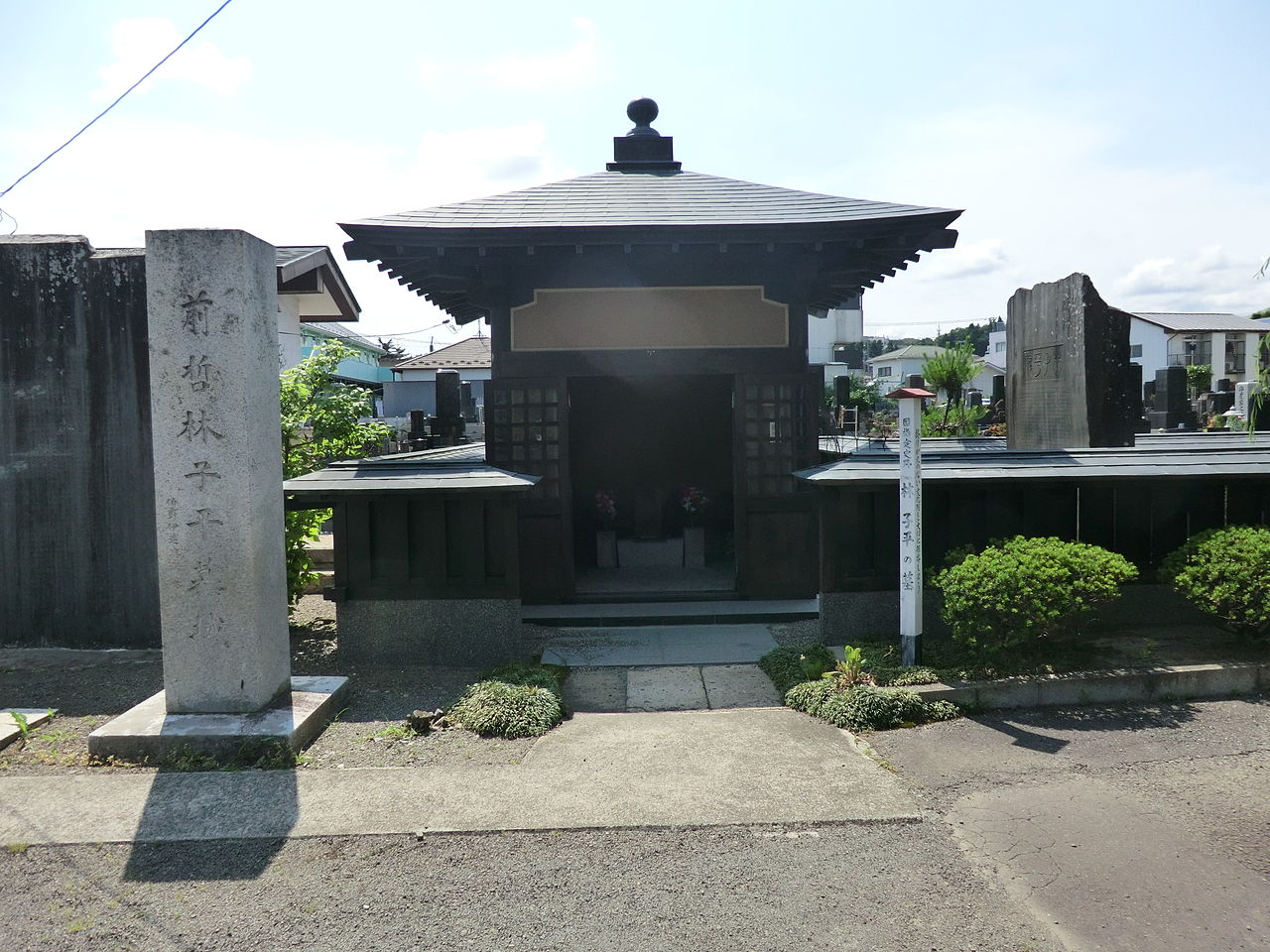
• Name — Hayashi Shihei • Born — 6 August 1738 • Birthplace — Edo, Japan • Died — 28 July 1793 • Place of death — Sendai, Miyagi, Japan • Occupation — Scholar • Subject — Military strategy, geography Hayashi • Illustration — Hayashi Shihei grave, National Historic Site
Biography
Biography
Hayashi was born in Edo as the second son of Hayashi Gonhyoue Yoshimichi, a 600 koku hatamoto who served the Tokugawa shogunate as commissioner for documents. However, when Hayashi was only three years old, his father was expelled for some reason and became a ronin. Hayashi and his brother were brought up by his uncle Hayashi Jyūgo, a physician. However, Hayashi had an elder sister, Kiyo, in the service of Date Yoshimura at the Date clan residence in Edo. She became the concubine of the 6th daimyō of Sendai Domain, Date Munemura. Through her influence, Hayashi Jyūgo received an appointment as official doctor to Sendai Domain with a stipend of 150 koku, and Hayashi's brother Hayashi Kazen was adopted as his heir. On Date Yoshimura's death, they moved to Sendai; however, Hayashi himself had no official post or stipend, and remained unemployed within the household. He wrote a poem called "Six No's", which reads: "I have no parents, no wife, no son, no block for printing, no money, and I wish for 'no death'." However, Hayashi was not idle. He maintained an active correspondence with many of the leading rangaku scholars, economists and military scientists of the day. He also travelled to Nagasaki in 1777 where he was especially impressed with the size and strength of the Dutch ships, and learned of Russian intentions to advance south from Siberia into Asia from the Dutch Opperhoofd. The caused him to make a journey to Matsumae in the north, and he increasing became aware of the weaknesses of the country's coastal defences, and ignorance of the outside world. In 1786, he published Sangoku Tsūran Zusetsu (Illustrated Description of Three Countries), describing in detail Japan's geopolitical position in relation to Korea, Ryukyu and Ezo. He raised concerns that China may one day attempt to invade Japan, as had been attempted in the Kamakura period, and also emphasized the need for Japan to populate and develop its northern frontier in Hokkaido. In 1787, he published Kaikoku Heidan (i.e. Military Defense of a Maritime Nation), a 16-volume work in which he stressed Japan's vulnerability from the sea and need for Japan to adopt Western military science and the re-education of the samurai. He complained of the lack of organized drill exercises, and stressed the importance of chōren, or teamwork drill, rather than mere individual martial training. He gave technical descriptions about shipbuilding, cannons and other military designs. He especially was critical of the Shogunate's sakoku national isolation policy. The work generated great interest, but was banned in May 1792, on the grounds that national security matters were being discussed without official consent. Hayashi was placed under house arrest. He died the following year. Together with Takayama Hikokurō and Gamō Kunpei, Hayashi is known as one of the "Three Excelling Men of the Kansei Period" (Kansei no san-kijin 寛政の三奇人).
Grave
Grave
Hayashi's grave is at the Buddhist temple of Ryuun-in in Aoba-ku, Sendai. It was proclaimed a National Historic Site in 1942. The surrounding neighbourhood was renamed Shihei-chō in 1967. A plaque commemorating his accomplishments can also be found at the site of Sendai Castle.
Identity
Identity
Hayashi Shihei is recorded as political scientist, cartographer, copper engraver and local government officer.

Hayashi Shihei Grave, Sendai, Miyagi, Japan
Rikita · Rikita at Japanese Wikipedia · Own work by the original uploader (Original text: 投稿者自身による撮影)

龍雲院 (仙台市青葉区)。林子平の墓。
運動会プロテインパワー
Life and career
Dated record
Life and career
The full dated record · 2 entries
1738
Hayashi Shihei born at Edo.
1793
Hayashi Shihei died at Sendai.
Places
Named by the record
Places
Only places the record itself states, plotted where the house gazetteer settles their coordinates. Nothing is inferred from a name or a nationality.
Edo.
Birth place
Sendai.
Death place
Primary material
Documents and archives
reference work
- “Hayashi Shihei”, English Wikipedia, consulted as further reading
Reputable secondary · Wikipedia
- Wikidata, structured authority record Q382306: Hayashi Shihei
Reputable secondary · Wikimedia Foundation
scholarly publication
- Le Kaikoku heidan (De la défense des pays maritimes) de Hayashi Shihei. Présentation et traduction de la préface, Ebisu, 2007
Scholarly · Crossref registry · 2007
authority file
- Gemeinsame Normdatei 124834817, Hayashi, Shihei.
General reference · Deutsche Nationalbibliothek
Notes from the source article
Cited by Wikipedia
Notes from the source article
These works are cited by the source article, in its own numbering. They are recorded as its citations, not as sources VALÉORINE has verified.
- 1.Jansen, Marius. China in the Tokugawa World. Harvard University Press. 88–89. 1992. 9780674184763.
- 2.Jansen, Marius. The Making of Modern Japan. Harvard University Press. 262. 2002. 9780674009912.
- 3.Agency for Cultural Affairs - Cultural Heritage Online
Bibliography printed in the source article · 3
- Boxer, C.R. (1932). Rin Shihei and his picture of a Dutch East-India ship, 1782. Tokyo: Asiatic Society of Japan.
- Lederer, Friedrich (Transl./Ed.) Diskurs über die Wehrhaftigkeit einer Seenation München, Iudicium, 2002 (Diss. LMU Munich) First Translation of Kaikoku Heidan in a foreign language, i.e. German.
- Keene, Donald (1952). The Japanese Discovery of Europe, 1720 - 1830. London: Stanford University Press.
References
Citations
References
Each reference names the institution holding it, so a reader may go to the document itself.
scholarly publication
Le Kaikoku heidan (De la défense des pays maritimes) de Hayashi Shihei. Présentation et traduction de la préface, Ebisu, 2007Crossref registry
Institutional witnessreference work
Secondary witnessauthority file
Gemeinsame Normdatei 124834817, Hayashi, Shihei.Deutsche Nationalbibliothek
Secondary witnessreference work
Wikidata, structured authority record Q382306: Hayashi ShiheiWikimedia Foundation
Secondary witness
The Encyclopedia exists whether or not anything is for sale. Corrections are recorded rather than overwritten, and every version of this record is kept. Published 16 August 2026.
Elsewhere in Maps and atlases
1,180 published records in this field, each with its sources named.
- Hans Conrad Escher von der LinthAuthor
- Hans MeyerAuthor
- Harry BeckAuthor
- Hartmann SchedelAuthor
- Heinrich BerghausAuthor
- Heinrich BüntingAuthor
- Heinrich C. BerannAuthor
- Heinrich FreyerAuthor
Best supported in this field
For owners
Own a work by Hayashi Shihei?
A specialist will read what you send and tell you what the house can establish, what it cannot, and whether the object is suited to sale. There is no charge and no obligation. The object stays with you throughout; nothing is shipped to us unless it is arranged in writing beforehand.