
Gerard van Honthorst
Gerard "Gerrit" van Honthorst (4 November 1592 – 27 April 1656) was a Dutch Golden Age painter who became known for his depiction of artificially lit scenes, eventually receiving the Italian nickname Gherardo delle Notti ("Gerard of the Nights"). Early in his career he visited Rome, where he had great success painting in a style influenced by Caravaggio. Following his return to the Netherlands he became a leading portrait painter.
Also recorded as Gherardo delle Notti · Gherardo delle Notte · Gherardo Fiammingo · Gerard Hermansz. van Honthorst
Gerard van Honthorst
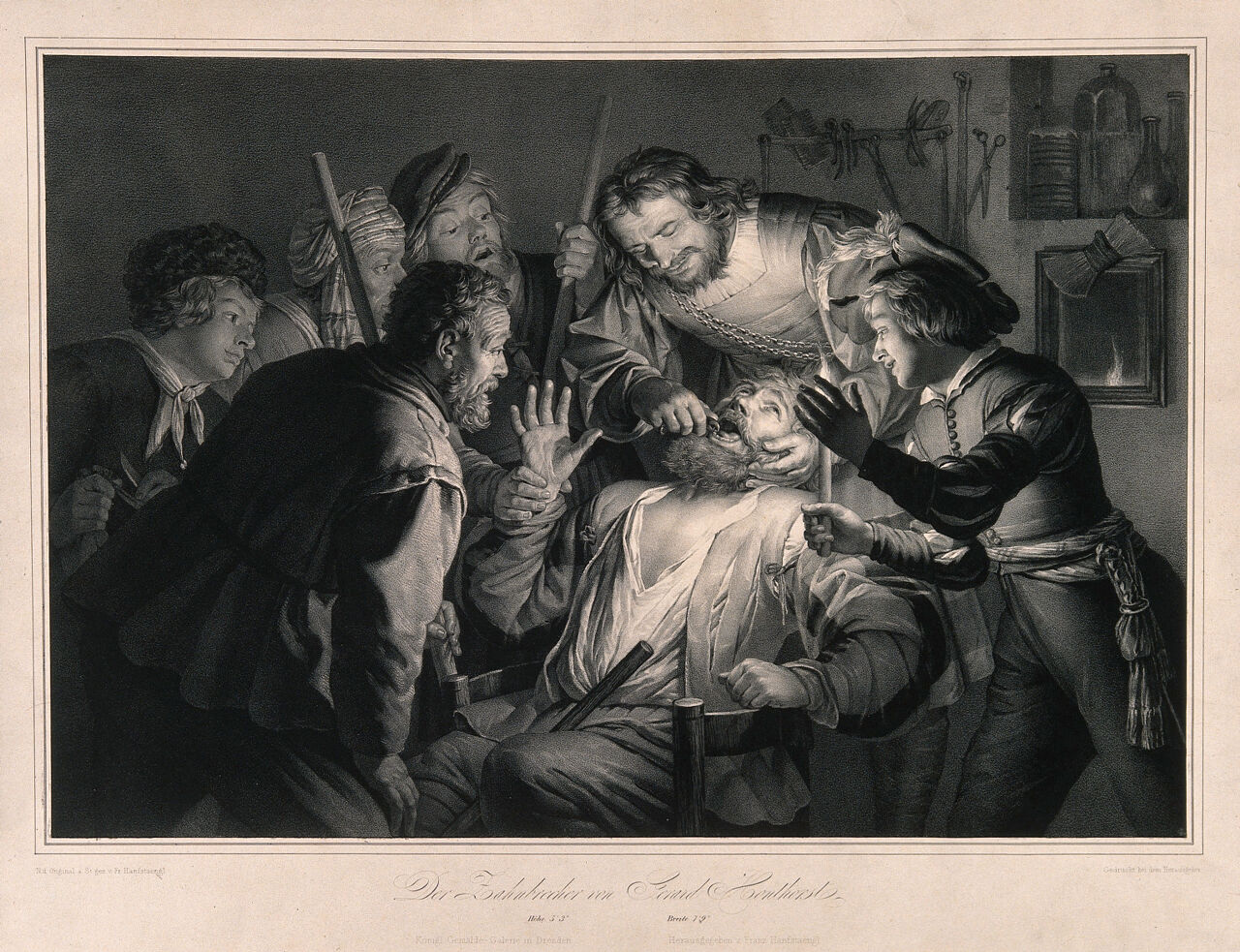
Gerard van Honthorst · Wellcome Collection, London · Wellcome Collection · Public Domain Mark
- Name
- Gerard van Honthorst
- Born
- 4 November 1592
- Birthplace
- Utrecht, Dutch Republic
- Died
- 27 April 1656 4 November 1592
- Education
- Abraham Bloemaert
- Known for
- Painting
- Movement
- Utrecht Caravaggism Classicism
- Nationality
- Dutch Republic
- Occupation
- painter · architectural drafter · printmaker · visual artist
- Fields
- genre painting · portrait · painting · mythological painting · history painting · Christian art
- Movements
- Utrecht Caravaggism · Dutch Golden Age painting
VALÉORINE Encyclopedia
VALÉORINE documentary reading
Documentary summary
Gerard "Gerrit" van Honthorst (4 November 1592 – 27 April 1656) was a Dutch Golden Age painter who became known for his depiction of artificially lit scenes, eventually receiving the Italian nickname Gherardo delle Notti ("Gerard of the Nights"). Early in his career he visited Rome, where he had great success painting in a style influenced by Caravaggio. Following his return to the Netherlands he became a leading portrait painter.
Admitted source layer · organised and presented by VALÉORINE
Note VALÉORINE
Gerard van Honthorst (1592–1656) was an architectural drafter, painter and printmaker, among other activities, of Dutch nationality. The architectural drafter was born and died in Utrecht.
Gerard van Honthorst was a member of Honthorst Brothers and worked in Florence, London and Rome, among others. Activity centred on painting. Gerard van Honthorst was associated with Dutch Golden Age painting and Utrecht Caravaggism.
Among the works are The Adoration of the Shepherds and The Procuress. The work spans Christian art, genre painting and history painting, among others. Languages used include Dutch.
Composed from admitted, traceable facts · 26 September 2026
VALÉORINE
Reference Check
Propose documentary evidence for Gerard van Honthorst. A contribution is never written directly as fact: identity, source, rights and evidence gates still decide.
Sign in to contribute
World of VALÉORINE
Documentary connections
Only confirmed graph relationships appear here. Images are shown only when their identity and reuse rights both pass the documentary gate.

Documentary evidence
Evidence Panel
not yet certified
- Identity
- resolved
- Independent source families
- 0
- Admitted assertions
- 0
- Open conflicts
- 0
Authority files
wikidata · Q314548 · wikipedia · Gerard van Honthorst
In this article
Biography
Biography
Van Honthorst's contemporaries included Utrecht painters Hendrick ter Brugghen and Dirck van Baburen.
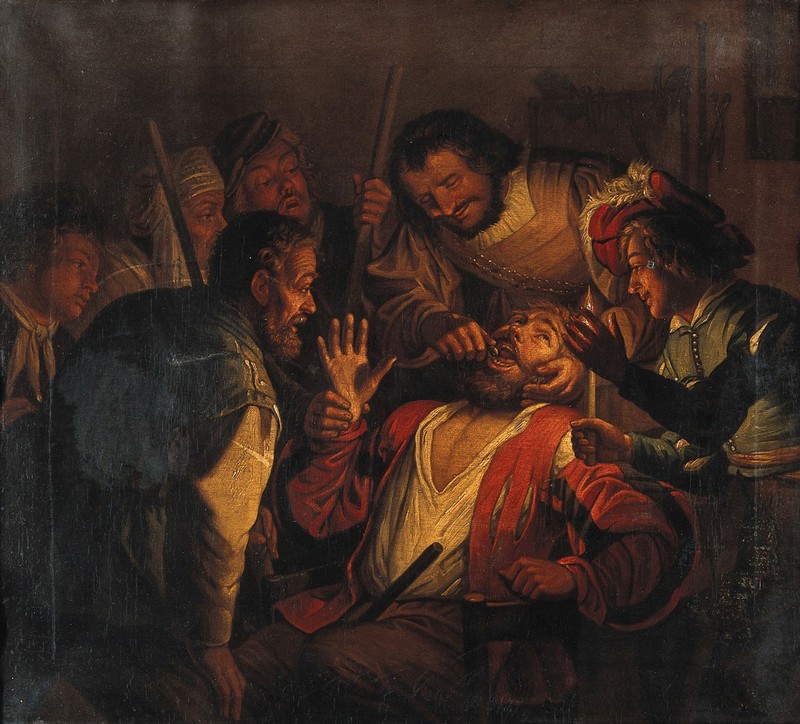
A surgeon extracting a tooth. Oil painting after Gerrit Honthorst., by Gerard van Honthorst
Gerard van Honthorst · Wellcome Collection, London · Wellcome Collection
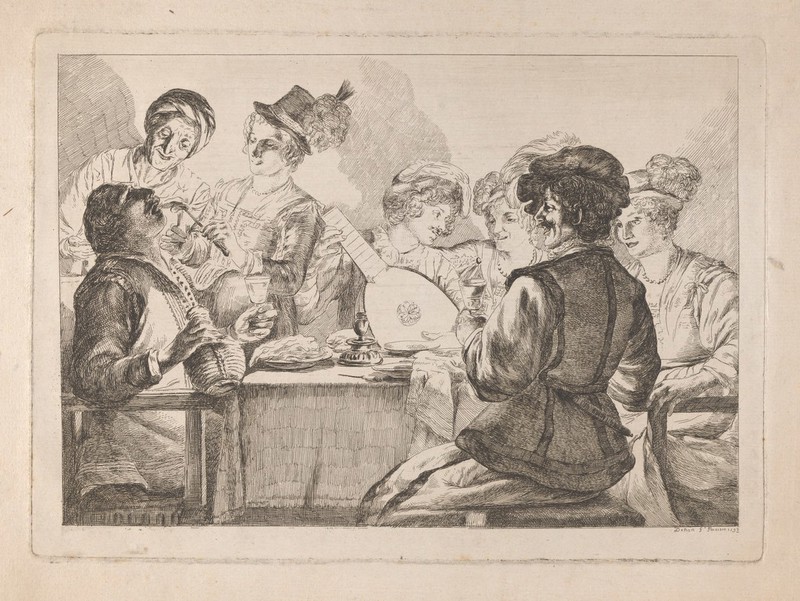
A dinner party: a young man plays the lute while a young woman puts a piece of meat into the mouth of the man at the head of the table. Etching by Vivant Denon, 1793, after G. Honthorst., 1793, by Gerard van Honthorst
Gerard van Honthorst · Wellcome Collection, London · Wellcome Collection
Key facts
Key facts
• Name — Gerard van Honthorst • Born — 4 November 1592 • Birthplace — Utrecht, Dutch Republic • Died — 27 April 1656 4 November 1592 • Place of death — Utrecht, Dutch Republic • Education — Abraham Bloemaert • Known for — Painting • Notable Works — The Matchmaker • Movement — Utrecht Caravaggism Classicism • Patrons — Vincenzo Giustiniani
Early life
Early life
• Illustration — Granida and Daifilo, 1625 • Illustration — The Concert, 1623, National Gallery of Art (Washington, D.C.) • Illustration — The Matchmaker (1625), showing the use of Carravagesque lighting effects • Illustration — Musical Group on a Balcony (1622) Van Honthorst was born in Utrecht, the son of a decorative painter, and trained under his father, and then under Abraham Bloemaert.
Italy
Italy
Having completed his education, Honthorst went to Italy, where he is first recorded in 1616. He was one of the artists from Utrecht who went to Rome at around this time, all of whom were to be deeply influenced by the recent art they encountered there. They were named the Utrecht caravaggisti. The other three were Dirk van Baburen, Hendrick ter Bruggen and Jan van Bijlert. In Rome he lodged at the palace of Vincenzo Giustiniani, where he painted Christ Before the High Priest, now in London's National Gallery. Giustiniani had an important art collection, and Honthorst was especially influenced by the contemporary artists, including Caravaggio, Bartolomeo Manfredi and the Carracci. He was particularly known for his depiction of artificially lit scenes. Cardinal Scipione Borghese became another important patron, securing important commissions for him at San Silvestro Della Mariro, Montecompatri, and at Santa Maria della Vittoria, Rome. He also worked for Cosimo II de' Medici, Grand Duke of Tuscany.
Return to Utrecht
Return to Utrecht
Honthorst returned to Utrecht in 1620, and went on to build a considerable reputation both in the Dutch Republic and abroad. In 1623, the year of his marriage, he was president of the Guild of St. Luke in Utrecht. He soon became so fashionable that Sir Dudley Carleton, then English envoy at The Hague, recommended his works to Thomas Howard, 21st Earl of Arundel. In 1626 Honthorst hosted a dinner for Peter Paul Rubens, and painted him as the honest man sought for and found by Diogenes.
Royal patronage
Royal patronage
Queen Elizabeth of Bohemia, sister of Charles I of England and Electress Palatine, then in exile in the Netherlands, commissioned Honthorst as a painter and employed him as a drawing-master for her children. Through her he became known to Charles, who invited him to England in 1628. There he painted several portraits, and a vast allegory, now at Hampton Court Palace, of Charles and his queen Henrietta Maria as Diana and Apollo in the clouds receiving the Duke of Buckingham as Mercury and guardian of the King of Bohemia's children. He painted a more intimate group portrait of The Four Eldest Children of the King of Bohemia, (also at Hampton Court) in which the two eldest are depicted as Diana and Apollo. After his return to Utrecht, Honthorst retained the patronage of the English monarch, painting for him, in 1631, a large picture of the king and queen of Bohemia and all their children. At around the same time he painted some pictures illustrating the Odyssey for Lord Dorchester, and some showing incidents of Danish history for Christian IV of Denmark. He also painted a portrait of the King's daughter Leonora Christina Ulfeldt while she was in The Hague. His popularity in the Netherlands was such that he opened a second studio in The Hague, where he painted portraits of members of the court, and taught drawing. These large studios, where the work included making replicas of Honthorst's royal portraits, employed a large number of pupils and assistants; according to one pupil, Joachim von Sandrart, describing his experiences in the mid-1620s, Honthorst would have about 24 students at any one time, each paying 100 guilders a year for their education. His brother Willem van Honthorst (1594–1666) was also a portrait painter. Many of Willem's paintings were previously misattributed to Gerrit due to the similarity of their signatures. Willem was a pupil of Abraham Bloemaert, and was also taught by his own elder brother. In 1646 he went to Berlin, where he became court painter to Louise-Henriette, wife of the Elector Frederick William of Brandenburg. He returned to Utrecht in 1664.
Nickname
Nickname
Honthorst is often referred to as "Gherardo delle notti" ("Gerrit of the Nights") by modern Italians. However, the nickname does not actually appear in any known Italian sources dating before Honthorst's death. Surviving Italian documents from before 1656 refer to the artist as either "Gherardo Fiammingo" ("Gerrit the Fleming") or "Gherardo Hollandese" ("Gerrit the Dutchman"), emphasizing his foreignness rather than his trademark skill at rendering nocturnal lighting. It was only in the 18th century that the nickname "Gherardo delle notti" came into widespread use.
Gallery
Gallery
• Illustration — St. Peter Being Freed from Prison, 1616–1618, Berlin State Museums • Illustration — Adoration of the Child, 1620 • Illustration — Adoration of the Shepherds 1622, Wallraf-Richartz-Museum • Illustration — Christ before the High Priest, c. 1617, National Gallery, London • Illustration — Mocking of Christ by Gerard van Honthorst • Illustration — The Denial of Saint Peter, c. 1620 • Illustration — King David Playing the Harp • Illustration — The Happy Fiddler, 1623 Rijksmuseum Amsterdam • Illustration — Lute Player, 1624 • Illustration — The Happy Violinist with a Glass of Wine, 1624, Thyssen-Bornemisza Museum • Illustration — Woman with guitar 1631, Lviv National Art Gallery • Illustration — Woman Playing the Guitar • Illustration — Man with viola da gamba • Illustration — Merry Company • Illustration — Merry Musician with Violin under His Left Arm • Illustration — Supper with a Lute Player • Illustration — Solon and Croesus • Illustration — Portrait of William II (1626–50), prins of Oranje, and Maria Stuart (1631–60) • Illustration — The Steadfast Philosopher, 1623 Private collection • Illustration — Smiling Girl, a Courtesan, Holding an Obscene Image, 1625 • Illustration — Frederick Henry, Prince of Orange, 1650 • Illustration — The soldier and the girl • Illustration — Pendant portrait of Amalia van Solms-Braunfels • Illustration — Margareta Maria de Roodere and Her Parents (c. 1652) Centraal Museum, Utrecht • Illustration — Allegory of Painting (1648) Crocker Art Museum, Sacramento, California
Identity and overview
Identity and overview
The following is established of the heading itself. Institutional cataloguing adds that gerard van Honthorst is recorded as Dutch Republic.
Legacy
Honthorst was a prolific artist. His most attractive pieces are those in which he cultivates the style of Caravaggio, often tavern scenes with musicians, gamblers and people eating. He had great skill at chiaroscuro, often painting scenes illuminated by a single candle. Some of his pieces were portraits of the Duke of Buckingham and his family (Hampton Court), the King and Queen of Bohemia (Hanover and Combe Abbey), Marie de' Medici (Amsterdam Stadthuis), 1628, the Stadtholders and their Wives (Amsterdam and The Hague), Charles Louis and Rupert, Charles I's nephews (Louvre, St Petersburg, Combe Abbey and Willin), and Baron Craven (National Portrait Gallery, London). His early style can be seen in the Lute-player (1614) in the Louvre, the Martyrdom of St John in Santa Maria della Scala at Rome, or the Liberation of Peter in the Gemäldegalerie, Berlin. His 1620 The Adoration of the Shepherds in the Uffizi was destroyed in the Via dei Georgofili Massacre of 1993. Honthorst's 1623 The Concert was purchased for an undisclosed sum by the National Gallery of Art in Washington, D.C., from a private collection in France in November 2013. The painting had not been on view since 1795. The 1.23 by The Concert went on display for the first time in 218 years in a special installation at the National Gallery of Art's West Building on 23 November 2013. It remained there for six months before going on permanent display in the museum's Dutch and Flemish galleries.
Primary material
Documents and archives
authority record
- Wikidata, structured authority record Q314548: Gerard van Honthorst
Unverified · Wikidata
reference work
- “Gerard van Honthorst”, English Wikipedia, consulted as further reading
Reputable secondary · Wikipedia
Notes from the source article
Cited by Wikipedia
Notes from the source article
These works are cited by the source article, in its own numbering. They are recorded as its citations, not as sources VALÉORINE has verified.
- 1.Liedtke, Walter. Vermeer and the Delft School. The Metropolitan Museum of Art. 58. 2001. 0870999737.
- 2.Brown (1997), p.62
- 3.Brown (1997), p.32
- 4.Brown. The Genius of Rome 1592-1693. Royal Academy of Arts. 380. 2001.
- 5.Brown (1997), p.46
- 6.National Gallery of Scotland. James Graham, 1st Marquess of Montrose, 1612–1650. Royalist.
- 7.Papi, Gianni. Gherardo delle Notti : Gerrit Honthorst in Italia. Galleria degli Uffizi. 2015. 9788809805385.
- 8.Lincoln, Matthew. Sources for Gerrit van Honthorst's Italian Nickname. Source: Notes in the History of Art. 35. 3. 244–249. Spring 2016. 10.1086/686710.
- 9.Delavaux, Celine. The Impossible Museum: The Best Art You'll Never See. Prestel. 86–9. 2012. 9783791347158.
- 10.Boyle, Katherine. "National Gallery Acquires 'The Concert' by Dutch Golden Age Painter Honthorst." Washington Post. November 22, 2013. Accessed 22 November 2013.
Bibliography printed in the source article · 3
- Honthorst, Gerard van. 13. 663–664.
- Brown, Christopher. Utrecht Painters of the Dutch Golden Age. National Gallery. 1997. 1-85709-214-7.
- Filippo Baldinucci's Artists in biographies by Filippo Baldinucci, 1610–1670, p. 198 Internet Archive
References
Citations
References
Each reference names the institution holding it, so a reader may go to the document itself.
authority record
Partially resolvedreference work
Partially resolved
The Encyclopedia exists whether or not anything is for sale. Corrections are recorded rather than overwritten, and every version of this record is kept. Published 14 August 2026.
Elsewhere in Prints
4,138 published records in this field, each with its sources named.
- Gerard de JodeEngraver
- Gerard de LairesseEngraver
- Gérard EdelinckEngraver
- Gérard Ernest SchneiderEngraver
- Gerard VanderguchtEngraver
- Gerardus OorthuysEngraver
- Gerbrand van den EeckhoutEngraver
- Gerhard AltenbourgEngraver
Best supported in this field
For owners
Own a work by Gerard van Honthorst?
A specialist will read what you send and tell you what the house can establish, what it cannot, and whether the object is suited to sale. There is no charge and no obligation. The object stays with you throughout; nothing is shipped to us unless it is arranged in writing beforehand.