
François-Xavier Fabre
François-Xavier Fabre (fʁɑ̃swa ɡzavje fabʁ; 1 April 1766 – 16 March 1837) was a French painter of historical subjects.
Also recorded as Xavier Fabre · Baron François-Xavier Fabre · François-Xavier, Baron Fabre · Francois Fabre
François-Xavier Fabre
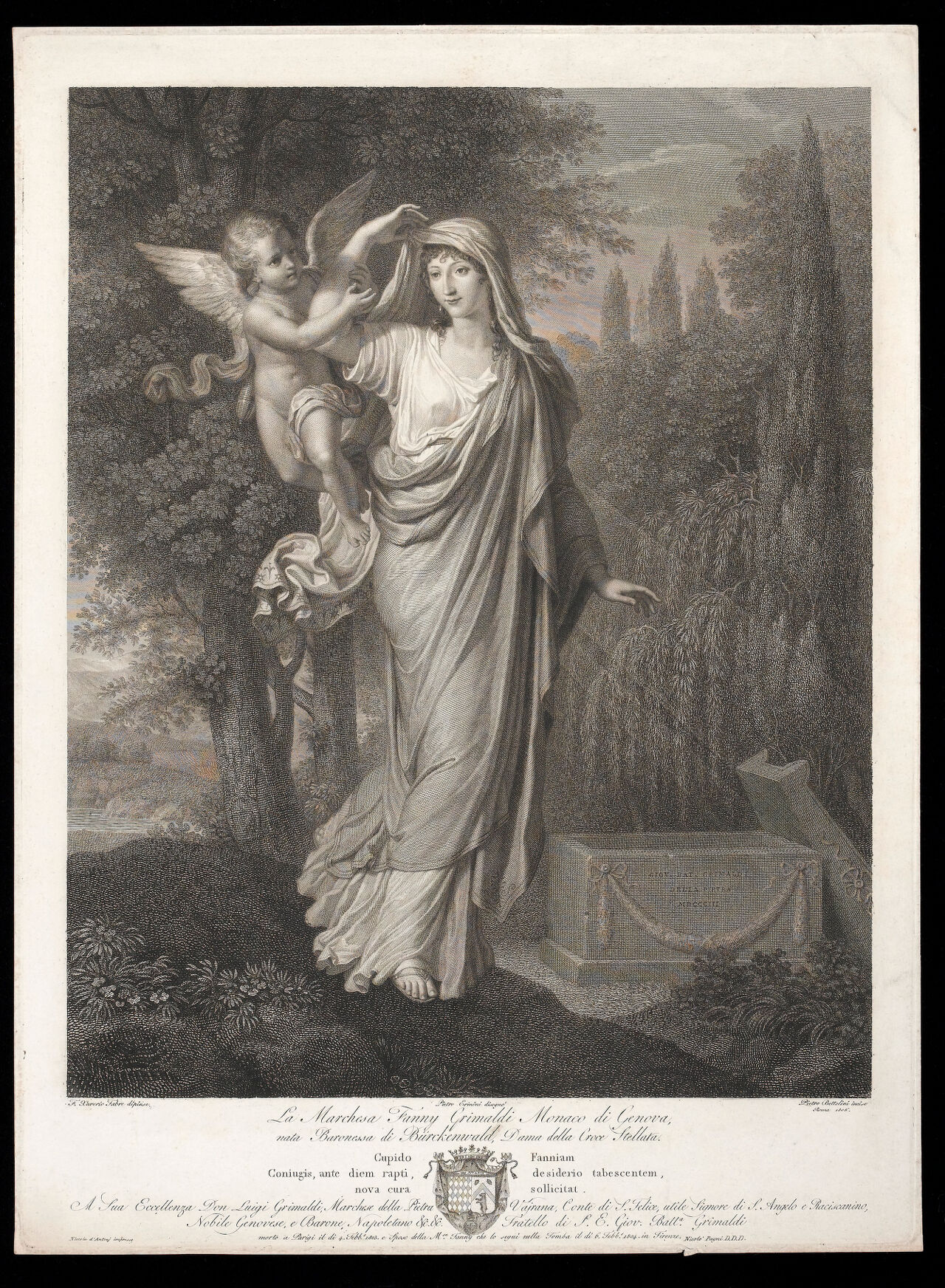
François-Xavier Fabre · Wellcome Collection, London · Wellcome Collection · Public Domain Mark
- Name
- François-Xavier Fabre
- Born
- 1 April 1766
- Birthplace
- Montpellier, France
- Died
- 16 March 1837
- Field
- Painting
- Nationality
- France.
- Occupation
- painter, art educator, art collector and philanthropist.
- Fields
- painting.
- Education
- Académie royale de peinture et de sculpture.
- Teachers
- Jacques-Louis David.
- Known for
- Portrait of Henri-Jacques-Guillaume Clarke, Comte d'Hunebourg and Duc de Feltre, Maréchal de l'Empire et Ministre de la Guerre, Portrait of a Man, Musée Fabre, Notice des tableaux et autres objets d'art exposés au Musée Fabre de Montpellier and 1830.
- Honours
- Officer of the Legion of Honour and Prix de Rome.
Reference Check
Propose documentary evidence for François-Xavier Fabre. A contribution is never written directly as fact: identity, source, rights and evidence gates still decide.
Sign in to contribute
World of VALÉORINE
Documentary connections
Only confirmed graph relationships appear here. Images are shown only when their identity and reuse rights both pass the documentary gate.
Documentary evidence
Documentary basis
Authority files
wikidata · Q726941 · wikipedia · François-Xavier Fabre
VALÉORINE Encyclopedia
The documentary record
Statements marked “Documentary record” are set in the article beside the passage they confirm. Each is read from the authority records of the institutions named here; select “Prove” to see the record it was read from, where in that record, and when.
Institutions cited
Bibliothèque nationale de France · Getty Union List of Artist Names
Complete reading chain (JSON)In this article
Biography
Biography
François-Xavier Fabre studied at Académie royale de peinture et de sculpture. Training under Jacques-Louis David is recorded. The recorded working language is French. The field of work recorded is painting. Subjects and genres recorded for the work are portrait. Places of work recorded in the authority are Montpellier and Florence. Positions recorded include director. Works named in the authority record are Portrait of Henri-Jacques-Guillaume Clarke, Comte d'Hunebourg and Duc de Feltre, Maréchal de l'Empire et Ministre de la Guerre, Portrait of a Man, Musée Fabre and Notice des tableaux et autres objets d'art exposés au Musée Fabre de Montpellier, 1830. Work by François-Xavier Fabre is recorded in the collections of Museo del Prado, Art Institute of Chicago, J. Paul Getty Museum, Uffizi Gallery and National Galleries Scotland. Distinctions recorded are Officer of the Legion of Honour and Prix de Rome.
Documentary record
François-Xavier Fabre was born in Montpellier, according to the Bibliothèque nationale de France and the Getty Union List of Artist Names. The Bibliothèque nationale de France records the fuller form Montpellier (Hérault). François-Xavier Fabre died in Montpellier, according to the Bibliothèque nationale de France and the Getty Union List of Artist Names. The Bibliothèque nationale de France records the fuller form Montpellier (Hérault).
Key facts
Key facts
• Name — François-Xavier Fabre • Born — 1 April 1766 • Birthplace — Montpellier, France • Died — 16 March 1837 • Place of death — Montpellier, France • Field — Painting
Documentary record
François-Xavier Fabre lived from 1 April 1766 to 16 March 1837 and was an architect, art collector, professor, engraver, etcher, draughtsman, portraitist, painter and printmaker. François-Xavier Fabre was born on 1 April 1766 and died on 16 March 1837.
Biography
Biography
Born in Montpellier, Fabre was a pupil of Jacques-Louis David, and made his name by winning the Prix de Rome in 1787. During the French Revolution, Fabre went to live in Florence, becoming a member of the Florentine Academy, where he taught painting. The friends he made in Italy included the dramatist, Vittorio Alfieri, whose widow, Princess Louise of Stolberg-Gedern, Countess of Albany, he is said to have married. On Louise's death in 1824, he inherited her fortune, which he used to found an art school in his home town. On his own death, he bequeathed his own art collection to the town, forming the basis of the Musée Fabre. Fabre began his training in Montpellier's art academy, where he spent several years prior to joining Jacques-Louis David's studio in Paris. His studies were paid for by the financier and art collector, Philippe-Laurent de Joubert. Philippe-Laurent was the father of Laurent-Nicolas de Joubert. Fabre painted a portrait of Laurent-Nicolas de Joubert, which is now in the Getty Museum. Fabre gained popularity in Florence. The city's Italian aristocrats and tourists were drawn to his elegance, realism, and precision of his portraits. This popularity earned Fabre a place in the Florentine Academy. He became an art teacher, art collector, and art dealer in Florence. Fabre's works include The Dying Saint Sebastian (1789), The Judgment of Paris (1808), and The Death of Narcissus (1814). Among his pupils in Florence was Emilio Santarelli.
Notable works
Notable works
• Illustration — The Dying Saint Sebastian, 1789 • Illustration — The Death of Abel, 1790 • Illustration — Suzanne and the Elders, 1791 • Illustration — Portrait of Vittorio Alfieri, 1793 • Illustration — Portrait of Henry Vassall-Fox, Lord Holland, 1795 • Illustration — Allen Smith Contemplating Across the Arno, 1797 • Illustration — Portrait of Edgar Clarke, 1802 • Illustration — The Judgment of Paris, 1808 • Illustration — Lucien Bonaparte at the Villa Rufinella, 1808 • Illustration — Portrait of Mrs Clarke with her Four Children, 1810 • Illustration — Portrait of Ugo Foscolo, 1813 • Illustration — A View of Florence from the North Bank of the Arno, 1813 • Illustration — The Death of Narcissus, 1814
Identity
Identity
François-Xavier Fabre is recorded as having received Officer of the Legion of Honour and Prix de Rome.
Life and career
Dated record
Life and career
The full dated record · 2 entries
1766
François-Xavier Fabre born at Montpellier.
1837
François-Xavier Fabre died at Montpellier.
Primary material
Documents and archives
reference work
- Wikidata, structured authority record Q726941: François-Xavier Fabre
Reputable secondary · Wikimedia Foundation
- “François-Xavier Fabre”, English Wikipedia, consulted as further reading
Reputable secondary · Wikipedia
scholarly publication
- De Florence à Montpellier : le destin singulier de François-Xavier Fabre, collectionneur et fondateur du musée, La Collection Cacault, 2016
Scholarly · Crossref registry · 2016
Text attribution
Licensing
Text attribution
Part of the biographical narrative on this page reuses licensed material. Its origin, revision and licence are recorded here.
The biographical narrative on this page is based on the Wikipedia article François-Xavier Fabre, revision 1365069361 (EN edition), by its contributors. VALÉORINE has edited that text and built its own documentary record around it. The reused material is available under CC BY-SA 4.0, and this page's reuse of it is offered under the same licence. Everything else on this page — the chronology, the holdings, the evidence, the plates and the connections — is VALÉORINE's own record. Sources and licences.
Notes from the source article
Cited by Wikipedia
Notes from the source article
These works are cited by the source article, in its own numbering. They are recorded as its citations, not as sources VALÉORINE has verified.
References
Citations
References
Each reference names the institution holding it, so a reader may go to the document itself.
scholarly publication
De Florence à Montpellier : le destin singulier de François-Xavier Fabre, collectionneur et fondateur du musée, La Collection Cacault, 2016Crossref registry
Institutional witnessreference work
Wikidata, structured authority record Q726941: François-Xavier FabreWikimedia Foundation
Secondary witnessreference work
Secondary witness
People, houses and institutions
Knowledge graph
People, houses and institutions
Teachers, collaborators, publishers and institutions recorded against this person, each on a stated basis.
Born at
1- MontpellierPlace
Established from a fact already recorded on a verified source.
Died at
1- MontpellierPlace
Established from a fact already recorded on a verified source.
Further particulars
Held on the record
Further particulars
Open the remaining particulars
The authorities additionally record the headings Xavier Fabre, Baron François-Xavier Fabre, François-Xavier, Baron Fabre, Francois Fabre and François Xavier Pascal Fabre. His recorded language was French. Formation and teaching. Fabre studied at Académie royale de peinture et de sculpture. He trained under Jacques-Louis David. Fabre received Officer of the Legion of Honour and Prix de Rome.
Identity and origins
Work by François-Xavier Fabre is
Museo del Prado, Art Institute of Chicago, J
The Encyclopedia exists whether or not anything is for sale. Corrections are recorded rather than overwritten, and every version of this record is kept. Published 14 August 2026.
Elsewhere in Paintings
19,456 published records in this field, each with its sources named.
- François-Léon BenouvilleArtist
- François-Louis DejuinneArtist
- François-Louis GounodArtist
- François-Louis-Joseph WatteauArtist
- Françoise AdnetArtist
- Françoise CloarecArtist
- Françoise DuparcArtist
- Françoise GilotArtist
Best supported in this field
For owners
Own a work by François-Xavier Fabre?
A specialist will read what you send and tell you what the house can establish, what it cannot, and whether the object is suited to sale. There is no charge and no obligation. The object stays with you throughout; nothing is shipped to us unless it is arranged in writing beforehand.