
Francesco Furini
Illustration — Self-Portrait, Uffizi Gallery Francesco Furini (10 apr. 1603 – 19 August 1646) was an Italian Baroque painter, poet and priest. He was a leading painter in Florence in the second quarter of the 17th century and also worked in Rome.
Also recorded as Francesco Forino · Francesco Furino · Francesco Furrini · Francesco Forini
Francesco Furini
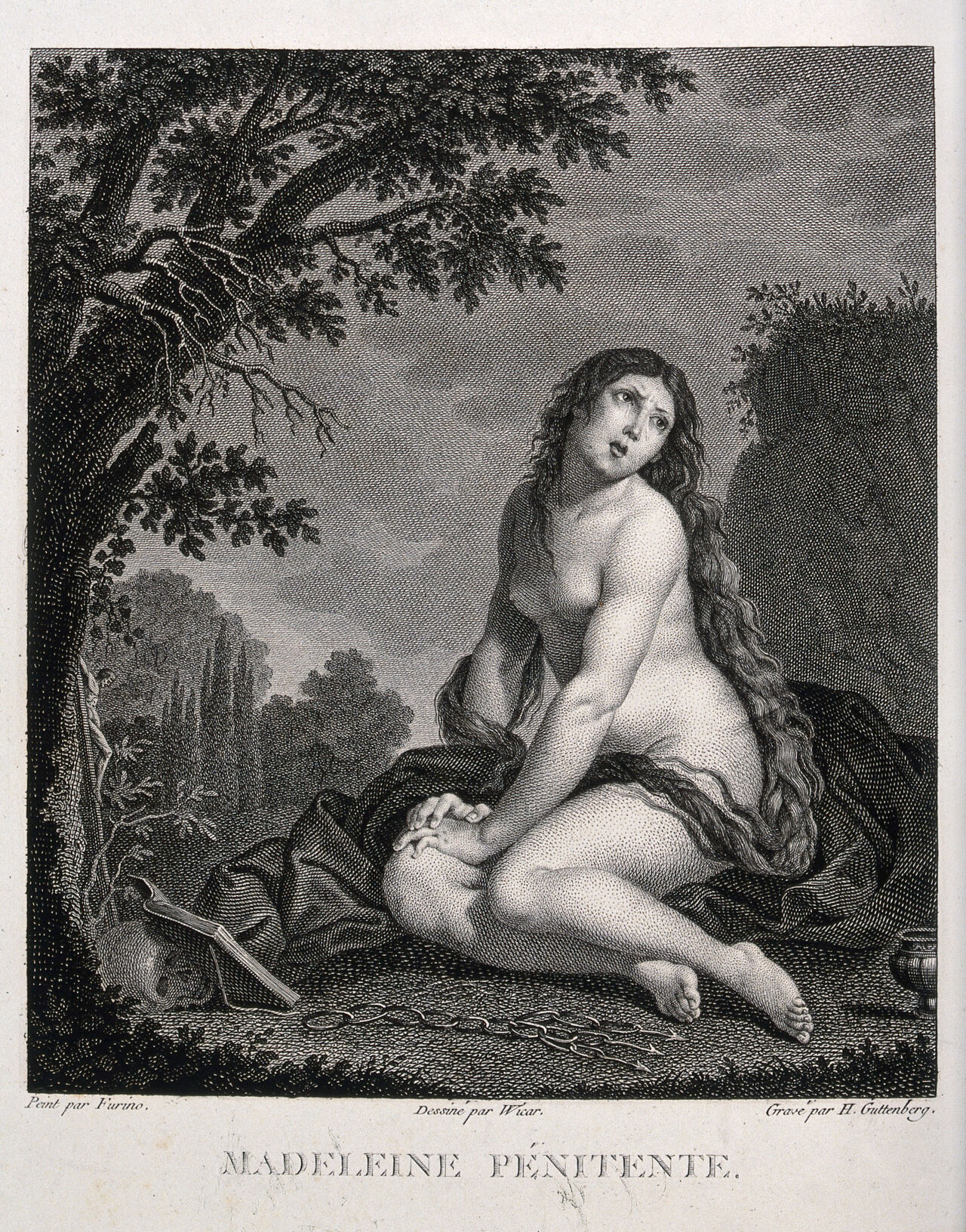
Francesco Furini · Wellcome Collection, London · Wellcome Collection · Public Domain Mark
- Born
- Francesco Furini was born on 10 April 1603. · Florence.
- Died
- Francesco Furini died on 19 August 1646. · Florence.
- Nationality
- Grand Duchy of Tuscany
- Occupation
- painter · draftsperson · poet · latin catholic priest · writer · artist
VALÉORINE Encyclopedia
VALÉORINE documentary reading
Documentary summary
Illustration — Self-Portrait, Uffizi Gallery Francesco Furini (10 apr. 1603 – 19 August 1646) was an Italian Baroque painter, poet and priest. He was a leading painter in Florence in the second quarter of the 17th century and also worked in Rome.
Admitted source layer · organised and presented by VALÉORINE
Note VALÉORINE
Francesco Furini was an artist, draftsperson and latin catholic priest, among other activities, a national of the Grand Duchy of Tuscany. The artist was born in Florence and died in Florence. Francesco Furini worked in Rome and Venice and lived in Florence. Works are held at Groeningemuseum, Minneapolis Institute of Art and Museo del Prado, among others.
Composed from admitted, traceable facts · 27 September 2026
VALÉORINE
Reference Check
Propose documentary evidence for Francesco Furini. A contribution is never written directly as fact: identity, source, rights and evidence gates still decide.
Sign in to contribute
World of VALÉORINE
Documentary connections
Only confirmed graph relationships appear here. Images are shown only when their identity and reuse rights both pass the documentary gate.
Documentary evidence
Evidence Panel
not yet certified
- Identity
- resolved
- Independent source families
- 0
- Admitted assertions
- 0
- Open conflicts
- 0
Authority files
wikidata · Q1356978 · wikipedia · Francesco Furini
In this article
Biography
Biography
He was noted for both secular and religious subjects in which he used a sensual sfumato style, particularly in the many female nudes.
Giovanni Battista Galestruzzi is recorded as having studied under Francesco Furini. Places of work recorded in the authority are Florence, Rome and Venice. Residence is recorded at Florence. Work by Francesco Furini is recorded in the collections of Minneapolis Institute of Art, Museo del Prado, Städel Museum, National Gallery of Canada and Groeningemuseum.
He was born in Florence as the son of Filippo di Nicola and Francesca di Lazzaro Rossi. His father was a portrait painter who had trained under Domenico Passignano. Francesco's sister Alessandra also became a painter and another sister, Angelica, was a singer at the court of Cosimo II de' Medici, Grand Duke of Tuscany. • Illustration — Allegory of Painting and Poetry, 1626, Palazzo Pitti Furini received his initial training from his father. He then may have studied first with Passignano and then with his father's friend Cristofano Allori or in the reverse order first with Allori and then with Passignano. He then studied with Giovanni Biliverti and possibly Matteo Rosselli (whose other pupils include Lorenzo Lippi and Baldassare Franceschini). He obtained his father's permission to visit Rome to study its antiquities and Raphael's work. He arrived in November 1619 in Rome where he frequented the workshop of Bartolomeo Manfredi, the leading Caravaggesque painter. He also befriended Giovanni da San Giovanni who came to Rome in mid-1621. The two artists worked together on the fresco of the Chariot of Night, commissioned by Cardinal Enzo Bentivoglio for the Monte Cavallo palace, now Palazzo Pallavicini-Rospigliosi. His first dated and signed work is the Crucifixion with the Saints Bartholomew, Magdalen and John the Baptist of 1623 in the Saint Bartholomew Church in Todi, Umbria. • Illustration — St. Agatha, c. 1635–1645, Walters Art Museum, Baltimore, United States Around 1624 he returned to Florence where he collaborated with Matteo Rosselli. Furini became in 1633 a priest in the parish of Sant'Ansano in Mugello. This did not reduce his interest in depicting the female nude as in the Lot and his daughters (1634, Prado). The painting also shows his interest in Antique sculpture as the nude daughter viewed from behind is based on the Medici Venus (Uffizi). He traveled to Rome again in the year before his death in 1646. Among his pupils are Simone Pignoni and Giovanni Battista Galestruzzi.
Work
Work
Furini was a painter of biblical, allegorical and mythological set-pieces with a strong use of the sfumato technique. His work reflects the tension between the Mannerist style of Florence and the new Baroque style. In the 1630s his style was similar to that of Guido Reni. An important early work, Hylas and the Nymphs (1630), features six female nudes that attest to the importance Furini placed upon drawing from life. • Illustration — Judith and Holofernes, 1636 Freedberg describes Furini's style as filled with "morbid sensuality". His frequent use of disrobed females is discordant with his excessive religious sentimentality while his polished stylization and poses are at odds with his aim of expressing highly emotional states. His stylistic choices did not go unnoticed by more puritanical contemporary biographers like Baldinucci. • Illustration — Head of a Girl Ferdinando II de' Medici commissioned him to paint frescoes in Palazzo Pitti which he completed between 1639 and 1642. Furini frescoed two large lunettes depicting the Platonic Academy of Careggi and the Allegory of the Death of Lorenzo the Magnificent, which are at odds with the style of his canvases. The frescoes can be seen as a response to Pietro da Cortona, who was at work in the palazzo during these years. Simone Pignoni was influenced by Furini's sensual style.
Life and career
Dated record
Life and career
The full dated record · 2 entries
1603
Francesco Furini born at Florence.
1646
Francesco Furini died at Florence.
Places
Named by the record
Places
Only places the record itself states, plotted where the house gazetteer settles their coordinates. Nothing is inferred from a name or a nationality.
- Florence
Named but not plotted · 2
Francesco Furini was born in Florence.
Birthplace
Francesco Furini died in Florence.
Deathplace
Legacy
• Illustration — Allegory of the death of Lorenzo the Magnificent In Robert Browning's series of poems titled Parleyings with certain people of importance in their day, the poet envisions Furini refuting Filippo Baldinucci's allegation that, on his deathbed, he had ordered all his nude paintings to be destroyed. For Browning, the nudity of Furini's subjects shows his courageous search for the hidden truth. Modern research has demonstrated that Furini did not abandon his sensual painting subjects on becoming a priest. Furini was rediscovered in the early 20th century by Arturo Stanghellini. His scantily documented career was sketched by Elena Toesca (Furini, 1950) and brought into focus with an exhibition of his drawings at the Uffizi, 1972.
Primary material
Documents and archives
scholarly publication
- Furini, Francesco, Benezit Dictionary of Artists, 2011
Scholarly · Crossref registry · 2011
authority record
- Wikidata, structured authority record Q1356978: Francesco Furini
Unverified · Wikidata
reference work
- “Francesco Furini”, English Wikipedia, consulted as further reading
Reputable secondary · Wikipedia
Notes from the source article
Cited by Wikipedia
Notes from the source article
These works are cited by the source article, in its own numbering. They are recorded as its citations, not as sources VALÉORINE has verified.
- 1.Retrieved 30 June 2025
- 2.Matteo Marangoni. Furini, Francesco. Enciclopedia Italiana (1932). Retrieved 30 June 2025
- 3.Cappelletti, F. (2003). Furini, Francesco. Grove Art Online. Retrieved 30 June 2025
- 4.Wittkower, Rudolf. Pelican History of Art, Art and Architecture Italy, 1600-1750. Penguin Books Ltd. 345. 1993.
- 5.Stanghellini, Arturo. Francesco Furini pittore. Vita d'Arte. 13. 1913.
- 6.The exhibition catalogue by Giuseppe Cantelli, Disegni di Francesco Furini e del suo ambiente (Florence: Oschki) 1972. Cantelli attributed seventy-two drawings in the Uffizi to his hand. Documents published by Gino Corti in Antichità Viva (Match-April 1971) appeared too late to be assimilated in the exhibition. Soon after, A. Barsanti recovered more biographical detail to flesh out the modest armature of dates in "Una vita inedita del Furini", Paragone 289, (1974), pp. 67–86.
Bibliography printed in the source article · 4
- Campbell, Malcolm. Francesco Furini Drawings at the Uffizi. The Burlington Magazine. 114. 833. 571–570. 1972.
- Cantelli, G. Disegni di Francesco Furini: e del suo ambiente. Olschki. 1972. 2045642.
- Freedberg, Sydney J. Painting in Italy, 1500-1600. 344–345 Penguin Books Ltd. 1993.
- Langmuir, Erika. Francesco Furini. Florence. The Burlington Magazine. 150. 1263. 431–433. 2008.
References
Citations
References
Each reference names the institution holding it, so a reader may go to the document itself.
scholarly publication
Furini, Francesco, Benezit Dictionary of Artists, 2011Crossref registry
Verifiedauthority record
Partially resolvedreference work
Partially resolved
The Encyclopedia exists whether or not anything is for sale. Corrections are recorded rather than overwritten, and every version of this record is kept. Published 14 August 2026.
Elsewhere in Paintings
18,705 published records in this field, each with its sources named.
- Francesco DidioniArtist
- Francesco FidanzaArtist
- Francesco FilippiniArtist
- Francesco FracanzanoArtist
- Francesco GessiArtist
- Francesco GhittoniArtist
- Francesco Giuseppe CasanovaArtist
- Francesco GnecchiArtist
Best supported in this field
For owners
Own a work by Francesco Furini?
A specialist will read what you send and tell you what the house can establish, what it cannot, and whether the object is suited to sale. There is no charge and no obligation. The object stays with you throughout; nothing is shipped to us unless it is arranged in writing beforehand.