
Carlo Dolci
Carlo (or Carlino) Dolci (25 May 1616 – 17 January 1686) was an Italian Baroque painter active mainly in Florence, known for highly finished religious pictures, often repeated in many versions.
Also recorded as Carlo Dolei · Carlo Dolu · Carlin Dolze · Car. Dolci
Carlo Dolci
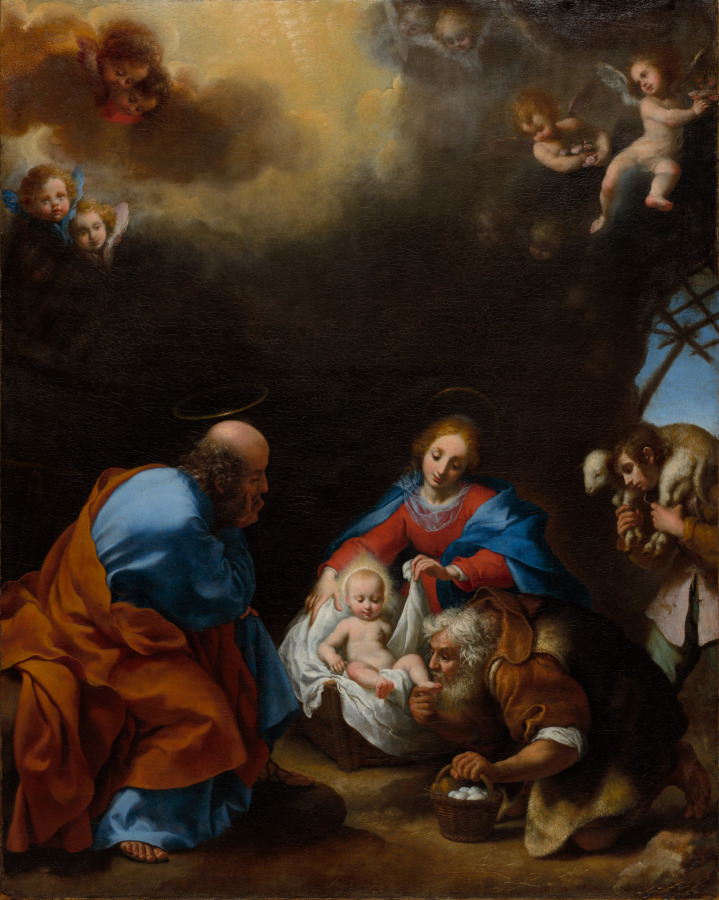
Carlo Dolci · The Cleveland Museum of Art · Mr. and Mrs. William H. Marlatt Fund · CC0
- Name
- Carlo Dolci
- Born
- 25 May 1616
- Birthplace
- Florence, Grand Duchy of Tuscany
- Died
- 17 January 1686
- Known for
- Painting
- Movement
- Baroque
- Training
- Jacopo Vignali
- Nationality
- Grand Duchy of Tuscany
- Occupation
- painter
VALÉORINE Encyclopedia
VALÉORINE documentary reading
Documentary summary
Carlo (or Carlino) Dolci (25 May 1616 – 17 January 1686) was an Italian Baroque painter active mainly in Florence, known for highly finished religious pictures, often repeated in many versions.
Admitted source layer · organised and presented by VALÉORINE
Note VALÉORINE
Carlo Dolci (1616–1686) was a painter, a national of the Grand Duchy of Tuscany. The painter was born and died in Florence.
Carlo Dolci worked in Florence and Innsbruck. Activity centred on painting. Carlo Dolci was associated with Baroque.
Among the works are Blessing Christ, Portrait of Ainolfo de Bardi, The Angel of the Annunciation and The Virgin of the Annunciation, among others. Works are held at Art Institute of Chicago, Metropolitan Museum of Art and National Gallery of Victoria, among others.
Composed from admitted, traceable facts · 01 October 2026
VALÉORINE
Reference Check
Propose documentary evidence for Carlo Dolci. A contribution is never written directly as fact: identity, source, rights and evidence gates still decide.
Sign in to contribute
World of VALÉORINE
Documentary connections
Only confirmed graph relationships appear here. Images are shown only when their identity and reuse rights both pass the documentary gate.
Documentary evidence
Documentary basis
Authority files
wikidata · Q503322 · wikipedia · Carlo Dolci
In this article
Biography
Biography
Alessandro Loni is recorded as having studied under Carlo Dolci. The field of work recorded is painting. Places of work recorded in the authority are Florence and Innsbruck. Works named in the authority record are The Virgin of the Annunciation, The Angel of the Annunciation, Blessing Christ, Portrait of Ainolfo de Bardi and Vase of flowers and a basin. Work by Carlo Dolci is recorded in the collections of Städel Museum, Art Institute of Chicago, Thyssen-Bornemisza Museum, J. Paul Getty Museum and National Gallery of Victoria.
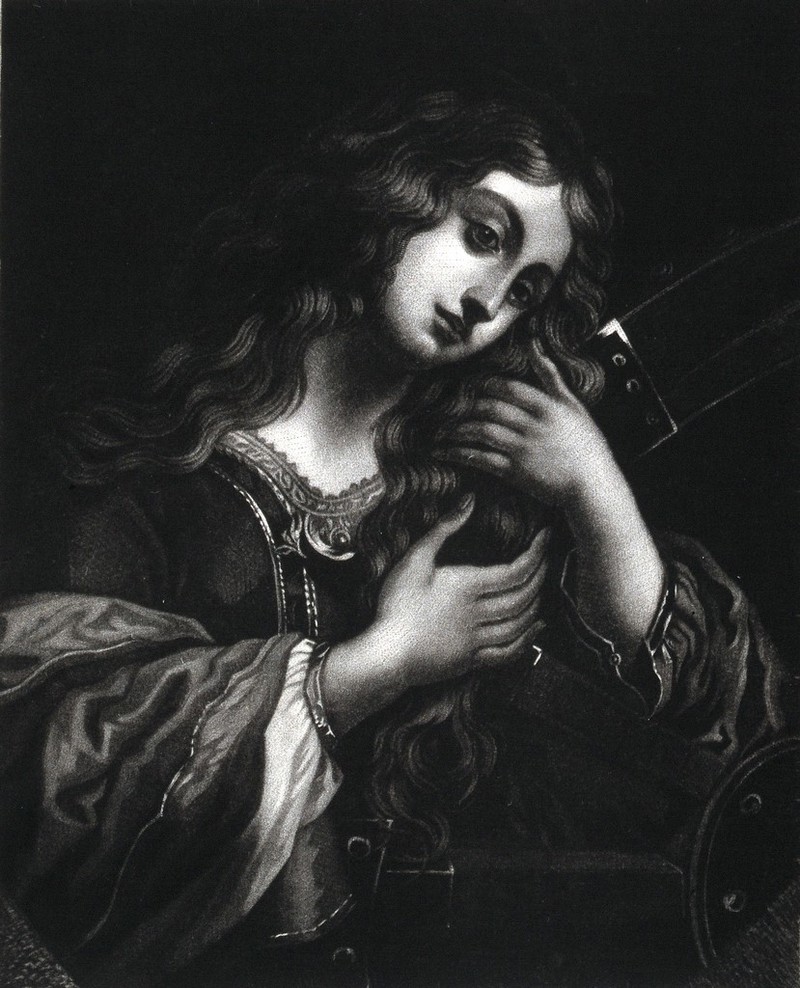
Saint Catherine. Reproduction of mezzotint after Carlo Dolci (?)., by Carlo Dolci
Carlo Dolci · Wellcome Collection, London · Wellcome Collection
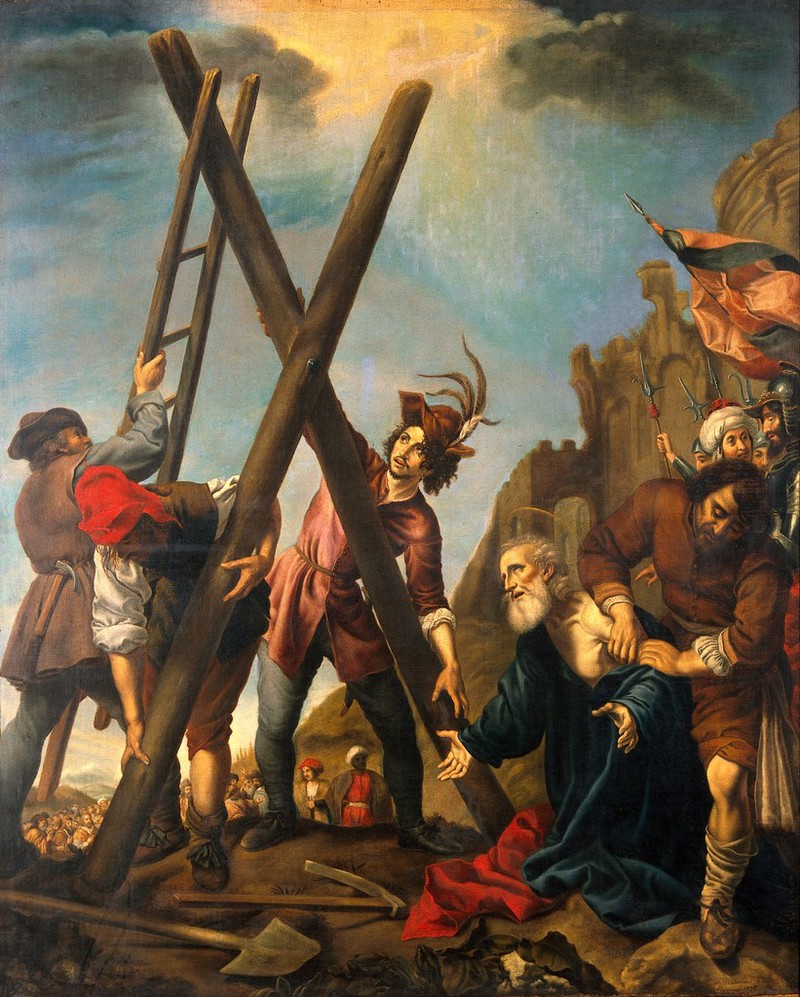
The crucifixion of Saint Andrew. Oil painting by Pierre Castoni after Carlo Dolci., by Carlo Dolci
Carlo Dolci · Wellcome Collection, London · Wellcome Collection
Key facts
Key facts
• Name — Carlo Dolci • Born — 25 May 1616 • Birthplace — Florence, Grand Duchy of Tuscany • Died — 17 January 1686 • Place of death — Florence, Grand Duchy of Tuscany • Known for — Painting • Movement — Baroque • Training — Jacopo Vignali • Resting Place — Santissima Annunziata, Florence • Children — Agnese Dolci
Biography
Biography
He was born in Florence, on his mother's side the grandson of a painter. He was precocious and apprenticed at a young age to Jacopo Vignali, and when only eleven years of age he attempted a whole figure of St John, and a head of the infant Christ, which received some approbation. Dolci was not prolific; "He would take weeks over a single foot", according to his biographer Baldinucci. His painstaking technique made him unsuited for large-scale fresco painting. He painted chiefly sacred subjects, and his works are generally small in scale, although he made a few life-size pictures. He often repeated the same composition in several versions, and his daughter, Agnese Dolci, also made copies of his works. After attempting the whole figure of St John, and the head of the infant Christ, he painted a portrait of his mother, displaying a new and delicate style which brought him into notice. This procured him extensive employment at Florence (from which city he hardly ever moved) and in other parts of Italy. Dolci was known for his piety. It is said that every year during Passion Week he painted a half-figure of the Savior wearing the Crown of Thorns. In 1682, when he saw Giordano—nicknamed "fa presto" (quick worker)—paint more in five hours than he could have completed in months, he fell into a depression. Dolci's daughter, Agnese (died circa 1680), was also a well-known painter. Two of her paintings, Jesus took bread and blessed it and Maria and Child, were included in the 1905 book Women Painters of the World. Her "Consecration of the Bread and Wine" is in the Louvre. Dolci died in Florence in 1686. He was buried in his family tomb in the Basilica of the Santissima Annunziata, Florence.
Works
Works
• Illustration — Saint Paul the Hermit, before 1648, National Museum in Warsaw The grand manner, vigorous coloration or luminosity, and dynamic emotion of the Bolognese-Roman Baroque are foreign to Dolci and to Baroque Florence. While he fits into a long tradition of prestigious official Florentine painting, Dolci appears constitutionally blind to the new aesthetic, shackled by the Florentine tradition that holds each drawn figure under a microscope of academicism. Wittkower describes him as the Florentine counterpart, in terms of devotional imagery, of the Roman Sassoferrato. Pilkington declared his touch "inexpressibly neat... though he has often been censured for the excessive labour bestowed on his pictures, and for giving his carnations more of the appearance of ivory than the look of flesh", a flaw that had been already apparent in Agnolo Bronzino. Among his best works are a St Sebastian; the Four Evangelists at Florence; Christ Breaking the Bread; the St Cecilia at the Organ; an Adoration of the Magi in the National Gallery, London; the St Catherine Reading and St Andrew praying before his Crucifixion (1646) in the Palazzo Pitti. He completed his portrait of Fra Ainolfo de' Bardi when he was only sixteen. He also painted a large altarpiece (1656) for the church of Sant' Andrea Cennano in Montevarchi. As was typical for Florentine painters, this was a painting about painting, and in it the Virgin of Soriano holds a miraculous and iconic painting of St Dominic.
Gallery
Gallery
• Illustration — Madonna and Child • Illustration — Saint Christina of Bolsena • Illustration — Virgin and Child with the Infant Saint John the Baptist • Illustration — Allegory of Sincerity • Illustration — David with Head of Goliath • Illustration — St Matthew • Illustration — Madonna in Glory • Illustration — The Penitent Magdalen • Illustration — Salome and Head of St. John the Baptist • Illustration — The Adoration of the Kings • Illustration — St Catherine of Siena • Illustration — Mater Dolorosa • Illustration — The Trinity in Glory • Illustration — Annuciation Angel • Illustration — The Penitent Magdalene • Illustration — Charity • Illustration — The Virgin and Child with Flowers • Illustration — Jesus with flowers (1663) • Illustration — Still life With Flowers • Illustration — Cruxifixion of St. Andrew • Illustration — Self portrait • Illustration — Portrait of the Artist's Daughter • Illustration — Vittoria della Rovere • Illustration — Claudia Felicitas of Austria • Illustration — Mattias de' Medici (1635) • Illustration — Ainolfo de Bardi • Illustration — Stefano della Bella • Illustration — Sir Thomas Baines
Life and career
Dated record
Life and career
The full dated record · 2 entries
1616
Carlo Dolci born at Florence.
1686
Carlo Dolci died at Florence.
Notes from the source article
Cited by Wikipedia
Notes from the source article
These works are cited by the source article, in its own numbering. They are recorded as its citations, not as sources VALÉORINE has verified.
- 1.Getty Museum biography.
- 2.Web Gallery of Art biography
- 3.Garollo, Gottardo. Dizionario biografico universale. Hoepli. 1. 1907.
- 4.Shaw Sparrow, Walter. Women painters of the world, from the time of Caterina Vigri, 1413-1463, to Rosa Bonheur and the present day. The Art and Life Library, Hodder & Stoughton. 1905.
- 5.Jeanna Bauck as a "German painter" at the 1893 Chicago World's Fair and Exposition
- 6.Pilkington, Matthew. A general dictionary of painters. T. M'Lean. 1.
- 7.Subsequently at Burleigh
- 8.In the Dresden Gemäldegalerie.
- 9.In the Residenzgalerie, Salzburg.
References
Citations
References
Each reference names the institution holding it, so a reader may go to the document itself.
reference work
Secondary witnessreference work
Secondary witness
Further particulars
Held on the record
Further particulars
Open the remaining particulars
The authorities additionally record the headings Carlo Dolei, Carlo Dolu, Carlin Dolze, Car. One child is recorded: Agnese Dolci. Formation and teaching. Each of those relationships is stated by the authority record rather than inferred from style. Work and production. Works recorded as notable number 5: The Virgin of the Annunciation, The Angel of the Annunciation, Blessing Christ, Portrait of Ainolfo de Bardi and Vase of flowers and a basin.
Identity and origins
Dolci and Carlo Dolcino
Recognition and collections
Work by Carlo Dolci is
Städel Museum, Art Institute of Chicago, Thyssen-Bornemisza Museum and J. Paul Getty Museum
The Encyclopedia exists whether or not anything is for sale. Corrections are recorded rather than overwritten, and every version of this record is kept. Published 17 August 2026.
Elsewhere in Paintings
19,103 published records in this field, each with its sources named.
- Carlo CeresaArtist
- Carlo CoppolaArtist
- Carlo CressiniArtist
- Carlo CrivelliArtist
- Carlo DonelliArtist
- Carlo FerrariArtist
- Carlo FolliniArtist
- Carlo FornaraArtist
Best supported in this field
For owners
Own a work by Carlo Dolci?
A specialist will read what you send and tell you what the house can establish, what it cannot, and whether the object is suited to sale. There is no charge and no obligation. The object stays with you throughout; nothing is shipped to us unless it is arranged in writing beforehand.