
Filippo Parodi
Filippo Parodi (1630 – 22 July 1702) was an Italian sculptor of the Baroque period, "Genoa's first and greatest native Baroque sculptor".
Also recorded as Giacomo Filippo Parodi
Filippo Parodi
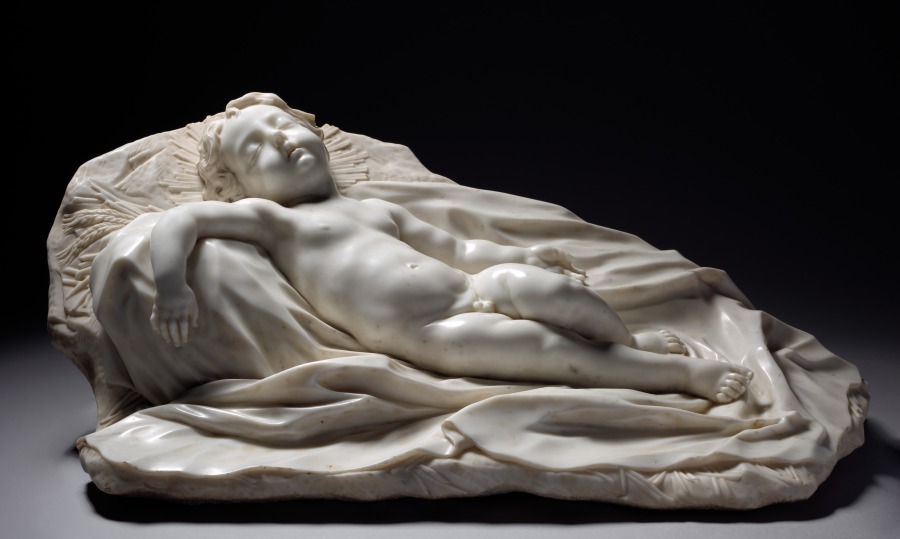
Filippo Parodi · The Cleveland Museum of Art · Leonard C. Hanna Jr. Fund · CC0
- Born
- 1630. · Genoa.
- Died
- 1702. · Genoa.
- Occupation
- sculptor and wood carver.
- Fields
- Baroque sculpture, art of sculpture and wood carving.
- Known for
- Lucrezia, Fountain of Heracles and Bust of Francesco Morosini.
- Languages
- Italian.
VALÉORINE Encyclopedia
VALÉORINE documentary reading
Documentary summary
Filippo Parodi (1630 – 22 July 1702) was an Italian sculptor of the Baroque period, "Genoa's first and greatest native Baroque sculptor".
Admitted source layer · organised and presented by VALÉORINE
Note VALÉORINE
No house-authored Note is published until its assertions and sources pass the VALÉORINE evidence contract. The documentary article remains available in full while that enrichment is being consolidated.
Documentary enrichment in progress · no unsupported statement published
Reference Check
Propose documentary evidence for Filippo Parodi. A contribution is never written directly as fact: identity, source, rights and evidence gates still decide.
Sign in to contribute
World of VALÉORINE
Documentary connections
Only confirmed graph relationships appear here. Images are shown only when their identity and reuse rights both pass the documentary gate.

Documentary evidence
Evidence Panel
wikipedia incomplete · checked 25 September 2026
- Identity
- resolved
- Independent source families
- 0
- Admitted assertions
- 0
- Open conflicts
- 0
Authority files
wikidata · Q975607 · wikipedia · Filippo Parodi
In this article
Biography
Biography
The recorded working language is Italian. The field of work recorded is Baroque sculpture, art of sculpture and wood carving. Places of work recorded in the authority are Genoa, Venice and Padua. Works named in the authority record are Lucrezia, Fountain of Heracles and Bust of Francesco Morosini. Work by Filippo Parodi is recorded in the collections of Art Institute of Chicago, The Nelson-Atkins Museum of Art, Cleveland Museum of Art, Villa Faraggiana and Museo Correr.
Filippo Parodi was born in Genoa into a family of sculptors. His father, Giovanni Battista, was a woodcarver. Filippo trained in the family workshop. Having developed his facility with wood, he then transferred his mastery to marble in the 1670s. He also worked in stucco. His two extended sojourns in Rome refined his style; he joined the studio of Bernini as an assistant (1655–1661), although he appears to have been influenced by Algardi and his pupil Ercole Ferrata. Under Bernini, Parodi learned to exploit the sensuous and tactile possibilities of the marble to enhance the emotional impact. The influence of the Roman Baroque style permeates his early work. Later on returning to Genoa, he met the French Baroque sculptor Pierre Puget, who stayed in Genoa from 1661–1666. Parodi developed a large studio to handle a large number of commissions. In Genoa during the 1661-1670s, he completed an Ecstasy of Saint Martha for Santa Marta, a Saint John for Santa Maria di Carignano, and a Virgin and Child for Santi Vittore e Carlo. In Venice, he completed the elaborate funeral Monument of Bishop Francesco Morosini (1678), in San Nicolò da Tolentino. For Johann Adam Andreas I von Liechtenstein of Vienna, he produced two allegorical busts: Vice and Virtue, which remain in the Liechtenstein collection, Vienna. The expressive bust of Vice has a specific Bernini source in Bernini's Anima dannata. His sculptures commissioned by Eugenio Durazzo in 1679 during the renovation of the Palazzo Balbi Durazzo, Genoa, remain in situ (the present Palazzo Reale); they are a sentimental Christ at the Column for the chapel and a set of four mythological figures from Ovid's Metamorphoses (Venus, Clytie, Adonis, and Hyacinth) for the garden. The statues are emotive and often witty reworkings of sculptures by Bernini. In 1689, Parodi was in charge of the architectural, decorative and sculptural design of the Cappella della Pietà in the abbey church of Santa Giustina. The ceiling is adorned with stucco angels. In the center is the Pietà, surrounded by statues of Mary Magdalene and John the Apostle. In 1691 he and his studio were responsible for the six white marble sculptures of saints and the Glory of Saint Anthony (1689–97) in the polychrome marble setting of the Cappella del Tesoro ("Chapel of the Treasure") at the Basilica of Saint Anthony of Padua. The cornice is crowded with celebrative angels by his student, Pietro Roncaioli, a stuccador from Lugano. Parodi also worked with Giacomo Antonio Ponsonelli (1654–1735) an Italian late-Baroque sculptor who was also his son-in-law. Parodi's son, Domenico Parodi (1672–1742), was a painter of some merit, initially apprenticed with Sebastiano Bombelli, then, in the early 1690s, working in the studios of Carlo Maratta and then his pupil Paolo Girolamo Piola. Other pupils of Parodi were Angelo de' Rossi, Andrea Brustolon, the brothers Francesco, Francesco Bonanni, and Bernardo Schiaffino.
Other works
Other works
Glory of the Magdalene, high altar, S. Maria delle Vigne, Genoa [1]. Boy with a Skull (Vanitas) Hermitage Museum, Saint Petersburg Sleeping Christ Child (Cleveland Museum of Art) Winter from a set of Seasons (Cleveland Museum of Art).
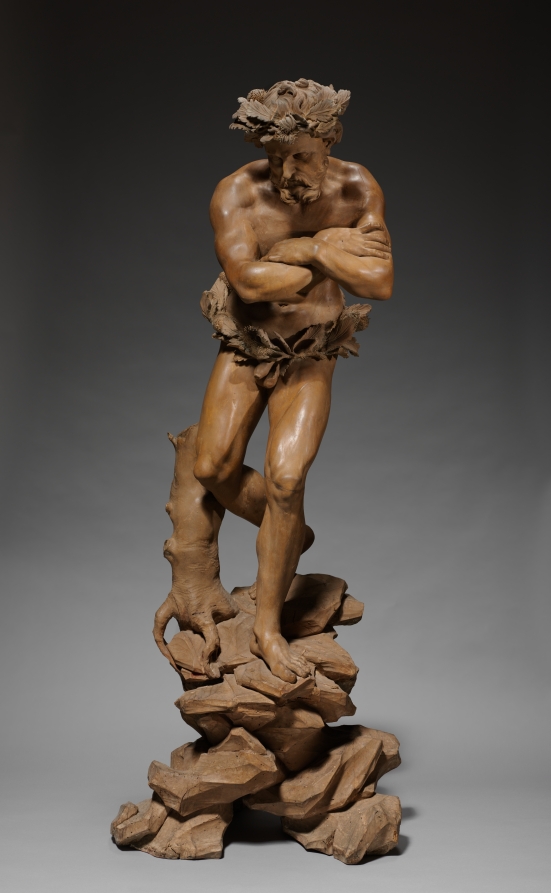
Winter, c. 1700–1725, by Filippo Parodi
Filippo Parodi · The Cleveland Museum of Art · Severance and Greta Millikin Collection
Life and career
Dated record
Life and career
The full dated record · 2 entries
1630
Filippo Parodi born at Genoa.
1702
Filippo Parodi died at Genoa.
Notes from the source article
Cited by Wikipedia
Notes from the source article
These works are cited by the source article, in its own numbering. They are recorded as its citations, not as sources VALÉORINE has verified.
- 1.Rudolf Wittkower, Joseph Connors, Jennifer Montagu, Art and Architecture in Italy, 1600-1750, 1999, Part 3 p. 63.
- 2.Leader, Anne. "This Day in History: July 22", Italian Art Society.
- 3."Filippo Paro", The Oxford Companion to Western Art, (Hugh Brigstocke, ed.) OUP, 2001
- 4."Allegory of Autumn", The Metropolitan Museum of Art.
- 5.Barzazi, Antonella. Morosini, Giovan Francesco. 77.
- 6.Christ at the Column.
- 7.Acquisitions of the month: December 2018. Apollo Magazine. 11 January 2019.
References
Citations
References
Each reference names the institution holding it, so a reader may go to the document itself.
reference work
Partially resolvedreference work
Partially resolved
The Encyclopedia exists whether or not anything is for sale. Corrections are recorded rather than overwritten, and every version of this record is kept. Published 14 August 2026.
Elsewhere in Sculpture
6,174 published records in this field, each with its sources named.
- Filippo CifarielloArtist
- Filippo ColarossiArtist
- Filippo della ValleArtist
- Filippo GnaccariniArtist
- Fiona Margaret HallArtist
- Fiore de HenriquezArtist
- Flaminio del TurcoArtist
- Flaminio VaccaArtist
Best supported in this field
For owners
Own a work by Filippo Parodi?
A specialist will read what you send and tell you what the house can establish, what it cannot, and whether the object is suited to sale. There is no charge and no obligation. The object stays with you throughout; nothing is shipped to us unless it is arranged in writing beforehand.