
Bichitr
Bichitr (17th century) was an Indian painter during the Mughal period, patronized by the emperors Jahangir and Shah Jahan. The earliest known painting of his is a mature work from c. Most of his paintings are formal portraits, and a large number of portraits in the 1630s are credited to him.
Also recorded as Vicitra
Bichitr
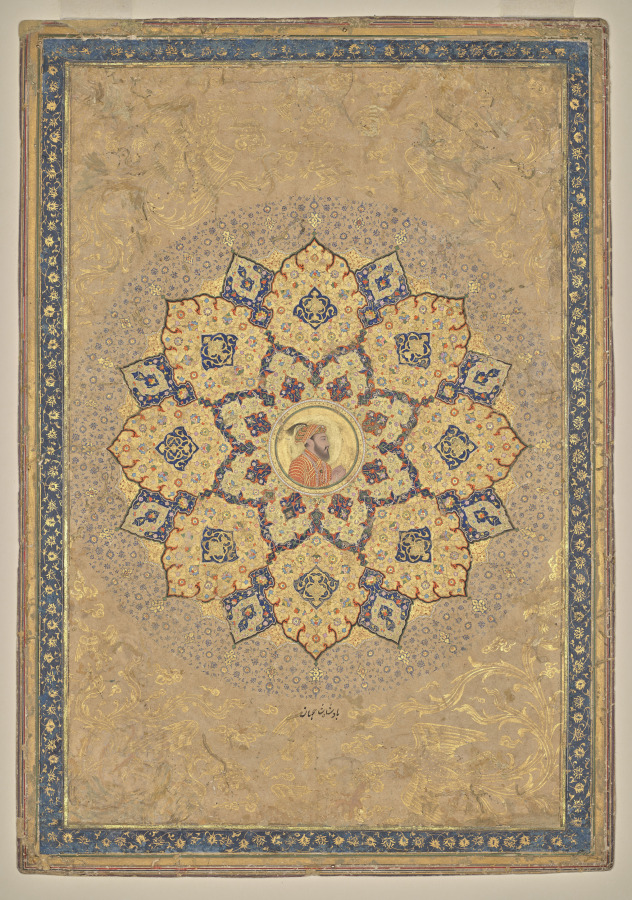
Bichitr · The Cleveland Museum of Art · Gift in honor of Madeline Neves Clapp · CC0
- Name
- Bichitr
- Born
- 1600
- Died
- 1660
- Nationality
- Mughal Empire
- Occupation
- painter
- Fields
- portrait
VALÉORINE Encyclopedia
VALÉORINE documentary reading
Documentary summary
Bichitr (17th century) was an Indian painter during the Mughal period, patronized by the emperors Jahangir and Shah Jahan. The earliest known painting of his is a mature work from c. Most of his paintings are formal portraits, and a large number of portraits in the 1630s are credited to him.
Admitted source layer · organised and presented by VALÉORINE
Note VALÉORINE
Bichitr (1600–1660) was a painter, a national of Mughal Empire. The painter held the position of court painter and worked in India.
The work spans portrait. Works are held at Chester Beatty Library and Freer Gallery of Art.
Composed from admitted, traceable facts · 26 September 2026
VALÉORINE
Reference Check
Propose documentary evidence for Bichitr. A contribution is never written directly as fact: identity, source, rights and evidence gates still decide.
Sign in to contribute
World of VALÉORINE
Documentary connections
Only confirmed graph relationships appear here. Images are shown only when their identity and reuse rights both pass the documentary gate.
Documentary evidence
Documentary basis
Authority files
wikidata · Q856754
In this article
Biography
Biography
Stuart Cary Welch, noting that he painted the likeness of nearly every important personage from this period, calls him "the Mughal Van Dyke". He was active until the 1640s at least. Beach concludes from Bichitr's clothing in self-portraits that Bichitr was Hindu.
Subjects and genres recorded for the work are portrait. Places of work recorded in the authority are India. Positions recorded include court painter. Work by Bichitr is recorded in the collections of Freer Gallery of Art and Chester Beatty Library.
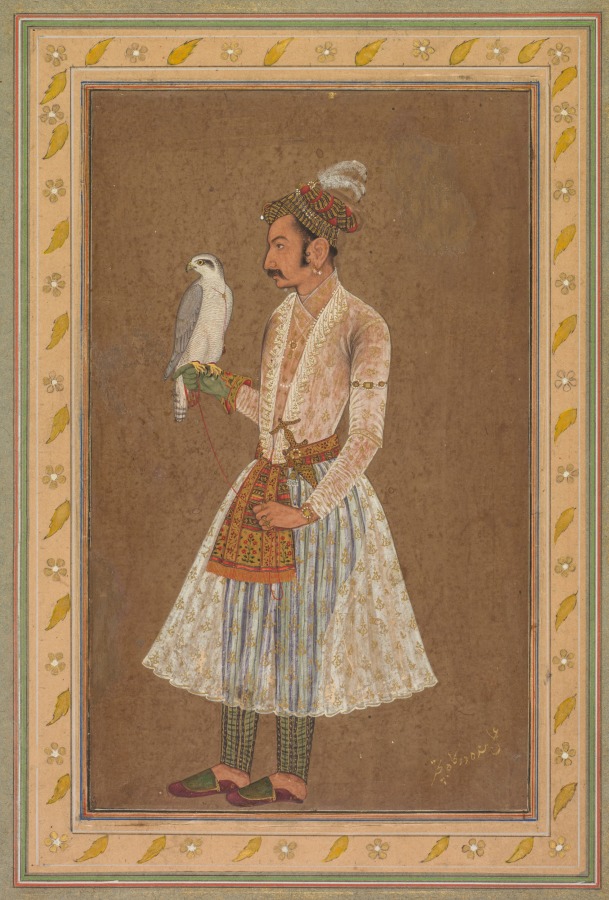
Portrait of Raja Jagat Singh of Nurpur (reigned 1618–46), probably 1619, by Bichitr
Bichitr · The Cleveland Museum of Art · Gift in honor of Madeline Neves Clapp
Key facts
Key facts
• Name — Bichitr • Style — Mughal • Patrons — Jahangir and Shah Jahan • Notable Works — Jahangir Preferring a Sufi Shaikh to Kings
Works
Works
• Illustration — Shah Jahan with Asaf Khan, c. 1640. The light radiating from god the father culminates in the halo around Shah Jahan. • Illustration — Shah Shuja Enthroned with Maharaja Gaj Singh of Marvar, ca. 1638. • Illustration — Dara Shikoh on a pink elephant Bichitr's earliest works are datable to the late 1610s and early 1620s. He may have been an apprentice of Abu'l Hasan, and his style may be considered a variant of Hasan's style. One of his earliest works is Jahangir Preferring a Sufi Shaikh to Kings dated to c. 1615-1618. It depicts Jahangir offering a book to a bearded Sufi saint while the King of England and the Ottoman sultan, as well as Bichitr himself stand in attendance, all spurned in favor of the holy man. The self-insertion of Bichitr later became a custom in Mughal painting. The painting exhibits European influences that Bichitr is known for. This is seen in the depiction of putti as well as the depiction of the English and Ottoman monarchs, which are copied from paintings by John de Critz and Giovanni Bellini respectively. However, European perspective is deliberately rejected in the design of the flat carpet, which forms the lower background of the work. European influences are apparent in Shah Jahan with Asaf Khan. Here, God the father is seen in the clouds, with divine light emanating from him, reaching the halo around Shah Jahan. Within this light is a dove, which symbolizes the holy spirit. Thus, the emperor is equated with Jesus, as the other figures of the trinity are represented. A large number of portraits in the 1630s can be attributed to Bichitr. Stuart Cary Welch calls him "the Mughal Van Dyke", and says that he painted almost every important figure during this period. Notable works include Shah Shuja Enthroned with Maharaja Gaj Singh of Marvar, and Jujhar Singh Bundela Kneels in Submission to Shah Jahan, the latter of which served as the inspiration for a sketch by Rembrandt. While known for his formal portraits of people, Bichitr also painted animal figures, notably Dara Shikoh on a pink elephant and Portrait of the Elephant 'Alam Guman. Bichitr was also one of the artists of the famous Windsor Padshahnama. The final works attributed with certainty to him are from the 1640s. These are the Darbar of Aurangzeb and Episode in a Bazaar, the latter of which is unfinished.
Style
Style
Milo C. Beach states that he paints with "a brilliant, but hard line", and calls his use of colors and patterns bold and assertive, producing an effect of "cold formality". Other critics have similar views of his work. Wheeler Thackston calls him the most observant of the Mughal artists. Bichitr's work draws inspiration from European paintings. This influence is seen in his mastery of trompe-l'œil reflections and use of cast shadows.
Gallery
Gallery
• Illustration — Padshahnama plate 10: Shah Jahan receives his three eldest sons and Asaf Khan during his accession ceremonies (8 March 1628)
Notes from the source article
Cited by Wikipedia
Notes from the source article
These works are cited by the source article, in its own numbering. They are recorded as its citations, not as sources VALÉORINE has verified.
- 1.Goldberg, Maren. Bichitr: Indian painter. Encyclopædia Britannica.
- 2.Beach, Milo Cleveland. The grand Mogul imperial painting in India,1600-1660. Sterling and Francine Clark Art Institute, Massachusetts. 101–102. 1978.
- 3.Welch, Stuart Cary. The Emperors' Album: Images of Mughal India. Metropolitan Museum of Art. 144–147. 1987. 978-0-87099-499-9.
- 4.Smee, Sebastian. A Mughal masterpiece. The Washington Post. 3 March 2021.
- 5.Goswamy, B. N. The Spirit of Indian Painting: Close Encounters with 101 Great Works, 1100-1900. Penguin Books. 322−325. 2014. 978-0-670-08657-3.
- 6.Qaisar, Ahsan Jan. Art and Culture: Painting and Perspective. Abhinav Publications. 1996. 978-81-7017-405-9.
- 7.Welch, Stuart Cary. India: Art and Culture, 1300-1900. Metropolitan Museum of Art. 1985. 978-0-03-006114-1.
- 8.Schrader, Stephanie. Rembrandt and the Inspiration of India. Getty Publications. 20 March 2018. 978-1-60606-552-5.
- 9.Metropolitan Museum of Art. Portrait of the Elephant 'Alam Guman.
- 10.Beach, Milo Cleveland. King of the World: The Padshahnama : an Imperial Mughal Manuscript from the Royal Library, Windsor Castle. Azimuth Editions. 1997. 978-1-898592-10-5.
References
Citations
References
Each reference names the institution holding it, so a reader may go to the document itself.
authority record
General reference
People, houses and institutions
Knowledge graph
People, houses and institutions
Teachers, collaborators, publishers and institutions recorded against this person, each on a stated basis.
Citizenship
1- Mughal EmpirePlace
Established from a fact already recorded on a verified source.
The Encyclopedia exists whether or not anything is for sale. Corrections are recorded rather than overwritten, and every version of this record is kept. Published 16 August 2026.
Elsewhere in Paintings
18,792 published records in this field, each with its sources named.
- Bianca WallinArtist
- Bibi LindströmArtist
- Bibi ZogbéArtist
- Bicci di LorenzoArtist
- Bijan ChoudhuryArtist
- Bijan ElahiArtist
- Bijan JazaniArtist
- Bijay BiswaalArtist
Best supported in this field
For owners
Own a work by Bichitr?
A specialist will read what you send and tell you what the house can establish, what it cannot, and whether the object is suited to sale. There is no charge and no obligation. The object stays with you throughout; nothing is shipped to us unless it is arranged in writing beforehand.