
Alexander Molinari
Illustration — Self-portrait (miniature, c. 1820) Alexander Molinari, also known as Alessandro and Alois (5 January 1772, Berlin – 20 January 1831, Dresden) was a Kingdom of Prussia-born portrait painter of Italian descent. He worked in several countries, but is best-known for his portraits of the Russian and Polish nobility.
Also recorded as Aleksander Molinary · Alexander Molinary
Alexander Molinari
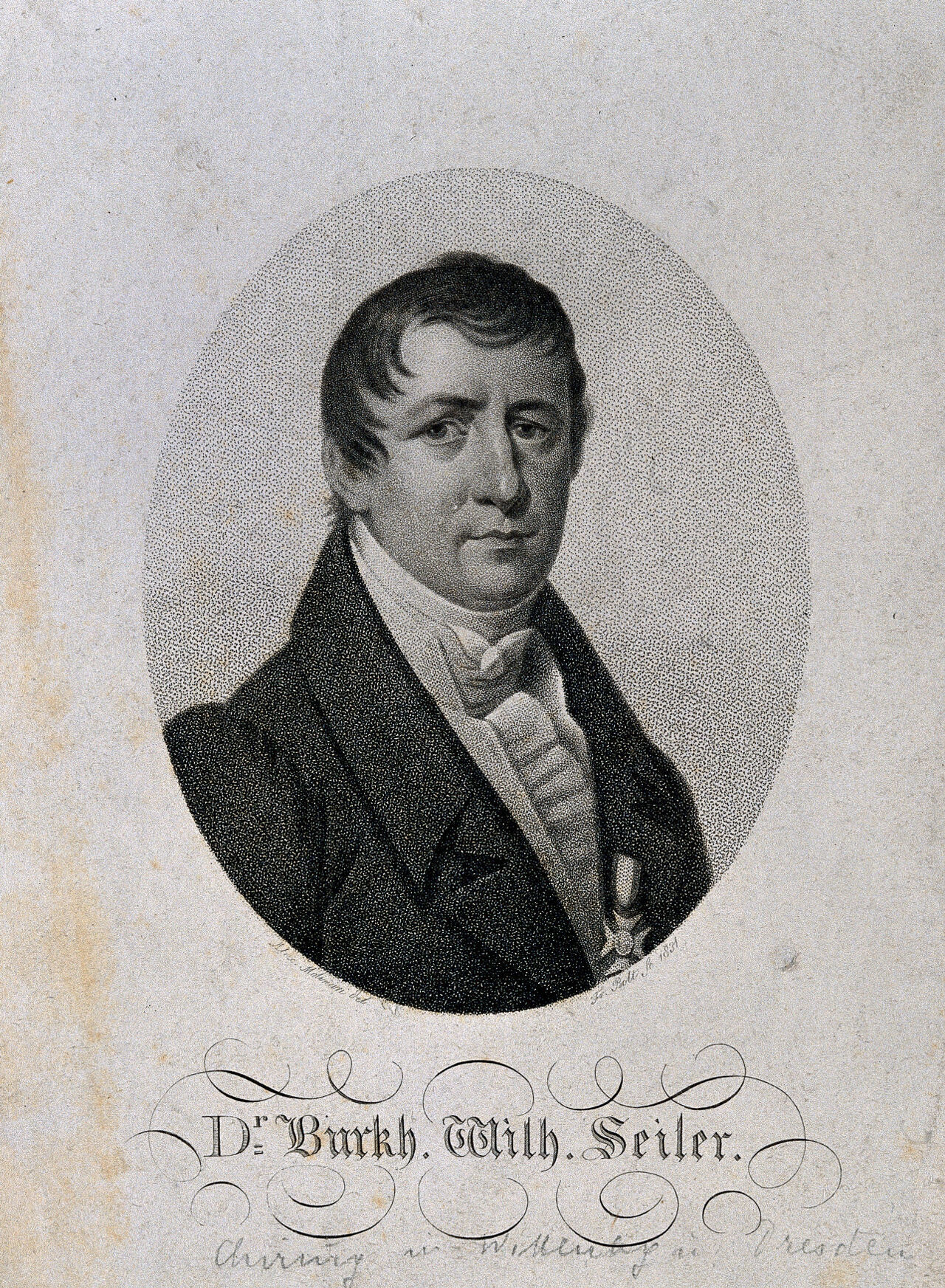
Alexander Molinari · Wellcome Collection, London · Wellcome Collection · Public Domain Mark
- Born
- 1772 · Berlin.
- Died
- 1831 · Dresden.
- Nationality
- Kingdom of Prussia
- Occupation
- painter
- Fields
- portrait
- Education
- Academy of Arts and Berlin
- Languages
- German
VALÉORINE Encyclopedia
VALÉORINE documentary reading
Documentary summary
Illustration — Self-portrait (miniature, c. 1820) Alexander Molinari, also known as Alessandro and Alois (5 January 1772, Berlin – 20 January 1831, Dresden) was a Kingdom of Prussia-born portrait painter of Italian descent. He worked in several countries, but is best-known for his portraits of the Russian and Polish nobility.
Admitted source layer · organised and presented by VALÉORINE
Reference Check
Propose documentary evidence for Alexander Molinari. A contribution is never written directly as fact: identity, source, rights and evidence gates still decide.
Sign in to contribute
World of VALÉORINE
Documentary connections
Only confirmed graph relationships appear here. Images are shown only when their identity and reuse rights both pass the documentary gate.
Documentary evidence
Documentary basis
Authority files
wikidata · Q2833888 · wikipedia · Alexander Molinari
In this article
Biography
Biography
Alexander Molinari studied at Academy of Arts, Berlin. The recorded working language is German. Subjects and genres recorded for the work are portrait. Work by Alexander Molinari is recorded in the collections of National Museum in Warsaw, Staatliche Kunstsammlungen Dresden, Russian Museum and State Historical Museum.
From 1787, he studied at the Berlin Academy of Arts, where he excelled in portraits. After graduating, he worked in Rome (1795), Vienna (1796-1797), Glogau and, around 1800, Weimar. While decorating a church in Glogau, he met and befriended the writer, E. T. A. Hoffmann. Later, he would be the inspiration for the artist, "Berthold", in Hoffmann's story, The Jesuit Church in G (1817). The year 1806 found him in Saint Petersburg, where he was warmly welcomed by Salvatore Tonci, the unofficial leader of an Italian artists' colony in Moscow. By 1807, he was well-established as a portrait painter. In 1810, with Tonci's assistance, he was able to find employment as a drawing teacher for the family of Count Бутурлин, Дмитрий Петрович (1763), a bibliophile and amateur poet: living on his estate north of Obninsk. He soon became a favourite artist of the Russian aristocracy; who admired his knowledge of foreign art, and corresponded with many, including Tsar Alexander I. Occasionally, he collaborated with another well-known portraitist, Orest Kiprensky. In 1816, he and Kiprensky both left Russia, possibly for political reasons. He went to Warsaw and lived there until 1822. This was followed by periods in Berlin and Dresden, where he died suddenly from a stroke at the age of fifty-nine. His works may be seen at the Hermitage Museum, the Tretyakov Gallery, the Russian Museum, and the Pushkin Museum.
Selected portraits
Selected portraits
• Illustration — Prince Голицын, Егор Алексеевич • Illustration — Duke Augustus and his wife, Louise • Illustration — Countess Суворова, Наталья Александровна • Illustration — Prince Голицын, Владимир Сергеевич • Illustration — Countess Салтыкова-Головкина, Наталья Юрьевна • Illustration — Count Бальмен, Карл Антонович
Places
Named by the record
Places
Only places the record itself states, plotted where the house gazetteer settles their coordinates. Nothing is inferred from a name or a nationality.
Berlin.
Birth place
Dresden.
Death place
Primary material
Documents and archives
reference work
- “Alexander Molinari”, English Wikipedia, consulted as further reading
Reputable secondary · Wikipedia
authority record
- Wikidata, structured authority record Q2833888: Alexander Molinari
General reference · Wikidata
Notes from the source article
Cited by Wikipedia
Notes from the source article
These works are cited by the source article, in its own numbering. They are recorded as its citations, not as sources VALÉORINE has verified.
- 1.Die Miniaturen der Albertina in Wien. A. Schroll. 1977.
- 2.San Pietroburgo : 1703-1825 arte di corte dal Museo dell’Ermitage : Palazzina di Caccia, Stupinigi, Torino 4. maggio - 8. settembre 1991 : Cità di Torino assessorato per la Cultura : Museo Statale dell’Ermitage di Leningrado. Berenice. 1991.
- 3.The miniature in Europe in the 16th, 17th, 18th, and 19th centuries. Akademische Druck- u. Verlagsanstalt. 1. 1964.
- 4.Exposition d'art russe, ancien et moderne. Palais des beaux-arts. 1928.
- 5.Тхе Хисторикал Мусеум, Москов. Аурора Арт Публишерс. 1985.
- 6.L'ombre de soi-même. Phébus. 1992.
- 7.Hoffmann le fantastique. Michel. 1950.
- 8.L'Allemagne romantique. Albin Michel. 2 : « Novalis - Hoffmann - Jean-Paul - Eichendorff ». 1963.
Bibliography printed in the source article · 1
References
Citations
References
Each reference names the institution holding it, so a reader may go to the document itself.
reference work
Secondary witnessauthority record
General reference
The Encyclopedia exists whether or not anything is for sale. Corrections are recorded rather than overwritten, and every version of this record is kept. Published 17 August 2026.
Elsewhere in Paintings
18,875 published records in this field, each with its sources named.
- Alexander Maximilian SeitzArtist
- Alexander Maxovich ShilovArtist
- Alexander MelamidArtist
- Alexander MohrArtist
- Alexander MrevlishviliArtist
- Alexander NasmythArtist
- Alexander NeyArtist
- Alexander Nikolaevich VolkovArtist
Best supported in this field
For owners
Own a work by Alexander Molinari?
A specialist will read what you send and tell you what the house can establish, what it cannot, and whether the object is suited to sale. There is no charge and no obligation. The object stays with you throughout; nothing is shipped to us unless it is arranged in writing beforehand.