
Wang Meng
Wang • Illustration — Wang Meng, Ge Zhichuan Relocating (葛稚川移居图), Palace Museum, Beijing Wang Meng (王蒙, Wáng Méng; Zi: Shūmíng 叔明, Hao: Xiāngguāng Jūshì 香光居士) (c. 1308 – 1385) was a Chinese painter during the Yuan dynasty.
Also recorded as Meng Wang · Shuming · Huange Shanqiao · Huanghe shanqiao
Wang Meng
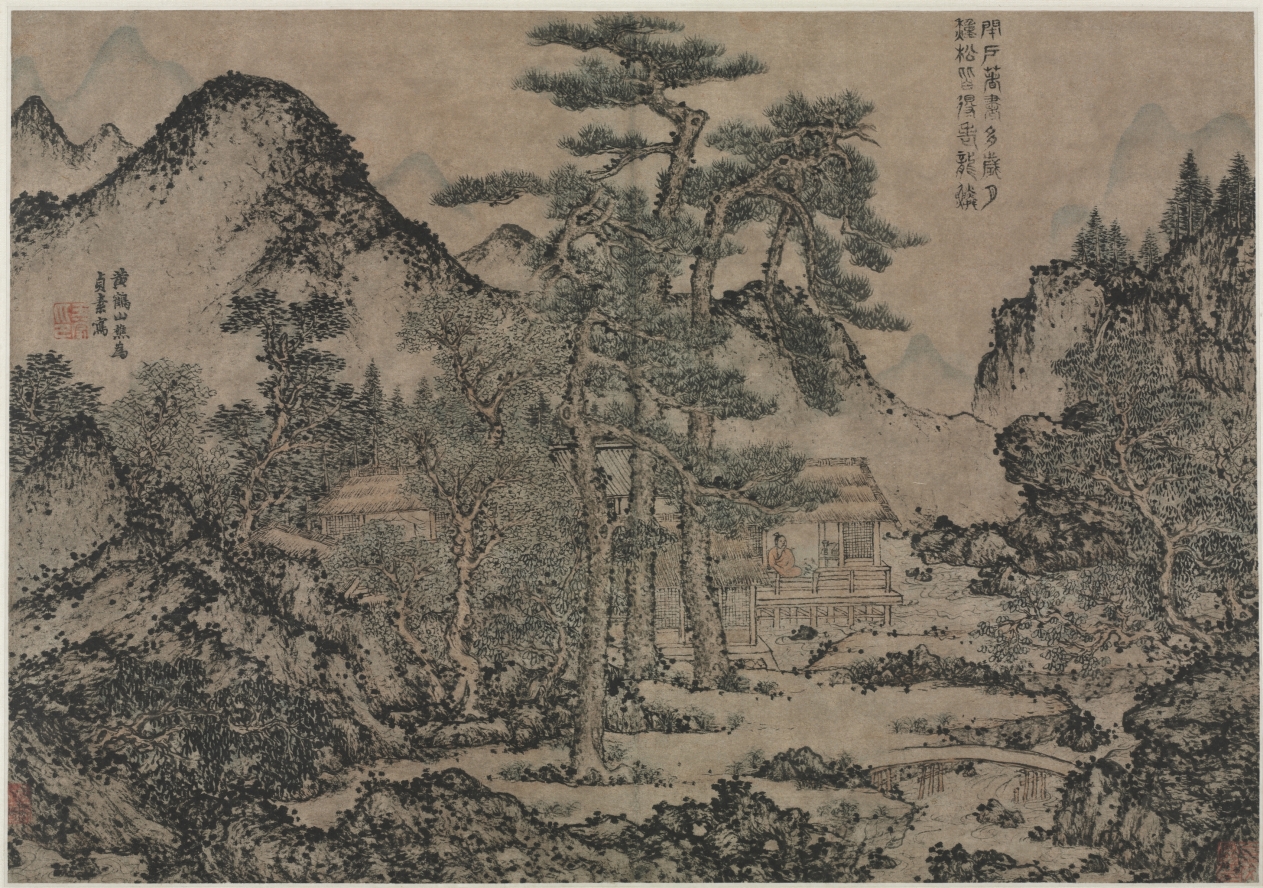
Wang Meng · The Cleveland Museum of Art · Bequest of Mrs. A. Dean Perry · CC0
- Born
- 1308 · Huzhou.
- Died
- 1385 · Nanjing.
- Nationality
- Yuan dynasty
- Occupation
- painter · politician · artist
- Fields
- shan shui
- Languages
- Chinese
Enciclopedia VALÉORINE
Il dossier documentario
Ogni enunciato è letto negli archivi di autorità delle istituzioni nominate. Scegliete «Prova» accanto a un enunciato per vedere la scheda da cui è tratto, il punto esatto e la data di lettura.
Wang Meng (1308 – 1385) figura come artista negli archivi di autorità della Deutsche Nationalbibliothek.
Vita
La nascita di Wang Meng è registrata nel 1308, e la morte nel 1385.
Istituzioni citate
Deutsche Nationalbibliothek
Non indicato dalle fonti citate: nazionalità
Catena di lettura completa (JSON)Reference Check
Propose documentary evidence for Wang Meng. A contribution is never written directly as fact: identity, source, rights and evidence gates still decide.
Sign in to contribute
World of VALÉORINE
Documentary connections
Only confirmed graph relationships appear here. Images are shown only when their identity and reuse rights both pass the documentary gate.
Documentary evidence
Documentary basis
Authority files
getty · 500327905 · gnd · 1118391918 · wikidata · Q700903
In this article
Biography
Biography
The recorded working language is Chinese. The field of work recorded is shan shui. Subjects and genres recorded for the work are landscape. Work by Wang Meng is recorded in the collections of Metropolitan Museum of Art, Art Institute of Chicago, Cleveland Museum of Art, The Palace Museum and National Palace Museum.
Wang Meng was born in Wuxing (吴兴), now known as Huzhou (湖州), Zhejiang. He was a maternal grandson of Zhao Mengfu, thus making him a descendant of the Song dynasty's royal bloodline on his mother's side. Wang Meng was erroneously accused of conspiring against the Ming Emperor Taizu and spent the last five years of his life in jail.
Painting style
Painting style
Wang Meng is considered to be one of the Four Masters of the Yuan dynasty, along with Huang Gongwang, Wu Zhen, and Ni Zan. They famously refused to serve the Mongolian rulers of their country. In contrast to many renowned painters in previous history, these artists mostly worked on paper instead of silk, an indication of the importance they gave to the calligraphic touch of the brush on paper. They exclusively painted landscapes, which they believed to be the visible key to the invisible reality. They restricted their acquaintanceship to each other, and like-minded "wen ren" (gentleman-scholars). Wang Meng was the youngest of the group, and the least famous in his own time. Nevertheless, his style greatly influenced later Chinese painting. In contrast to the relatively spare style of his compatriots, his ropy brushstrokes piled one on the other to produce masses of texture combined in dense and involved patterns. Many artists were influenced by the works of Wang Meng centuries after his death, most notably Dong Qichang. His most famous works are the Ge Zhichuan Relocating, Forest Grotto at Juqu, Writing Books under the Pine Trees, The Simple Retreat, and Dwelling in the Qingbian Mountains. Most of his masterpieces are now located in notable museums around the world, such as the Palace Museum, National Palace Museum, Shanghai Museum, Cleveland Museum of Art and the Metropolitan Museum of Art. In 2011, a lesser known work of his from a private collection, titled Zhichuan Resettlement, was sold for 402.5 million yuan (US$62.1 million) at art auction. • Illustration — Writing Books under the Pine Trees, Cleveland Museum of Art • Illustration — Forest Grotto in Juqu, National Palace Museum • Illustration — Dwelling in the Qingbian Mountains, Shanghai Museum • Illustration — The Simple Retreat, Metropolitan Museum of Art
Identity
Identity
Wang Meng is recorded as painter, politician and artist.
Life and career
Dated record
Life and career
The full dated record · 2 entries
1308
Wang Meng born at Huzhou.
1385
Wang Meng died at Nanjing.
Places
Named by the record
Places
Only places the record itself states, plotted where the house gazetteer settles their coordinates. Nothing is inferred from a name or a nationality.
Huzhou.
Birth place
Nanjing.
Death place
Primary material
Documents and archives
authority file
- Gemeinsame Normdatei 1118391918, Wang, Meng.
General reference · Deutsche Nationalbibliothek
- Getty Union List of Artist Names 500327905, Wang Meng.
General reference · The Getty Research Institute
scholarly publication
- Wang Meng, Benezit Dictionary of Artists, 2011
Scholarly · Crossref registry · 2011
reference work
- Wikidata, structured authority record Q700903: Wang Meng
Reputable secondary · Wikimedia Foundation
Text attribution
Licensing
Text attribution
Part of the biographical narrative on this page reuses licensed material. Its origin, revision and licence are recorded here.
The biographical narrative on this page is based on the Wikipedia article Wang Meng (painter), revision 1360945486 (EN edition), by its contributors. VALÉORINE has edited that text and built its own documentary record around it. The reused material is available under CC BY-SA 4.0, and this page's reuse of it is offered under the same licence. Everything else on this page — the chronology, the holdings, the evidence, the plates and the connections — is VALÉORINE's own record. Sources and licences.
Notes from the source article
Cited by Wikipedia
Notes from the source article
These works are cited by the source article, in its own numbering. They are recorded as its citations, not as sources VALÉORINE has verified.
- 1.122.
- 2.140.
- 3.harvsp François Cheng 1979 p=30
- 4.177.
- 5.338.
Bibliography printed in the source article · 7
- Vide et plein. Le langage pictural chinois. Seuil. 1979. 2-02-005272-5.
- Trois mille ans de peinture chinoise. Philippe Piquier. 2003. 2-87730-667-4.
- La Peinture chinoise. Hazan. 2004. 2-85025-922-5.
- L'Art en Chine. La résonance intérieure. Hermann. 2001. 2-7056-6424-6.
- Montagnes et eaux. La culture du Shanshui. Hermann. 2005. 2-7056-6521-8.
- Montagnes célestes. Trésors des musées de Chine. Galeries Nationales du Grand Palais. Éditions de la Réunion des Musées Nationaux. 2004. 2-7118-4770-5.
- Les Arts de l'Asie orientale. Tome 1. Könemann. 1999. 3-8290-1743-X.
References
Citations
References
Each reference names the institution holding it, so a reader may go to the document itself.
scholarly publication
Wang Meng, Benezit Dictionary of Artists, 2011Crossref registry
Institutional witnessauthority file
Gemeinsame Normdatei 1118391918, Wang, Meng.Deutsche Nationalbibliothek
Secondary witnessauthority file
Getty Union List of Artist Names 500327905, Wang Meng.The Getty Research Institute
Secondary witnessreference work
Wikidata, structured authority record Q700903: Wang MengWikimedia Foundation
Secondary witness
People, houses and institutions
Knowledge graph
People, houses and institutions
Teachers, collaborators, publishers and institutions recorded against this person, each on a stated basis.
Born at
1- HuzhouPlace
Established from a fact already recorded on a verified source.
Further particulars
Held on the record
Further particulars
Open the remaining particulars
The authorities additionally record the headings Meng Wang, Shuming, Huange Shanqiao, Huanghe shanqiao and Xiangguang Jushi hao Huanghe Shanqiao.
The Encyclopedia exists whether or not anything is for sale. Corrections are recorded rather than overwritten, and every version of this record is kept. Published 14 August 2026.
Elsewhere in Paintings
19,456 published records in this field, each with its sources named.
- Wang HuiArtist
- Wang JianArtist
- Wang LanArtist
- Wang LüArtist
- Wang Pan-yuanArtist
- Wang ShiminArtist
- Wang ShishenArtist
- Wang WeiArtist
Best supported in this field
For owners
Own a work by Wang Meng?
A specialist will read what you send and tell you what the house can establish, what it cannot, and whether the object is suited to sale. There is no charge and no obligation. The object stays with you throughout; nothing is shipped to us unless it is arranged in writing beforehand.