
Thomas Sully
Thomas Sully (June 19, 1783November 5, 1872) was an English-American portrait painter. He was born in England, became a naturalized American citizen in 1809, and lived most of his life in Philadelphia, Pennsylvania, including in the Thomas Sully Residence. He studied painting in England under Benjamin West.
Also recorded as Sully · thos sully · sully thos · sully t.
Thomas Sully
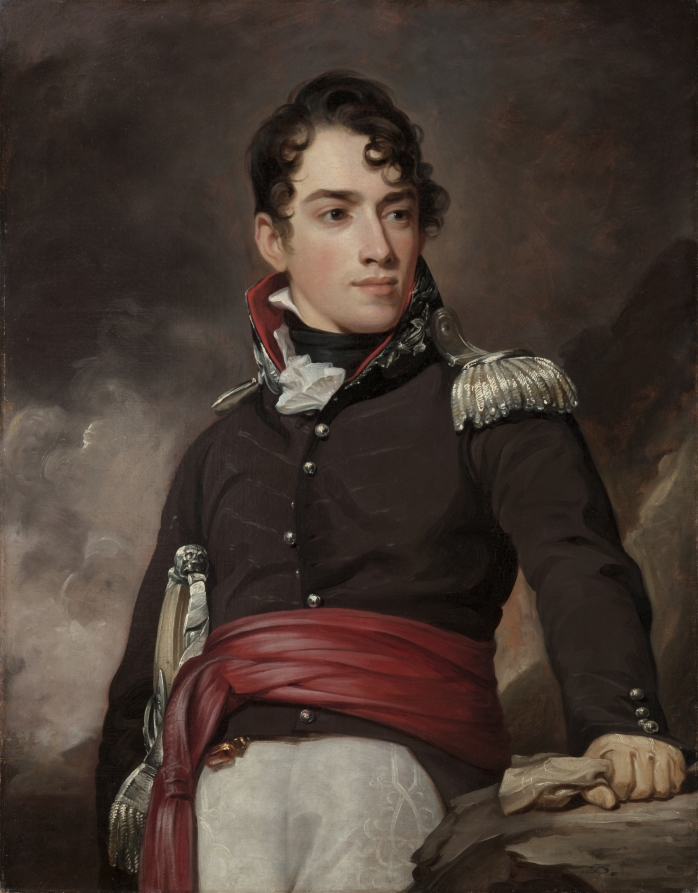
Thomas Sully · The Cleveland Museum of Art · Gift of the John Huntington Art and Polytechnic Trust · CC0
- Name
- Thomas Sully
- Birthplace
- Horncastle, Lincolnshire, England
- Died
- 5 November 1872
- Place of death
- Philadelphia, Pennsylvania, U.S.
- Occupation
- Painter
- Spouse
- Sarah (Annis) Sully (m. 1805)
- Born
- 1783. · Horncastle.
- Nationality
- United States.
- Fields
- portrait, figure and history.
- Movements
- Neoclassicism.
- Teachers
- Gilbert Stuart.
- Known for
- Prison Scene from J. Fenimore Cooper’s “The Pilot”: “Cecelia Howard and Katherine Plowden arousing the prisoner Edward Griffith from his slumber.”.
VALÉORINE Encyclopedia
VALÉORINE documentary reading
Documentary summary
Thomas Sully (June 19, 1783November 5, 1872) was an English-American portrait painter. He was born in England, became a naturalized American citizen in 1809, and lived most of his life in Philadelphia, Pennsylvania, including in the Thomas Sully Residence. He studied painting in England under Benjamin West.
Admitted source layer · organised and presented by VALÉORINE
Note VALÉORINE
No house-authored Note is published until its assertions and sources pass the VALÉORINE evidence contract. The documentary article remains available in full while that enrichment is being consolidated.
Documentary enrichment in progress · no unsupported statement published
Reference Check
Propose documentary evidence for Thomas Sully. A contribution is never written directly as fact: identity, source, rights and evidence gates still decide.
Sign in to contribute
World of VALÉORINE
Documentary connections
Only confirmed graph relationships appear here. Images are shown only when their identity and reuse rights both pass the documentary gate.
Documentary evidence
Evidence Panel
not yet certified
- Identity
- resolved
- Independent source families
- 0
- Admitted assertions
- 0
- Open conflicts
- 0
Authority files
gnd · 1046435078 · wikidata · Q786545 · wikipedia · Thomas Sully
In this article
Biography
Biography
He painted in the style of Thomas Lawrence and has been referred to as the "Sir Thomas Lawrence of America". He produced over 2,300 paintings over his 70 year career. His subjects included United States presidents Thomas Jefferson, John Quincy Adams, and Andrew Jackson; Revolutionary War hero General Marquis de Lafayette, and Queen Victoria. In addition to portraits of wealthy patrons, he painted landscapes and historical pieces such as the 1819 The Passage of the Delaware. His work was adapted for use on United States coinage.
Training under Gilbert Stuart is recorded. John Neagle is recorded as having studied under Thomas Sully. The recorded working language is English. Subjects and genres recorded for the work are portrait, figure and history. Places of work recorded in the authority are Philadelphia, London and Boston. Works named in the authority record are Prison Scene from J. Fenimore Cooper’s “The Pilot”: “Cecelia Howard and Katherine Plowden arousing the prisoner Edward Griffith from his slumber.”. Work by Thomas Sully is recorded in the collections of Minneapolis Institute of Art, Art Institute of Chicago, The Nelson-Atkins Museum of Art, National Gallery of Canada and Metropolitan Museum of Art.
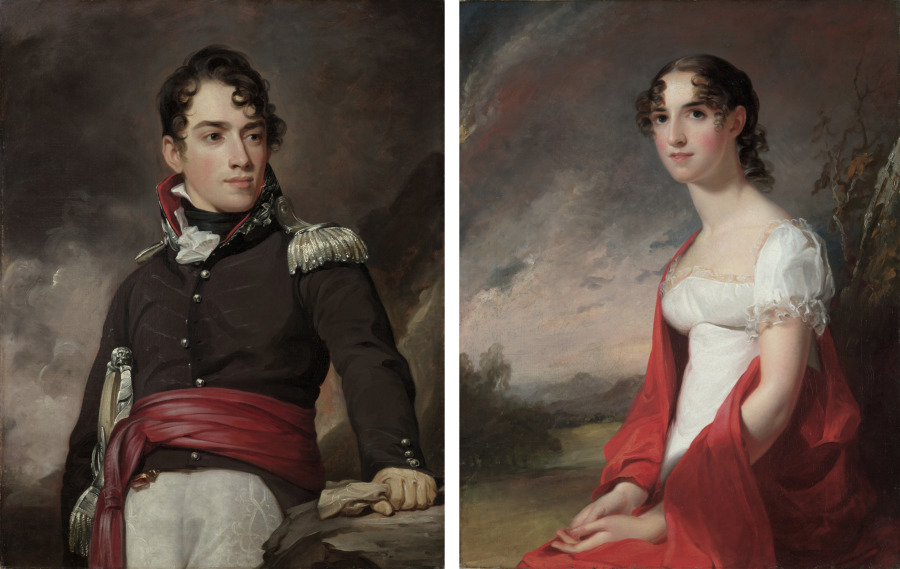
Portraits of Jean Terford David and Mary Sicard David, 1813, by Thomas Sully
Thomas Sully · The Cleveland Museum of Art · Gift of the John Huntington Art and Polytechnic Trust
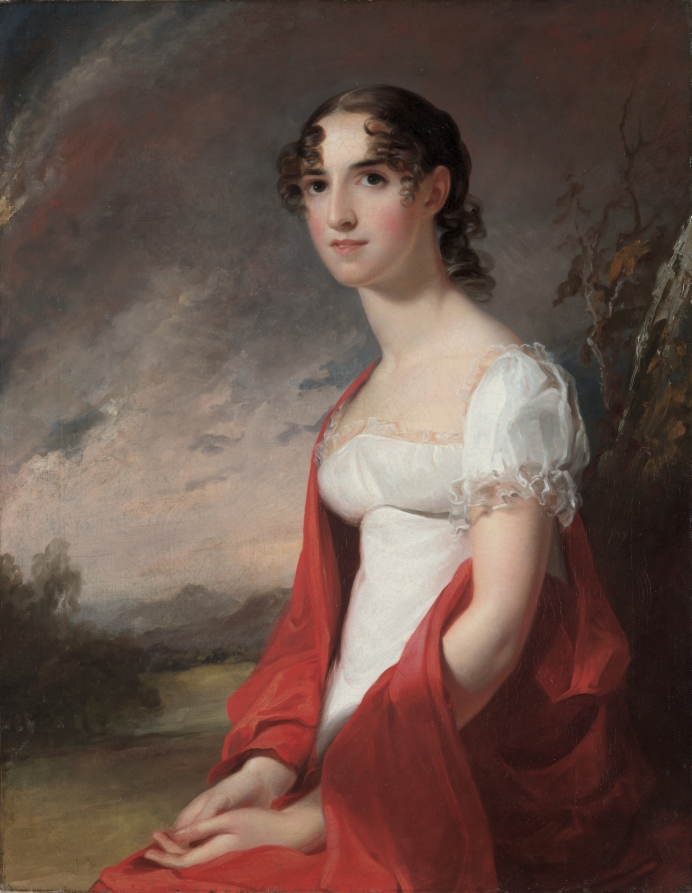
Portrait of Mary Sicard David, 1813, by Thomas Sully
Thomas Sully · The Cleveland Museum of Art · Gift of the John Huntington Art and Polytechnic Trust
Key facts
Key facts
• Name — Thomas Sully • Birthplace — Horncastle, Lincolnshire, England • Died — 5 November 1872 • Place of death — Philadelphia, Pennsylvania, U.S. • Resting Place — Laurel Hill Cemetery, Philadelphia, Pennsylvania, U.S. • Occupation — Painter • Spouse — Sarah (Annis) Sully (m. 1805) • Children — 9, including: Alfred Sully Rosalie Sully • Father — Matthew Sully • Mother — Sarah Chester
Early life
Early life
Sully was born in Horncastle, Lincolnshire, England in 1783 to actors Matthew Sully and Sarah Chester. In March 1792, the Sullys and their nine children emigrated to Charleston, South Carolina, where Thomas's uncle Thomas Wade West managed a theater. Sully made his first appearance in the theater as a tumbler at the age of 11. After a brief apprenticeship to an insurance broker, who recognized his artistic talent, at about age 12 Sully began painting. He went to school with Charles Fraser and received informal instruction from him. He studied with his brother-in-law Jean Belzons (active 1794–1812), a French miniaturist, until they had a falling-out in 1799. Between 1801 and 1802, Sully lived in Norfolk, Virginia, the city from which his aunt Margaretta Sully West ran her theater and opera company.
Career
Career
• Illustration — Plaque on the former home of Thomas Sully in Society Hill Sully became a professional painter at age 18 in 1801, while living in Norfolk, Virginia, with his brother Lawrence. By 1802, he and elder brother Lawrence Sully changed their base to Richmond, Virginia, where they continued to work together. In 1805, Thomas Sully married his brother's widow, Sarah (Annis) Sully. He took on the rearing of Lawrence's children. Sully moved to New York in 1806. The next year, he studied portrait painting under Gilbert Stuart in Boston for three weeks. By 1808, he had settled in Philadelphia, where he resided for the remainder of his life. He received his American citizenship on May 17, 1809, and soon after traveled to London for nine months of study under Benjamin West, who had established his painting career in London. Sully also befriended the portrait painter Charles Bird King who was also studying under West in London. West had stopped painting portraits and encouraged Sully to study the work of portrait artists he admired. Sully formed a friendship with Thomas Lawrence, whose influence was so profound that Sully came to be known as the "Sir Thomas Lawrence of America." Sully returned to the U.S. in 1810. Sully's 1824 portraits of John Quincy Adams, who became President within the year, and the general Marquis de Lafayette, brought him widespread recognition. His Adams portrait is held in the National Gallery of Art, Washington. Many notable Americans of the day had their portraits painted by him. In 1837–1838, he was in London to paint Queen Victoria at the request of the St. George Society of Philadelphia. His daughter Blanche assisted him as the Queen's "stand-in," modeling the Queen's costume when she was not available. One of Sully's portraits of Thomas Jefferson is owned by the Jefferson Literary and Debating Society at the University of Virginia and hangs in that school's rotunda. Another Jefferson portrait, this one head-to-toe, hangs at West Point, as does his portrait of General Alexander Macomb. Sully taught portrait painting to Marcus Aurelius Root, who later became an internationally successful daguerreotypist. Other students of his included Jacob Eichholtz, Charles Robert Leslie and John Neagle. Sully was a prolific artist and produced more than 2,300 paintings over the course of his seventy year career. His style resembles that of Thomas Lawrence.(cf. Rilla Evelyn Jackman "AMERICAN ARTS" 1928 pg. 61) Though best known as a portrait painter, Sully also made historical pieces and landscapes. An example of the former is the 1819 The Passage of the Delaware, now in the Museum of Fine Arts, Boston.
Personal life
Personal life
Thomas and Sarah Sully had nine children together. Among the children were Alfred Sully, Mary Chester Sully (who married Sully's protégé, the painter John Neagle), Jane Cooper Sully (who married a Mr. Darley who would later have a son, Francis Thomas Sully Darley, who would marry, Cecelia Baldwin the daughter of Mathias W. Baldwin), Blanche Sully, Rosalie Sully, and Thomas Wilcocks Sully. His son, Alfred Sully, served as a brigadier general in the Union Army during the American Civil War. Through Alfred, Thomas Sully is the great-grandfather of Ella Deloria, the noted Yankton Dakota ethnologist and writer; the great-grandfather of artist Mary Sully (also known as Susan Mabel Deloria, 1896–1963); and the great-great-grandfather of Vine Deloria, Jr., Standing Rock Dakota scholar and author of Custer Died For Your Sins (1969), an American Indian civil-rights manifesto. Sully was a great-uncle of Thomas Sully (1855–1939), the New Orleans–based architect who was named for him. The World War II Liberty Ship Thomas Sully was named in his honor.
Gallery of works
Gallery of works
• Illustration — Portrait of James Madison, c. 1809, oil on panel • Illustration — Portrait of Simon Snyder, c. 1809, oil on panel • Illustration — Portrait of the Artist Painting His Wife, c. 1810, oil on canvas, Yale University Art Gallery • Illustration — Portrait of Charles Stewart, c. 1811–1812, oil on canvas, National Gallery of Art • Illustration — Lady with a Harp: Eliza Ridgely, 1818, a portrait of Eliza Ridgely, was at Hampton Mansion from the 1820s to 1945, when it was sold to the National Gallery of Art. • Illustration — The Passage of the Delaware, 1819, Museum of Fine Arts, Boston • Illustration — Portrait of the Artist, 1821, Metropolitan Museum of Art • Illustration — Portrait of Thomas Jefferson, c. 1821, West Point • Illustration — Portrait of William Patterson, c. 1821, Maryland Center for History and Culture • Illustration — Portrait of the Misses Mary and Emily McEuen, 1823, Los Angeles County Museum of Art • Illustration — Portrait of Elizabeth McEuen Smith, 1823, oil on canvas, Honolulu Museum of Art • Illustration — Mrs. Robert Gilmor, Jr. (Sarah Reeve Ladson), 1823 • Illustration — Portrait of Andrew Jackson, 1824, used for the United States twenty-dollar bill from 1928 onward • Illustration — John Quincy Adams, 1824, National Portrait Gallery • Illustration — A Life Study of the Marquis de Lafayette, c. 1824–1825, oil on canvas • Illustration — Gilbert Stuart painted John Quincy Adams' face for this 1828 portrait; Sully did all the rest (Harvard University Collection) • Illustration — Portrait of Mary Ann Heide Norris, 1830, Philadelphia Museum of Art • Illustration — Sheet of figure studies, 1830–1839, Museum of Fine Arts, Boston • Illustration — Thomas L. Winthrop, 1831, oil on canvas, Massachusetts Historical Society • Illustration — Jared Sparks, 1831, oil on canvas, Reynolda House Museum of American Art • Illustration — Miss Walton of Florida, 1833, oil on canvas, a portrait of Octavia Walton Le Vert • Illustration — Portrait of Fanny Kemble, 1834 • Illustration — Portia and Shylock, 1835 • Illustration — John Gwinn, 1837 • Illustration — Portrait of Queen Victoria, 1838 • Illustration — Gypsy Maidens, 1839, watercolor, Brooklyn Museum • Illustration — Macbeth in the witches' cave, 1840, Folger Shakespeare Library • Illustration — Mother and Son, 1840, oil on canvas, Metropolitan Museum of Art, New York • Illustration — Charlotte Cushman, 1843, Folger Shakespeare Library • Illustration — Cinderella at the Kitchen Fire, 1843, Dallas Museum of Art • Illustration — Engraving of Sully's portrait of Eliza, daughter of Joshua Bates of Boston (US), and wife to the Belgian statesman Sylvain van de Weyer • Illustration — Elizabeth/Elise Wadsworth, wife of Sir Charles Murray MrsMurray • Illustration — The Student, of Sully's daughter Rosalie Sully, 1848 • Illustration — Portrait of Shakespeare, 1864, Folger Shakespeare Library • Illustration — Portrait of Rev. John Andrews D.D. Provost of University of Pennsylvania • Illustration — Portrait of Benjamin Ogle Tayloe American businessman, bon vivant, diplomat, and influential political activist in Washington, D.C., during the first half of the 19th century. Son of John Tayloe III • Illustration — John Tayloe III, reproduction by Thomas Sully from the original by Gilbert Stuart • Illustration — Portrait of Miss Marie Louise Parker
Identity and origins
Identity and origins
The authorities additionally record the headings Sully, thos sully, sully thos, sully t. and thos. Sully. His recorded language was English. He married Sarah Sully. 4 children are recorded: Thomas Wilcocks Sully, Alfred Sully, Rosalie Sully and Jane Cooper Sully Darley.
Life and career
Dated record
Life and career
The full dated record · 2 entries
1783
Thomas Sully born at Horncastle.
1872
Thomas Sully died at Philadelphia.
Places
Named by the record
Places
Only places the record itself states, plotted where the house gazetteer settles their coordinates. Nothing is inferred from a name or a nationality.
Horncastle.
Birth place
Philadelphia.
Death place
Death and legacy
• Illustration — Grave marker for Thomas Sully and his wife Sarah Sully died in Philadelphia on November 5, 1872, and was interred in Laurel Hill Cemetery. His book Hints to Young Painters was published posthumously. His paintings are held and displayed permanently in many of the world's leading art museums. Two of Sully's portraits hang in the chambers of the Dialectic and Philanthropic societies of the University of North Carolina. Portraits, including that of President James K. Polk, were commissioned of notable alumni from the Societies. The obverse design of the United States Seated Liberty coinage, which began with the Gobrecht dollar in 1836 and lasted until 1891, was based on his work. The Sully painting Portrait of Anna and Harriet Coleman was sold at auction in 2013 for $145,000.
Primary material
Documents and archives
scholarly publication
- Sully, Thomas (1783-1872), painter, American National Biography Online, 2000
Scholarly · Crossref registry · 2000
Institutional database
- Wikidata, structured authority record Q786545: Thomas Sully
Scholarly · Wikimedia Foundation
authority file
- Gemeinsame Normdatei 1046435078, Exhibition Thomas Sully: Painted Performance (2013-2014 : Milwaukee, Wis; San Antonio, Tex.).
Unverified · Deutsche Nationalbibliothek
Professional connections and honors
Sully was one of the founding members of The Musical Fund Society in Philadelphia. He painted the portraits of many of the musicians and composers who were also members. In 1812, he was elected as an honorary member of the Pennsylvania Academy of Fine Arts and served in multiple roles including as a member of the board of directors until 1831. In 1835, Sully was elected a member of the American Philosophical Society.
References
Citations
References
Each reference names the institution holding it, so a reader may go to the document itself.
scholarly publication
VerifiedInstitutional database
Wikidata, structured authority record Q786545: Thomas SullyWikimedia Foundation
Verifiedauthority file
Gemeinsame Normdatei 1046435078, Exhibition Thomas Sully: Painted Performance (2013-2014 : Milwaukee, Wis; San Antonio, Tex.).Deutsche Nationalbibliothek
Partially resolvedreference work
Partially resolved
Further particulars
Held on the record
Further particulars
Open the remaining particulars
Formation and teaching. He trained under Gilbert Stuart. Each of those relationships is stated by the authority record rather than inferred from style. His work is associated with Neoclassicism. He belonged to American Philosophical Society. He worked at Philadelphia, London, Boston and Charleston. Work and production. One work is recorded as notable: Prison Scene from J. Fenimore Cooper’s “The Pilot”: “Cecelia Howard and Katherine Plowden arousing the prisoner Edward Griffith from his slumber.”. His recorded genres are portrait, figure and history.
Career and activity
Recognition and collections
Work by Thomas Sully is
Minneapolis Institute of Art, Art Institute of Chicago, The Nelson-Atkins Museum of Art and National Gallery of Canada
The Encyclopedia exists whether or not anything is for sale. Corrections are recorded rather than overwritten, and every version of this record is kept. Published 14 August 2026.
Elsewhere in Paintings
18,792 published records in this field, each with its sources named.
- Thomas SomerscalesArtist
- Thomas Staunton St. ClairArtist
- Thomas SteinerArtist
- Thomas Stuart SmithArtist
- Thomas Sword GoodArtist
- Thomas TudorArtist
- Thomas van ApshovenArtist
- Thomas Waterman WoodArtist
Best supported in this field
For owners
Own a work by Thomas Sully?
A specialist will read what you send and tell you what the house can establish, what it cannot, and whether the object is suited to sale. There is no charge and no obligation. The object stays with you throughout; nothing is shipped to us unless it is arranged in writing beforehand.