
Thomas Waterman Wood
Thomas Waterman Wood (November 12, 1823 – April 14, 1903) was an American painter born in Montpelier, Vermont.
Also recorded as thos. w. wood · Wood · t.w. wood · T. W. Wood
Thomas Waterman Wood
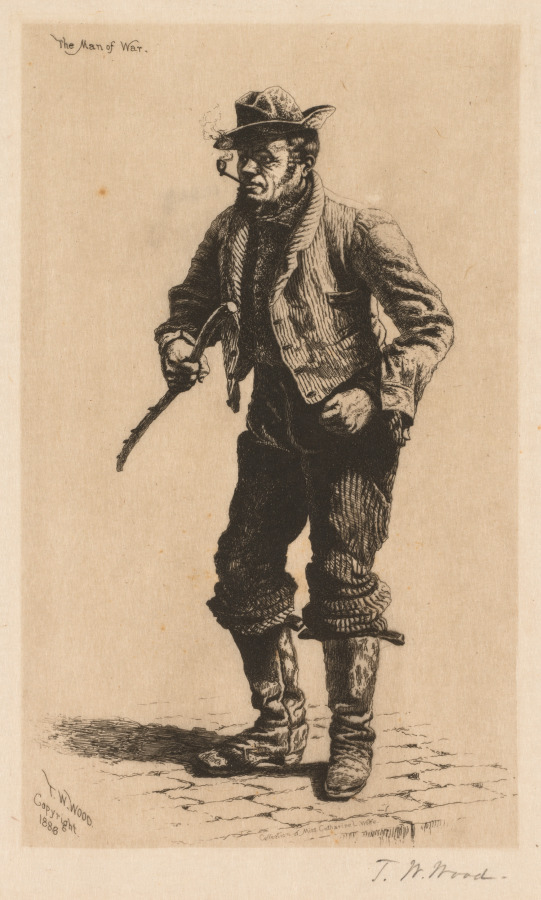
Thomas Waterman Wood · The Cleveland Museum of Art · Bequest of John Bonebrake · CC0
- Name
- Thomas Waterman Wood
- Born
- 12 November 1823
- Birthplace
- Montpelier, Vermont, U.S.
- Died
- 14 April 1903
- Place of death
- New York City, U.S.
- Known for
- Painting
- Nationality
- United States
- Occupation
- painter · ornithologist
- Teachers
- Chester Harding
- Languages
- English
VALÉORINE Encyclopedia
VALÉORINE documentary reading
Documentary summary
Thomas Waterman Wood (November 12, 1823 – April 14, 1903) was an American painter born in Montpelier, Vermont.
Admitted source layer · organised and presented by VALÉORINE
Note VALÉORINE
Thomas Waterman Wood (1823–1903) was an ornithologist and painter, of American nationality. The ornithologist was born in Montpelier and died in New York City.
Thomas Waterman Wood was a member of American Academy of Arts and Letters. Activity centred on painting.
Among the works is Now for a Good Smoke. The work spans portrait. Languages used include English. Works are held at Crystal Bridges Museum of American Art, Detroit Institute of Arts and Georgia Museum of Art, among others.
Composed from admitted, traceable facts · 27 September 2026
VALÉORINE
Reference Check
Propose documentary evidence for Thomas Waterman Wood. A contribution is never written directly as fact: identity, source, rights and evidence gates still decide.
Sign in to contribute
World of VALÉORINE
Documentary connections
Only confirmed graph relationships appear here. Images are shown only when their identity and reuse rights both pass the documentary gate.
Documentary evidence
Documentary basis
Authority files
wikidata · Q7794913 · wikipedia · Thomas Waterman Wood
In this article
Biography
Biography
Training under Chester Harding is recorded. The recorded working language is English. The field of work recorded is painting. Subjects and genres recorded for the work are portrait. Works named in the authority record are Now for a Good Smoke. Work by Thomas Waterman Wood is recorded in the collections of Minneapolis Institute of Art, Metropolitan Museum of Art, National Portrait Gallery, Yale University Art Gallery and Detroit Institute of Arts.
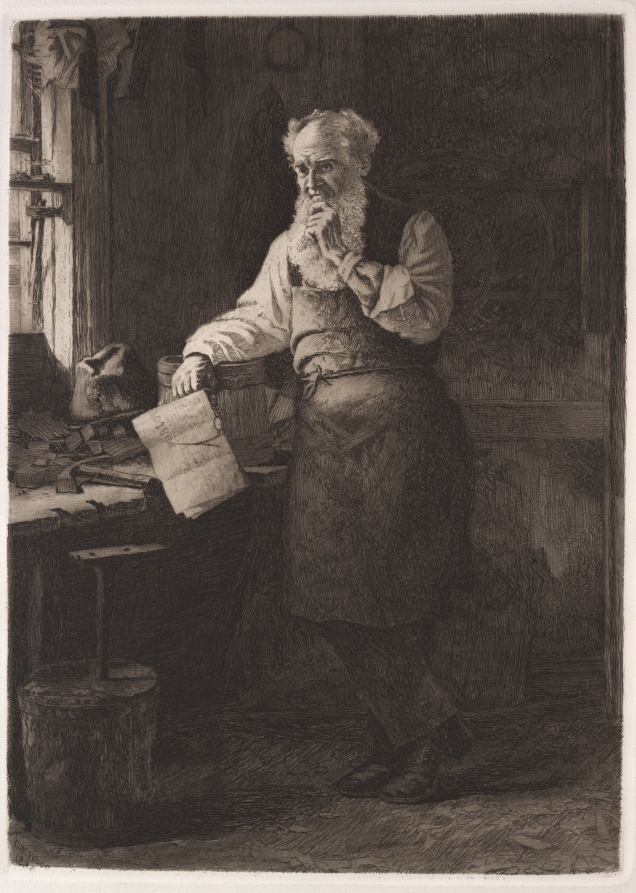
Thinking It Over, 1884, by Thomas Waterman Wood
Thomas Waterman Wood · The Cleveland Museum of Art · Gift of George A. Goddard
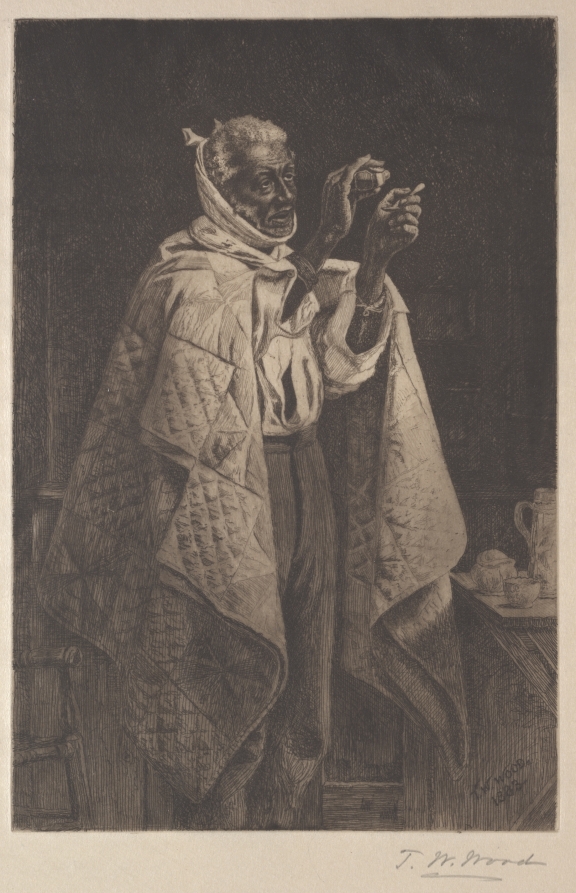
His Own Doctor, 1883, by Thomas Waterman Wood
Thomas Waterman Wood · The Cleveland Museum of Art · Gift of George A. Goddard
Key facts
Key facts
• Name — Thomas Waterman Wood • Born — 12 November 1823 • Birthplace — Montpelier, Vermont, U.S. • Died — 14 April 1903 • Place of death — New York City, U.S. • Resting Place — Green Mount Cemetery, Montpelier, Vermont • Known for — Painting • Illustration — Market Woman
Early life and education
Early life and education
Thomas Waterman Wood's father, John Wood, came to Montpelier from Lebanon, New Hampshire in 1814. The Wood family was of Puritan descent, and it was from Lebanon that John Wood, the father of the artist, married his wife Mary Waterman. John Wood and his brother Cyrus were partners in a cabinet making business, the partnership concluding with the death of Cyrus in 1840. John's other brother, Zenas, lived to be 84 years of age. John Wood was the captain of an artillery company and for a long time, a deacon in the First Congregational Church.
Career
Career
• Illustration — Susie Kent Southwick - Brooklyn Museum When fortune permitted, Wood went to Boston and studied for a short time in the studio of Chester Harding, a portrait painter. In 1850 he married Miss Minerva Robinson, then living in Waterbury, Vermont, and in the same year he built a summer home in the Carpenter Gothic style on the west side of the mountain gorge through which the road leads up to Northfield. He named this home after his wife, making use of the Latin synonym, Athenwood. During the 1850s, he found means of visiting galleries in London, Paris, Rome and Florence, having previously painted portraits in Canada, Washington and Baltimore. His first European visit, in 1858, was shared with Mrs. Wood. Upon their return he painted portraits in Nashville and Louisville, beginning at the former place The Fiddler, which was completed years afterwards and finally included in the Thomas W. Wood Collection in the Montpelier gallery. At the age of 43, the artist permanently settled himself in New York City, opening a studio as a figure painter. This was in 1866, eight years after the exhibition of his first work in the National Academy of Design, The Baltimore Newsvendor (1858). This painting was sold by mistake to two persons, Mr. J. C. Brune of Baltimore and Mr. Robert L. Stuart of New York, resulting in a long, expensive lawsuit, terminated in favor of Mr. Brune. During his residence in Louisville, Wood painted The Contraband, Recruit and Veteran, suggested by the sight of a black man in light brown jeans, who had but one leg and was hobbling along on home-made crutches. This celebrated work commemorates the transition of the African American from slavery to freedom and is now the property of The Metropolitan Museum of Art. In 1869, Wood was elected an Associate of the National Academy of Design and, in 1871, an Academician. He became President of the American Water Color Society in 1878 and served in that office until 1887. He acted as vice-president of the National Academy of Design for a period of twelve years beginning in 1879. In 1891 he became the President of the academy. He died in New York City and was buried at Green Mount Cemetery in Montpelier.
Art
Art
In 1891, Wood exhibited at the academy a picture entitled A Cogitation, for which one of his Montpelier friends, Mr. George Ripley, posed. The composition is extremely simple, a farmer in his barn, leaning upon his pitchfork, his countenance thoughtful. This picture was bought by Mr. Harper and published as a full-page engraving in Harper's Weekly during the Greeley campaign over the title "Is Greeley a Fool or a Knave?". The subjects of his works, his selection of characters, his yearly pilgrimage to Vermont, all demonstrate his filial loyalty and he gave to this sentiment of his heart its final expression in the establishment, as a gift to Montpelier, of its Gallery of Art. But, apart from this, the homes, offices and institutions of Montpelier and without are filled with the affectionate and great evidences of his work. The Vermont Historical Society possesses several excellent examples of his portraiture, all of great historic value and preserved in the Cedar Creek Reception Room at the Vermont State House: Samuel Prentiss (1881), United States Senator; Mrs. Samuel Prentiss (1895) and Dr. Edward Lamb (1895), gifts to the Society by the family of Mr. Prentiss. In 1896, the Society unveiled a life-size portrait of the distinguished publicist, the Hon. E. P. Walton, the gift of his wife and sister. Wood's personal donations include portraits of the Rev. William A. Lord, D.D. (1874), minister of Bethany Congregational Church of this city, Daniel Pierce Thompson (1880), novelist and author of "The Green Mountain Boys", and Justin S. Morrill, United States Senator, father of tariff legislation, promoter of agricultural colleges and chief up builder of the Library of Congress.
Life and career
Dated record
Life and career
The full dated record · 2 entries
1823
Thomas Waterman Wood was born on 12 November 1823.
1903
Thomas Waterman Wood died on 14 April 1903.
Places
Named by the record
Places
Only places the record itself states, plotted where the house gazetteer settles their coordinates. Nothing is inferred from a name or a nationality.
Montpelier.
Birth place
New York City.
Death place
Primary material
Documents and archives
reference work
- “Thomas Waterman Wood”, English Wikipedia, consulted as further reading
Reputable secondary · Wikipedia
authority record
- Wikidata, structured authority record Q7794913: Thomas Waterman Wood
General reference · Wikidata
Notes from the source article
Cited by Wikipedia
Notes from the source article
These works are cited by the source article, in its own numbering. They are recorded as its citations, not as sources VALÉORINE has verified.
References
Citations
References
Each reference names the institution holding it, so a reader may go to the document itself.
reference work
Secondary witnessauthority record
General reference
Further particulars
Held on the record
Further particulars
Open the remaining particulars
Thomas Waterman Wood is recorded with the occupation ornithologist. Recorded as a citizen of United States. Classed in the genre portrait.
The Encyclopedia exists whether or not anything is for sale. Corrections are recorded rather than overwritten, and every version of this record is kept. Published 18 August 2026.
Elsewhere in Paintings
18,792 published records in this field, each with its sources named.
- Thomas SullyArtist
- Thomas Sword GoodArtist
- Thomas TudorArtist
- Thomas van ApshovenArtist
- Thomas William MarshallArtist
- Thomas William WoodArtist
- Thomas Witlam AtkinsonArtist
- Thommie BayerArtist
Best supported in this field
For owners
Own a work by Thomas Waterman Wood?
A specialist will read what you send and tell you what the house can establish, what it cannot, and whether the object is suited to sale. There is no charge and no obligation. The object stays with you throughout; nothing is shipped to us unless it is arranged in writing beforehand.