
Thomas Ender
Thomas Ender (3 November 1793, Vienna - 28 September 1875, Vienna) was an Austrian landscape painter and watercolorist. • Illustration — Thomas Ender; portrait by Friedrich von Amerling (1831)
Also recorded as ender th. · joh. thomas ender · tho. ender · t. ender
Thomas Ender
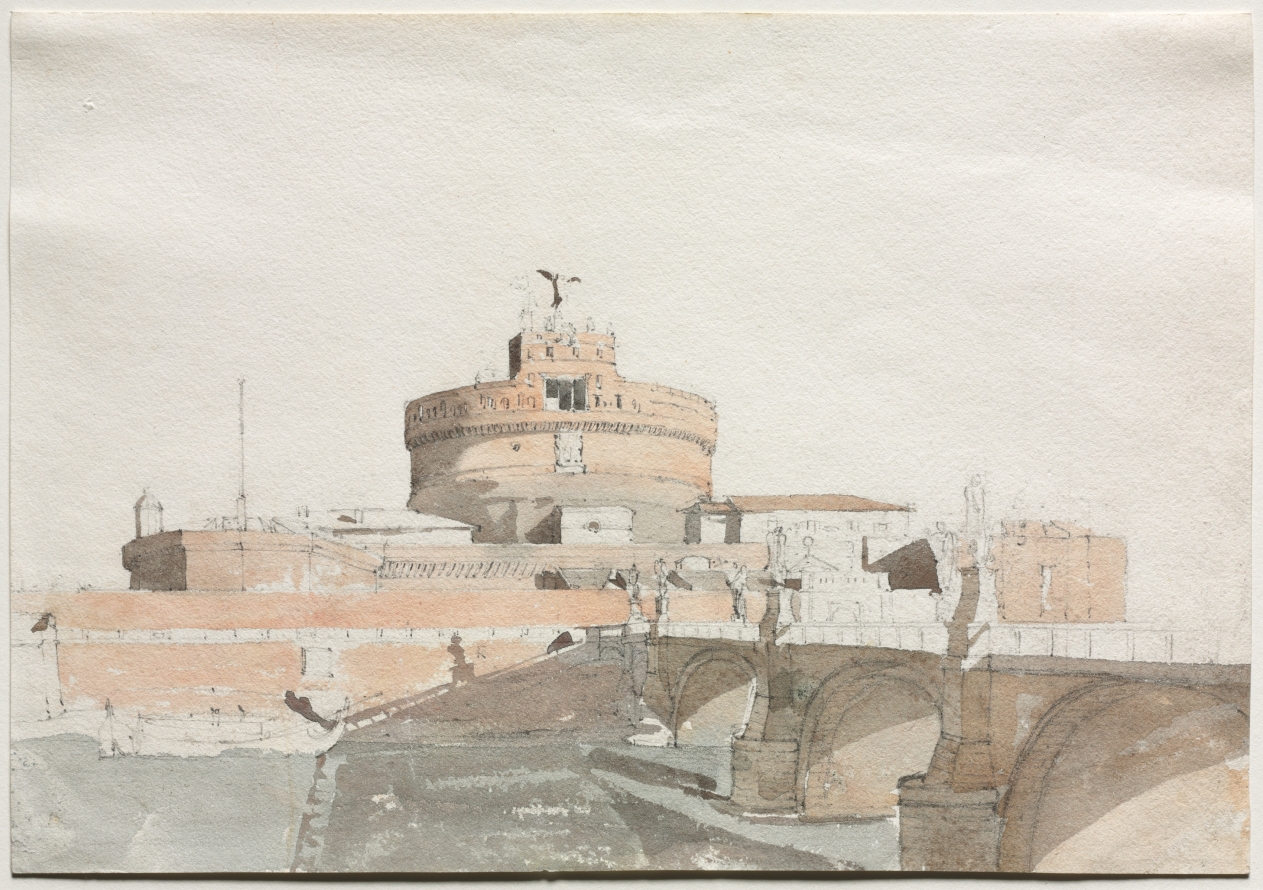
Thomas Ender · The Cleveland Museum of Art · Gift of Arthur L. Parker Foundation and Wattenmaker Advertising Inc. · CC0
- Born
- 1793
- Died
- 1875
- Nationality
- Austrian Empire · Cisleithania
- Occupation
- painter · landscape painter · draftsperson · printmaker · artist
- Fields
- landscape painting
- Known for
- Rio de Janeiro: View of the Neighbourhood of Engenho Velho and Drawn from the Austrian Embassy
VALÉORINE Encyclopedia
VALÉORINE documentary reading
Documentary summary
Thomas Ender (3 November 1793, Vienna - 28 September 1875, Vienna) was an Austrian landscape painter and watercolorist. • Illustration — Thomas Ender; portrait by Friedrich von Amerling (1831)
Admitted source layer · organised and presented by VALÉORINE
Reference Check
Propose documentary evidence for Thomas Ender. A contribution is never written directly as fact: identity, source, rights and evidence gates still decide.
Sign in to contribute
Documentary evidence
Documentary basis
Authority files
gnd · 109142649X · wikidata · Q685361 · wikipedia · Thomas Ender
In this article
Life and work
Life and work
He was born to Johann Ender, a junk dealer, and was the twin brother of Johann Nepomuk Ender, a history painter. He and his brother were both enrolled at the Academy of Fine Arts, Vienna, where he began by studying history painting with Hubert Maurer, but switched to landscape painting with Laurenz Janscha then, after Janscha's death in 1812, with Joseph Mössmer. He was awarded the Academy's first prize for landscape drawing. In 1817, after several study trips, he was awarded the "Great Painter's Prize". The winning canvas was purchased by Prince Klemens von Metternich, who became Ender's patron. This made it possible for him to take part in the Austrian Brazilian Expedition, during which he made over 700 drawings and watercolors. After his return, he accompanied Metternich to Rome and remained there, on a government pension, until 1823. After that, he worked for Metternich in Salzkammergut and became a member of the Academy in 1824. Two years later, he made a study trip to Paris. He was named a court painter to Archduke John in 1828. He accompanied him on a trip to the Middle East and Southern Russia in 1837; visiting Istanbul and Greece. Upon his return, he became a Professor at the Academy; a position he held until 1851, when he retired. His paintings grew to be very popular, and were often engraved by artists in England. In 1845, he received an appointment as an Imperial Councilor; a largely honorary title. In 1853, he was awarded the Order of Franz Joseph. He made extended visits to Italy in 1855 and 1857. A street in Vienna's Meidling district was named after him and his brother in 1922.
Life and career
Dated record
Life and career
The full dated record · 2 entries
1793
Thomas Ender was born in 1793.
1875
Thomas Ender died at Vienna.
Selected paintings
• Illustration — The Großglockner and the Pasterze Glacier • Illustration — The Zenoburg, near Merano • Illustration — Weir System with Waterwheels • Illustration — View of Rio de Janeiro • Illustration — The Steamship Marianne in a Storm on the Black Sea
Primary material
Documents and archives
reference work
- Wikidata, structured authority record Q685361: Thomas Ender
Reputable secondary · Wikimedia Foundation
- “Thomas Ender”, English Wikipedia, consulted as further reading
Reputable secondary · Wikipedia
scholarly publication
- Ender, Thomas, Benezit Dictionary of Artists, 2011
Scholarly · Crossref registry · 2011
authority file
- Gemeinsame Normdatei 109142649X, Thomas Ender (1993 : Washington, DC etc.).
General reference · Deutsche Nationalbibliothek
Notes from the source article
Cited by Wikipedia
Notes from the source article
These works are cited by the source article, in its own numbering. They are recorded as its citations, not as sources VALÉORINE has verified.
Bibliography printed in the source article · 1
- Albertina (Vienna), „Von der Schönheit der Natur“ Die Kammermaler Erzherzog Johanns, Exhibition catalog, Klaus Albrecht Schröder and Maria Luise Sternath (Eds.), "Thomas Ender", by Stefanie Hoffmann-Gudehus, pp. 150–214, 2015; Hirmer Verlag GmbH München,
References
Citations
References
Each reference names the institution holding it, so a reader may go to the document itself.
scholarly publication
Ender, Thomas, Benezit Dictionary of Artists, 2011Crossref registry
Institutional witnessauthority file
Gemeinsame Normdatei 109142649X, Thomas Ender (1993 : Washington, DC etc.).Deutsche Nationalbibliothek
Secondary witnessreference work
Wikidata, structured authority record Q685361: Thomas EnderWikimedia Foundation
Secondary witnessreference work
Secondary witness
Further particulars
Held on the record
Further particulars
Open the remaining particulars
Formation and teaching. Ender studied at Academy of Fine Arts Vienna. His recorded influences include Joseph Mössmer. Work and production. One work is recorded as notable: Rio de Janeiro: View of the Neighbourhood of Engenho Velho, Drawn from the Austrian Embassy. His recorded genre is landscape. Ender received Order of Franz Joseph.
Recognition and collections
Work by Thomas Ender is
Belvedere, National Museum in Warsaw, Kunsthistorisches Museum and São Paulo Museum of Art
The Encyclopedia exists whether or not anything is for sale. Corrections are recorded rather than overwritten, and every version of this record is kept. Published 14 August 2026.
Elsewhere in Prints
4,138 published records in this field, each with its sources named.
- Thomas DaniellEngraver
- Thomas de LeuEngraver
- Thomas DeVany ForrestallEngraver
- Thomas DudleyEngraver
- Thomas FairlandEngraver
- Thomas FieldingEngraver
- Thomas FlatmanEngraver
- Thomas GainsboroughEngraver
Best supported in this field
For owners
Own a work by Thomas Ender?
A specialist will read what you send and tell you what the house can establish, what it cannot, and whether the object is suited to sale. There is no charge and no obligation. The object stays with you throughout; nothing is shipped to us unless it is arranged in writing beforehand.