
Thomas Gainsborough
Thomas Gainsborough (14 May 1727 (baptised) – 2 August 1788) was an English painter, draughtsman and printmaker who specialised in portrait and landscape painting. Along with his rival Sir Joshua Reynolds, he was one of the most important British artists of the 18th century. He painted quickly, and the works of his maturity are characterised by a light palette and easy strokes.
Also recorded as Thomas Gainsboro · Thomas Gainsbro · Tomas Geĭnzbŭro · Tomas Geĭnsboro
Thomas Gainsborough
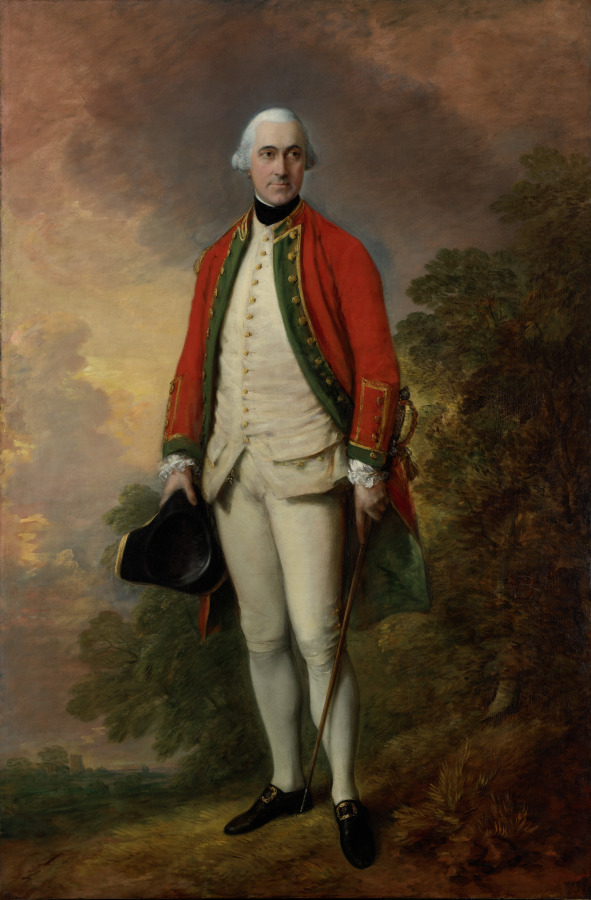
Thomas Gainsborough · The Cleveland Museum of Art · Gift of the John Huntington Art and Polytechnic Trust · CC0
- Name
- Thomas Gainsborough
- Birthplace
- Sudbury, Suffolk, England
- Died
- 2 August 1788
- Place of death
- London, England
- Training
- Hubert-François Gravelot, Francis Hayman
- Movement
- Rococo
- Known for
- * Landscape painting
- Born
- 1727
- Nationality
- United Kingdom
- Occupation
- painter · draftsperson · portraitist · landscape painter · architectural drafter · printmaker · artist
- Fields
- portrait painting · landscape painting · portrait
- Movements
- Rococo · English painting
VALÉORINE Encyclopedia
VALÉORINE documentary reading
Documentary summary
Thomas Gainsborough (14 May 1727 (baptised) – 2 August 1788) was an English painter, draughtsman and printmaker who specialised in portrait and landscape painting. Along with his rival Sir Joshua Reynolds, he was one of the most important British artists of the 18th century. He painted quickly, and the works of his maturity are characterised by a light palette and easy strokes.
Admitted source layer · organised and presented by VALÉORINE
Reference Check
Propose documentary evidence for Thomas Gainsborough. A contribution is never written directly as fact: identity, source, rights and evidence gates still decide.
Sign in to contribute
Documentary evidence
Documentary basis
Authority files
gnd · 16183415-2 · wikidata · Q192720 · wikipedia · Thomas Gainsborough
In this article
Biography
Biography
Despite being a prolific portrait painter, Gainsborough gained greater satisfaction from his landscapes. He is credited (with Richard Wilson) as the originator of the 18th-century British landscape school. Gainsborough was a founding member of the Royal Academy.
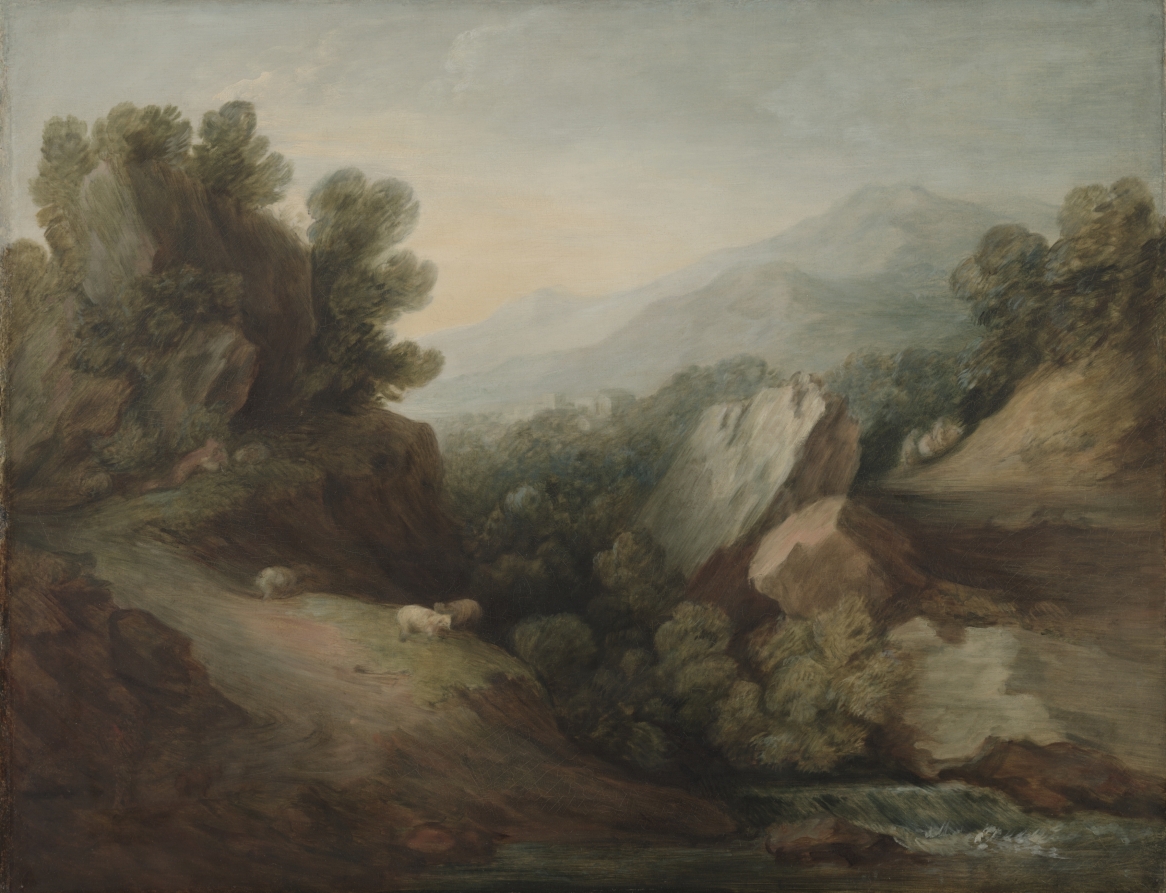
Rocky, Wooded Landscape with a Dell and Weir, c. 1782–1783, by Thomas Gainsborough
Thomas Gainsborough · The Cleveland Museum of Art · Mr. and Mrs. William H. Marlatt Fund
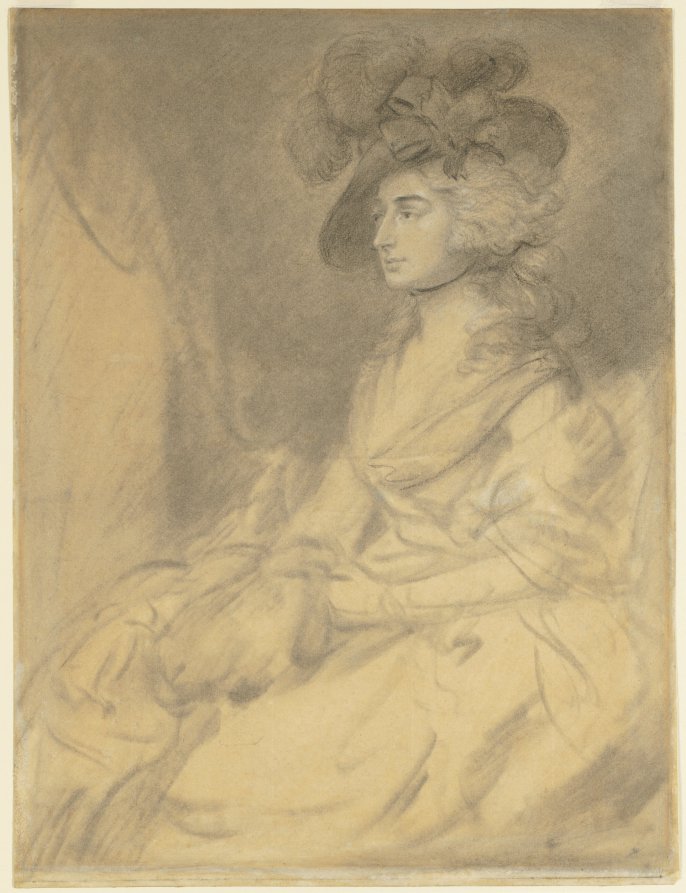
Mrs. Sarah Siddons, 1785, by Thomas Gainsborough
Thomas Gainsborough · The Cleveland Museum of Art · John L. Severance Fund
Key facts
Key facts
• Name — Thomas Gainsborough • Honorific Suffix — FRSA • Baptised — 1727 5 14 • Birthplace — Sudbury, Suffolk, England • Died — 2 August 1788 • Place of death — London, England • Training — Hubert-François Gravelot, Francis Hayman • Movement — Rococo • Children — 2, including Mary • Works — Mr and Mrs Andrews The Blue Boy • Resting Place — St Anne's Church, Kew • Known for — * Landscape painting • portrait painting
Early life
Early life
• Illustration — Lady Lloyd and Her Son, Richard Savage Lloyd, of Hintlesham Hall, Suffolk (1745–46), Yale Center for British Art Gainsborough was born in Sudbury, Suffolk, the youngest son of John Gainsborough, a weaver and maker of woollen goods, and his wife Mary, sister of the Reverend Humphry Burroughs. One of Gainsborough's brothers, Humphrey, is said to have invented the method of condensing steam in a separate vessel, which was of great service to James Watt; another brother, John, was known as Scheming Jack because of his passion for designing curiosities. The artist spent his childhood at what is now Gainsborough's House, on Gainsborough Street, Sudbury. He later resided there following the death of his father in 1748 and before his move to Ipswich. The building is now a house-museum dedicated to his life and art. As a boy he demonstrated impressive drawing and painting skills. At the age of ten he was painting heads and small landscapes, including a miniature self-portrait. Gainsborough left home in 1740 to study art in London, where he trained under engraver Hubert Gravelot but became associated with William Hogarth and his school. He assisted Francis Hayman in decorating the supper boxes at Vauxhall Gardens.
Suffolk
Suffolk
In 1746, Gainsborough married Margaret Burr, an illegitimate daughter of the 3rd Duke of Beaufort, who had settled a £200 annuity on her. The artist's work, then mostly consisting of landscape paintings, was not selling well. He returned to Sudbury in 1748–1749 and concentrated on painting portraits. While still in Suffolk, Gainsborough painted a portrait of The Rev. John Chafy Playing the Violoncello in a Landscape (c. 1750–1752; Tate Gallery, London). In 1752, he and his family, now including two daughters, Mary ("Molly", 1750–1826) and Margaret ("Peggy", 1751–1820), moved to Ipswich. Commissions for portraits increased, but his clients included mainly local merchants and squires. He had to borrow against his wife's annuity. Toward the end of his time in Ipswich, he painted a self-portrait, now in the permanent collection of the National Portrait Gallery, London. • Illustration — Margaret Burr (1728–1797), the artist's wife, c. early 1770s • Illustration — Self-Portrait (1754) • Illustration — The Artist's Daughters (c. 1759)
Bath
Bath
• Illustration — Portrait of Ann Ford, 1760, Cincinnati Art Museum • Illustration — The Blue Boy (1770). Huntington Library, San Marino, California In 1759, Gainsborough and his family moved to Bath, living at number 17 The Circus. There, he studied portraits by van Dyck and was eventually able to attract a fashionable clientele. Beginning with the Exhibition of 1761 he sent work to the annual exhibition of the Society of Artists of Great Britain (of which he was one of the earliest members) at Spring Gardens in London. From 1769 he submitted works to the Royal Academy's annual exhibitions. The exhibitions helped him enhance his reputation, and he was invited to become a founding member of the Royal Academy in 1769. His relationship with the academy was not an easy one and he stopped exhibiting his paintings in 1773. Despite Gainsborough's increasing popularity and success in painting portraits for fashionable society, he expressed frustration during his Bath period at the demands of such work and that it prevented him from pursuing his preferred artistic interests. In a letter to a friend in the 1760s Gainsborough wrote: "I'm sick of Portraits and wish very much to take my Viol da Gamba and walk off to some sweet Village where I can paint Landskips [landscapes] and enjoy the fag End of Life in quietness and ease". Of the men he had to deal with as patrons and admirers, and their pretensions, he wrote:... damn Gentlemen, there is not such a set of Enemies to a real artist in the world as they are, if not kept at a proper distance. They think... that they reward your merit by their Company & notice; but I... know that they have but one part worth looking at, and that is their Purse; their Hearts are seldom near enough the right place to get a sight of it. Gainsborough was so keen a viol da gamba player that he had at this stage five of the instruments, three made by Henry Jaye and two by Barak Norman.
London
London
• Illustration — Frances Browne, Mrs John Douglas (1746–1811), 1783–84, Waddesdon Manor In 1774, Gainsborough and his family moved to London to live in Schomberg House, Pall Mall. A commemorative blue plaque was put on the house in 1951. In 1777, he again began to exhibit his paintings at the Royal Academy, including portraits of contemporary celebrities, such as the Duke and Duchess of Cumberland. Exhibitions of his work continued for the next six years. About this time, Gainsborough began experimenting with printmaking using the then-novel techniques of aquatint and soft-ground etching. • Illustration — Portrait of Anne, Countess of Chesterfield (1777–78), J. Paul Getty Museum. His later pictures are characterised by a light palette and easy strokes. During the 1770s and 1780s Gainsborough developed a type of portrait in which he integrated the sitter into the landscape. An example of this is his portrait of Frances Browne, Mrs John Douglas (1746–1811) which can be seen at Waddesdon Manor. The sitter has withdrawn to a secluded and overgrown corner of a garden to read a letter, her pose recalling the traditional representation of Melancholy. Gainsborough emphasised the relationship between Mrs Douglas and her environment by painting the clouds behind her and the drapery billowing across her lap with similar silvery violet tones and fluid brushstrokes. This portrait was included in his first private exhibition at Schomberg House in 1784. In 1776, Gainsborough painted a portrait of Johann Christian Bach, the youngest son of Johann Sebastian Bach. Bach's former teacher Padre Martini of Bologna, Italy, was assembling a collection of portraits of musicians, and Bach asked Gainsborough to paint his portrait as part of this collection. The portrait now hangs in the National Portrait Gallery, London. In 1780, he painted the portraits of King George III and Queen Charlotte and afterwards received other royal commissions. In February 1780, his daughter Molly was married to his musician friend Johann Christian Fischer, to Gainsborough's dismay, as he realized that Fischer was forming an attachment to Molly while carrying on flirtation with Peggy. The marriage between Molly and Fischer lasted only eight months, owing to their discord and Fischer's deceit. In 1784, Principal Painter in Ordinary Allan Ramsay died and the King was obliged to give the job to Gainsborough's rival and Academy president, Joshua Reynolds. Gainsborough remained the royal family's favourite painter, however. In his later years, Gainsborough often painted landscapes. With Richard Wilson, he was one of the originators of the eighteenth-century British landscape school; though simultaneously, in conjunction with Reynolds, he was the dominant British portraitist of the second half of the 18th century. William Jackson in his contemporary essays said of him "to his intimate friends he was sincere and honest and that his heart was always alive to every feeling of honour and generosity". Gainsborough did not particularly enjoy reading but letters written to his friends were penned in such an exceptional conversational manner that the style could not be equalled. As a letter writer Henry Bate-Dudley said of him "a selection of his letters would offer the world as much originality and beauty as is ever traced in his paintings". In the 1780s, Gainsborough used a device he called a "Showbox" to compose landscapes and display them backlit on glass. The original box is on display in the Victoria and Albert Museum with a reproduction transparency. He died of cancer on 2 August 1788 at the age of 61. According to his daughter Peggy, his last words were "van Dyck". He is interred in the churchyard St Anne's Church, Kew, Surrey, (located on Kew Green). It was his express wish to be buried near his friend Joshua Kirby. Later his wife and nephew Gainsborough Dupont were interred with him. Coincidentally Johan Zoffany and Franz Bauer are also buried in the graveyard. In 2011, an appeal was given to pay the costs of restoration of his tomb, and the tomb was restored in 2012. A street in Kew, Gainsborough Road, is named after him.
Popular culture
Popular culture
• In the steampunk alternate history novel The Two Georges by Richard Dreyfuss and Harry Turtledove, the eponymous fictional Gainsborough painting serves as the macguffin. • Gainsborough's portrait The Blue Boy is shown in the 1988 comedy movie The Naked Gun: From the Files of Police Squad! in the office of the antagonist, Vincent Ludwig. • Gainsborough's The Blue Boy is also referenced in a 1995 episode of Keeping Up Appearances with Hyacinth Bucket stating at country house estate sale that she was "looking for something like Gainsborough's Blue Boy...only cheaper...". • In the Star Trek: The Next Generation episode Hollow Pursuits (1990), Wesley Crusher dresses up as The Blue Boy. • Cecil Beaton's play Gainsborough's Girls is set in London in 1774 when the painter moved his family to the capital. Previously unpublished, it received its first performance in Sudbury, Suffolk in 2019, followed by a short run at the Tower Theatre, London. • Simon Edge's comic novel A Right Royal Face-Off focuses on Gainsborough's relationship with King George III and his family, and his rivalry with Joshua Reynolds. • Stanley Kubrick was inspired by Gainsborough's paintings, amongst other artists of the 18th century, in creating the look and mannerisms for his 1975 film Barry Lyndon. • Gainsborough's portrait The Morning Walk (Portrait of Mr and Mrs William Hallett) is clearly visible over actor Daniel Craig's shoulder during a scene in the 2012 James Bond film Skyfall set in the National Gallery. • Gainsborough (played by Cecil Kellaway) performs a vital role in the 1945 film Kitty; saving the eponymous heroine from prison sets the plot, based on Pygmalion, in motion. • Gainsborough's portrait The Gravenor Family was cut and pasted into the sleeve of the 1983 Electric Light Orchestra album Secret Messages. • Gainsborough's portrait Cornard Wood, near Sudbury, Suffolk is referenced in the first season of the 2024 Netflix show The Gentlemen. • The CSS extended color Gainsboro (hex value #DCDCDC) is attributed to Gainsborough's use of similar light tones.
Gallery
Gallery
• Illustration — Clayton Jones (1745), Yale Center for British Art • Illustration — Conversation in a Park (1746), Louvre • Illustration — Portrait of a Woman (1750), Yale Center for British Art • Illustration — Portrait of John Plampin (1752), National Gallery • Illustration — Portrait of Edward Vernon (1753), National Portrait Gallery • Illustration — The Gravenor Family (1754), Yale Center for British Art • Illustration — The Painter's Daughters Chasing a Butterfly (1756), National Gallery • Illustration — A Man Called Mr. Wood, the Dancing Master (1757), Yale Center for British Art • Illustration — Mary Little, Later Lady Carr (c. 1763), Yale Center for British Art • Illustration — Portrait of the Artist's Daughters, 1763–64 Worcester Art Museum • Illustration — Portrait of Richard Howe, (1763), Kenwood House • Illustration — Portrait of Countess Howe, (1764), Kenwood House • Illustration — Portrait of the Composer Carl Friedrich Abel with his Viola da Gamba (c. 1765), National Portrait Gallery • Illustration — Theodosia Meade, Countess of Clanwilliam (Miss Hawkins-Magill), 1765 • Illustration — The lawyer Joshua Grigby III (1760/1765), Gemäldegalerie • Illustration — Portrait of Francis Bennett (1766), private collection • Illustration — Mrs Edmund Morton Pleydell c. 1765 • Illustration — Lady Elizabeth Montagu, Duchess of Buccleuch and Queensberry (c. 1767), Boughton House • Illustration — Portrait of Augustus Hervey (1767), Ickworth House • Illustration — Portrait of Ignatius Sancho (1768), National Gallery of Canada • Illustration — Sir Robert Clayton (1769), Walker Art Gallery • Illustration — Portrait of David Garrick (1770), National Portrait Gallery, London • Illustration — Maria, Lady Eardley (c. 1770) Nationalmuseum • Illustration — Portrait of Sir William Pulteney (1772), Yale Center for British Art • Illustration — The Linley Sisters (1772), Dulwich Picture Gallery • Illustration — Portrait of Johann Christian Bach (1776), National Portrait Gallery, London • Illustration — Captain John Stanley, in a 20th Regiment of Foot uniform, collection of Mary, Viscountess Eccles(1776) • Illustration — Portrait of Mary Gainsborough (1777), Tate Britain • Illustration — The Hon. Mrs. Thomas "Mary" Graham (c. 1775–77), National Gallery of Art • Illustration — Portrait of Mrs Mary Graham (1777), Scottish National Gallery (wearing Jacobean inspired gown) • Illustration — The Hon. Frances Duncombe (c. 1777) • Illustration — Mrs. Grace Dalrymple Elliott (1778), Metropolitan Museum of Art • Illustration — Sir Henry Bate-Dudley (1780) • Illustration — Portrait of James Christie (1778), J. Paul Getty Museum • Illustration — Portrait of Philip James de Loutherbourg (1778), Dulwich Picture Gallery • Illustration — Portrait of Margaret Gainsborough (1778), Courtauld Gallery • Illustration — Colonel John Bullock (c. 1780), Blanton Museum of Art • Illustration — [Richard st George] An officer of the 4th Regiment of Foot (c. 1776), National Gallery of Victoria • Illustration — Woman in Blue (c. 1780), Hermitage Museum • Illustration — Madame Lebrun (1780), Art Gallery of South Australia • Illustration — Portrait of Jeffery Amherst, 1780 • Illustration — Portrait of Henry Seymour Conway, 1780 • Illustration — Portrait of Queen Charlotte (c. 1781) Royal Collection • Illustration — Portrait of Giovanna Baccelli (c. 1782), Tate Britain • Illustration — Portrait of the Earl of Sandwich (1783), National Maritime Museum • Illustration — Portrait of Admiral Rodney (1783), Private Collection • Illustration — Portrait of Lord Cornwallis (1783), National Portrait Gallery • Illustration — Portrait of Lord Rawdon, 1784, São Paulo Museum of Art • Illustration — Portrait of the Earl of Buckinghamshire (1784), Blickling Hall • Illustration — The Three Eldest Princesses (1784) • Illustration — Portrait of Sarah Siddons (1785), National Gallery • Illustration — The Morning Walk (1785), National Gallery • Illustration — The Cottage Girl (1785), National Gallery of Ireland • Illustration — Portrait of Sophia Charlotte Digby, Lady Sheffield, (c. 1785–86), Waddesdon Manor • Illustration — The Marsham Children (1787), Gemäldegalerie • Illustration — Portrait of Georgiana, Duchess of Devonshire (1787), Chatsworth House • Illustration — Mrs Richard Brinsley Sheridan (1787), National Gallery of Art • Illustration — Cornard Wood, near Sudbury, Suffolk (1748), National Gallery • Illustration — Landscape in Suffolk (1748), Kunsthistorisches Museum • Illustration — Holywells Park, Ipswich (c. 1748–50), Christchurch Mansion • Illustration — Mr and Mrs Andrews (c. 1750), National Gallery • Illustration — Landscape with Stream and Weir (c. 1750–53), Yale Center for British Art • Illustration — Hilly Landscape with Figures Approaching a Bridge (c. 1763), watercolour, Yale Center for British Art • Illustration — Road from Market (c. 1767–68), Toledo Museum of Art • Illustration — The Mall in St. James's Park (1783), Frick Collection • Illustration — Coastal Landscape with a Shepherd and His Flock (c. 1783–84), Yale Center for British Art • Illustration — Romantic Landscape with Sheep at a Spring (1783), Royal Academy of Arts • Illustration — The Harvest Wagon (1784), Art Gallery of Ontario • Illustration — The Market Cart (1786), National Gallery • Illustration — River Landscape (undated), Yale Center for British Art
Identity and origins
Identity and origins
The authorities additionally record the headings Thomas Gainsboro, Thomas Gainsbro, Tomas Geĭnzbŭro, Tomas Geĭnsboro and Thomas Gainsborough RA. His recorded language was English. He was the child of John Gainsborough and Mary Elizabeth Burroughs. He married Margaret Burr Gainsborough. 2 children are recorded: Margaret Gainsborough and Mary Gainsborough Fischer. Other recorded relations include Gainsborough Dupont.
Career and activity
Career and activity
His work is associated with Rococo and English painting. He belonged to Royal Academy of Arts. He worked at Bath, Ipswich, London and Sudbury.
Work and production
Work and production
Works recorded as notable number 3: Sir George Chad, Baronet of Thursford, Sarah Rowlls Chad and Mr and Mrs Andrews. His recorded genres are portrait and landscape.
Life and career
Dated record
Life and career
Explore 1727–1788
The full dated record · 4 entries
1727
Thomas Gainsborough was born in 1727.
1770
Recto:)Winding Lane With Peasants And Cattle (Versolandscape Sketch) by Thomas Gainsborough - Thomas Gainsborough (Aberdeen Archives, Gallery and Museums collections).
1772
Gainsborough Dupont (National Gallery).
1788
Thomas Gainsborough died at London.
Technique
• Illustration — Girl with Pigs, 1781–82, private collection, was said by Sir Joshua Reynolds to be "the best picture he ever painted". The art historian Michael Rosenthal described Gainsborough as "one of the most technically proficient and, at the same time, most experimental artists of his time". He was noted for the speed with which he applied paint, and he worked more from observations of nature (and of human nature) than from application of formal academic rules. The poetic sensibility of his paintings caused John Constable to say, "On looking at them, we find tears in our eyes and know not what brings them." Gainsborough's enthusiasm for landscapes is shown in the way he merged figures of the portraits with the scenes behind them. His landscapes were often painted at night by candlelight, using a tabletop arrangement of stones, pieces of mirrors, broccoli, and the like as a model. His later work was characterised by a light palette and easy, economical strokes. Gainsborough's only known assistant was his nephew, Gainsborough Dupont.
Reputation
• Illustration — Portrait of Mrs Mary Graham (1777) Scottish National Gallery • Illustration — The Harvest Wagon (1767) • Illustration — Alice De Lancey Izard (between 1747 and 1788) Metropolitan Museum of Art His more famous works, The Blue Boy; Mr and Mrs Andrews; Portrait of Mrs Mary Graham; Mary and Margaret: The Painter's Daughters; William Hallett and His Wife Elizabeth, nee Stephen, known as The Morning Walk; and Cottage Girl with Dog and Pitcher, display the unique individuality of his subjects. His rival, Joshua Reynolds wrote that the painting Girl with Pigs was "the best picture he (Gainsborough) ever painted or perhaps ever will". Gainsborough's works became popular with collectors from the 1850s on, after Lionel de Rothschild began buying his portraits. The rapid rise in the value of pictures by Gainsborough and also by Reynolds in the mid 19th century was partly because the Rothschild family, including Ferdinand de Rothschild began collecting them. In 2011, Gainsborough's portrait of Miss Read (Mrs Frances Villebois) was sold by Michael Pearson, 4th Viscount Cowdray, for a record price of £6.54M, at Christie's in London. She was a matrilineal descendant of Cecily Neville, Duchess of York. • Illustration — Portrait of Lady Bate-Dudely (1787) Stephen Schwarzman collection The auction record was subsequently surpassed in July 2019 when the landscape Going to Market, Early Morning (1773) sold at Sotheby’s, London, for £7,961,000. Private sales have also reached high levels: in 2024–25 Blackstone co-founder Steve Schwarzman acquired the full-length Portrait of Lady Bate-Dudley (1787), previously on long-term loan to Tate, in a private transaction reported to be well in excess of the artist’s auction record. • Illustration — Portrait of Richard Tickell, Private collection • Illustration — Portrait of Giusto Ferdinando Tenducci, Private collection Smaller works have also fetched strong prices. In 2003, Gainsborough’s half-length Portrait of Richard Tickell from the Hillingdon Collection sold at Sotheby’s, London, for £1,853,600. In 2009 the half-length Portrait of Giusto Ferdinando Tenducci (the castrato singer), from the Yves Saint Laurent and Pierre Bergé collection, realised €1.9 million in Paris. Perhaps the most valuable of Gainsborough’s paintings is The Blue Boy (c. 1770), now at The Huntington. Purchased by Henry Huntington in 1921 for $728,000—a world-record price at the time—the painting is regarded by the museum as “priceless.”
Primary material
Documents and archives
scholarly publication
- Gainsborough, Thomas (1727–1788), painter and printmaker, Oxford Dictionary of National Biography, 2004
Scholarly · Crossref registry · 2004
- Gainsborough, Thomas, Benezit Dictionary of Artists, 2011
Scholarly · Crossref registry · 2011
reference work
- Wikidata, structured authority record Q192720: Thomas Gainsborough
Reputable secondary · Wikimedia Foundation
- “Thomas Gainsborough”, English Wikipedia, consulted as further reading
Reputable secondary · Wikipedia
authority file
- Gemeinsame Normdatei 16183415-2, Exhibition Thomas Gainsborough and the Modern Woman (2010 : London).
General reference · Deutsche Nationalbibliothek
Literature
Literature
Literature
“A beautiful assemblage of an interesting nature”: Gainsborough’s Charity Relieving Distress and the Reconciliation of High and Low Art, British Art Studies, 2015. William Hogarth, Thomas Gainsborough, and Britain’s Myth of the Self-Made Man, Forum, 2010.
Thomas Gainsborough, Thomas Gainsborough, 2003
Gainsborough, Thomas, Oxford Art Online, 2003
Gainsborough, Thomas, Benezit Dictionary of Artists, 2011
Gainsborough, Thomas (1727–1788), Oxford Dictionary of National Biography, 2018
Scholarly footprint
Literature
Scholarly footprint
A count of publications is evidence of attention, not of standing, and is given here only as a measure.
Notes from the source article
Cited by Wikipedia
Notes from the source article
These works are cited by the source article, in its own numbering. They are recorded as its citations, not as sources VALÉORINE has verified.
- 1.Roya Nikkhah. Reynolds and Gainsborough - artistic rivals' reconciliation revealed in Royal Academy show. The Daily Telegraph. 25 November 2012.
- 2.Hudson Hills. Masterworks of European Painting in the California Palace of the Legion of Honor. 111. 1999. 9781555951825.
- 3.Mary Woodall. Gainsborough's Landscape Drawings. Faber & Faber. 1. 1939.
- 4.National Gallery of Art. Thomas Gainsborough.
- 5.Fulcher, George William, Life of Thomas Gainsborough, London 1856
- 6.Grove. The dictionary of art (volume 11 Ferrara-Gainsborough). 907. 1996. 978-1884446009.
- 7.Conrad, Stephen, "Thomas Gainsborough's First Self-portrait", The British Art Journal, Vol. XII, No. 1, Summer 2011, pp. 52–59
- 8.Katharine Baetjer. British Paintings in the Metropolitan Museum of Art, 1575-1875. Metropolitan Museum of Art. 92. 2009. 9781588393487.
- 9.Tate Gallery website. Retrieved 3 November 2021.
- 10.Hamilton, James. Gainsborough: A Portrait. W&N. 2017-07-13. 978-1474600521.
- 11.The boy is back in town. BBC Suffolk.
- 12.Thomas Gainsborough. National Portrait Gallery.
- 13.Greenwood, Charles. Famous houses of the West Country. Kingsmead Press. 84–86. 1977. 978-0-901571-87-8.
- 14.Letter to William Jackson, from Bath, dated 4 June (but without the year), in M. Woodall (ed.), The Letters of Thomas Gainsborough (London, 1961), p. 115.
- 15.Letter to William Jackson, from Bath, dated 2 September 1767, in M. Woodall (ed.), The Letters of Thomas Gainsborough (London, 1961), p. 101.
- 16.Letter to William Jackson, from Bath, dated 4 June (but without the year), in M. Woodall (ed.), The Letters of Thomas Gainsborough (London, 1961), p. 115: "My comfort is, I have 5 Viols da Gamba, 3 Jayes and two Barak Normans."
- 17.openplaque 2
- 18.openplaques.org. Thomas Gainsborough Blue Plaque.
- 19.Rosenthal, Michael. "Gainsborough, Thomas". Grove Art Online. Oxford Art Online. Oxford University Press. Web.
- 20.Search Results. collection.waddesdon.org.uk.
- 21.Johann Christian Bach. National Portrait Gallery.
- 22.Bagnoli, Giorgio. The La Scala Encyclopedia of the Opera. Simon and Schuster. 38. 1993. 9780671870423.
- 23.Jackson, William. The Four Ages including essays on various subjects. Cadell & Davies. 161. 1798.
- 24.Jackson, William. The Four Ages including essays on various subjects. Cadell & Davies. 183. 1798.
- 25.Woodall, Mary, Introduction to The Letters of Thomas Gainborough, Cupid Press, London, 1963
- 26.Gainsborough's Showbox. www.vam.ac.uk. 2011-07-12.
- 27.Episode 5, Gainsborough, Book of the Week - BBC Radio 4. BBC.
- 28.Restoration of Thomas Gainsborough's tomb. Richmond Guardian. 7 March 2011.
- 29.The Restoration of the Tomb of Sir Thomas Gainsborough. Minerva Conservation. 2016.
- 30.Dunbar, Janet. A Prospect of Richmond. George Harrap. 199–209.
- 31.Birmingham Museum of Art. Birmingham Museum of Art: A Guide to the Collection. Giles. 80. 2010. 978-1-904832-77-5.
- 32.Willes, F.W. Letters of Joshua Reynolds, Cambridge University Press, Cambridge 1929
- 33.Hall, M. Waddesdon Manor: The Heritage of a Rothschild House, Scala, London, 2009, p. 77
- 34.Christie's.
- 35.Richard III – Family tree – Ann of York – Michael Ibsen – University of Leicester.
- 36.Turi E. King. Figure 1: Genealogical links between Richard III and modern-day relatives who participated in this study. Nature Communications. 5. 5631. 2014. 10.1038/ncomms6631.
- 37.Sotheby’s, London, Old Masters Evening Sale, 3 July 2019, lot 22 ( Going to Market, Early Morning realised £7,961,000).
- 38.John Gapper, “Blackstone’s Schwarzman stirs London art market with record purchases,” Financial Times , 25 January 2025.
- 39.Hester Davenport, “Portrait of a Lady as Evelina,” Burney Letter (Burney Centre Newsletter), vol. 10, no. 1 (Spring 2004), McGill University, p. 12 (reporting the 27 November 2003 Sotheby’s Hillingdon Collection sale of Gainsborough’s Portrait of Richard Tickell for £1,853,600).
- 40.Christie’s, Paris, Collection Yves Saint Laurent et Pierre Bergé, 23–25 February 2009, lot 76 ( Portrait de Giusto Ferdinando Tenducci tenant une partition realised €1.9 million / €2,193,000 including premium).
- 41.The Huntington Library, Art Museum, and Botanical Gardens, “ The Blue Boy ,” noting the 1921 purchase price of $728,000 and describing the painting as a “priceless portrait.”
- 42.Tower Theatre Company : Gainsborough's Girls.
- 43.A Right Royal Face-Off by Simon Edge | Eye Books.
- 44.The English paintings that inspired Stanley Kubrick art Agenda Phaidon. www.phaidon.com.
- 45.Gainsborough painting restored and rehung after 'drill-bit attack'. TheGuardian.com. 28 March 2017.
- 46.Richard St George Life and Death Exhibt"accessed 21 June 2026
Bibliography printed in the source article · 27
- Thomas Gainsborough, William T. Whitley, (John Murray, 1915)
- Gainsborough, Ellis Waterhouse, (Edward Hulton, 1958) – the standard catalogue of the portraits etc.
- The Letters of Thomas Gainborough, ed. Mary Woodall, (Cupid Press, 1963)
- The Drawings of Thomas Gainsborough, John Hayes, (Two volumes, Zwemmer, 1970) – the standard catalogue of the drawings
- Gainsborough as Printmaker, John Hayes, (Zwemmer, 1971) – the standard catalogue of the prints
- Gainsborough, John Hayes, (Phaidon, 1975)
- Gainsborough & Reynolds in the British Museum, ed. Timothy Clifford, Antony Grffiths and Martin Royalton-Kisch, (BMP, 1978)
- Thomas Gainborough, John Hayes, (Tate Gallery, 1981)
- The Landscape Paintings of Thomas Gainsborough, John Hayes (Two volumes, Sotheby's, 1982) – the standard catalogue on the landscape paintings
- Thomas Gainsborough: His Life and Art, Jack Lindsay, (Granada, 1981)
- A Nest of Nightingales: Thomas Gainsborough, The Linley Sisters. Paintings and their Context II, ed. Giles Waterfield, (Dulwich PIcture Gallery, 1988)
- The Paintings of Thomas Gainborough, Malcolm Cormack, (Cambridge University Press, 1991)
- Gainsborough & Reynolds: Contrasts in Royal Patronage, exhibition catalogue, (Queen's Gallery, 1994)
- Gainsborough's Vision, Amal Asfour and Paul Williamson (Liverpool University Press, 1999)
- The Art of Thomas Gainborough: A little business for the Eye, Michael Rosenthal, (Yale University Press, 1999)
- The Letters of Thomas Gainsborough, ed. John Hayes (Yale University Press, 2001)
- Gainsborough, eds. Michael Rosenthal and Martin Myrone, (Tate, 2002)
- Gainsborough in Bath, Susan Sloman, (Yale University Press, 2002)
- Gainsborough, William Vaughan, (World of Art, Thames & Hudson, 2002) – the most accessible introduction
- Sensation & Sensibility: Viewing Gainsborough's Cottage Door, ed. Ann Bermingham (Yale University Press, 2005)
- Thomas Gainsborough's First Self-portrait, Stephen Conrad, in The British Art Journal, Vol. XII, No. 1, Summer 2011, pp. 52–59
- Thomas Gainsborough and the Modern Woman, ed. Benedict Leca, (Giles, 2011)
- Gainsborough's Landscapes: Themes and Variations, Susan Sloman, (Philip Wilson, 2012)
- Gainsborough: A Portrait, James Hamilton, (W&N, 13 July 2017)
- Belsey, Hugh. Gainsborough, Thomas (1727–1788).
- Monkhouse, William Cosmo. 20.
- Rossetti, William Michael. 11. 388–389.
References
Citations
References
Each reference names the institution holding it, so a reader may go to the document itself.
scholarly publication
Gainsborough, Thomas (1727–1788), painter and printmaker, Oxford Dictionary of National Biography, 2004Crossref registry
Institutional witnessscholarly publication
Gainsborough, Thomas, Benezit Dictionary of Artists, 2011Crossref registry
Institutional witnessauthority file
Gemeinsame Normdatei 16183415-2, Exhibition Thomas Gainsborough and the Modern Woman (2010 : London).Deutsche Nationalbibliothek
Secondary witnessreference work
Wikidata, structured authority record Q192720: Thomas GainsboroughWikimedia Foundation
Secondary witnessreference work
Secondary witness
The Encyclopedia exists whether or not anything is for sale. Corrections are recorded rather than overwritten, and every version of this record is kept. Published 14 August 2026.
Elsewhere in Prints
4,138 published records in this field, each with its sources named.
- Thomas EnderEngraver
- Thomas FairlandEngraver
- Thomas FieldingEngraver
- Thomas FlatmanEngraver
- Thomas GarnerEngraver
- Thomas GaugainEngraver
- Thomas GeminusEngraver
- Thomas Georg DriendlEngraver
Best supported in this field
For owners
Own a work by Thomas Gainsborough?
A specialist will read what you send and tell you what the house can establish, what it cannot, and whether the object is suited to sale. There is no charge and no obligation. The object stays with you throughout; nothing is shipped to us unless it is arranged in writing beforehand.