
Rosso Fiorentino
Giovanni Battista di Jacopo (8 March 1495 – 14 November 1540), known as Rosso Fiorentino (meaning "Florentine Redhead" in Italian) or Il Rosso ("The Redhead"), was an Italian Mannerist painter who worked in oil and fresco and belonged to the Florentine school.
Also recorded as Maitre Roux · Giovanni Battista di Iacopo Rosso · Giovanni Battista di Jacopo Rosso · Il Rosso Fiorentino Rosso
Rosso Fiorentino
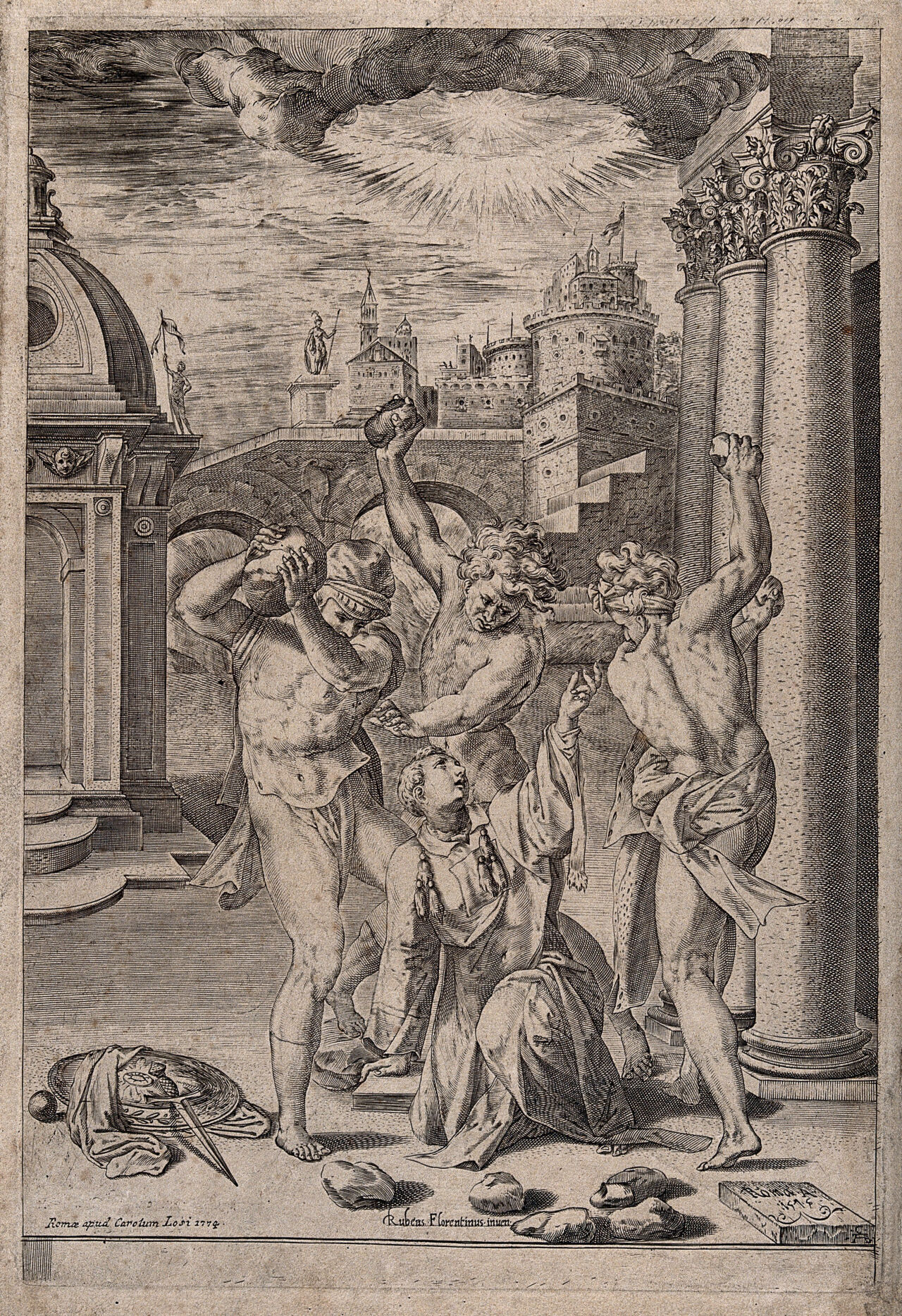
Rosso Fiorentino · Wellcome Collection, London · Wellcome Collection · Public Domain Mark
- Name
- Rosso Fiorentino
- Birth Name
- Giovanni Battista di Jacopo
- Born
- 8 March 1495
- Birthplace
- Florence, Republic of Florence
- Died
- 14 November 1540
- Place of death
- Fontainebleau, Kingdom of France
- Field
- Painting
- Movement
- Mannerism
- Nationality
- Italy
- Occupation
- painter · printmaker · draftsperson · fresco painter · designer
- Known for
- Allegory of Salvation with the Virgin and Christ Child, St. Elizabeth and the Young St. John the Baptist and Two Angels · Madonna between Two Saints · Marriage of the Virgin · Moses Defending the Daughters of Jethro
VALÉORINE Encyclopedia
VALÉORINE documentary reading
Documentary summary
Giovanni Battista di Jacopo (8 March 1495 – 14 November 1540), known as Rosso Fiorentino (meaning "Florentine Redhead" in Italian) or Il Rosso ("The Redhead"), was an Italian Mannerist painter who worked in oil and fresco and belonged to the Florentine school.
Admitted source layer · organised and presented by VALÉORINE
Note VALÉORINE
Rosso Fiorentino (1494–1540) was an Italian designer, draftsperson and fresco painter, among other activities. The designer was associated with Mannerism. Works include Madonna between Two Saints, Marriage of the Virgin and Moses Defending the Daughters of Jethro.
Composed from admitted, traceable facts · 27 September 2026
VALÉORINE
Reference Check
Propose documentary evidence for Rosso Fiorentino. A contribution is never written directly as fact: identity, source, rights and evidence gates still decide.
Sign in to contribute
World of VALÉORINE
Documentary connections
Only confirmed graph relationships appear here. Images are shown only when their identity and reuse rights both pass the documentary gate.


Documentary evidence
Evidence Panel
not yet certified
- Identity
- resolved
- Independent source families
- 0
- Admitted assertions
- 0
- Open conflicts
- 0
Authority files
getty · 500014451 · wikidata · Q312617 · wikipedia · Rosso Fiorentino
In this article
Key facts
Key facts
• Name — Rosso Fiorentino • Birth Name — Giovanni Battista di Jacopo • Born — 8 March 1495 • Birthplace — Florence, Republic of Florence • Died — 14 November 1540 • Place of death — Fontainebleau, Kingdom of France • Field — Painting • Movement — Mannerism • Illustration — Moses Defending the Daughters of Jethro by Rosso Fiorentino (c.1523) at the Uffizi Gallery, Florence.
Biography
Biography
Born in Florence with the red hair that gave him his nickname, Rosso first trained in the studio of Andrea del Sarto alongside his contemporary, Pontormo. His early works include Holy Family with the Infant Saint John the Baptist (Walters Art Gallery), Cherub Playing a Lute (Uffizi) and The Infant Saint John the Baptist (private collection), all produced around 1521. In late 1523, Rosso moved to Rome, where he was exposed to the works of Michelangelo, Raphael, and other Renaissance artists, resulting in the realignment of his artistic style. Fleeing Rome after the Sacking of 1527, Rosso eventually went to France where he secured a position at the court of Francis I in 1530, remaining there until his death. Together with Francesco Primaticcio, Rosso was one of the leading artists to work at the Chateau Fontainebleau as part of the "First School of Fontainebleau", spending much of his life there. Following his death in 1540 (which, according to an unsubstantiated claim by Vasari, was a suicide), Francesco Primaticcio took charge of the artistic direction at Fontainebleau. Rosso's reputation, along those of other stylized late Renaissance Florentines, was long out of favour in comparison to other more naturalistic and graceful contemporaries, but has revived considerably in recent decades. That his masterpiece is in a small city, away from the tourist track, was a factor in this, especially before the arrival of photography. His poses are certainly contorted, and his figures often appear haggard and thin, but his work has considerable power.
Deposition from the Cross
Deposition from the Cross
• Illustration — Rosso Fiorentino. Descent from the Cross. 1521. Oil on wood. 375 × 196 cm. Pinacoteca Comunale di Volterra, Italy. His masterpiece is generally considered to be the Deposition or Descent from the Cross altarpiece in the Pinacoteca Comunale di Volterra (initially painted for the Duomo). In contrast to the frozen grief of other depositions, this one appears as a hurried and complicated operation, while the figures below have simple and forceful expressions of quiet grief, with powerful expressions hinted at by hidden faces. The sky is somber. The three ladders and those carrying down Christ appear precarious. Christ himself is sallow. Contrast this frenetic, windswept scene with the equally complex, but more restrained composition on the same theme by the near contemporary Florentine Mannerist Pontormo. Rosso would go on to paint a second, darker and more crowded Deposition altarpiece for the church of San Lorenzo in Sansepolcro.
Gallery
Gallery
• Illustration — Portrait of a Young Man (1516–18) • Illustration — Portrait of a Young Man Seated on a Carpet (c. 1525–1527) • Illustration — Sacred Conversation with Musical Angels (1518), Uffizi, Florence • Illustration — Allegory of Salvation with the Virgin and Christ Child, St. Elizabeth, the Young St. John the Baptist and Two Angels (c. 1520) • Illustration — Descent from the Cross, detail • Illustration — Descent from the Cross, detail • Illustration — Marriage of the Virgin and Saints (1523) • Illustration — Bacchus, Venus and Cupid (c. 1531) • Illustration — Elephant, Château de Fontainebleau (c. 1536) • Illustration — Diana, Château de Fontainebleau
Identity and origins
Identity and origins
His recorded language was Italian.
Work and production
Work and production
Works recorded as notable number 4: Allegory of Salvation with the Virgin and Christ Child, St. Elizabeth, the Young St. John the Baptist and Two Angels, Madonna between Two Saints, Marriage of the Virgin and Moses Defending the Daughters of Jethro.
Life and career
Dated record
Life and career
The full dated record · 2 entries
1494
Rosso Fiorentino was born on 8 March 1494.
1540
Rosso Fiorentino died on 14 November 1540.
Context
Primary material
Context
Rosso Fiorentino is associated with Mannerism.
Documents and archives
Primary material
Documents and archives
authority file
- Getty Union List of Artist Names 500014451, Rosso Fiorentino.
Unverified · The Getty Research Institute
authority record
- Wikidata, structured authority record Q312617: Rosso Fiorentino
Unverified · Wikidata
reference work
- “Rosso Fiorentino”, English Wikipedia, consulted as further reading
Reputable secondary · Wikipedia
References
Citations
References
Each reference names the institution holding it, so a reader may go to the document itself.
authority file
Getty Union List of Artist Names 500014451, Rosso Fiorentino.The Getty Research Institute
Partially resolvedauthority record
Partially resolvedreference work
Partially resolved
People, houses and institutions
Knowledge graph
People, houses and institutions
Teachers, collaborators, publishers and institutions recorded against this person, each on a stated basis.
Died at
1- ParisPlace
Established from a fact already recorded on a verified source.
The Encyclopedia exists whether or not anything is for sale. Corrections are recorded rather than overwritten, and every version of this record is kept. Published 14 August 2026.
Elsewhere in Prints
4,138 published records in this field, each with its sources named.
- Rosalind Bengelsdorf BrowneEngraver
- Rosemary KilbournEngraver
- Roser BruEngraver
- Roslyn SwartzmanEngraver
- Rowland LangmaidEngraver
- Roy RagleEngraver
- Rubem ValentimEngraver
- Rubén Ortiz TorresEngraver
Best supported in this field
For owners
Own a work by Rosso Fiorentino?
A specialist will read what you send and tell you what the house can establish, what it cannot, and whether the object is suited to sale. There is no charge and no obligation. The object stays with you throughout; nothing is shipped to us unless it is arranged in writing beforehand.