
Francesco Salviati
Francesco Salviati or Francesco de' Rossi (1510 – 11 November 1563) was an Italian Mannerist painter who lived and worked in Florence, with periods in Bologna and Venice, ending with a long period in Rome, where he died. He is known by various names, usually the adopted one of Francesco Salviati or Il Salviati, after an early patron, but also Francesco Rossi and Cecchino del Salviati. He worked in fresco and oils, on ambitious history paintings, but also painted many portraits, and designed tapestries for the Medici.
Also recorded as Francesco de' Rossi · Francesco Cecchino Salviati · Cecchino Salviati · Il Salviati
Francesco Salviati
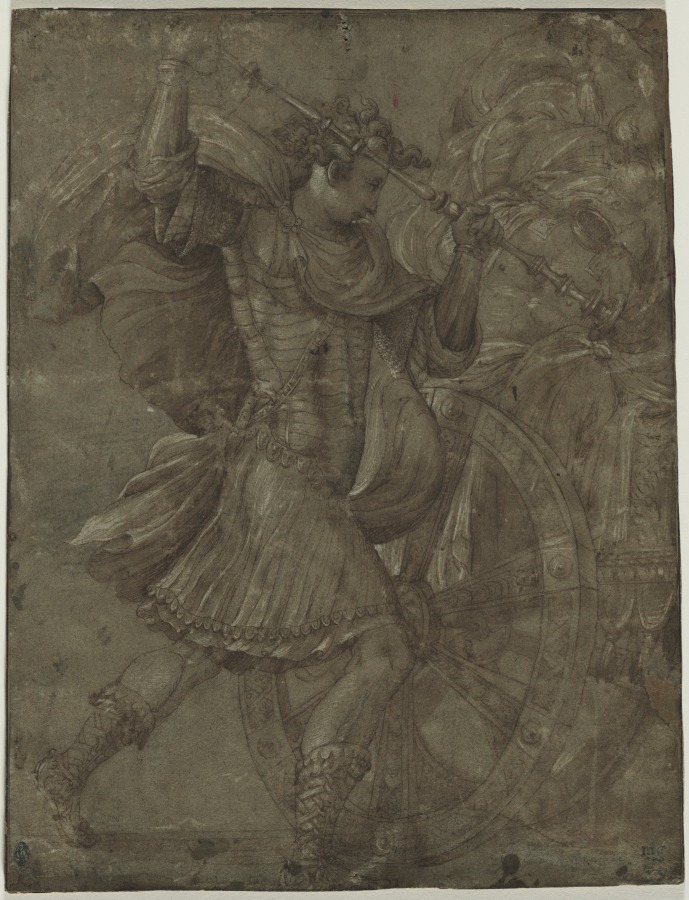
Francesco Salviati · The Cleveland Museum of Art · Dudley P. Allen Fund · CC0
- Name
- Francesco Salviati
- Birth Name
- Francesco de' Rossi
- Born
- 1510
- Birthplace
- Florence, Republic of Florence
- Died
- 11 November 1563
- Place of death
- Rome, Papal States
- Movement
- Mannerism
- Nationality
- Duchy of Florence
- Occupation
- painter · draftsperson · designer · visual artist
- Fields
- portrait
- Known for
- Charity · The Incredulity of Saint Thomas · Stories of David · Adoration of the sheperds · Annunciation · Seasons
Reference Check
Propose documentary evidence for Francesco Salviati. A contribution is never written directly as fact: identity, source, rights and evidence gates still decide.
Sign in to contribute
World of VALÉORINE
Documentary connections
Only confirmed graph relationships appear here. Images are shown only when their identity and reuse rights both pass the documentary gate.

Documentary evidence
Documentary basis
Authority files
wikidata · Q704594
In this article
Key facts
Key facts
• Name — Francesco Salviati • Birth Name — Francesco de' Rossi • Born — 1510 • Birthplace — Florence, Republic of Florence • Died — 11 November 1563 • Place of death — Rome, Papal States • Notable Works — The Incredulity of Saint Thomas • Movement — Mannerism
Biography
Biography
Salviati was born in Florence, Italy. He apprenticed under Giuliano Bugiardini, Baccio Bandinelli, Andrea del Brescianino, and finally (in 1529–1530) Andrea del Sarto. In 1531, he travelled to Rome, where he met another pupil of Bandinelli's, Giorgio Vasari, and helped to complete the frescoes on the Life of John the Baptist in the Palazzo Salviati for his patron, the Cardinal Giovanni Salviati. It is from his attachment to this household that he took on the surname. In Rome, he frescoed an Annunciation in the church of San Francesco a Ripa (1533–1535). His mature style has Mannerist contortions and crowded scenes similar to the output of Giulio Romano. In 1538 he joined Jacopino del Conte, completing a fresco of the Visitation for the Oratory of San Giovanni Battista Decollato in Rome, the church of a Florentine fraternity ministering to persons who had been condemned to execution. Salviati painted in Bologna in 1540 alongside Vasari, and stayed for a brief time in Venice, where he frescoed decorations for the Palazzo Grimani di Santa Maria Formosa in an antique style. During this period, his style shows the influences of Parmigianino. His many portrait paintings can sometimes be confused for Bronzino. In 1543, Salviati returned to Florence. Working for Cosimo I de' Medici, Grand Duke of Tuscany, he completed a fresco decoration eulogising the Medici family (the Triumph of Camillus in the Sala dell'Udienza of the Palazzo Vecchio, 1543–1545). He also designed tapestry cartoons for the recently established Arazzeria, including Ecce Homo, the Resurrection, and Joseph explains the Pharaoh's dreams. The latter commission was awarded after a competition, which pitted him against his contemporary Florentine Mannerists Bronzino and Pontormo. He painted a Deposition altarpiece for Santa Croce in 1547–1548. This crowded and complex subject was a key one for Italian painters of the Late Renaissance. He often travelled to Rome between 1548 and 1563, to complete various fresco series, such as the Wedding at Cana in the Oratory of the Piceni, a Birth of John the Baptist in the Oratory of San Giovanni Battista Decollato, in the Palazzo della Cancelleria (Pallium Cappella), in the Palazzo Sacchetti (Life of David), and in the Palazzo Farnese. He died in Rome on 11 November 1563.
Life and career
Dated record
Life and career
The full dated record · 2 entries
1509
Francesco Salviati was born on 1 January 1509.
1563
Francesco Salviati died on 11 November 1563.
Collections
Many of his larger works are still in situ, and the Cleveland Museum of Art, the Courtauld Institute of Art, the J. Paul Getty Museum, Harvard University Art Museums, the Hermitage Museum, the Honolulu Museum of Art, the Liechtenstein Museum (Vienna), the Louvre, the Metropolitan Museum of Art, the Museo Poldi Pezzoli (Milan), Museum der bildenden Künste (Leipzig), the Museum of Fine Arts, Boston, the National Gallery of Art (Washington, DC), the Pinacoteca di Brera (Milan), the Ringling Museum of Art (Florida), the Royal Museums of Fine Arts of Belgium, the Saint Louis Art Museum, the Prado Museum (Madrid), the Toledo Museum of Art (Ohio), and the Uffizi are among the public collections holding paintings by Salviati.
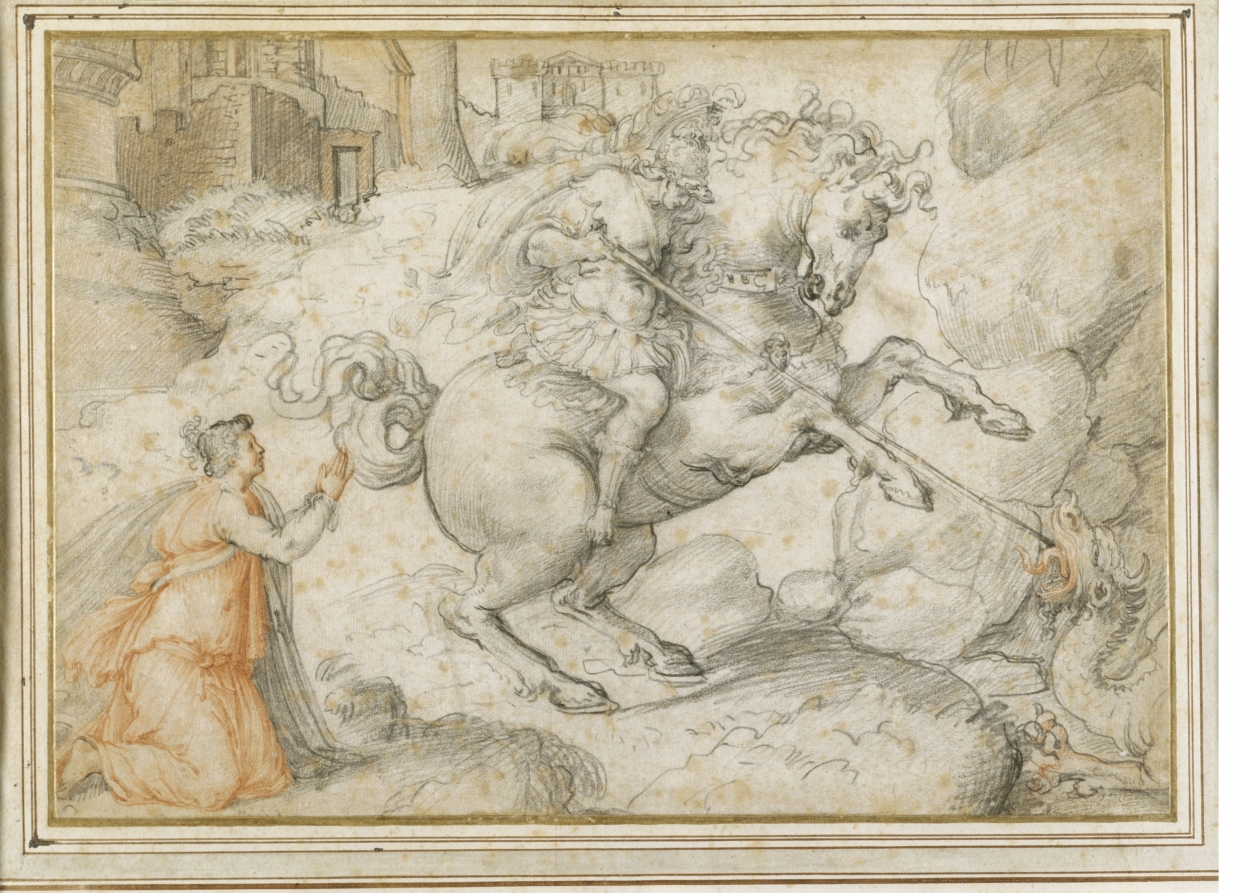
St. George and the Dragon, c. 1530s, by Francesco Salviati
Francesco Salviati · The Cleveland Museum of Art · John L. Severance Fund
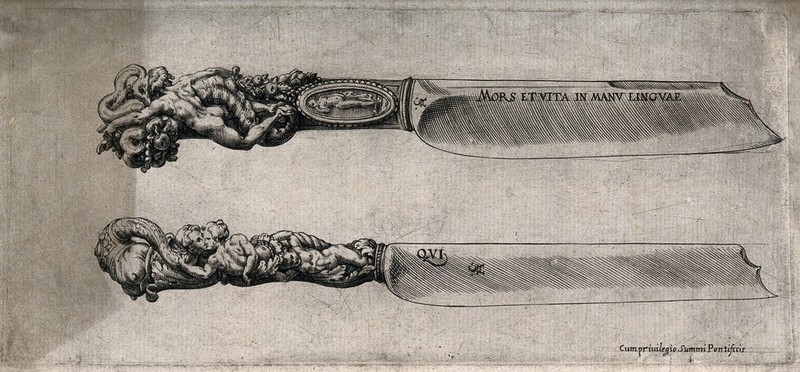
Two knives with ornate handles, incorporating human figures and ornament in the grotesque style. Engraving by C. Alberti, after F. Salviati, 1575/1600?., [1575/1600?], by Francesco Salviati
Francesco Salviati · Wellcome Collection, London · Wellcome Collection
Text attribution
Licensing
Text attribution
Part of the biographical narrative on this page reuses licensed material. Its origin, revision and licence are recorded here.
The biographical narrative on this page is based on the Wikipedia article Francesco Salviati (painter), revision 1370413058 (EN edition), by its contributors. VALÉORINE has edited that text and built its own documentary record around it. The reused material is available under CC BY-SA 4.0, and this page's reuse of it is offered under the same licence. Everything else on this page — the chronology, the holdings, the evidence, the plates and the connections — is VALÉORINE's own record. Sources and licences.
References
Citations
References
Each reference names the institution holding it, so a reader may go to the document itself.
authority record
Secondary witness
The Encyclopedia exists whether or not anything is for sale. Corrections are recorded rather than overwritten, and every version of this record is kept. Published 14 August 2026.
Elsewhere in Modern design
3,254 published records in this field, each with its sources named.
- Frances SorrellDesigner
- Frances StarkDesigner
- Francesco Bassano the YoungerDesigner
- Francesco BilottoDesigner
- Francis BaconDesigner
- Francis Cyril RoseDesigner
- Francis Davis MilletDesigner
- Francis Ernest JacksonDesigner
Best supported in this field
For owners
Own a work by Francesco Salviati?
A specialist will read what you send and tell you what the house can establish, what it cannot, and whether the object is suited to sale. There is no charge and no obligation. The object stays with you throughout; nothing is shipped to us unless it is arranged in writing beforehand.