
New Sculpture
Illustration — Alfred Gilbert's Shaftesbury Memorial Fountain in Piccadilly Circus, London, is one of the best-known examples of the New Sculpture. A movement in late 19th-century British sculpture with an emphasis on naturalistic poses and spiritual subjects. The movement was characterised by the production of free-standing statues and statuettes of 'ideal' figures from poetry or mythology.
New Sculpture

Diego Delso · CC BY-SA 4.0
- Region
- United Kingdom
VALÉORINE Encyclopedia
VALÉORINE documentary reading
Documentary summary
Illustration — Alfred Gilbert's Shaftesbury Memorial Fountain in Piccadilly Circus, London, is one of the best-known examples of the New Sculpture. A movement in late 19th-century British sculpture with an emphasis on naturalistic poses and spiritual subjects. The movement was characterised by the production of free-standing statues and statuettes of 'ideal' figures from poetry or mythology.
Admitted source layer · organised and presented by VALÉORINE
Reference Check
Propose documentary evidence for New Sculpture. A contribution is never written directly as fact: identity, source, rights and evidence gates still decide.
Sign in to contribute
World of VALÉORINE
Documentary connections
Only confirmed graph relationships appear here. Images are shown only when their identity and reuse rights both pass the documentary gate.
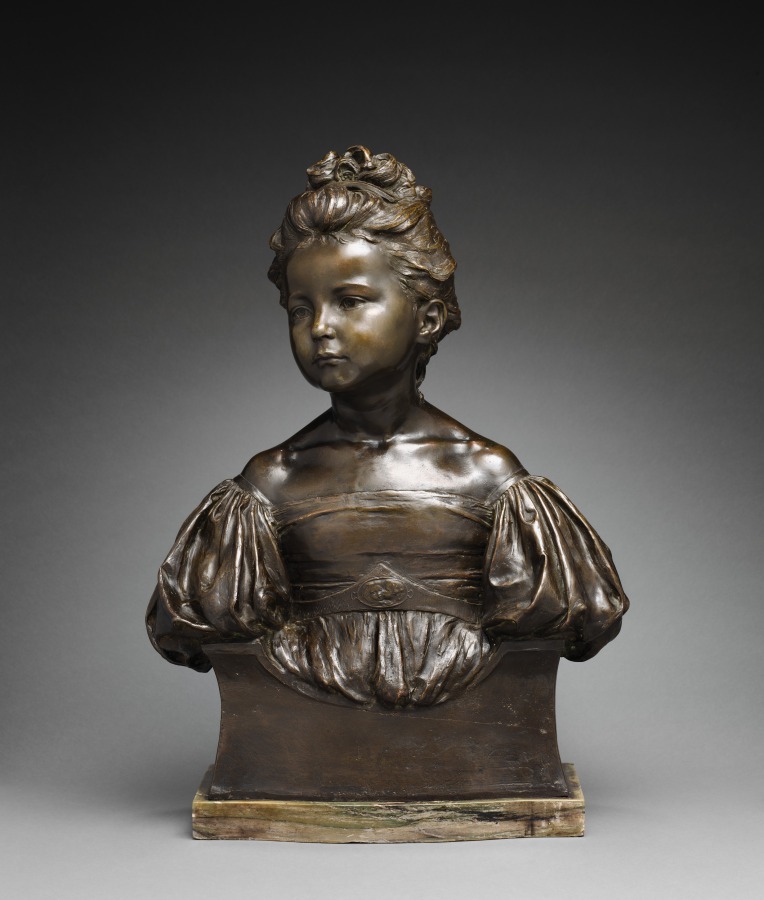
Associated With · incoming
Alfred Drury
Artist
Purchase from the J. H. Wade Fund

Associated With · incoming
Andrea Carlo Lucchesi
Artist
Self-taken photo of a structure in a public place (Ben Rudiak-Gould)

Associated With · incoming
C. J. Allen
Artist
Own work

Associated With · incoming
F. W. Pomeroy
Artist
https://www.victorianweb.org/sculpture/pomeroy/index.html

Associated With · incoming
Gilbert Bayes
Artist
Own work
Located In · outgoing
United Kingdom
Place

Associated With · incoming
William Goscombe John
Artist
National Museum Wales
Documentary evidence
Documentary basis
Authority files
gnd · 5507810-2 · wikidata · Q11811815 · wikipedia · New Sculpture
In this article
Sculptors
Sculptors
These figures were usually in bronze but a mixture of materials, such as ivory and gem stones, to give a polychromic effect, were also used. "New Sculpture" is most closely associated with the period from 1880 to 1910, although some artists continued to work in the style much further into the 20th-century. The term "New Sculpture" was coined by the art critic Edmund Gosse, who wrote a four-part series for The Art Journal in 1894. After a protracted period of a stylized neoclassicism, sculpture in the last quarter of the century began to explore a greater degree of naturalism and wider range of subject matter. The French sculptor Jules Dalou, in his eight-year English exile after the Paris Commune events in 1871, taught modelling at the South Kensington School of Art, and then at the Lambeth School of Art. He profoundly influenced a new generation of British sculptors, helping to usher in a new approach to the medium. The catalyst for this development is usually understood to be the exhibition, in 1877, of Frederic Leighton's An Athlete Wrestling with a Python. This was Leighton's first major sculpture, and he intended it as a challenge to the prevailing styles of sculpture. It reflected his interest in a more dynamic and vibrant representation of the human body and a shift from easily legible and didactic subject matter. Many sculptors looked to the Athlete and created responses to it in the following years. The New Sculpture represents an alternate formulation of a new direction for sculpture at the end of the nineteenth century. Whereas the major French alternative to mid-19th-century sculpture, Auguste Rodin, increasingly left the accurate representation of the human body behind, the New Sculptors by and large chose to grapple with issues arising from the naturalistic representation of the body and the detailed rendering of its surface variations. The New Sculpture does not represent one singular style, but rather a range of options developed to make sculpture more vital and lifelike. A small exhibition dedicated to the New Sculpture was held at Tate Britain during the summer and early autumn of 2010. Works on display included Pandora by Harry Bates, Mother Teaching Child and three small bronzes by Alfred Gilbert, The Singer, Applause and Folly by Edward Onslow Ford, Lycidas by James Havard Thomas, The Sluggard by Frederic Leighton and The Nymph of Loch Awe by F.W.
Major figures associated with the New Sculpture, either by making a significant contribution to the movement or whose work was influenced by that of the major protagonists include:
Places
Named by the record
Places
Only places the record itself states, plotted where the house gazetteer settles their coordinates. Nothing is inferred from a name or a nationality.
- United Kingdom
Named but not plotted · 1
New Sculpture is associated with United Kingdom.
Country
Figures, places and works
Knowledge graph
Figures, places and works
Those recorded within this movement, and the places and works associated with it.
Associated with
2- Alfred DruryArtist
Established from a fact already recorded on a verified source.
- C. J. AllenArtist
Established from a fact already recorded on a verified source.
Primary material
Documents and archives
reference work
- Wikidata, structured authority record Q11811815: New Sculpture
Reputable secondary · Wikidata
- “New Sculpture”, English Wikipedia, consulted as further reading
Reputable secondary · Wikipedia
authority file
- Gemeinsame Normdatei 5507810-2, New Sculpture Museum Foundation.
General reference · Deutsche Nationalbibliothek
Notes from the source article
Cited by Wikipedia
Notes from the source article
These works are cited by the source article, in its own numbering. They are recorded as its citations, not as sources VALÉORINE has verified.
- 1.Ian Chilvers. The Oxford Dictionary of Art. Oxford University Press. 2004. 0 19 860476 9.
- 2.Art Term: New Sculpture. Tate.
- 3.Susan Beattie. The New Sculpture. Paul Mellon Centre for Studies in British Art / Yale University Press. 1983. 0300033591.
Bibliography printed in the source article · 5
- Curtis, Penelope, et al. eds. Sculpture in 20th-Century Britain. Leeds: Henry Moore Institute, 2003.
- Getsy, David. Body Doubles: Sculpture in Britain, 1877–1905. New Haven and London: Yale University Press, 2004.
- Getsy, David, ed., Sculpture and the Pursuit of a Modern Ideal in Britain, c.1880–1930. Aldershot: Ashgate, 2004.
- Gosse, Edmund. The New Sculpture: 1879–1894. The Art Journal. 56. 138–42, 199–203, 277–82, 306–11. 1894.
- Read, Benedict. Victorian Sculpture. New Haven: Yale University Press, 1982.
References
Citations
References
Each reference names the institution holding it, so a reader may go to the document itself.
authority file
Gemeinsame Normdatei 5507810-2, New Sculpture Museum Foundation.Deutsche Nationalbibliothek
Secondary witnessreference work
Secondary witnessreference work
Secondary witness
The Encyclopedia exists whether or not anything is for sale. Corrections are recorded rather than overwritten, and every version of this record is kept. Published 16 August 2026.
Elsewhere in Terminology
620 published records in this field, each with its sources named.
- New Peasant PoetsMovement
- New PrimitivismMovement
- New RomanticMovement
- New schoolMovement
- New SimplicityMovement
- New Valencian SchoolMovement
- New VisionMovement
- New WaveMovement
Best supported in this field
For owners
Own an object connected with New Sculpture?
A specialist will read what you send and tell you what the house can establish, what it cannot, and whether the object is suited to sale. There is no charge and no obligation. The object stays with you throughout; nothing is shipped to us unless it is arranged in writing beforehand.