
Maruyama Ōkyo
Also recorded as Maruyama Okyo · Ōkyo Maruyama
Maruyama Ōkyo
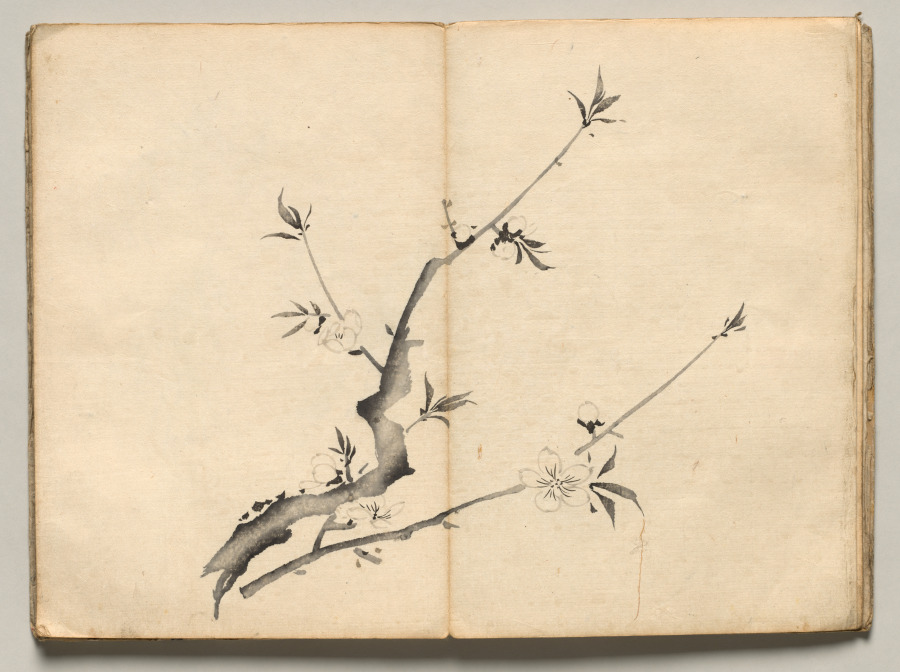
Maruyama Ōkyo · The Cleveland Museum of Art · The Kelvin Smith Collection, given by Mrs. Kelvin Smith · CC0
- Name
- Maruyama Ōkyo
- Birth Name
- Maruyama Masataka
- Born
- 12 June 1733
- Birthplace
- Ano-o, Kameoka, Kyoto, Japan
- Died
- 31 August 1795
- Movement
- Maruyama school, June 12, 1733 – August 31, 1795, born Maruyama Masataka, was a Japanese artist active in the late 18th century.
- Nationality
- Japan
- Occupation
- painter
- Fields
- shunga
- Movements
- Maruyama school
- Teachers
- Ishida Yūtei
- Known for
- The Ghost of Oyuki · Pine Trees in the Snow · Cracked Ice screen
Reference Check
Propose documentary evidence for Maruyama Ōkyo. A contribution is never written directly as fact: identity, source, rights and evidence gates still decide.
Sign in to contribute
World of VALÉORINE
Documentary connections
Only confirmed graph relationships appear here. Images are shown only when their identity and reuse rights both pass the documentary gate.
Documentary evidence
Evidence Panel
not yet certified
- Identity
- resolved
- Independent source families
- 0
- Admitted assertions
- 0
- Open conflicts
- 0
Authority files
getty · 500121290 · gnd · 132597039 · wikidata · Q405444 · wikipedia · Maruyama Ōkyo
In this article
Biography
Biography
Training under Ishida Yūtei is recorded. Gen Ki, Nagasawa Rosetsu and Mori Tetsuzan are recorded as having studied under Maruyama Ōkyo. Subjects and genres recorded for the work are shunga. Works named in the authority record are The Ghost of Oyuki, Pine Trees in the Snow and Cracked Ice screen. Work by Maruyama Ōkyo is recorded in the collections of Minneapolis Institute of Art, Art Institute of Chicago, The Nelson-Atkins Museum of Art, Ashmolean Museum and Metropolitan Museum of Art.
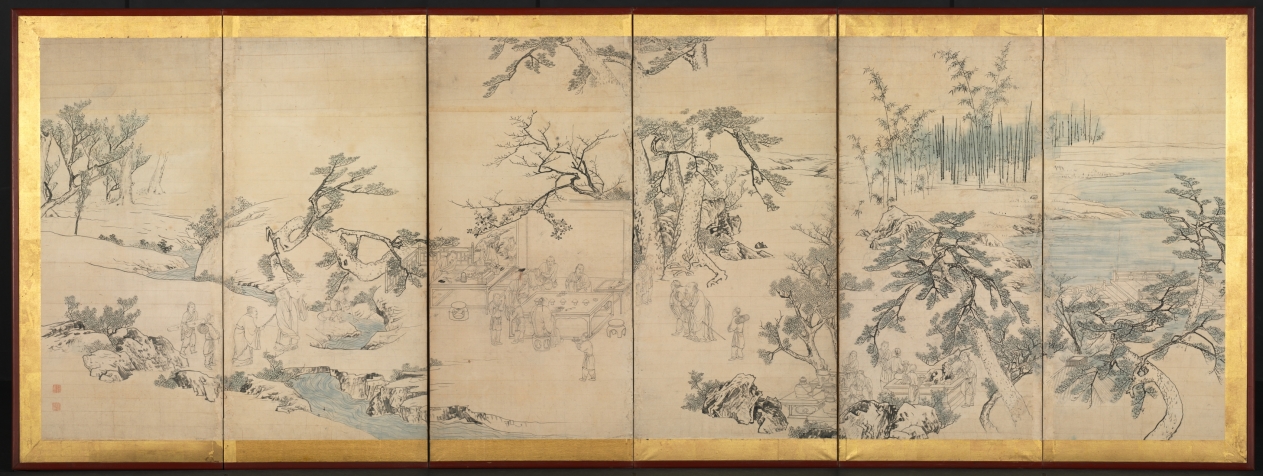
Literary Gathering in the Orchid Pavilion, late 1700s, by Maruyama Ōkyo
Maruyama Ōkyo · The Cleveland Museum of Art · John L. Severance Fund
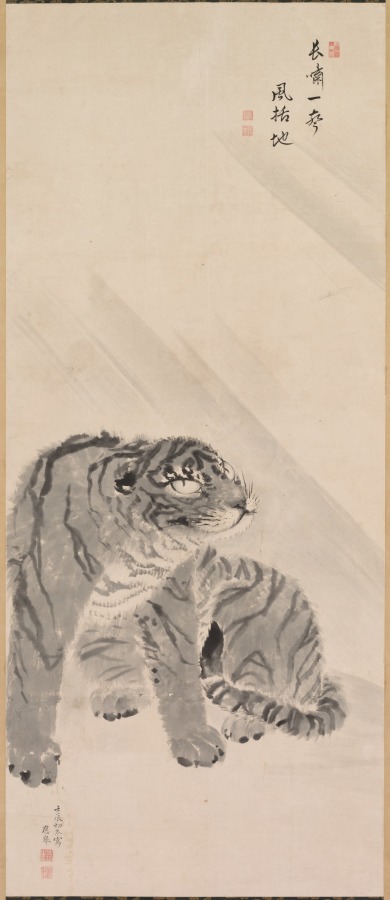
Tiger in Wind, 1800s, by Maruyama Ōkyo
Maruyama Ōkyo · The Cleveland Museum of Art · Sundry Purchase Fund
Key facts
Key facts
• Name — Maruyama Ōkyo • Native Name — 円山 応挙 • Birth Name — Maruyama Masataka • Born — 12 June 1733 • Birthplace — Ano-o, Kameoka, Kyoto, Japan • Died — 31 August 1795 • Movement — Maruyama school, June 12, 1733 – August 31, 1795, born Maruyama Masataka, was a Japanese artist active in the late 18th century. He moved to Kyoto, during which he studied artworks from Chinese, Japanese and Western sources. A personal style of Western naturalism mixed with Eastern decorative design emerged, and Ōkyo founded the Maruyama school of painting. Although many of his fellow artists criticized his work as too slavishly devoted to natural representation, it proved a success with laypeople.
Early career
Early career
Ōkyo was born into a farming family in Ano-o, in present-day Kameoka, Kyoto. As a teenager, he moved to Kyoto and joined the townspeople (chōnin) class. He apprenticed for a toy shop, where he painted the faces onto dolls. The shop began selling European stereoscopes, novelties that when looked into presented the illusion of a three-dimensional image. It was Ōkyo's first look at Western-style perspective, and in 1767 he tried his hand at one of the images. He created Harbour View, a small picture in single-point perspective. Ōkyo soon mastered the techniques of drawing stereoscope images (megane-e, eyeglass pictures). Ōkyo decided to pursue a career as an artist. He first studied under Ishida Yūtei, a member of the Kanō school and ultimately a bigger influence on Ōkyo than the stereoscope images. During these formative years, Ōkyo studied Chinese painting as well. He particularly admired the works of Qian Xuan, a 13th-century painter known for his detailed flower drawings, and Qiu Ying, a 16th-century figure painter. In fact, the "kyo" in Ōkyo's name was adopted in tribute to Ch'ien Hsüan. Ōkyo even briefly adopted the Chinese practice of signing his name with one character, so for a time he was known as Ōkyo En. He studied the works of Shen Quan, a Chinese artist who lived in Nagasaki from 1731 to 1733 and painted images of flowers. However, Ōkyo did not like the artist's treatment of proportion, preferring the works of Watanabe Shikō. He also studied Ming and Qing paintings. Perhaps most significantly, Ōkyo eagerly studied any Western paintings or prints he could find.
Success
Success
Ōkyo's first major commission came in 1768 from Yūjō, abbot of a temple in Ōtsu called Enman'in. Over the next three years, Ōkyo painted The Seven Misfortunes and Seven Fortunes, a depiction of the results of both bad and good karma. The three scrolls total about 148 ft (45 m) in length. Ōkyo tried to find models for the people depicted in them, even for the shocking images such as a man being ripped in two by frightened bulls. His introduction to the work states that he believed that people needed to see reality, not imaginary images of Nirvana or Hell, if they were to truly believe in Buddhist principles. • Illustration — Pine Trees, c. 1780; pair of sixfold screens. Other painters were critical of Ōkyo's style. They found it to be overly concerned with physical appearances, alleging that he was too beholden to the real world and produced undignified works. Nevertheless, his style proved popular with the public, and commissions came in to do Western-style landscapes, decorative screens, and nudes. He did life drawings and used them for material in his paintings. Ōkyo was probably the first Japanese artist to do life drawings from nude models. The subject was still considered pornographic in Japan. During his career he painted for wealthy merchants, the shogunate, even the emperor. The public's perception of Ōkyo's skill is evident in a legend recounted by Van Briessen. The story goes that a daimyō commissioned Ōkyo to paint a "ghost image" of a lost family member. Once the work was completed, the ghost image came off the painting and flew away.
Style
Style
• Illustration — Peacock and Peahen; hanging scroll; color on silk Maruyama style is a school of painting founded by the mid-Edo period painter Maruyama Okyo. One of the leading schools of early modern Japanese painting, the Maruyama style was based on the realistic sensibilities of the emerging townships of Kyoto in the mid-18th century and had a major influence on Japanese painting with its new style that fused realism with traditional decorative elements. It is characterised by the use of a technique known as tsukeitate, in which a frame is not drawn and ink shading is added. Ōkyo's painting style merged a tranquil version of Western naturalism with the Eastern decorative painting of the Kanō school. His works show a Western understanding of highlight and shadow. His realism differed from previous Japanese schools in its devotion to nature as the ultimate source with no regard for sentiment. Ōkyo's intricately detailed plant and animal sketches show a great influence from European nature drawings. An album of leaves in the Nishimura Collection in Kyoto (now in handscroll form) depicts several animals and plants, each labeled as if in European guidebook. Still, Ōkyo's works remain Japanese. Unlike European painting, Ōkyo's images have very few midtones. Moreover, he follows the Eastern tradition in depicting objects with very little setting; often his pictures feature a single subject on a plain background. The result is a more immediate naturalism with a decorative and reflective feel. This was achieved through skillful brush handling; Ōkyo painted with a broad, flat brush, which he would load with more paint on one side. This created broad strokes that vary in paint coverage. Nature was not his only subject; many works by Ōkyo depict normal scenes from life in Kyoto's commercial area. • Illustration — Dragon His Geese Alighting on Water, painted at Enman'in, Ōtsu in 1767, is an early example of his mature style. The subject is treated as a part of nature; nothing philosophical is implied as had been done with such imagery in the East Asian tradition. Likewise, Kingfisher and Trout, painted in 1769, features a bird near the top of the image, waiting for a fish. The trout swims under a large rock near the center. Bird, fish, and stone all appear as they do in nature, creating a matter-of-fact, comprehensible, and natural-looking piece. Later in his oeuvre, Pine Trees in Snow, executed in 1773 for the wealthy Mitsui family, is realistic despite being in the Japanese idiom of ink on a gold background. The two six-panel screens show tree bark and pine needles separated by differing brush strokes, and the white snow seems to weigh down the branches. The bark is painted in the tsuketate technique, which uses no outlines, just dark and light shades to create the illusion of volume. Hozu Rapids, painted in 1795, is one of Ōkyo's later works. On two eightfold screens it depicts a tree and a cluster of rocks with some dragons. The work thus shows Ōkyo's ability to render the natural elements in a convincingly realistic fashion. However, the dragons, according to art critics such as Paine, demonstrate a weakness; they are treated academically, thus losing their grand, legendary essence.
Life and career
Dated record
Life and career
The full dated record · 2 entries
1733
Maruyama Ōkyo born at Minamikuwada district.
1795
Maruyama Ōkyo died at Kyoto.
Places
Named by the record
Places
Only places the record itself states, plotted where the house gazetteer settles their coordinates. Nothing is inferred from a name or a nationality.
Minamikuwada district.
Birth place
Kyoto.
Death place
Maruyama school
Success prompted Ōkyo to start a school in Kyoto, where he could teach his new style. He was a talented art teacher, and he soon took on many students. He taught them to rely on nature to render images in a realistic picture of light, shadow, and forms. The school grew popular, and branches soon appeared in other locations, including Osaka. Much of the school's work is today preserved at Daijō-ji, a temple in Kasumi (Hyōgo Prefecture). Noteworthy pupils include Ōkyo's son, Maruyama Ōzui, Nagasawa Rosetsu, and Matsumura Goshun. Goshun joined Ōkyo's school in 1787. That year, the Maruyama school took a commission to paint screens for Daijō-ji. Later that year, Kyoto suffered a devastating fire, so Ōkyo and Goshun moved into a temple called Kiunin. The two became fast friends, and Ōkyo refused to regard their relationship as that of a teacher and student. Goshun later went on to found the Shijō school.
Primary material
Documents and archives
authority file
- Gemeinsame Normdatei 132597039, Maruyama, Ōkyo.
Unverified · Deutsche Nationalbibliothek
- Getty Union List of Artist Names 500121290, Maruyama Ōkyo.
Unverified · The Getty Research Institute
reference work
- Wikidata, structured authority record Q405444: Maruyama Ōkyo
Reputable secondary · Wikimedia Foundation
- “Maruyama Ōkyo”, English Wikipedia, consulted as further reading
Reputable secondary · Wikipedia
Citations
References
Each reference names the institution holding it, so a reader may go to the document itself.
authority file
Gemeinsame Normdatei 132597039, Maruyama, Ōkyo.Deutsche Nationalbibliothek
Partially resolvedauthority file
Getty Union List of Artist Names 500121290, Maruyama Ōkyo.The Getty Research Institute
Partially resolvedreference work
Wikidata, structured authority record Q405444: Maruyama ŌkyoWikimedia Foundation
Partially resolvedreference work
Partially resolved
The Encyclopedia exists whether or not anything is for sale. Corrections are recorded rather than overwritten, and every version of this record is kept. Published 14 August 2026.
Elsewhere in Paintings
18,717 published records in this field, each with its sources named.
- Martinus van Regteren AltenaArtist
- Martta WendelinArtist
- Martyl LangsdorfArtist
- Maruja MalloArtist
- Marvin ConeArtist
- Marwan Kassab-BachiArtist
- Marx ReichlichArtist
- Mary AbbottArtist
Best supported in this field
For owners
Own a work by Maruyama Ōkyo?
A specialist will read what you send and tell you what the house can establish, what it cannot, and whether the object is suited to sale. There is no charge and no obligation. The object stays with you throughout; nothing is shipped to us unless it is arranged in writing beforehand.