
Ludwig Knaus
Ludwig Knaus (5 October 1829 – 7 December 1910) was a German genre painter of the younger 7 Düsseldorf school of painting. • Illustration — Ludwig Knaus, 1860s
Also recorded as prof. ludwig knaus · knaus l. · Knaus · l.s knauss
Ludwig Knaus
Ludwig Knaus · Wellcome Collection, London · Wellcome Collection · Public Domain Mark
- Died
- 1910 · Berlin.
- Nationality
- Kingdom of Prussia
- Occupation
- painter · etcher
- Fields
- genre · history
- Education
- Kunstakademie Düsseldorf
- Teachers
- Karl Ferdinand Sohn · Otto Reinhold Jacobi
- Known for
- Drunken peasants
- Honours
- Pour le Mérite for Sciences and Arts order · Bavarian Maximilian Order for Science and Art
- Languages
- German
Reference Check
Propose documentary evidence for Ludwig Knaus. A contribution is never written directly as fact: identity, source, rights and evidence gates still decide.
Sign in to contribute
World of VALÉORINE
Documentary connections
Only confirmed graph relationships appear here. Images are shown only when their identity and reuse rights both pass the documentary gate.
Documentary evidence
Documentary basis
Authority files
wikidata · Q567361 · wikipedia · Ludwig Knaus
VALÉORINE Encyclopedia
The documentary record
Statements marked “Documentary record” are set in the article beside the passage they confirm. Each is read from the authority records of the institutions named here; select “Prove” to see the record it was read from, where in that record, and when.
Institutions cited
Bibliothèque nationale de France · Deutsche Nationalbibliothek · Getty Union List of Artist Names
Complete reading chain (JSON)In this article
Biography
Biography
Ludwig Knaus studied at Kunstakademie Düsseldorf. Training under Karl Ferdinand Sohn and Otto Reinhold Jacobi is recorded. Mihály Munkácsy, Knut Ekwall and Ernst te Peerdt are recorded as having studied under Ludwig Knaus. The recorded working language is German. Subjects and genres recorded for the work are genre and history. Places of work recorded in the authority are Düsseldorf, Paris and Berlin. Employment is recorded with Academy of Arts, Berlin. Works named in the authority record are Drunken peasants. Work by Ludwig Knaus is recorded in the collections of Minneapolis Institute of Art, British Museum, Hessen Kassel Heritage, Walters Art Museum and Hermitage Museum. Distinctions recorded are Pour le Mérite for Sciences and Arts order and Bavarian Maximilian Order for Science and Art.
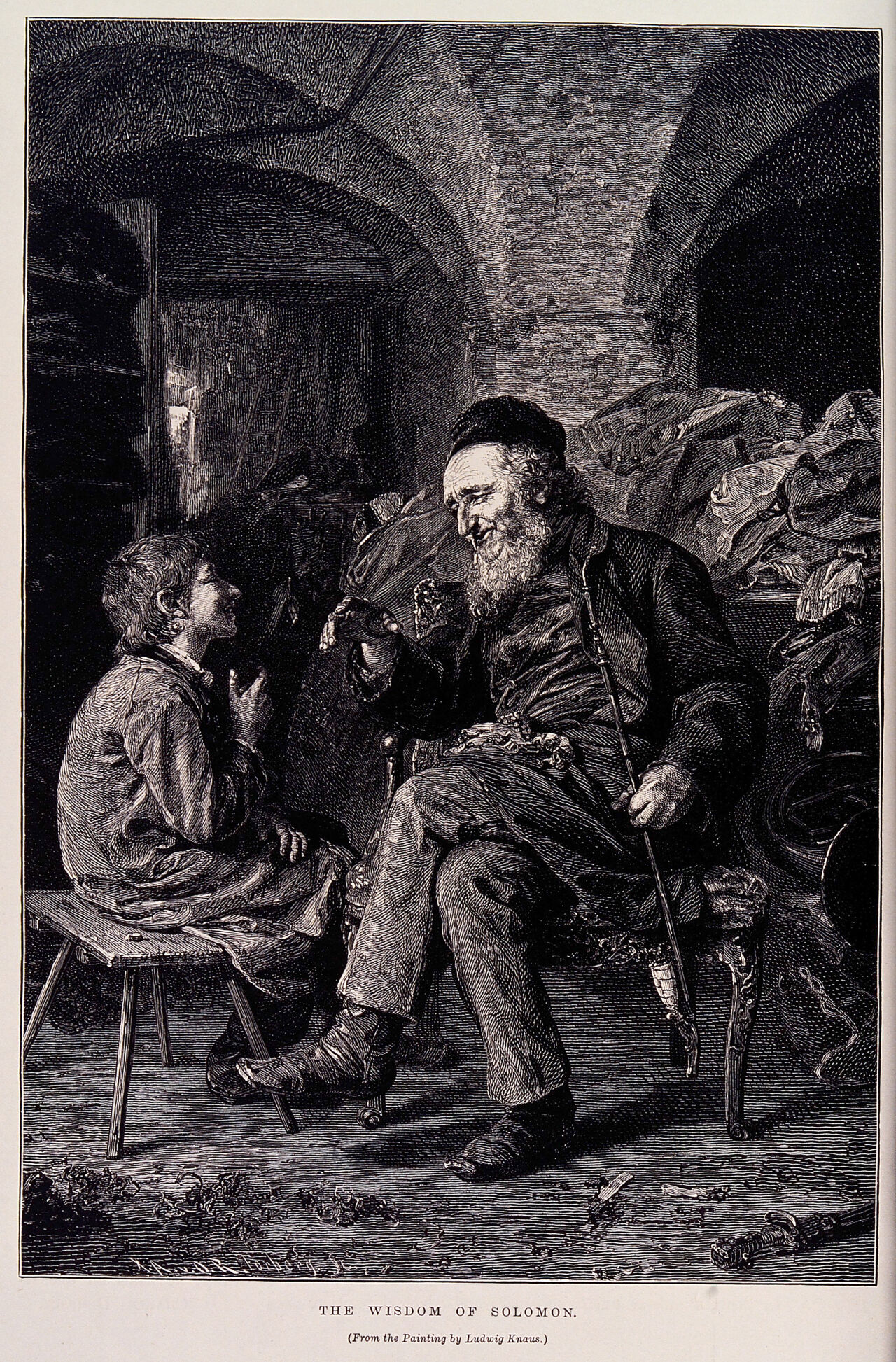
He was born at Wiesbaden and studied from 1845 to 1852 under Sohn and Schadow in Düsseldorf. His early works, like The Gamblers in the Düsseldorf Gallery, are in the manner of that school, being dark and heavy in color. This deficiency was remedied by study at Paris, whither he went in 1852 and enrolled as a pupil of Thomas Couture. In 1853 his Morning after the Kermess received the second gold Medal of the Salon and made him a celebrated painter. Except for a year's study in Italy he remained in Paris until 1860. His chief works of this period include The Golden Wedding, The Baptism, and The Promenade, purchased for the Luxembourg. From 1861 to 1866 he practiced at Berlin, producing such works as Boys Playing Cards, Looking for a Bride (Wiesbaden Museum), and His Highness on His Travels. The next eight years of his life saw the production of much of his best work, including The Children's Festival (Nation Gallery, Berlin), In Great Distress, and The Village Prince. From 1874 to 1883 he was professor at the Royal Prussian Academy, Berlin, continuing to reside in that city until his death. • Illustration — Girl in a Field (1857) Among the most important works of his last period were: The Holy Family and The Road to Ruin, both painted in 1876 and now in the Metropolitan Museum of Art, New York; Behind the Curtain (1880), Dresden Gallery; The Rag Baby (1880) and A Village Festival (1881), both in the Vanderbilt collection, Metropolitan Museum, New York; and A Duel. During his last period Knaus also painted a series of “Idyls,” with nudes in a rather classical style, of which an important example is in the Wiesbaden Museum. The most famous examples of his portraits, which are genre in character, are those of the scientist Helmholtz and the historian Mommsen, both in the National Gallery, Berlin. Among his many distinctions were the great gold medal of the Berlin Exhibition of 1861 and the grand medal of honor at the Paris Exposition of 1867. Many of his works are represented at the Museum Wiesbaden. He was a member of the Berlin, Munich, and many other academies; an Officer of the Legion of Honor and a Knight of the Prussian Order Pour le Mérite. Possibly, his most famous work is Girl in a Field (1857). Engravings of his works were especially popular among the German peasantry.
Documentary record
Ludwig Knaus lived from 5 October 1829 to 7 December 1910 and was a draughtsman, portrait painter, cartoonist, genre artist and portraitist. The birth of Ludwig Knaus is recorded on 5 October 1829, and the death on 7 December 1910. Ludwig Knaus was born in Wiesbaden, Germany, according to the Deutsche Nationalbibliothek, the Getty Union List of Artist Names and the Bibliothèque nationale de France. The place of death of Ludwig Knaus is recorded as Berlin by the Bibliothèque nationale de France and the Deutsche Nationalbibliothek and as Berlin (Berlin state) by the Getty Union List of Artist Names.
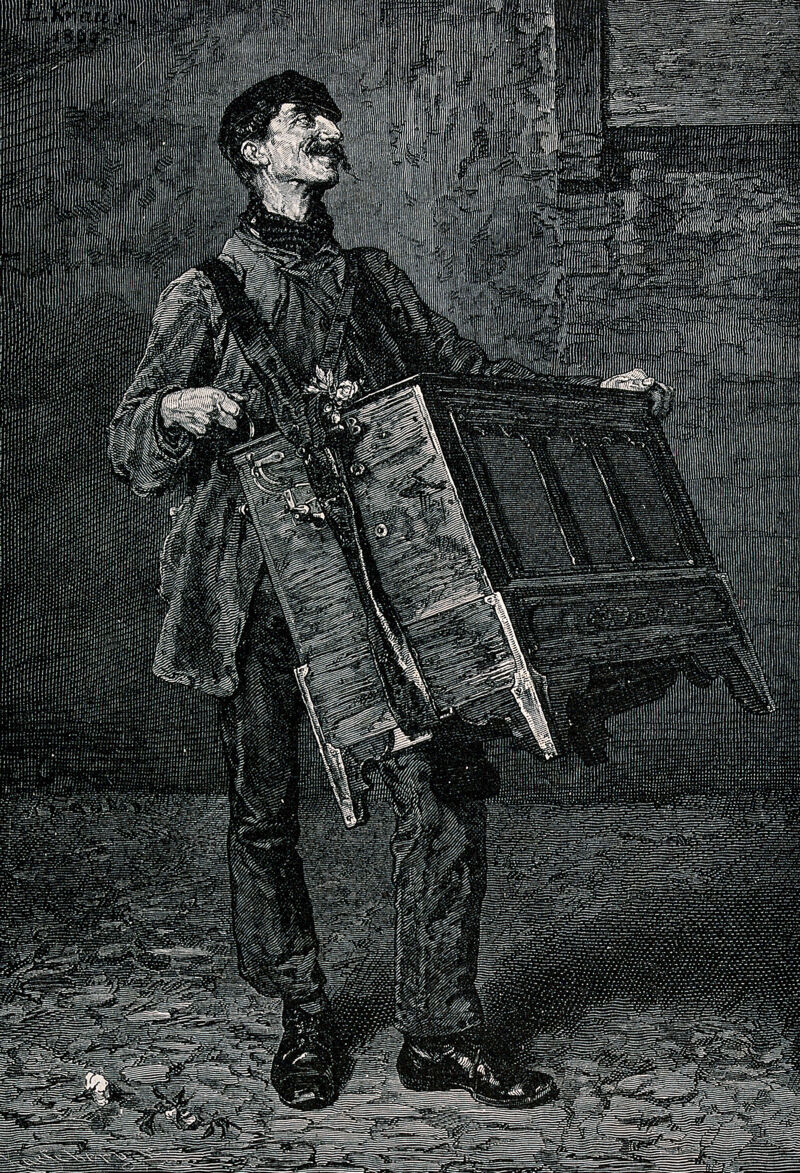
A man playing a barrel organ. Wood engraving by H. Kaeseberg after L. Knaus., 1800-1899, by Ludwig Knaus
Ludwig Knaus · Wellcome Collection, London · Wellcome Collection
Life and career
Dated record
Life and career
The full dated record · 2 entries
1829
Ludwig Knaus born at Wiesbaden.
1910
Ludwig Knaus died at Berlin.
Places
Named by the record
Places
Only places the record itself states, plotted where the house gazetteer settles their coordinates. Nothing is inferred from a name or a nationality.
Wiesbaden.
Birth place
Berlin.
Death place
Text attribution
Licensing
Text attribution
Part of the biographical narrative on this page reuses licensed material. Its origin, revision and licence are recorded here.
The biographical narrative on this page is based on the Wikipedia article Ludwig Knaus, revision 1367055541 (EN edition), by its contributors. VALÉORINE has edited that text and built its own documentary record around it. The reused material is available under CC BY-SA 4.0, and this page's reuse of it is offered under the same licence. Everything else on this page — the chronology, the holdings, the evidence, the plates and the connections — is VALÉORINE's own record. Sources and licences.
Notes from the source article
Cited by Wikipedia
Notes from the source article
These works are cited by the source article, in its own numbering. They are recorded as its citations, not as sources VALÉORINE has verified.
- 1.Er gehörte zur bevorzugten Auswahl zeitgenössischer Künstler, die das „Komité zur Beschaffung und Bewertung von Stollwerckbildern“ dem Kölner Schokoladeproduzent Ludwig Stollwerck zur Beauftragung für Entwürfe vorschlug. Siehe: Detlef Lorenz: Reklamekunst um 1900. Künstlerlexikon für Sammelbilder. Reimer-Verlag, 2000.
- 2.Knaus. 11. 168. 20006905560.
- 3.Alexander Hildebrand: Kleiner Wiesbadener in der großen Welt, Ludwig Knaus, Zum 100. Todestag des Malers. In: Wiesbadener Kurier, 30. November 2010, S. 18.
- 4.Wend von Kalnein: Die Düsseldorfer Malerschule. Verlag Philipp von Zabern, Mainz 1979, ISBN 3-8053-0409-9, S. 369.
- 5.Ute Rickel-Immel: Die Düsseldorfer Genremalerei. In: Wend von Kalnein, S. 159.
- 6.Wend von Kalnein, S. 369
- 7.Ute Ricke-Immel, S. 159.
- 8.Clemens Weiler: Ludwig Knaus und Willinghausen. In. Hessische Heimat, 1. Jg., 1951, Heft 3, S. 45.
- 9.Bernd Fäthke: Das Thema Landschaft und Ludwig Knaus. In: Ausst. Kat.: Ludwig Knaus 1829–1910. Museum Wiesbaden 1979, S. 49 ff.
- 10.Else Müller, geb. Knaus: Erinnerungen an Ludwig Knaus. MS, Museum Wiesbaden 1949, S. 49.
- 11.Clemens Weiler: Ludwig Knaus und Willinghausen. In: Hessische Heimat, 1. Jg., 1951, Heft 3, S. 46.
- 12.Sigrid Russ: Das „interessante gemüthliche deutsche Genre“. In: Ausst. Kat.: Ludwig Knaus 1829–1910. Museum Wiesbaden 1979, S. 31.
- 13.Wend von Kalnein, S. 369.
- 14.Ulrich Schmidt: Biographische Übersicht, Ludwig Knaus 1829–1910. In: Ausst. Kat.: Ludwig Knaus 1829–1910. Museum Wiesbaden 1979, S. 11.
- 15.Knaus, Prof., Duisburgerstraße 138, in Adreßbuch der Oberbürgermeisterei Düsseldorf für 1873, S. 4.
- 16.Gestorben Juli 1873 Hedwig Knaus, 11 J., Duisburgerstraße. In: Düsseldorfer Volksblatt, No. 153, vom 3. Juli 1873
- 17.Von Ausstellungen und Sammlungen, S. 95, in Die Kunst für Alle, Fünfzehnter Jahrgang, 1988–1900
- 18.Abb. In: Ernst Günther Grimme: Das Suermondt-Museum. In: Peter Ludwig (Hrsg.): Aachener Kunstblätter, 1963, Band 28, S. 9.
- 19.Gefühlvoller Blick auf einfache Leute. In: Frankfurter Allgemeine Sonntagszeitung vom 10. August 2014, S. R4.
References
Citations
References
Each reference names the institution holding it, so a reader may go to the document itself.
reference work
Wikidata, structured authority record Q567361: Ludwig KnausWikimedia Foundation
Secondary witnessreference work
Secondary witness
People, houses and institutions
Knowledge graph
People, houses and institutions
Teachers, collaborators, publishers and institutions recorded against this person, each on a stated basis.
Studied at
1- Kunstakademie DüsseldorfOrganisation
Established from a fact already recorded on a verified source.
Born at
1- WiesbadenPlace
Established from a fact already recorded on a verified source.
The Encyclopedia exists whether or not anything is for sale. Corrections are recorded rather than overwritten, and every version of this record is kept. Published 14 August 2026.
Elsewhere in Paintings
19,456 published records in this field, each with its sources named.
- Ludwig DeutschArtist
- Ludwig ElsholtzArtist
- Ludwig Hans FischerArtist
- Ludwig Hugo BeckerArtist
- Ludwig Lindenschmit the ElderArtist
- Ludwig PoseArtist
- Ludwig RefingerArtist
- Ludwig RichterArtist
Best supported in this field
For owners
Own a work by Ludwig Knaus?
A specialist will read what you send and tell you what the house can establish, what it cannot, and whether the object is suited to sale. There is no charge and no obligation. The object stays with you throughout; nothing is shipped to us unless it is arranged in writing beforehand.