
Ludovico Carracci
Ludovico (or Lodovico) Carracci (UKalso; 21 April 1555 – 13 November 1619) was an Italian early-Baroque painter, etcher, and printmaker from Bologna. His works are characterized by a strong mood invoked by broad gestures and flickering light that create spiritual emotion and are credited with reinvigorating Italian art, especially fresco art, which was subsumed with formalistic Mannerism. He died in Bologna in 1619.
Also recorded as Ludovico Carachi · Lud. Carracci · Ludovico Carracchi · Ludovico Caracciolo
Ludovico Carracci
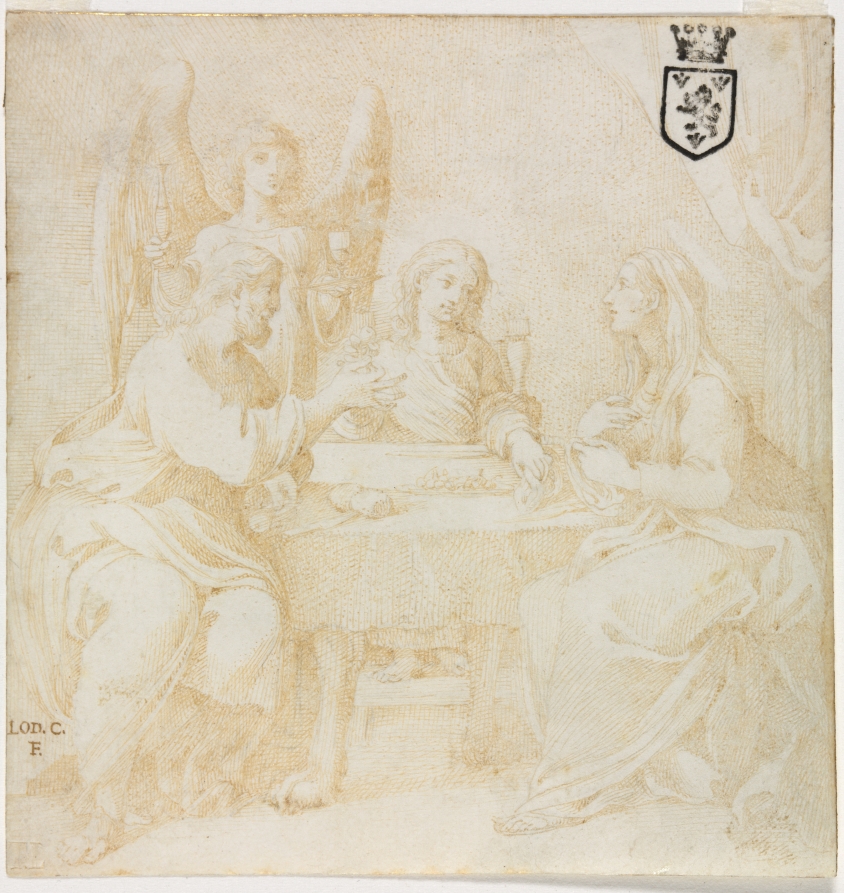
Ludovico Carracci · The Cleveland Museum of Art · Dudley P. Allen Fund · CC0
- Name
- Ludovico Carracci
- Birthplace
- Bologna, Papal States
- Died
- 13 November 1619
- Field
- Painting
- Training
- Prospero Fontana
- Movement
- Baroque
- Born
- 1555 · Bologna.
- Nationality
- Papal States
- Occupation
- painter · etcher · printmaker · draftsperson · artist
- Teachers
- Prospero Fontana · Jacopo Tintoretto
- Known for
- The Vision of Saint Francis of Assisi · Madonna and Child Appearing to Saint Hyacinth · Madonna and Child · Mocking of Christ · The Lamentation · Annunciation · Birth of John the Baptist · Conversion of Saint Paul
- Languages
- Italian
VALÉORINE Encyclopedia
VALÉORINE documentary reading
Documentary summary
Ludovico (or Lodovico) Carracci (UKalso; 21 April 1555 – 13 November 1619) was an Italian early-Baroque painter, etcher, and printmaker from Bologna. His works are characterized by a strong mood invoked by broad gestures and flickering light that create spiritual emotion and are credited with reinvigorating Italian art, especially fresco art, which was subsumed with formalistic Mannerism. He died in Bologna in 1619.
Admitted source layer · organised and presented by VALÉORINE
Reference Check
Propose documentary evidence for Ludovico Carracci. A contribution is never written directly as fact: identity, source, rights and evidence gates still decide.
Sign in to contribute
World of VALÉORINE
Documentary connections
Only confirmed graph relationships appear here. Images are shown only when their identity and reuse rights both pass the documentary gate.
Documentary evidence
Documentary basis
Authority files
wikidata · Q380553 · wikipedia · Ludovico Carracci
In this article
Biography
Biography
Training under Prospero Fontana and Jacopo Tintoretto is recorded. Antonio Maria Fabrizi is recorded as having studied under Ludovico Carracci. The recorded working language is Italian. The field of work recorded is painting. Subjects and genres recorded for the work are history. Places of work recorded in the authority are Bologna, Florence and Parma. Works named in the authority record are The Vision of Saint Francis of Assisi, Madonna and Child Appearing to Saint Hyacinth, Madonna and Child, Mocking of Christ, The Lamentation and Annunciation. Work by Ludovico Carracci is recorded in the collections of Städel Museum, Minneapolis Institute of Art, Museo del Prado, Art Institute of Chicago and Auckland Art Gallery.
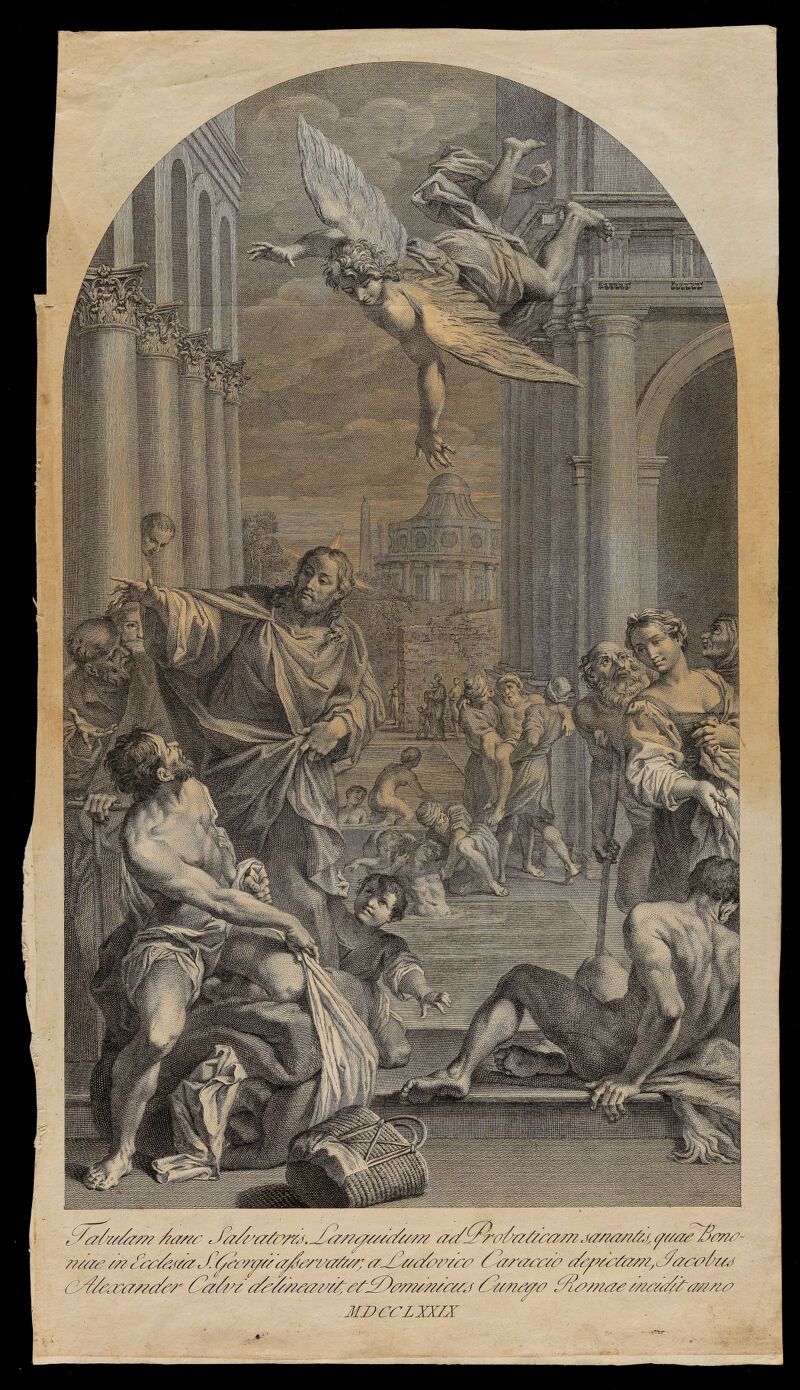
Christ healing lame people at the pool of Bethesda. Etching by D. Cunego, 1779, after J.A. Calvi after L. Carracci., 1779, by Ludovico Carracci
Ludovico Carracci · Wellcome Collection, London · Wellcome Collection
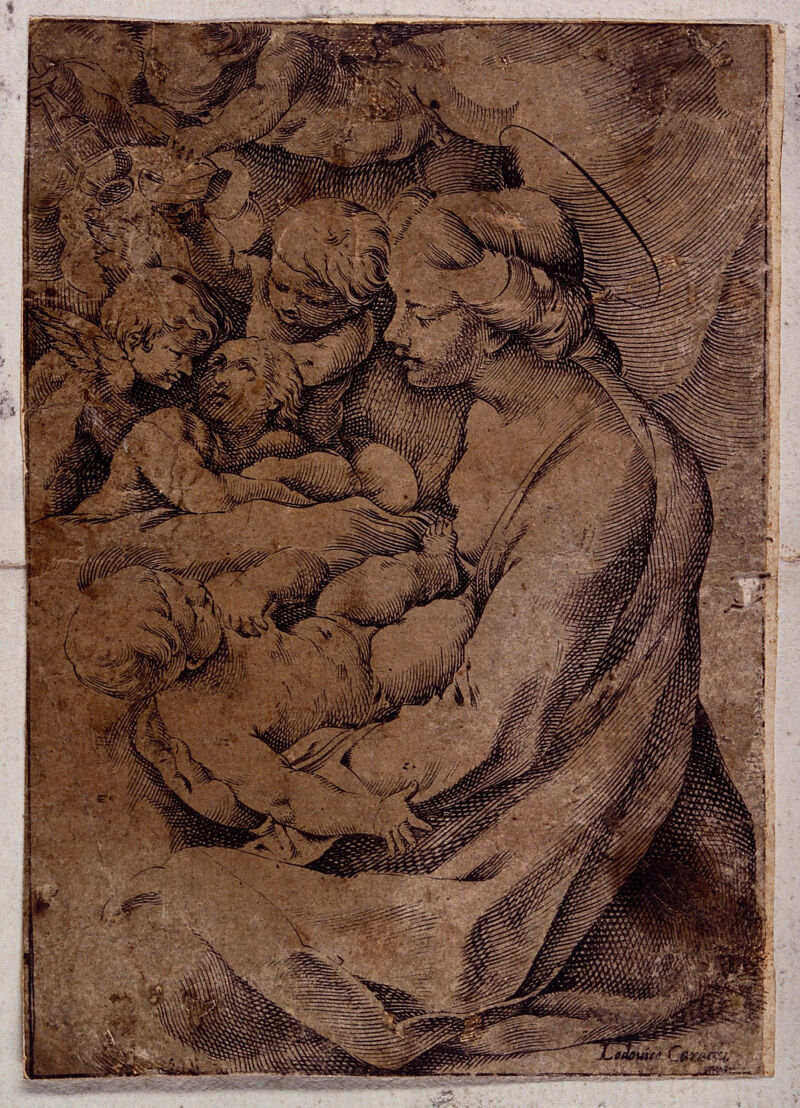
Saint Mary (the Blessed Virgin) with the Christ Child. Engraving after L. Carracci., by Ludovico Carracci
Ludovico Carracci · Wellcome Collection, London · Wellcome Collection
Key facts
Key facts
• Name — Ludovico Carracci • Birthplace — Bologna, Papal States • Died — 13 November 1619 • Place of death — Bologna, Papal States • Field — Painting • Training — Prospero Fontana • Movement — Baroque
Biography
Biography
• Illustration — Ludovico Carracci - Christ in the Wilderness, Served by Angels Ludovico apprenticed under Prospero Fontana in Bologna and traveled to Florence, Parma, and Venice, before returning to his hometown. Together with his cousins Annibale and Agostino Carracci, Ludovico worked in Bologna on the fresco cycles depicting Histories of Jason and Medea (1584) in Palazzo Fava, and the Histories of Romulus and Remus (1590-1592) for the Palazzo Magnani. Their individual contributions to these works are unclear, although Annibale, the younger than Ludovico by 5 years had gained fame as the best of the three. This led to Annibale's famed commission of the Loves of the Gods in the Palazzo Farnese in Rome. Agostino joined Annibale there briefly. While Ludovico remained in Bologna, this does not mean that he was any less influential, the biography of Lanzi states that around 1585, Ludovico and his cousins had founded the so-called Eclectic Academy of painting (also called the Accademia degli Incamminati). More recent conjectures are that there was no established Academy with curriculum, but that Ludovico tutored many in his studio. This studio however propelled a number of Emilian artists to pre-eminence in Rome and elsewhere, and singularly helped encourage the so-called Bolognese School of the late 16th century, which included Albani, Guercino, Sacchi, Reni, Lanfranco and Domenichino. The Carracci had their apprentices draw studies focused on observation of nature and natural poses, and use a bold scale in drawing figures. Two of Ludovico's main pupils were Giacomo Cavedone and Francesco Camullo.
Restitution
Restitution
In 2009, Carracci's painting of St. Jerome (c. 1595) was restituted to the heirs of Max Stern, a German Jewish art dealer persecuted and looted by the Nazis. • Illustration — alt=Lamentation of Christ (ca. 1582). Lamentation of Christ (ca. 1582) • Illustration — Madonna and Child with St Francis of Assisi (1591) – known as "La Carraccina" due to the admiration of the young Guercino • Illustration — Madonna and Child with Saints • Illustration — Annunciation • Illustration — Madonna dei Bargellini (1588) • Illustration — Transfiguration (1595) • Illustration — Abraham and the Three Angels • Illustration — Saint Sebastian Thrown into the Cloaca Maxima • Illustration — The Funeral of the Virgin Mary
Work and production
Work and production
Works recorded as notable number 8: The Vision of Saint Francis of Assisi, Madonna and Child Appearing to Saint Hyacinth, Madonna and Child, Mocking of Christ, The Lamentation, Annunciation, Birth of John the Baptist and Conversion of Saint Paul. His recorded genre is history.
Life and career
Dated record
Life and career
The full dated record · 2 entries
1555
Ludovico Carracci born at Bologna.
1619
Ludovico Carracci died at Bologna.
Notes from the source article
Cited by Wikipedia
Notes from the source article
These works are cited by the source article, in its own numbering. They are recorded as its citations, not as sources VALÉORINE has verified.
- 1.Lodovico Carracci Italian painter. Encyclopedia Britannica.
- 2.New Yorker returns Nazi-looted art hanging in his room. www.lootedart.com.
- 3.Seventh Stern painting restored to estate. www.lootedart.com.
- 4.Oil on canvas, 95 x 173 cm. Metropolitan Museum of Art, New York.
- 5.Regione Emilia Romagna. La Carraccina. bbcc.ibc.regione.emilia-romagna.it.
Bibliography printed in the source article · 3
- Babette Bohn, Ludovico Carracci and the Art of Drawing Brepols 2004
- Allessandro Brogi, Ludovico Carracci Bologna 2001
- Andrea Emiliani (ed.), Ludovico Carracci exh. cat. Bologna-FortWorth 1994 (with Essay and catalogue by Gail Feigenbaum)
References
Citations
References
Each reference names the institution holding it, so a reader may go to the document itself.
reference work
Wikidata, structured authority record Q380553: Ludovico CarracciWikimedia Foundation
Secondary witnessreference work
Secondary witness
Further particulars
Held on the record
Further particulars
Open the remaining particulars
He trained under Prospero Fontana and Jacopo Tintoretto. His recorded influences include Annibale Carracci. Each of those relationships is stated by the authority record rather than inferred from style.
The authorities additionally record the headings Ludovico Carachi, Lud. His recorded language was Italian. Carracci worked in painting. His work is associated with Baroque. He belonged to Accademia di San Luca. He worked at Bologna, Florence, Parma and Venice.
Identity and origins
Carracci, Ludovico Carracchi, Ludovico Caracciolo and Lud
Career and activity
The Encyclopedia exists whether or not anything is for sale. Corrections are recorded rather than overwritten, and every version of this record is kept. Published 16 August 2026.
Elsewhere in Prints
4,138 published records in this field, each with its sources named.
- Ludmila ArmataEngraver
- Ludolf BakhuizenEngraver
- Ludolph BüsinckEngraver
- Ludovic-Napoléon LepicEngraver
- Ludovico DavidEngraver
- Ludovico DorignyEngraver
- Ludovico MattioliEngraver
- Ludovico TommasiEngraver
Best supported in this field
For owners
Own a work by Ludovico Carracci?
A specialist will read what you send and tell you what the house can establish, what it cannot, and whether the object is suited to sale. There is no charge and no obligation. The object stays with you throughout; nothing is shipped to us unless it is arranged in writing beforehand.