
Louis-Ernest Barrias
Louis-Ernest Barrias (13 April 1841 – 4 February 1905) was a French sculptor of the Beaux-Arts school. In 1865 Barrias won the Prix de Rome for study at the French Academy in Rome. Barrias was involved in the decoration of the Paris Opéra and the Hôtel de la Païva in the Champs-Élysées.
Also recorded as Ernest Barrias · Louis-Ernst Barrias · Louis Ernest Barrias
Louis-Ernest Barrias
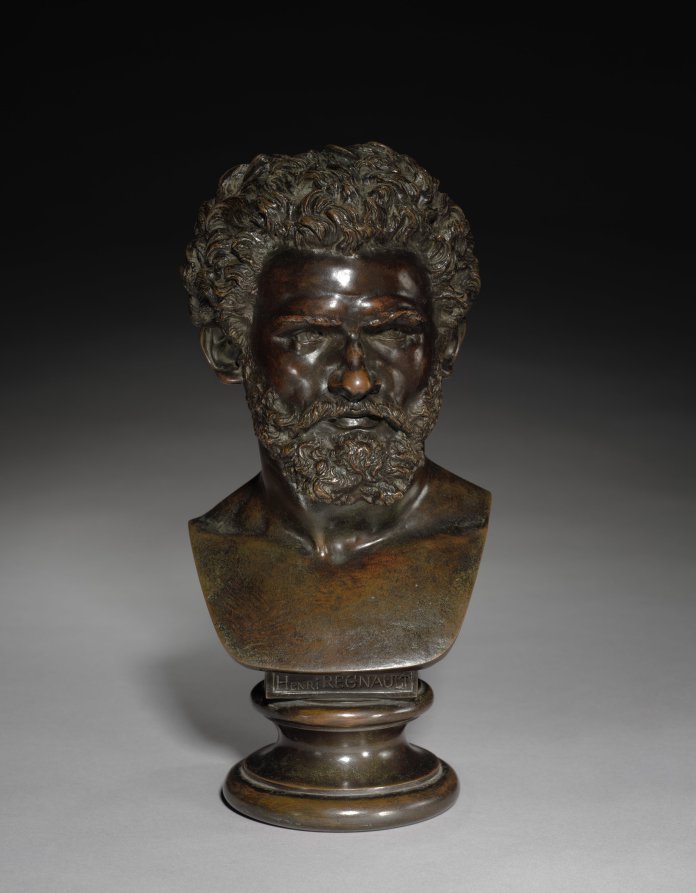
Louis-Ernest Barrias · The Cleveland Museum of Art · Bequest of Noah L. Butkin · CC0
- Name
- Louis-Ernest Barrias
- Born
- 13 April 1841
- Birthplace
- Paris, France
- Died
- 4 February 1905
- Known for
- Sculpture
- Training
- École des Beaux-Arts
- Movement
- Romantic; Art Nouveau
- Nationality
- France.
- Occupation
- sculptor and teacher.
- Fields
- art of sculpture.
- Movements
- Neo-Baroque.
- Education
- Beaux-Arts de Paris and French Academy in Rome.
VALÉORINE Encyclopedia
VALÉORINE documentary reading
Documentary summary
Louis-Ernest Barrias (13 April 1841 – 4 February 1905) was a French sculptor of the Beaux-Arts school. In 1865 Barrias won the Prix de Rome for study at the French Academy in Rome. Barrias was involved in the decoration of the Paris Opéra and the Hôtel de la Païva in the Champs-Élysées.
Admitted source layer · organised and presented by VALÉORINE
Note VALÉORINE
Louis-Ernest Barrias (1841–1905) was a French sculptor and teacher. Born in former 5th arrondissement of Paris, the sculptor died in 17th arrondissement of Paris.
Louis-Ernest Barrias studied at Beaux-Arts de Paris and French Academy in Rome. The sculptor worked for Beaux-Arts de Paris and was a member of Académie des beaux-arts and Institut de France. Louis-Ernest Barrias was active in art of sculpture. The sculptor was associated with Neo-Baroque.
Works include Jeune fille de Mégare, La Défense de Paris and The Oath of Spartacus. Languages used include French. Works by Louis-Ernest Barrias are held at Centre national des arts plastiques, Finnish National Gallery and Musée d'Orsay, among others. The sculptor received Commander of the Legion of Honour, Knight of the Legion of Honour and Prix de Rome.
Composed from admitted, traceable facts · 26 September 2026
VALÉORINE
Reference Check
Propose documentary evidence for Louis-Ernest Barrias. A contribution is never written directly as fact: identity, source, rights and evidence gates still decide.
Sign in to contribute
World of VALÉORINE
Documentary connections
Only confirmed graph relationships appear here. Images are shown only when their identity and reuse rights both pass the documentary gate.
Documentary evidence
Documentary basis
Authority files
wikidata · Q1289500 · wikipedia · Louis-Ernest Barrias
In this article
Biography
Biography
His work was mostly in marble, in a Romantic realist style indebted to Jean-Baptiste Carpeaux.
Louis-Ernest Barrias studied at Beaux-Arts de Paris and French Academy in Rome. Training under François Jouffroy, Pierre-Jules Cavelier and Léon Cogniet is recorded. Hippolyte Lefèbvre, Charles-Henri Pourquet and Charles Caby are recorded as having studied under Louis-Ernest Barrias. The recorded working language is French. The field of work recorded is art of sculpture. Employment is recorded with Beaux-Arts de Paris. Works named in the authority record are The Oath of Spartacus, Jeune fille de Mégare and La Défense de Paris. Work by Louis-Ernest Barrias is recorded in the collections of Finnish National Gallery, Musée national des beaux-arts du Québec, Centre national des arts plastiques, Museum of Fine Arts of Lyon and Museum of Grenoble. Distinctions recorded are Prix de Rome, Knight of the Legion of Honour and Commander of the Legion of Honour.
Key facts
Key facts
• Name — Louis-Ernest Barrias • Born — 13 April 1841 • Birthplace — Paris, France • Died — 4 February 1905 • Place of death — Paris, France • Known for — Sculpture • Training — École des Beaux-Arts • Movement — Romantic; Art Nouveau • Notable Works — Jeune Fille de Bou Saada La Nature se dévoilant devant la Science • Illustration — Louis-Ernest Barrias in his Paris studio • Illustration — Barrais' sculpture for tomb of Gustave Guillaumet, Montmartre Cemetery, Paris. Young girl from Bou Saâda dropping flowers onto a portrait of Guillaumet
Biography
Biography
He was born in Paris into a family of artists. His father was a porcelain-painter, and his older brother Félix-Joseph Barrias a well-known painter. Louis-Ernest also started out as a painter, studying under Léon Cogniet, but later took up sculpture with Pierre-Jules Cavelier as teacher. In 1858 he was admitted to the École nationale supérieure des Beaux-Arts in Paris, where his teacher was François Jouffroy. In 1865 Barrias won the Prix de Rome for study at the French Academy in Rome. Barrias was involved in the decoration of the Paris Opéra and the Hôtel de la Païva in the Champs-Élysées. His work was mostly in marble, in a Romantic realist style indebted to Jean-Baptiste Carpeaux. In 1878 he was made a knight of the Legion of Honour, an officer in 1881, and a commander in 1900. Barrias replaced Dumont at the Institut de France in 1884 then succeeded Cavelier as professor at the École des Beaux-Arts. In 1900-03 he served on the Council for the National Museums. Among his students were Josep Clarà, Charles Despiau, Henri Bouchard, Fernand Hamar, and Victor Ségoffin. Barrias was very influenced by the Art Nouveau style, which was prominent in art during the fin-de-siècle in France. The voluptuous women figures used in many of his sculptures are a product of this time and style. Nature and the erotic was, also, used often in this type style of art, which is seen in many of Barrias's works including, Nature Unveiling Herself Before Science. This piece was made in 1899, when this style was popular. Another sculpture by Barrias is Portrait of the Young Mozart. He also often used literary references in his sculptures (Fusco, Peter, and H. W, Janson, eds. The Romantics to Rodin. New York: Los Angeles County Museum of Art, 1980. Print). Barrias died in Paris on 4 February 1905.
Selected works
Selected works
At Père Lachaise Cemetery: • Tomb of Thomas Couture (c. 1879) • Tomb of Anatole de La Forge (1893) At the Jardin des Tuileries: • The Oath of Spartacus (1869, illustrated) At La Défense: • La Défense de Paris (bronze) Monument to the defenders of Paris in 1870 (1880–1883). The plaster model was shown at the Paris Salon of 1881, now in the Petit Palais. At the Musée d'Orsay: • Nature Unveiling Herself before Science (1899) • Bust of Henri Regnault (1871) • Nubian Alligator Hunters (1893–1894) At Dreux: • Funeral monument of the duchesse d'Alençon. In private collections: • First Mourning, Adam and Eve carrying Abel (1878) • Fame (c. 1893)
Image gallery
Image gallery
• Illustration — La Jeune Fille de Bou Saada • Illustration — Louis Ernest La Renomee • Illustration — Flower of Winter • Illustration — Libération des noirs, 1896 (Musée Saint-Nazaire, Bourbon-Lancy) • Illustration — Les Chasseurs d'alligators ou Les Nubiens, 1894 (Muséum d'Histoire Naturelle, Paris) • Illustration — The First Funeral or Adam and Eve carrying the body of Abel, 1878 (Petit Palais, Paris) • Illustration — Nature Reveals Herself to Science, bronze • Illustration — Bust of Henri Regnault, 1871 (Musée d'Orsay, Paris) • Illustration — Statue of Victor Hugo, 1896-1900 (Musée des Beaux-Arts, Lyon) • Illustration — Statue of Jacques-Bénigne Bossuet, (Façade of the chapel of the Sorbonne, Paris) • Illustration — La Défense de Paris
Works and production
Works and production
The following works and productions are recorded by name or by count.
Places
Named by the record
Places
Only places the record itself states, plotted where the house gazetteer settles their coordinates. Nothing is inferred from a name or a nationality.
former 5th arrondissement of Paris.
Birth place
17th arrondissement of Paris.
Death place
Collections and holdings
Where the work is held
Collections and holdings
Institutional holdings are recorded as follows.
Documents and archives
Primary material
Documents and archives
scholarly publication
- Louis-Ernest Barrias (1841-1905), un sculpteur sous la Troisième République
Scholarly · Crossref registry
reference work
- “Louis-Ernest Barrias”, English Wikipedia, consulted as further reading
Reputable secondary · Wikipedia
authority record
- Wikidata, structured authority record Q1289500: Louis-Ernest Barrias
General reference · Wikidata
Notes from the source article
Cited by Wikipedia
Notes from the source article
These works are cited by the source article, in its own numbering. They are recorded as its citations, not as sources VALÉORINE has verified.
- 1.Antoinette Le Normand-Romain, Mémoire de marbre. La Sculpture funéraire en France 1804-1914 (Paris) 1995.
References
Citations
References
Each reference names the institution holding it, so a reader may go to the document itself.
scholarly publication
Institutional witnessreference work
Secondary witnessauthority record
General reference
The Encyclopedia exists whether or not anything is for sale. Corrections are recorded rather than overwritten, and every version of this record is kept. Published 16 August 2026.
Elsewhere in Sculpture
6,174 published records in this field, each with its sources named.
- Louis van GasterenArtist
- Louis-Albert LefeuvreArtist
- Louis-Claude VasséArtist
- Louis-Denis CaillouetteArtist
- Louis-Eugène BionArtist
- Louis-Félix ChabaudArtist
- Louis-Ferdinand AntoniArtist
- Louis-François RoubiliacArtist
Best supported in this field
For owners
Own a work by Louis-Ernest Barrias?
A specialist will read what you send and tell you what the house can establish, what it cannot, and whether the object is suited to sale. There is no charge and no obligation. The object stays with you throughout; nothing is shipped to us unless it is arranged in writing beforehand.