
Louis-François Roubiliac
Louis-François Roubiliac (or Roubilliac or Roubillac; 31 August 1702 – 11 January 1762) was a French sculptor who worked in England. One of the four most prominent sculptors in London working in the rococo style, he was described by Margaret Whinney as "probably the most accomplished sculptor ever to work in England".
Also recorded as Louis Francois Roubiliac · Louis François Roubillac · Louis François Roubilliac · Louis François Roubiliac
Louis-François Roubiliac

Adrien Carpentiers · Public domain
- Name
- Louis-François Roubiliac
- Born
- 31 August 1702
- Birthplace
- Lyon, France
- Died
- 11 January 1762
- Place of death
- London, England
- Spouse
- Caroline Magdalene Hélot
- Field
- Rococo sculpture
- Training
- Studio of Balthasar Permoser
- Nationality
- France.
- Occupation
- painter and sculptor.
- Fields
- Rococo.
- Movements
- Baroque.
VALÉORINE Encyclopedia
VALÉORINE documentary reading
Documentary summary
Louis-François Roubiliac (or Roubilliac or Roubillac; 31 August 1702 – 11 January 1762) was a French sculptor who worked in England. One of the four most prominent sculptors in London working in the rococo style, he was described by Margaret Whinney as "probably the most accomplished sculptor ever to work in England".
Admitted source layer · organised and presented by VALÉORINE
Reference Check
Propose documentary evidence for Louis-François Roubiliac. A contribution is never written directly as fact: identity, source, rights and evidence gates still decide.
Sign in to contribute
World of VALÉORINE
Documentary connections
Only confirmed graph relationships appear here. Images are shown only when their identity and reuse rights both pass the documentary gate.
Documentary evidence
Documentary basis
Authority files
wikidata · Q1284603 · wikipedia · Louis-François Roubiliac
In this article
Biography
Biography
Jean-Pierre-Antoine Tassaert is recorded as having studied under Louis-François Roubiliac. The recorded working language is French. The field of work recorded is Rococo. Places of work recorded in the authority are Lyon, Frankfurt and Dresden. Works named in the authority record are George Frederick Handel. Work by Louis-François Roubiliac is recorded in the collections of Victoria and Albert Museum, Vanderbilt Museum of Art and Yale Center for British Art.
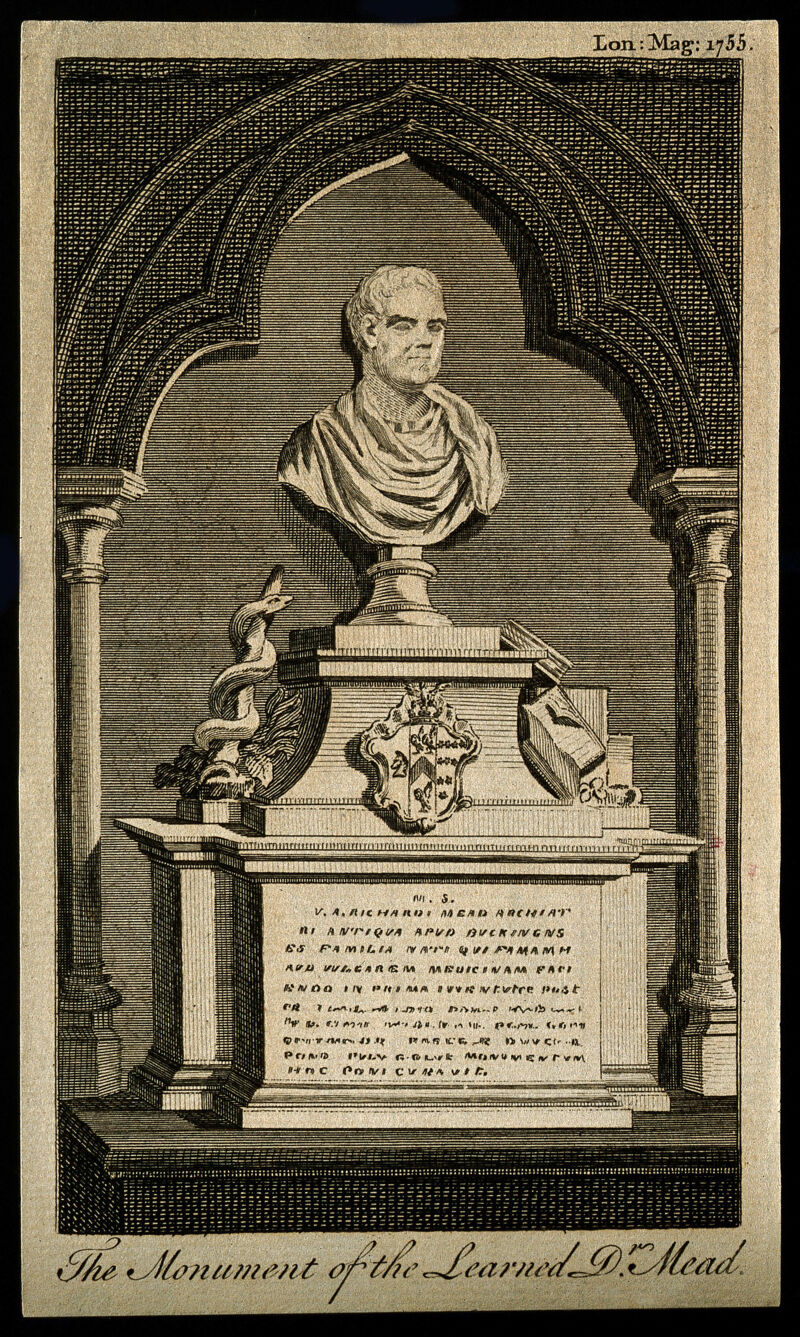
Richard Mead. Line engraving, 1755, after L. F. Roubiliac., by Louis-François Roubiliac
Louis-François Roubiliac · Wellcome Collection, London · Wellcome Collection
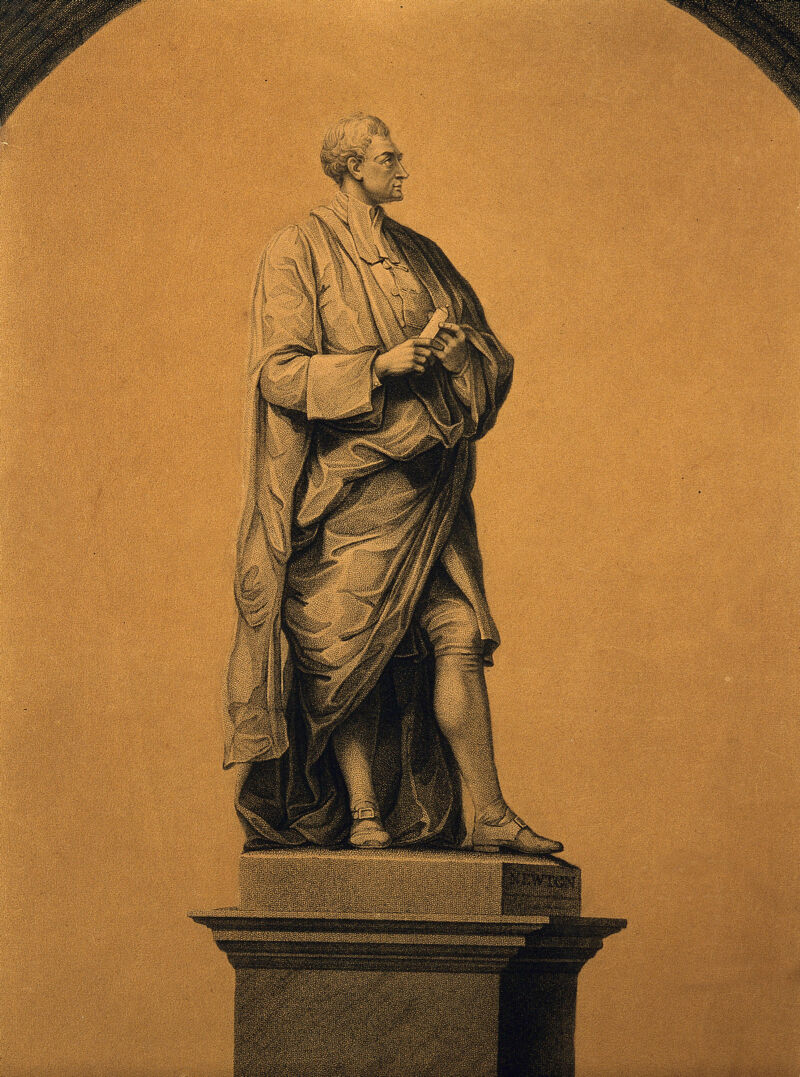
Sir Isaac Newton. Stipple engraving by J. Whessell, 1812, after L. F. Roubiliac, 1755., by Louis-François Roubiliac
Louis-François Roubiliac · Wellcome Collection, London · Wellcome Collection
Key facts
Key facts
• Name — Louis-François Roubiliac • Born — 31 August 1702 • Birthplace — Lyon, France • Died — 11 January 1762 • Place of death — London, England • Spouse — Caroline Magdalene Hélot • Field — Rococo sculpture • Training — Studio of Balthasar Permoser • Illustration — Portrait of Roubiliac making the finishing touches to his statue of Shakespeare, by Adrien Carpentiers, 1762
Life
Life
Roubiliac is said to have been born in Lyon on 31 August 1702. Katharine Esdaile, a biographer, has suggested Roubiliac may have been born in 1705 as a marriage document in 1735 mentions he was age 30, and the Louis François that was born and baptised in 1702 may have been an older brother who died as an infant. Roubiliac's father, a silk merchant, had moved the family to Frankfurt by 1710. According to J. T. Smith, Roubiliac was trained in the studio of Balthasar Permoser in Dresden, where Permoser was working for the Protestant Elector of Saxony, and later in Paris, in the studio of his fellow-townsman Nicolas Coustou. Disappointed in receiving second place in the competition for the Prix de Rome, 1730, he received his medal but not the chance to study in Rome; he moved to London instead. In 1735 he married Caroline Magdalene Hélot, a member of the French Huguenot community in London, at St Martin-in-the-Fields. In London, he was employed by "Carter, the statuary" but was introduced by Edward Walpole, son of the Prime Minister, to Henry Cheere, who took him on as an assistant. Sir Edward's intervention resulted in the commission for half the busts in the series for Trinity College, Dublin, and for the Duke of Argyll monument commission, if Horace Walpole is correct in his Anecdotes of Painting in England. In 1738 he had a great success with a seated figure of Handel, commissioned by Jonathan Tyers, owner of the Vauxhall Gardens. The statue blends realism and allegory: Handel is shown in modern dress, but plays an Ancient Greek lyre, and has a putto sitting at his feet. It is now in the collection of the Victoria and Albert Museum. Roubiliac was recommended for this commission by Cheere. Its prominent placement in the fashionable pleasure grounds "fixed Roubiliac's fame" as Walpole put it, and he was able to open the studio in St Martin's Lane that he maintained until his death. Roubiliac was a founding member of the St Martin's Lane Academy, a professional association and fraternity of rococo artists that was a forerunner to the Royal Academy. His studio in St Martin's Lane became its meeting room; its members came together again for his funeral. He earned his living from commissions for portrait busts and monuments for country churches until 1745, when he received the first of his commissions for a funeral monument in Westminster Abbey, for one commemorating the Duke of Argyll (installed 1749). George Vertue was one of the work's many admirers; it showed, he thought, "the greatness of his genius in his invention, design and execution, in every part equal, if not superior, to any others" outshining "for nobleness and skill all those before done by the best sculptors this fifty years past" The mourning figure of Eloquence, the notably unkind John Thomas Smith found to be "such a memorial of his powers, that even his friend Pope could not have equalled it by an epitaph". Even when the patrons were prominent, the churches in which the monuments were installed often lay deep in the English countryside: the monuments to the Duke of Montagu (1752), and of his wife Mary (1753), are in the church at Warkton, Northamptonshire; Horace Walpole, an inveterate country house visitor, noted them: his verdict was "well-performed and magnificent, but wanting in simplicity". Neoclassical taste, trained to appreciate svelte line and idealised refinements of nature, did not favour Roubiliac's vigour and immediacy: to J.T. Smith the legs of the figure of Hercules, supporting the bust of Sir Peter Warren in Roubiliac's monument in Westminster Abbey (1753), seemed "copied from a chairman's, and the arms from those of a waterman". • Illustration — Bust of William Hogarth by Roubiliac About the mid-century Roubiliac was employed for a time as a modeller at the Chelsea porcelain factory, a new outlet for sculptors' talent in Britain; its entrepreneur Nicholas Sprimont stood godfather to the sculptor's daughter Sophie, in 1744. For a friend like Thomas Hudson he was willing to sculpt figures of Painting and Sculpture to ornament a marble chimneypiece in Hudson's house in Great Queen Street, Lincoln's Inn Fields. For his friend William Hogarth he even carved a portrait of Hogarth's dog "Trump"; it was later repeated in Chelsea porcelain and Wedgwood. His second wife (a considerable heiress) having recently died, he took a brief tour to Italy towards the end of 1752 in the company of several artists. Soon after his death an auction sale of the contents of his studio was held, on 12–15 May 1762, from which Dr Matthew Maty purchased a number of his plaster and terracotta models, which he presented to the newly-founded British Museum. Prices were derisory, and when his effects were totalled up, Roubiliac's creditors, J.T. Smith said, had to be satisfied with one shilling sixpence in the pound. Roubiliac died penniless on 11 January 1762 in London and was buried in the church of St Martin-in-the-Fields, where he had been married.
Works
Works
Roubiliac was mainly employed for portrait busts, and from the 1740s especially for sepulchral monuments; these were, in essence, the two outlets for free-standing sculpture in Britain at the time. He also made several full-length portrait sculptures. His most important works in Westminster Abbey are the monuments to the Duke of Argyll (1748) – the work which first established his fame as a sculptor – Handel (1761), Sir Peter Warren, Field Marshal Wade, General Fleming, General William Hargrave and Lady Elizabeth Nightingale (1761). At Cambridge he made the statues of George I in the Senate House, Cambridge, the Duke of Somerset and Sir Isaac Newton. Trinity College, Cambridge, has a series of busts by him of distinguished members of the college. The statue of George II erected in Golden Square, London, was also his work. The celebrated bust of William Shakespeare, known as the Davenant bust, in the possession of the Garrick Club, London, must be attributed to Roubiliac. His friend Sir Joshua Reynolds painted a copy of the Chandos Portrait for him. The statue of Shakespeare (1758), a commission from David Garrick to be set up in his garden shrine to Shakespeare at Hampton House, Twickenham, and bequeathed by the actor to the English nation, is in the British Museum; a terracotta model dated 1757 is in collection of the Victoria and Albert Museum.
Identity
Identity
Louis-François Roubiliac is recorded as painter and sculptor.
Life and career
Dated record
Life and career
Explore 1695–1762
The full dated record · 5 entries
1695
Louis-François Roubiliac was born in 1695 at Lyon.
1750
Monument of George Wade is dated 1750.
1751
Statue of John Cass is dated 1751.
1757
Statue of William Shakespeare is dated 1757.
1762
Louis-François Roubiliac died in 1762 at Lyon.
Primary material
Documents and archives
Institutional database
- Wikidata, structured authority record Q1284603: Louis-François Roubiliac
Scholarly · Wikimedia Foundation
reference work
- “Louis-François Roubiliac”, English Wikipedia, consulted as further reading
Reputable secondary · Wikipedia
Notes from the source article
Cited by Wikipedia
Notes from the source article
These works are cited by the source article, in its own numbering. They are recorded as its citations, not as sources VALÉORINE has verified.
- 1.The others being Michael Rysbrack, Peter Scheemakers and Henry Cheere.
- 2.Whinney 1981:198.
- 3.bust. British Museum.
- 4.Murdoch, Tessa. Louis François Roubiliac and his Huguenot Connections. The Huguenot Society Journal. 24. 1. 26. 10.3828/huguenot.1983.24.01.26.
- 5.Baker, Malcolm. Sculpting Reputation: A Terracotta Bust of Seresino by Roubiliac. Metropolitan Museum Journal. Metropolitan Museum of Art. 57. 29. 2022.
- 6.Smith 1829
- 7.Le Roy de Sainte-Croix, François-Noël. Vie et ouvrages de L. F. Roubiliac, sculpteur lyonnais (1695–1762). Paul Ollendorff. 1882.
- 8.Gunnis 1968
- 9.Horace Walpole, Anecdotes of Painting in England, vol. III "Statuaries in the Reign of George II"
- 10.Whinney 1971:77– 8
- 11.Smith 1829 vol. II:94; the often-repeated cost of 300 guineas reported by K. A. Esdaile was a published estimate for the sculpture and an elaborate architectural niche, never executed (Whinney 1981:454 note 9).
- 12.Smith 1829: vol. II:98.
- 13.The funeral monument for Bishop Hough, in Worcester Cathedral (1747) was admired in 1753 by Horace Walpole, who found its fully "in the Westminster Abbey style"; "it has a dramatic unity of action unknown in the work of Rysbrack, Scheemakers, or Cheere," Margaret Whinney has observed. (Whinney 1981:203).
- 14."1745" is the date on the terracotta model, at the Victoria and Albert Museum.
- 15.Vertue Notebooks, Walpole Society iv:146 quoted by Gunnis 1968.
- 16.Walpole, Anecdotes.
- 17.Smith 1829, vol. II;90.
- 18.Peter Bradshaw. An illustrated catalogue of fifty-eight pieces of fine Chelsea porcelain many modelled by Louis François Roubiliac (circa 1755–1760) in the collection of Henry Edwards Huntington at San Marino, California. 1925.
- 19.Smith 1829, vol II:93; they were bought at Hudson's sale by Joseph Nollekens
- 20.Gunnis 1968: it was lot 239 in James Brindley's sale at Christie's, 1819.
- 21.Gunnis 1968; Whinney 1981:
- 22.Smith 1829: vol. II:99.
- 23.Louis François Roubiliac 1702–1762. Yale Center for British Art.
- 24.Esdaile, Katharine Ada. The Life and Works of Louis François Roubiliac. 84. 1928.
- 25.Roubiliac, Louis François. 23. 767. Marion Harry Alexander. Spielmann. Marion Spielmann.
- 26.It was sold in Roubiliac's sale in a lot of eight paintings that brought just ten shillings; it was identified and rescued by the father of John Flaxman, who immediately resold it for three guineas; the actor Edward Malone subsequently owned it (Smith 1829, vol. II:99).
Bibliography printed in the source article · 12
- Malcolm Baker, "The Marble Index - Roubiliac and Sculptural Portraiture in Eighteenth-century England" (Library of Congress 2014)
- Malcolm Baker "Fame & Friendship - Pope, Roubiliac and the Portrait Bust" (British Library 2014)
- Allan Cunningham, The Lives of the Most Eminent British Painters, Sculptors, and Architects, vol. 3, pp. 31–67 (London, 1830) the fount of information of later biographies.
- Dutton Cook, Art in England ("A Sculptor's Life in the Past Century") (London, 1869)
- Austin Dobson, "Little Roubiliac", The Magazine of Art 17 (1894:202, 231)
- Melanie Doderer-Winkler, "Magnificent Entertainments: Temporary Architecture for Georgian Festivals" (London and New Haven, Yale University Press for The Paul Mellon Centre for Studies in British Art, 2013). and .
- Katharine Esdaile, Roubiliac's Work at Trinity College Cambridge. Cambridge University Press (1924. reissued by Cambridge University Press, 2009) )
- Rupert Gunnis, Dictionary of British Sculptors 1660–1851 (rev. ed., 1968).
- J. T. Smith, Nollekens and his Times (London, 1829 passim); Smith's father was an assistant in Roubiliac's studio.
- Margaret Whinney, English Sculpture 1720–1830. Victoria and Albert Museum Monograph, HMSO, (London 1971).
- Margaret Whinney, Sculpture in Britain, 1530 to 1830. Pelican History of Art (London,1981)
- William T. Whitley, Artists and Their Friends in England, 1700–1799, 1928.
References
Citations
References
Each reference names the institution holding it, so a reader may go to the document itself.
Institutional database
Wikidata, structured authority record Q1284603: Louis-François RoubiliacWikimedia Foundation
Institutional witnessreference work
Secondary witness
Further particulars
Held on the record
Further particulars
Open the remaining particulars
The authorities additionally record the headings Louis Francois Roubiliac, Louis François Roubillac, Louis François Roubilliac, Louis François Roubiliac and [Mr. His recorded language was French. Formation and teaching. Each of those relationships is stated by the authority record rather than inferred from style. Roubiliac worked in Rococo. His work is associated with Baroque. He worked at Lyon, Frankfurt, Dresden and Paris.
Identity and origins
Career and activity
Recognition and collections
Work by Louis-François Roubiliac is
Victoria and Albert Museum, Vanderbilt Museum of Art and Yale Center for British Art
The Encyclopedia exists whether or not anything is for sale. Corrections are recorded rather than overwritten, and every version of this record is kept. Published 16 August 2026.
Elsewhere in Sculpture
6,174 published records in this field, each with its sources named.
- Louis-Ernest BarriasArtist
- Louis-Eugène BionArtist
- Louis-Félix ChabaudArtist
- Louis-Ferdinand AntoniArtist
- Louis-Jean-François LagrenéeArtist
- Louis-Joseph DaumasArtist
- Louis-Léon CugnotArtist
- Louis-Léopold ChambardArtist
Best supported in this field
For owners
Own a work by Louis-François Roubiliac?
A specialist will read what you send and tell you what the house can establish, what it cannot, and whether the object is suited to sale. There is no charge and no obligation. The object stays with you throughout; nothing is shipped to us unless it is arranged in writing beforehand.