
Louis-Albert Lefeuvre
Louis-Albert Lefeuvre (1845 in Paris – 1924 in Neuilly-sur-Seine) was a French sculptor. He was a pupil of Auguste Dumont and Alexandre Falguière. From 1875, he exhibited his allegorical works, including Pour la patrie, La Muse des bois.
Also recorded as Louis Étienne Marie Albert-Lefeuvre · Louis Etienne Marie Albert-Lefeuvre · Albert Lefeuvre
Louis-Albert Lefeuvre

Louis-Albert Lefeuvre · Own work / Harmonia Amanda · CC BY-SA 3.0
- Full name
- Louis Etienne Albert Lefeuvre.
- Born
- 1845. · Paris.
- Died
- 1924. · Boulevard Bineau.
- Nationality
- France.
- Occupation
- sculptor.
- Education
- Beaux-Arts de Paris.
- Teachers
- Augustin-Alexandre Dumont and Alexandre Falguière.
- Honours
- Knight of the Legion of Honour.
- Languages
- French.
VALÉORINE Encyclopedia
VALÉORINE documentary reading
Documentary summary
Louis-Albert Lefeuvre (1845 in Paris – 1924 in Neuilly-sur-Seine) was a French sculptor. He was a pupil of Auguste Dumont and Alexandre Falguière. From 1875, he exhibited his allegorical works, including Pour la patrie, La Muse des bois.
Admitted source layer · organised and presented by VALÉORINE
Reference Check
Propose documentary evidence for Louis-Albert Lefeuvre. A contribution is never written directly as fact: identity, source, rights and evidence gates still decide.
Sign in to contribute
World of VALÉORINE
Documentary connections
Only confirmed graph relationships appear here. Images are shown only when their identity and reuse rights both pass the documentary gate.

Documentary evidence
Documentary basis
Authority files
wikidata · Q635741 · wikipedia · Louis-Albert Lefeuvre
In this article
Main works
Main works
• Jeanne d'Arc, statue, plaster, 1875 • L'Adolescence, statue, plaster, 1876 • Saint Michel, Santa Maria Annunziata in Borgo • Joseph Bara, statue, 1881, Palaiseau • Après le travail, plaster, 1885 • Armand Carrel, statue, bronze, 1887 (destroyed) • L'Aïeul, plaster, museum of Cholet • Le Pain, marble • Pour la patrie, iron • Pour la patrie, marble, Salon des artistes français, 1890 • Maréchal Boucicaut • Paul-Louis Courier • Marivaux, bust, bronze • Les Fondeurs de cloche or Les Fondeurs du Moyen-Âge, statue, tin and bronze, Exposition Universelle (1900) • Le Repos, bronze
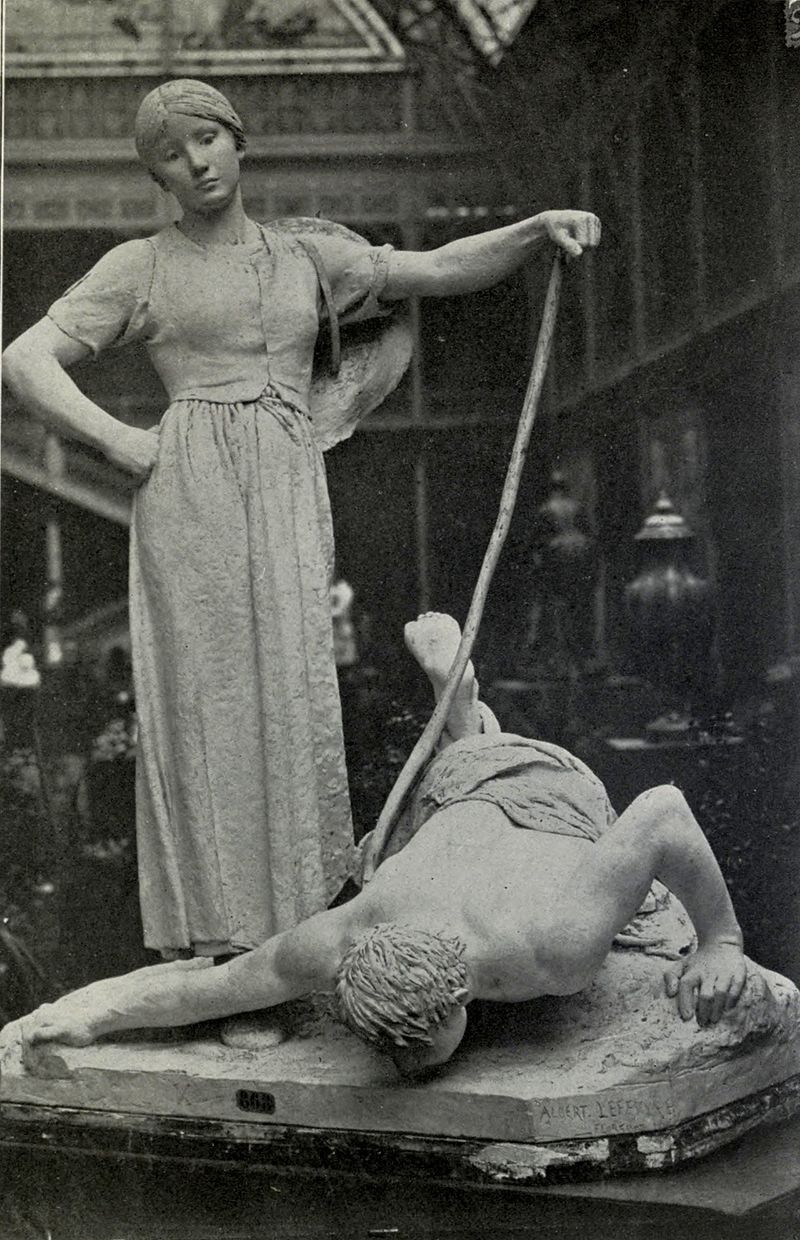
Après le travail
Louis Albert-Lefeuvre

katholische Pfarrkirche Saint-Pierre-Saint-Paul in Clamart im Département Hauts-de-Seine (Île-de-France)
Reinhardhauke
Life and career
Dated record
Life and career
The full dated record · 2 entries
1845
Louis-Albert Lefeuvre was born on 27 May 1845.
1924
Louis-Albert Lefeuvre died at Boulevard Bineau.
Places
Named by the record
Places
Only places the record itself states, plotted where the house gazetteer settles their coordinates. Nothing is inferred from a name or a nationality.
Paris.
Birth place
Boulevard Bineau.
Death place
Notes from the source article
Cited by Wikipedia
Notes from the source article
These works are cited by the source article, in its own numbering. They are recorded as its citations, not as sources VALÉORINE has verified.
- 1.Presentada en el sitio web : Bellecpa.comm http://www.bellecpa.com/cpa_paris/cpa_10eme_arrondissement.html?orderby=publish_date&orderdir=asc
- 2.Ficha de Adolescencia en la base fotográfica Archim. (en francés). Consultada el 3/1/2012.
- 3.Sitio web del museo de Orsay: Ficha de Fin de journée (en francés). Consultada el 3/1/2012.
- 4.destruida por el régimen de Vichy. Esta estatua estuvo en el boulevard de la Marne (fr), en Rouen.
- 5.Ficha del monumento a Armand Carrel en la base Mérimée. (en francés). Consultada el 3/1/2012.
- 6.Sobre el museo de Arte e Historia de Cholet puedes ampliar información en la Wikipedia
- 7.Obra reproducida en The Illustrated Globe, 1887.
- 8.Ficha de la estatua a Paul-Louis Courier en la base Arcade. (en francés). Consultada el 3/1/2012.
- 9.Ficha de las estatuas de santos en Clamart en la base Palissy. (en francés). Consultada el 3/1/2012.
References
Citations
References
Each reference names the institution holding it, so a reader may go to the document itself.
reference work
Secondary witnessreference work
Secondary witness
People, houses and institutions
Knowledge graph
People, houses and institutions
Teachers, collaborators, publishers and institutions recorded against this person, each on a stated basis.
Born at
1- ParisPlace
Established from a fact already recorded on a verified source.
The Encyclopedia exists whether or not anything is for sale. Corrections are recorded rather than overwritten, and every version of this record is kept. Published 17 August 2026.
Elsewhere in Sculpture
6,174 published records in this field, each with its sources named.
- Louis Sussmann-HellbornArtist
- Louis TuaillonArtist
- Louis Van CutsemArtist
- Louis van GasterenArtist
- Louis-Claude VasséArtist
- Louis-Denis CaillouetteArtist
- Louis-Ernest BarriasArtist
- Louis-Eugène BionArtist
Best supported in this field
For owners
Own a work by Louis-Albert Lefeuvre?
A specialist will read what you send and tell you what the house can establish, what it cannot, and whether the object is suited to sale. There is no charge and no obligation. The object stays with you throughout; nothing is shipped to us unless it is arranged in writing beforehand.