
Kanō Mitsunobu
Kanō Mitsunobu (狩野 光信, 1565–1608) was a son of Kanō Eitoku and an influential artist of the Kanō school of Japanese painting.
Also recorded as Ko-Ukyō · Ukyō · Ukyōnoshin · Mitsunobu Kanō
Kanō Mitsunobu
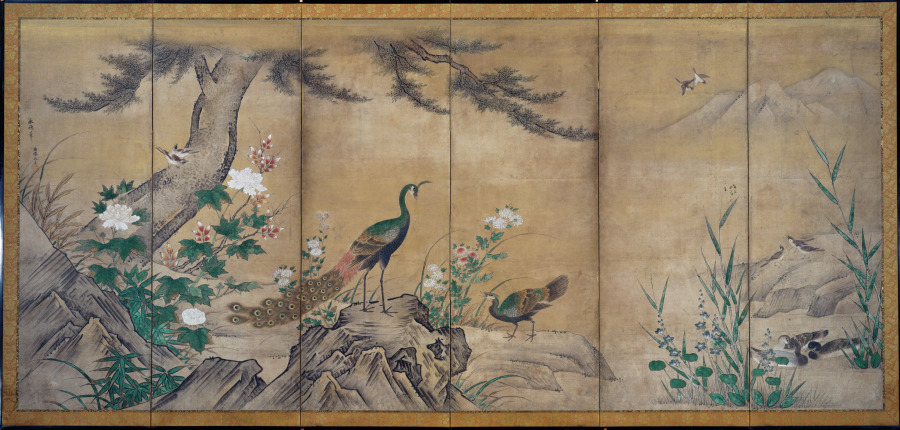
Kano Mitsunobu · The Cleveland Museum of Art · Gift of William G. Mather · CC0
- Died
- 1608 · Kuwana.
- Nationality
- Japan
- Occupation
- painter
VALÉORINE Encyclopedia
VALÉORINE documentary reading
Documentary summary
Kanō Mitsunobu (狩野 光信, 1565–1608) was a son of Kanō Eitoku and an influential artist of the Kanō school of Japanese painting.
Admitted source layer · organised and presented by VALÉORINE
Reference Check
Propose documentary evidence for Kanō Mitsunobu. A contribution is never written directly as fact: identity, source, rights and evidence gates still decide.
Sign in to contribute
Documentary evidence
Documentary basis
Authority files
wikidata · Q3192786 · wikipedia · Kanō Mitsunobu
In this article
Biography
Biography
Scholars disagree on the year of Mitsunobu's birth, placing it in either 1561 or 1565. The earliest record of his involvement on any major project was in conjunction with his father's commission to paint elements of Oda Nobunaga's Azuchi Castle. He also worked with his father on a number of other major castles and palaces, including Osaka Castle, Kyoto Gosho, and Toyotomi Hideyoshi's Jurakudai palace. He received a commission from Toyotomi Hideyori to paint the ceiling of the main hall of Shōkoku-ji in Kyoto with dragons. After his father's death in 1590, Mitsunobu became the head of the family and of the school. He took over the Kyoto Imperial Palace project, and continued to receive many illustrious commissions. However, in part due to his poor leadership skills and political ability, he lost many commissions and patrons to the rival Hasegawa school of painting and siblings within the Kanō school. Notably, his adopted brother, Kanō Sanraku, and his son, Kanō Sansetsu, saw a surge of new commissions and helped cement their place within Kanō school history.
Style
Style
• Illustration — Portrait of Toyotomi Hideyoshi, by Kanō Mitsunobu While a master of the fundamental Kanō school style, and that of his father, Mitsunobu expressed elements of his own preferences and skills in his paintings. The emergence of his own style was not truly observed until after his father's death in 1590 and he had more independent commissions. His color paintings of flowers, trees and similar subjects made extensive use of gold-leaf as most Kanō paintings did, but also displayed a delicate, elegant, and gentle lightness.
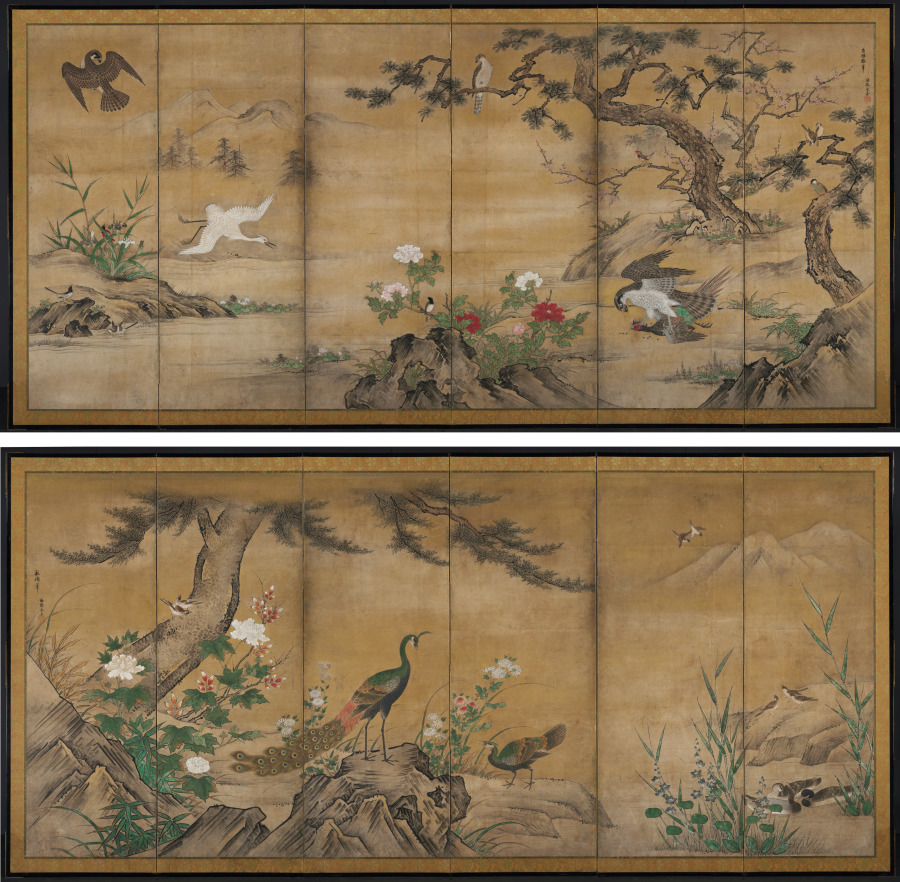
Birds and Flowers, late 1500s, by Kanō Mitsunobu
Kano Mitsunobu · The Cleveland Museum of Art · Gift of William G. Mather
Life and career
Dated record
Life and career
The full dated record · 2 entries
1561
Kanō Mitsunobu born at Yamashiro Province.
1608
Kanō Mitsunobu died on 13 April 1608.
Places
Named by the record
Places
Only places the record itself states, plotted where the house gazetteer settles their coordinates. Nothing is inferred from a name or a nationality.
Yamashiro Province.
Birth place
Kuwana.
Death place
Primary material
Documents and archives
reference work
- “Kanō Mitsunobu”, English Wikipedia, consulted as further reading
Reputable secondary · Wikipedia
authority record
- Wikidata, structured authority record Q3192786: Kanō Mitsunobu
General reference · Wikidata
Citations
References
Each reference names the institution holding it, so a reader may go to the document itself.
reference work
Secondary witnessauthority record
General reference
The Encyclopedia exists whether or not anything is for sale. Corrections are recorded rather than overwritten, and every version of this record is kept. Published 17 August 2026.
Elsewhere in Paintings
18,623 published records in this field, each with its sources named.
- Kanō HideyoriArtist
- Kanō HōgaiArtist
- Kanō MasanobuArtist
- Kanō MichinobuArtist
- Kanō MotonobuArtist
- Kanō NaizenArtist
- Kanō NaonobuArtist
- Kanō SadanobuArtist
Best supported in this field
For owners
Own a work by Kanō Mitsunobu?
A specialist will read what you send and tell you what the house can establish, what it cannot, and whether the object is suited to sale. There is no charge and no obligation. The object stays with you throughout; nothing is shipped to us unless it is arranged in writing beforehand.