
Jooris van der Straeten
Illustration — Elisabeth of Austria, Queen of France Jooris van der Straeten, known as Jorge de la Rúa in Spain and in France as Georges van der Straeten (fl. 1552–1577), was a Flemish portrait and history painter. Originally from Ghent, he travelled abroad and became portrait painter to the ruling houses in Portugal, Spain and France.
Jooris van der Straeten
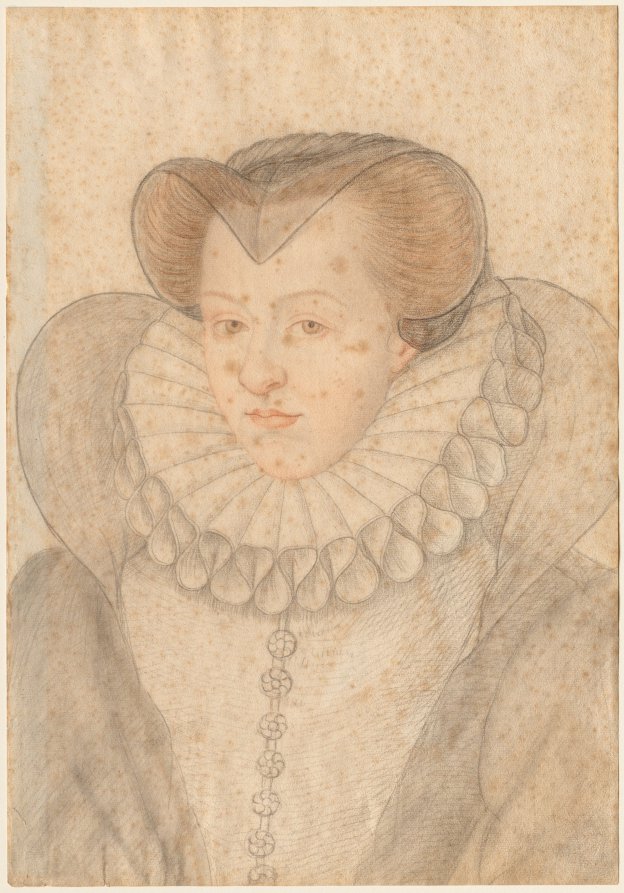
Jooris van der Straeten · The Cleveland Museum of Art · Gift of Mrs. A. Dean Perry in memory of Mr. and Mrs. Edward Belden Greene · CC0
- Died
- Jooris van der Straeten died in 1577. · Paris.
- Nationality
- Southern Netherlands
- Occupation
- painter
VALÉORINE Encyclopedia
VALÉORINE documentary reading
Documentary summary
Illustration — Elisabeth of Austria, Queen of France Jooris van der Straeten, known as Jorge de la Rúa in Spain and in France as Georges van der Straeten (fl. 1552–1577), was a Flemish portrait and history painter. Originally from Ghent, he travelled abroad and became portrait painter to the ruling houses in Portugal, Spain and France.
Admitted source layer · organised and presented by VALÉORINE
Note VALÉORINE
Jooris van der Straeten was a painter, a national of Southern Netherlands. The painter was born in Ghent and died in Paris. Jooris van der Straeten held the position of court painter. Works are held at Convent of Las Descalzas Reales and Pollok House.
Composed from admitted, traceable facts · 01 October 2026
VALÉORINE
Reference Check
Propose documentary evidence for Jooris van der Straeten. A contribution is never written directly as fact: identity, source, rights and evidence gates still decide.
Sign in to contribute
World of VALÉORINE
Documentary connections
Only confirmed graph relationships appear here. Images are shown only when their identity and reuse rights both pass the documentary gate.

Documentary evidence
Documentary basis
Authority files
wikidata · Q18606042 · wikipedia · Jooris van der Straeten
In this article
Life
Life
A polyglot, van der Straeten was a versatile courtier, who worked primarily as a portraitist for queens.
Jooris van der Straeten was originally from Ghent, which explains his alias of Joris van Gent (Joris of Ghent). It is believed he was a pupil of the prominent history and portrait painter Frans Floris in Antwerp. It is possible that he also trained under the prominent portrait painter Antonis Mor and travelled with him to the Iberian peninsula. He likely accompanied the future Spanish King Philip II when the travelled to England to marry the English Queen Mary I in 1554 as evidenced by the portrait he made of the future king with the order of the Garter. There are also bust and rondella versions of this work. After leaving England he worked in Portugal. Catherine of Austria, Queen of Portugal paid him in 1556 for a portrait of her grandson, the future King Sebastian of Portugal at the age of two. • Illustration — Portrait of Philip II of Spain In 1559, he was recorded in Spain, with a commission to paint a Resurrection of Lazarus for the church of Santiago de Cáceres. He was documented from 1560 to 1568 under the name Jorge de la Rúa as painter of Elisabeth of Valois, the Spanish queen consort. He was her portrait painter together with the local painter Alonso Sánchez Coello, with whom he had also worked in Portugal. He also painted devotional works for queen Elisabeth. She paid a high sum for a painting of the Immaculate Virgin with five figures that hung over the queen's bed. He was still at the Spanish court in January 1571, as he is documented at that time occupied with a portrait of the infantas Isabella Clara Eugenia and Catalina Micaela. The portrait had been commissioned by the Duchess of Alba. He made two copies, one of which was sent to the grandmother of the infantas, the queen of France Catherine de' Medici while the other was sent to the Duchess. The Duchess refused the work because of its high price. It is possible that this is the work preserved in the British Royal Collection that portrays the sisters with a puppy and a parrot. At the Royal Collection website this work is attributed to Alonso Sánchez Coello and workshop. • Illustration — Prince Don Carlos in armor The artist moved to France where he worked as a painter of Elisabeth of Austria, wife of Charles IX of France. He painted a portrait of the queen in 1573. This is the only signed and dated work by the painter and is preserved in the Convent of Las Descalzas Reales in Madrid. To Jorge de la Rúa is also attributed a portrait of Prince Don Carlos in armor in the Convent of Las Descalzas Reales. This work was previously attributed to the Portuguese painter Cristóvão de Morais. The artist worked in France also for Catherine de' Medici. The artist made his testament in April 1577 while lying ill in bed in at a residence in Saint-Germain-des-Prés. He stated in his testament that he was a painter and valet de chambre (valet) of the French queen Louise of Lorraine. He further declared that he was the creditor of the queen and Nicholas Hilliard, painter to the English queen. The artist likely never married nor did he become a naturalised Frenchman.
Work
Work
While Jooris van der Straeten is mainly known as a portrait painter for rulers of the Habsburg and Valois, he also created Christian devotional scenes for his royal patrons. • Illustration — Portrait of a gentleman, said to be Perari Di Cremona At the time he was working for the courts on the Iberian peninsula, many other portrait painters were active as court painters for the same ruling dynasty. They included Flemish painters Antonio Moro and Roland de Mois, as well as Spanish painters Alonso Sánchez Coello and Juan Pantoja de la Cruz and Italian painter Sofonisba Anguissola. As these artists were working within a same ideological framework, their depictions show many similarities. This has made attributions of unsigned works difficult and some works have been attributed to one artist and later to another one. For instance, the Portrait of Don Juan of Austria is now attributed to van der Straeten but was earlier attributed to Alonso Sánchez Coello. The coherence of portraits made by painters working at the court of Philip II can be explained by the propagandistic purpose behind their creation and use. The conception behind the portraits of the Habsburg ruling family was to project an image capable of conveying the family's leading position in the world, its interests and dynastic destiny. Achieving a likeness in the portrait of the king and his family was secondary to giving form to the concept of the Habsburg majesty. The establishment and repetition of a series of conventions repeated by each court painter forged a uniform court painting procedure. This so-called 'Spanish school of portrait painting' typically depicted the royal sitters at full or three-quarter length in a not overly heroic but rather personal manner. This was because portraits also had a semi-private and familial as well as genealogical role. As the royal family was spread out over Europe, the portraits could be kept to remember close family members as well as serve in the negotiation of royal marriages to give a preview of the prospective spouse's appearance.
Life and career
Dated record
Life and career
The full dated record · 2 entries
1530
Jooris van der Straeten was born in 1530.
1577
Jooris van der Straeten died at Paris.
Places
Named by the record
Places
Only places the record itself states, plotted where the house gazetteer settles their coordinates. Nothing is inferred from a name or a nationality.
Jooris van der Straeten was born at Ghent.
Birthplace
Jooris van der Straeten died at Paris.
Deathplace
Ghent.
Birth place
Paris.
Death place
Jooris van der Straeten was born in Ghent.
Birthplace
Jooris van der Straeten died in Paris.
Deathplace
Primary material
Documents and archives
authority record
- Wikidata, structured authority record Q18606042: Jooris van der Straeten
General reference · Wikidata
reference work
- “Jooris van der Straeten”, English Wikipedia, consulted as further reading
Reputable secondary · Wikipedia
Notes from the source article
Cited by Wikipedia
Notes from the source article
These works are cited by the source article, in its own numbering. They are recorded as its citations, not as sources VALÉORINE has verified.
- 1.Alternative name spellings: as Joris van Straeten, Jooris van Straeten, Georges van Straeten, Georges van Gent, Georgius van Gent, Jooris van Gent, Joris van Gent
- 2.Joris van Straeten at the Netherlands Institute for Art History
- 3.Annemarie Jordan, Jooris van der Straeten: Habsburg Court Portraitist in Portugal, Spain, and France, paper presented on 24 March 2007
- 4.Abraham de Rijcke in: Karel van Mander, Schilder-boeck, 1604,
- 5.Colección Abelló, Centro Centro Cibeles de Cultura y Ciudadanía, 2014
- 6.Julia de la Torre Fazio, El retrato en miniatura español bajo los reinados de Felipe II y Felipe III, Tesis Doctoral, Universidad de Málaga, Departamento de Historia del Arte, Málaga, 2009
- 7.Pérez de Tudela, Almudena, Retrato de Isabel Clara Eugenia y Catalina Micaela de Jorge de la Rúa, Ars Magazine, nº 29, enero-marzo 2016, pp. 66-76
- 8.Attributed to artist and workshop of Alonso Sánchez Coello (1531-88), Isabella Clara Eugenia and Catharina, Daughters of Philip II, King of Spain, c. 1569-70 at the Royal Trust
- 9.Breuer-Hermann, Stephanie, Alonso Sánchez Coello y el retrato en la corte de Felipe II, catálogo de la exposición celebrada en el Museo del Prado, June/July 1990, pp. 154-155
- 10.Alexandra Zvereva, Le portrait de la Renaissance française
- 11.Anne J. Cruz, Juana of Austria : patron of the arts and regent of Spain, 1554-59, in: Anne J Cruz (Editor), 'The Rule of Women in Early Modern Europe', Mihoko Suzuki, 22 June 2009, pp. 103–122
- 12.Jorge de la Rúa (Attributed to), Portrait of Don Juan of Austria at Art UK
- 13.Leticia Ruiz Gómez, In the king's name : the portrait of Juana of Austria in the Bilbao Fine Arts Museum, in: Bulletin of the Bilbao Fine Arts Museum, no. 2, 2007, pp. 85-12
References
Citations
References
Each reference names the institution holding it, so a reader may go to the document itself.
authority record
Secondary witnessreference work
Secondary witness
People, houses and institutions
Knowledge graph
People, houses and institutions
Teachers, collaborators, publishers and institutions recorded against this person, each on a stated basis.
Died at
1- ParisPlace
Established from a fact already recorded on a verified source.
The Encyclopedia exists whether or not anything is for sale. Corrections are recorded rather than overwritten, and every version of this record is kept. Published 18 August 2026.
Elsewhere in Paintings
18,452 published records in this field, each with its sources named.
- Jonathan LaskerArtist
- Jonathan RichardsonArtist
- Jonathan WintersArtist
- Jonathan YeoArtist
- Joos de BeerArtist
- Joos de Momper the YoungerArtist
- Joos van CleveArtist
- Joos van CraesbeeckArtist
Best supported in this field
For owners
Own a work by Jooris van der Straeten?
A specialist will read what you send and tell you what the house can establish, what it cannot, and whether the object is suited to sale. There is no charge and no obligation. The object stays with you throughout; nothing is shipped to us unless it is arranged in writing beforehand.