
Jonathan Richardson
Jonathan Richardson (12 January 1667 – 28 May 1745), sometimes called "the Elder" to distinguish him from his son, was an English artist, collector of drawings and writer on art, working almost entirely as a portrait-painter in London. He was considered by some art-critics as one of the three foremost painters of his time. He was the master of Thomas Hudson and George Knapton.
Also recorded as Jonathan Richardson the Elder · Jonathan, I Richardson · Jonathan the Elder Richardson · Jonathan I Richardson
Jonathan Richardson
Jonathan Richardson · Wellcome Collection, London · Wellcome Collection · Public Domain Mark
- Name
- Jonathan Richardson
- Born
- 12 January 1667
- Birthplace
- London, England
- Died
- 28 May 1745
- Place of death
- Bloomsbury, London, England
- Nationality
- Kingdom of Great Britain
- Occupation
- art collector · painter · etcher · draftsperson · art historian · artist
- Fields
- painting
- Teachers
- John Riley
- Languages
- English
VALÉORINE Encyclopedia
VALÉORINE documentary reading
Documentary summary
Jonathan Richardson (12 January 1667 – 28 May 1745), sometimes called "the Elder" to distinguish him from his son, was an English artist, collector of drawings and writer on art, working almost entirely as a portrait-painter in London. He was considered by some art-critics as one of the three foremost painters of his time. He was the master of Thomas Hudson and George Knapton.
Admitted source layer · organised and presented by VALÉORINE
Note VALÉORINE
Jonathan Richardson (1665–1745) was a British art collector, art historian and artist, among other activities. Born in London, the art collector died in London Borough of Camden.
Jonathan Richardson worked in London. The art collector was active in painting.
Genres include portrait. Languages used include English. Works by Jonathan Richardson are held at Art Institute of Chicago, Museum of Fine Arts Boston and National Galleries Scotland, among others.
Composed from admitted, traceable facts · 27 September 2026
VALÉORINE
Reference Check
Propose documentary evidence for Jonathan Richardson. A contribution is never written directly as fact: identity, source, rights and evidence gates still decide.
Sign in to contribute
World of VALÉORINE
Documentary connections
Only confirmed graph relationships appear here. Images are shown only when their identity and reuse rights both pass the documentary gate.

Documentary evidence
Evidence Panel
not yet certified
- Identity
- resolved
- Independent source families
- 0
- Admitted assertions
- 0
- Open conflicts
- 0
Authority files
wikidata · Q1703287 · wikipedia · Jonathan Richardson
In this article
Biography
Biography
Richardson was even more influential as a writer; he is credited with inspiring Joshua Reynolds to paint and theorise with his book An Essay on the Theory of Painting.[1] This book is credited with being "the first significant work of artistic theory in English."[2]
Training under John Riley is recorded. Thomas Hudson is recorded as having studied under Jonathan Richardson. The recorded working language is English. The field of work recorded is painting. Subjects and genres recorded for the work are portrait. Places of work recorded in the authority are London. Work by Jonathan Richardson is recorded in the collections of J. Paul Getty Museum, Tate, National Gallery of Victoria, National Galleries Scotland and Museum of Fine Arts Boston.
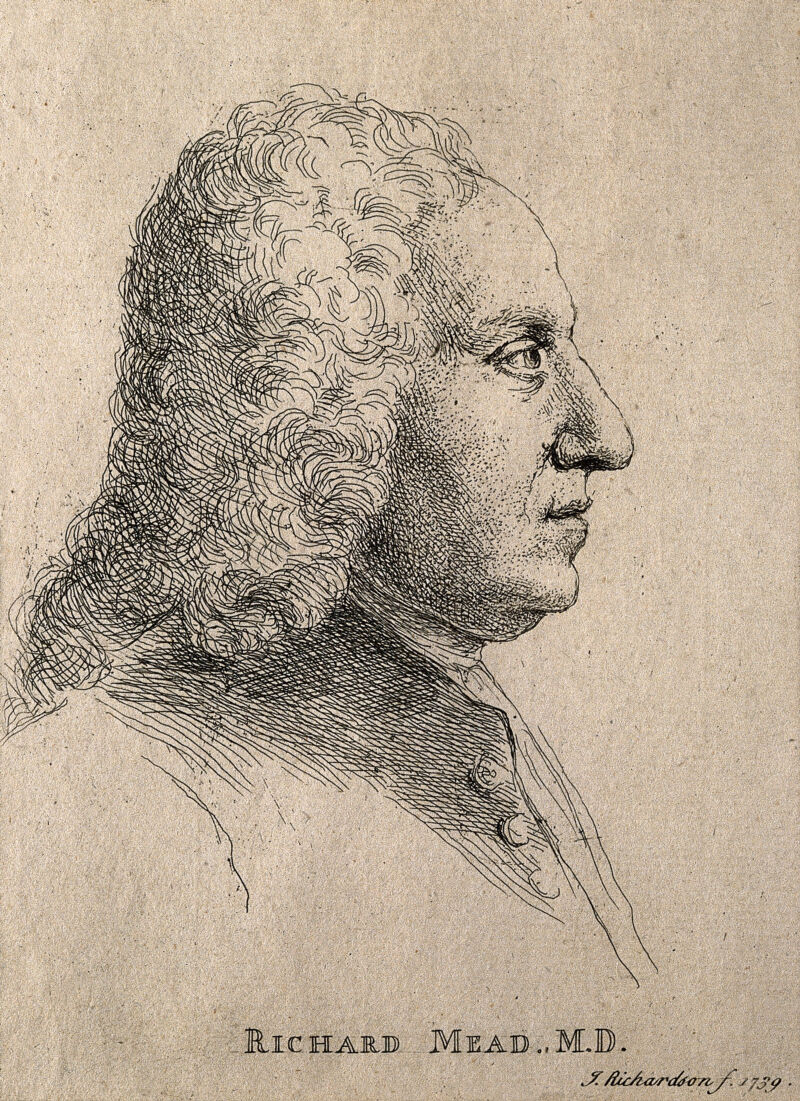
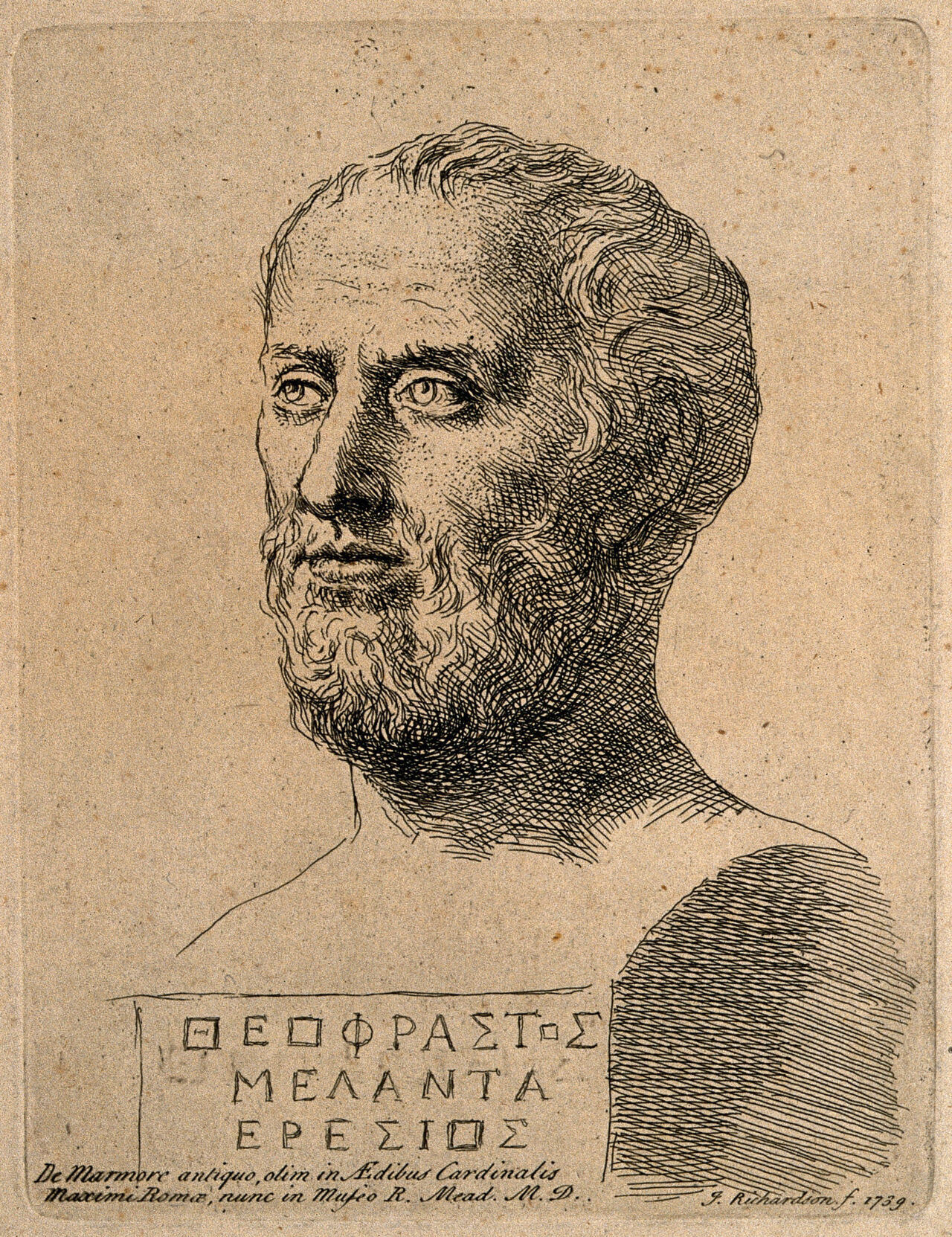
Richard Mead. Etching by J. Richardson, 1739., 1739, by Jonathan Richardson
Jonathan Richardson · Wellcome Collection, London · Wellcome Collection
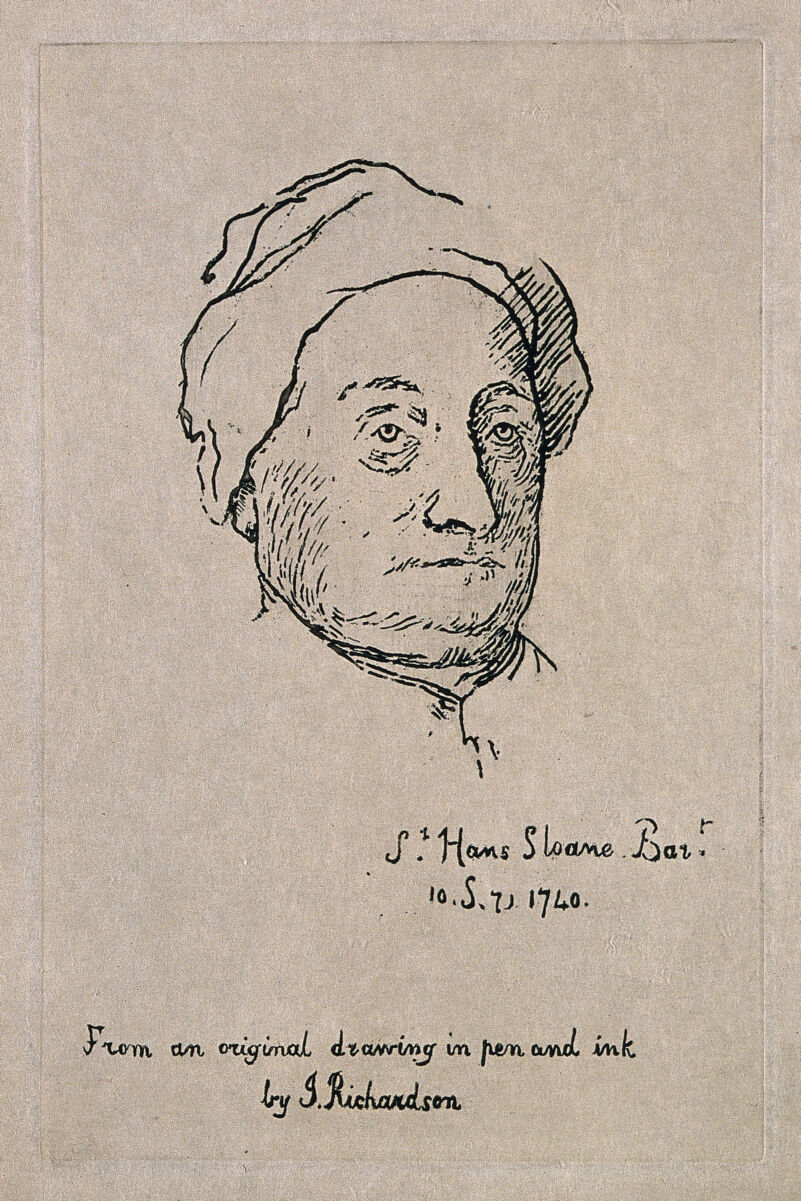
Sir Hans Sloane. Etching after J. Richardson, 1740., by Jonathan Richardson
Jonathan Richardson · Wellcome Collection, London · Wellcome Collection
Key facts
Key facts
• Name — Jonathan Richardson • Born — 12 January 1667 • Birthplace — London, England • Died — 28 May 1745 • Place of death — Bloomsbury, London, England
Life
Life
Richardson was born in the parish of St. Botolph, Bishopsgate in London on 12 January 1667 to William and Mary Richardson. In 1672 his father died and his mother married again.[3] Richardson became a scrivener's apprentice, but he was released early when his master retired. Richardson was lucky enough to be taken on as a painting apprentice by John Riley. He learnt the art of portraiture from Riley whilst living at his master's house. Richardson's wife was Riley's niece. Richardson was even more influential as a writer than as a painter according to Samuel Johnson. He is credited with inspiring Joshua Reynolds to paint and theorise with his 1715 book An Essay on the Theory of Painting. In 1722, Richardson published with his son, also Jonathan (1694–1771), An Account of Some of the Statues, Bas-Reliefs, Drawings, and Pictures in Italy (1722). The book was compiled by Richardson the elder using material gathered by his son whilst touring Italy in 1720.[4] This was a very popular book and was used by young men as a basis for their Grand Tour. It was said that the book became the basis for future purchases of art by wealthy collectors and therefore shaped English interest in foreign old masters.[5] It also provided an important model for Johann Joachim Winckelmann's History of Art (1764).[6] Richardson and his son also co-authored their Explanatory Notes and Remarks on Milton's Paradise Lost (1734). These notes are, in part, a response to Richard Bentley's 1732 edition of Paradise Lost, in which he frequently faults Milton's style or places exceptionable passages in square brackets, claiming they are the work of another hand. The Richardsons' responses to Bentley helped to lay the foundation for subsequent interpretation of the poem.[7]
Written works
Written works
• An Essay on the Theory of Painting (1715) • An Essay on the Whole Art of Criticism as it Relates to Painting and an Argument in Behalf of the Science of a Connoisseur (1719) • An Account of Some of the Statues, Bas-Reliefs, Drawings, and Pictures in Italy (1722) • Explanatory notes and remarks on Milton's Paradise lost By J. Richardson, father and son. With the life of the author, and a discourse on the poem.
Gallery
Gallery
• Illustration — Fisher Harding (1701) • Illustration — William Cowper, 1st Earl Cowper (c. 1710) • Illustration — Sir Richard Hoare (c. 1712) • Illustration — Sir William Wyndham, 3rd Baronet (c. 1713–1714) • Illustration — Horace Walpole (1735) • Illustration — Alexander Pope (c. 1736) • Illustration — Thomas Fanshawe (c. 1736)
Identity and origins
Identity and origins
His recorded language was English. One child is recorded: Jonathan Richardson the younger.
Life and career
Dated record
Life and career
The full dated record · 2 entries
1665
Jonathan Richardson born at London.
1745
Jonathan Richardson died at London Borough of Camden.
Places
Named by the record
Places
Only places the record itself states, plotted where the house gazetteer settles their coordinates. Nothing is inferred from a name or a nationality.
London.
Birth place
London Borough of Camden.
Death place
Legacy
Richardson was considered as one of the three foremost painters of his time with Charles Jervas and Michael Dahl. He was also an excellent and prolific draughtsman, and made a number of chalk drawings of friends and family, often using blue paper for them. Recent research has shed light also on his activity as a printmaker, once again mostly in the field of portraiture.[9] He was the master of Thomas Hudson and George Knapton. He painted, drew and etched many self-portraits, which are highly regarded today. Richardson has over 120 paintings in public ownership in the United Kingdom.[10] When the elder Richardson died in Bloomsbury on 28 May 1745 he left four daughters, one of whom married Thomas Hudson the painter,[11] who had previously been Richardson's pupil. He was also survived by his son, Jonathan Richardson the Younger (1694–1771), who was brought up as a gentleman; he dabbled in painting and printmaking. Horace Walpole stated that he "painted a little" but whatever works he created are now lost.[12] He left a large and valuable collection of 4,749 Old Master drawings which were auctioned by Sotheby's over eighteen days. Another large collection of painting, prints, drawings, etc. (1241 lots in all) was auctioned by Christopher Cock over eighteen evenings from 22 January to 11 February 1747.[13] Today a drawing that still bears Richardson's collector's mark gains substantially in value. Richardson has been described as one of the "greatest collectors of drawings of all time."[14]
Primary material
Documents and archives
scholarly publication
- Richardson, Jonathan, the Elder, Benezit Dictionary of Artists, 2011
Scholarly · Crossref registry · 2011
- Richardson, Jonathan, the Younger, Benezit Dictionary of Artists, 2011
Scholarly · Crossref registry · 2011
reference work
- Wikidata, structured authority record Q1703287: Jonathan Richardson
Reputable secondary · Wikimedia Foundation
- “Jonathan Richardson”, English Wikipedia, consulted as further reading
Reputable secondary · Wikipedia
Notes from the source article
Cited by Wikipedia
Notes from the source article
These works are cited by the source article, in its own numbering. They are recorded as its citations, not as sources VALÉORINE has verified.
- 1.Jonathan Richardson, London – National Portrait Gallery, accessed January 2010
- 2.Jonathan Richardson the elder , Getty Museum, accessed January 2009
- 3.Carol Gibson-Wood, 'Richardson, Jonathan, the elder (1667–1745)', Oxford Dictionary of National Biography, Oxford University Press, 2004; online edn, Jan 2008 accessed 31 July 2013
- 4.Dušan Vasić, "Jonathan Richardson junior and the Plague of Marseilles", 2022, researchers.one
- 5.Jonathan Richardson , Dictionary of Art Historians, accessed January 2009
- 6.Katherine Harloe, Winckelmann and the Invention of Antiquity, Oxford University Press, 2013
- 7.Carol Gibson-Wood, Jonathan Richardson: Art Theorist of the English Enlightenment, Yale University Press
- 8.John Leonard, Faithful Labourers: A Reception History of Paradise Lost, Oxford University Press, 2013
- 9.Bryony Bartlett-Rawlings, "Jonathan Richardson (1667–1745) as Etcher", Print Quarterly, XXXV, no.4, December 2018, pp.392–406 http://www.printquarterly.com/8-contents/66-contents-2018.html
- 10.Jonathon Richardson the Elder.
- 11.Jonathon Richardson, Dictionary of National Biography, accessed January 2010
- 12.Getty ULAN
- 13.Cock, Christopher. A catalogue of the genuine and entire collection of Italian and other drawings, Prints, Models, and Casts, Of the late Eminent Mr. Jonathan . Christopher Cock. 1747.
- 14.Finsten, Jill. A Self Portrait of Jonathan Richardson. The J. Paul Getty Museum Journal. J. Paul Getty Trust. 21. 43–54. 1993. 4166635.
References
Citations
References
Each reference names the institution holding it, so a reader may go to the document itself.
scholarly publication
Richardson, Jonathan, the Elder, Benezit Dictionary of Artists, 2011Crossref registry
Verifiedscholarly publication
Verifiedreference work
Wikidata, structured authority record Q1703287: Jonathan RichardsonWikimedia Foundation
Partially resolvedreference work
Partially resolved
Further particulars
Held on the record
Further particulars
Open the remaining particulars
Formation and teaching. He trained under John Riley. Each of those relationships is stated by the authority record rather than inferred from style. Recorded as art collector, painter, etcher, draftsperson and art historian.
Recognition and collections
Work by Jonathan Richardson is
J. Paul Getty Museum, Tate, National Gallery of Victoria and National Galleries Scotland
The Encyclopedia exists whether or not anything is for sale. Corrections are recorded rather than overwritten, and every version of this record is kept. Published 14 August 2026.
Elsewhere in Paintings
18,717 published records in this field, each with its sources named.
- Jonathan CrenshawArtist
- Jonathan FisherArtist
- Jonathan HirschfeldArtist
- Jonathan LaskerArtist
- Jonathan WintersArtist
- Jonathan YeoArtist
- Jooris van der StraetenArtist
- Joos de BeerArtist
Best supported in this field
For owners
Own a work by Jonathan Richardson?
A specialist will read what you send and tell you what the house can establish, what it cannot, and whether the object is suited to sale. There is no charge and no obligation. The object stays with you throughout; nothing is shipped to us unless it is arranged in writing beforehand.