
Joos van Cleve
Illustration — Self-Portrait Joos van Cleve (also Joos van der Beke; c. Within Dutch and Flemish Renaissance painting, he combines the traditional techniques of Early Netherlandish painting with influences of more contemporary Renaissance painting styles. An active member and co-deacon of the Guild of Saint Luke of Antwerp, he is known mostly for his religious works and portraits, some of royalty.
Also recorded as Joos van Kleef · Joos Van Cleve · Joos van der Beke Cleef · Joos van der Beke
Joos van Cleve
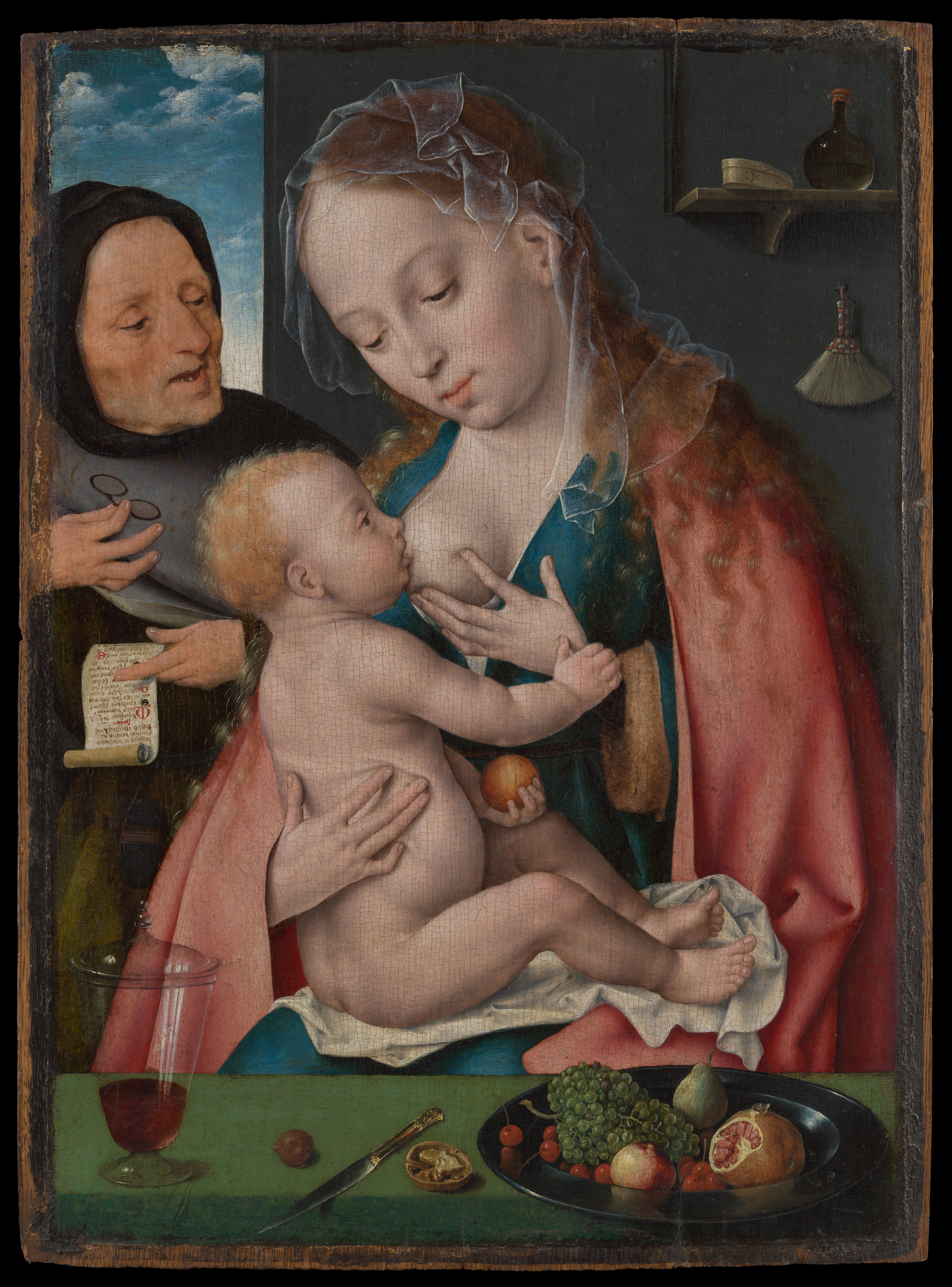
Joos van Cleve · The Metropolitan Museum of Art, New York · The Friedsam Collection, Bequest of Michael Friedsam, 1931 · Public domain (CC0, Met Open Access)
- Born
- 1485 · Kleve.
- Nationality
- Habsburg Netherlands
- Occupation
- painter
- Fields
- painting · portrait painting
- Known for
- Portrait of a man · Portrait of an Unknown Man · Portrait of a man and his wife
- Languages
- Dutch
VALÉORINE Encyclopedia
VALÉORINE documentary reading
Documentary summary
Illustration — Self-Portrait Joos van Cleve (also Joos van der Beke; c. Within Dutch and Flemish Renaissance painting, he combines the traditional techniques of Early Netherlandish painting with influences of more contemporary Renaissance painting styles. An active member and co-deacon of the Guild of Saint Luke of Antwerp, he is known mostly for his religious works and portraits, some of royalty.
Admitted source layer · organised and presented by VALÉORINE
Note VALÉORINE
Joos van Cleve (1485–1540) was a painter, a national of the Habsburg Netherlands. The painter was born in Kleve and died in Antwerp. Activity centred on painting and portrait painting.
Among the works are Portrait of a man and Portrait of a man and his wife. The work spans portrait. Languages used include Dutch. Works are held at Metropolitan Museum of Art, Minneapolis Institute of Art and Museo del Prado, among others.
Composed from admitted, traceable facts · 01 October 2026
VALÉORINE
Reference Check
Propose documentary evidence for Joos van Cleve. A contribution is never written directly as fact: identity, source, rights and evidence gates still decide.
Sign in to contribute
World of VALÉORINE
Documentary connections
Only confirmed graph relationships appear here. Images are shown only when their identity and reuse rights both pass the documentary gate.
Documentary evidence
Documentary basis
Authority files
wikidata · Q153472 · wikipedia · Joos van Cleve
In this article
Life
Life
He ran a large workshop, with at least five pupils and other assistants, which produced paintings in a variety of styles over his career. His style is highly eclectic: he was one of the first to introduce broad world landscapes in the backgrounds of his paintings, sometimes collaborating with Joachim Patinir, which would become a popular technique of sixteenth century northern Renaissance paintings. Some works reflect the popular style of Antwerp Mannerism, while others are variations on early Netherlandish masters of two or more generations before, or reflect recent Italian painting. Four of his more important paintings have the monogram "JB", presumably for Joos van der Beke, rather inconspicuously placed. In three other works a self-portrait is placed among the minor figures. From the seventeenth to the nineteenth centuries, the name of Joos van Cleve as an artist was lost. Some of the paintings now attributed to Joos van Cleve were, at that time, known as the works of the "Master of the Death of the Virgin", after the triptych in the Wallraf-Richartz-Museum in Cologne. In 1894 it was discovered that the monogram on the back of the triptych was that of Joos van der Beke, the real name of Joos van Cleve. His oeuvre was reconstructed in the 1920s and 1930s by Ludwig von Baldass and Max Jakob Friedländer. Now over 300 works are generally attributed to him or his workshop, which vary considerably in both quality and style. He was the father of Cornelis van Cleve (1520–1567) who also became a painter, and inherited the workshop. Cornelis became mentally ill during a residence in England and was therefore referred to as 'Sotte Cleef' (mad Cleef).
The recorded working language is Dutch. The field of work recorded is painting and portrait painting. Subjects and genres recorded for the work are portrait. Works named in the authority record are Portrait of a man, Portrait of an Unknown Man and Portrait of a man and his wife. Work by Joos van Cleve is recorded in the collections of Museum Boijmans Van Beuningen, Städel Museum, Minneapolis Institute of Art, Museo del Prado and The Nelson-Atkins Museum of Art.
• Illustration — Altarpiece of the Lamentation, 1520–1525 Joos van Cleve was born around 1485–90. The birthplace of Joos van Cleve is not precisely known. In various Antwerp legal documents he is referred to as 'Joos van der Beke alias van Cleve'. It is therefore likely that he came from the Lower Rhenish region or city named Kleve (in traditional English "Cleves"), from which his name is derived. It is assumed that he began his artistic training around 1505 in the workshop of Jan Joest, whom he assisted in the panel paintings of the wings for the high altar of the Nikolaikirche in Kalkar, Lower Rhine, Germany, from 1506 to 1509. These include one of his self-portraits. From this a birth date of about 1485 to 1490 is inferred. Joos van Cleve is believed to have moved to Bruges between 1507 and 1511 since his painting style is similar to that of the painters of Bruges. Later he moved to Antwerp, and in 1511 became a free master in the Antwerp Guild of Saint Luke. He was co-deacon of the guild for several years around 1520, along with registering pupils there at various dates between 1516 and 1536. In 1528 he bought a house from his wife's parents. As there are no records of his being in Antwerp between 1529 and 1534, it is possible he spent some of this time in Italy or France at the court, or even London. From surviving documents it is clear that he was alive in Antwerp on 10 November 1540 and dead by 4 February 1541.
Personal life
Personal life
He had two children from his first marriage, a daughter and a son. His son named Cornelis (1520) became a painter. Although the date of his death is unknown, Joos van Cleve drew up a will and testament on 10 November 1540, and his second wife was listed as a widow in April 1541. There are a number of other "van Cleef" Antwerp painters recorded from his time, some of whom may have been relatives.
Work
Work
• Illustration — Adoration of the Magi triptych, apparently the prime version, Museo di Capodimonte, Naples, c. 1515 Compositions were often copied, repeated or adapted; for example at least six versions of an Adoration of the Magi triptych composition by him and his workshop are known, though varying considerably in size, with the widths of the centre panel ranging from 56 to 93 cm. This probably reflected different intended sites for the paintings, from private house chapels to churches. Numerous paintings contain heraldry, which often enables the customers to be identified, including eleven of the twenty-one altarpieces attributed to the workshop. In other works the identity of local saints gives clues. Antwerp was the centre of European trade in the period, and the Antwerp merchant class was highly cosmopolitan. Five paintings can be linked with Italy, especially Genoa, and others to Cologne (three altarpieces) and Danzig in Germany, and four to various Netherlandish cities. Others have the arms of his homeland Mark-Cleves, the territories of John III, Duke of Cleves, and the Holy Roman Empire, suggesting the duke or a close courtier. Three paintings delivered to King Francois I of France are recorded. The great majority of his work is religious subjects or portraits, with the main exceptions being versions of the Suicide of Lucretia, and a Leonardo-esque half-length nude, the Mona Vanna in the National Gallery in Prague. In January 2021 an episode the BBC Four series Britain's Lost Masterpieces, centred on the fine art collection of the Royal Pavilion in Brighton, uncovered a work of Joos van Cleve, a portrayal of Balthazar, previously attributed to Bernard van Orley. The painting had once been the left-hand door of a folding altarpiece triptych. • Illustration — Descent from the Cross, Rogier van der Weyden's figures (Prado), given a landscape background. • Illustration — The Last Judgment, oil on panel, 123.8 cm (48.7 in) high • Illustration — Salvator Mundi, c.1516-18, Louvre • Illustration — Annunciation; Italianate figure style, with the Early Netherlandish domestic setting of works such as the Mérode Altarpiece of Robert Campin, c. 1525 • Illustration — Rest on the Flight into Egypt, Royal Museums of Fine Arts of Belgium • Illustration — Portrait of Eleonore of Austria, Queen of France, c. 1530
Royal portraits
Royal portraits
Joos van Cleve's skills as a portrait artist were highly regarded as demonstrated by a summons to the court of Francis I of France. There he painted the king (Philadelphia Museum of Art), the queen Eleanor of Austria (Kunsthistorisches Museum) and other members of the court. His portrait of Henry VIII of England is of comparable size to that of Francis I (72.1 x 59.2 cm) and the compositions and costumes in both portraits are similar. Some historians have interpreted this as evidence that the portraits were pendants painted to commemorate the meeting of the two kings in Calais and Boulogne on 21 and 29 October 1532, which Joos might possibly have witnessed. Other historians have proposed the alternative view that van Cleve based the Henry VIII portrait on that of Francis I without meeting the English king. He may have hoped that this gesture might earn him English royal commissions in future.
Virgin and Child and Holy Family
Virgin and Child and Holy Family
• Illustration — The Holy Family, Metropolitan Museum of Art Small devotional pictures of the Virgin Mary were the bread and butter work of early 15th century painting workshops, and Joos van Cleve produced many different types of the Virgin and Child, the Holy Family and the Virgin and Child with St Anne. In some instances the prime version has been lost, but the type can be recovered through the numerous replicas produced by his workshop and copyists. Most of these were no doubt produced with no specific commission, with many distributed by agents and dealers across Europe, for the houses of the wealthy. The Holy Family was a newly popular subject in small devotional paintings, reflecting increased theological and devotional interest in the role of Saint Joseph. One of the earliest examples of the new type is the painting by Joos dated to c. 1512 at the New York Metropolitan Museum of Art. This essentially reduced the figures from Jan van Eyck's Lucca Madonna (c. 1435, Städel, Frankfurt) to a close-up with domestic still life details, and added Saint Joseph over the Virgin's shoulder. The wine and fruits on the foreground are a reference to Christ's incarnation and future sacrifice. They also hint at the emerging genre of still-life painting in Flanders. Another of the many compositional types exists in very similar versions, one in the Museum of Fine Arts, Budapest and another sold at Sotheby's on 30 January 2014. It is full of charm and tenderness and was popular in his own time as well as with later collectors. The composition shows the Virgin with a brilliant red cloak, lined with fur and elaborately embroidered with pearls along the outside edge. The Virgin is seated in a loggia-like space with open windows through which a distant mountainous landscape is visible. She has her lips parted in a slight smile while she helps the Christ Child drink from a glass with red wine, a symbol of Christ's future suffering and blood and the Eucharist. Characteristic of Netherlandish painting of this period are the jewel-like colours and the details of the Virgin's costume and brocade pillow in the foreground. A new devotional type of the Virgin alone, her hands clasped in prayer, also appears in many versions. This may be called a Mater Dolorosa. • Illustration — Madonna and Sleeping Child in a Landscape, 1515–1520 • Illustration — Genoa, Palazzo Bianco • Illustration — Leonardo-esque Madonna of the Cherries, Berlin, c. 1525 • Illustration — Fitzwilliam Museum, c. 1525–30 • Illustration — With wine-drinking Child, sold Sotheby's, 2014 • Illustration — The Virgin in Prayer, Minneapolis Institute of Arts • Illustration — The Virgin in Prayer, Yale • Illustration — Another Holy Family type found in many versions
Saint Jerome
Saint Jerome
• Illustration — Horizontally extended second type, by a follower of Joos Saint Jerome became increasingly of interest and popular after the publication of Erasmus's nine-volume set of his works, prefaced with a biography, in 1516, and the general increased interest in the text of the Bible. Jerome had compiled the Latin Vulgate which remained the official version of the Western church until the Protestant Reformation was well under way. Paintings of Saint Jerome were produced by Joos and his workshop, apparently beginning in 1521, in three basic types: penitent amid a desert landscape, with his attribute of a lion; at bust or half-length in a cluttered study, often with a skull on his desk; and lastly in his study, naked to the waist and holding a rock. The first two are not original, and borrow in particular from Albrecht Dürer; the last, from the 1520s onwards, is an unusual combination of a figure type usually seen outdoors with the indoors study setting. In some versions of this type there are inscriptions referring to the Last Judgement. Various inscriptions in the second type, usually on the back wall, also exhort thoughts of death and judgement. The last type is probably known only from numerous workshop or later versions. • Illustration — Saint Jerome in Penitence, Muskegon Museum of Art • Illustration — The second type described here • Illustration — Saint Jerome in His Study, 1528, Princeton, with HOMO BULLA ("Man is a bubble") on the wall. • Illustration — In his study, with a rock
Works (very incomplete list)
Works (very incomplete list)
• Illustration — Mona Vanna
In chronological order
In chronological order
• The Holy Family (1515), Academy of Fine Arts Vienna • Saint Reinhold Altar (before 1516), National Museum, Warsaw • Descent from the Cross (c. 1517–20), Philadelphia Museum of Art • Triptych. Centre: the Deposition from the Cross; Left wing: St John the Baptist with a Donor; Right wing: St Margaret of Antioch with a Donatrix (1518–1519), National Gallery of Scotland, Edinburgh • Self-Portrait (1519), Thyssen-Bornemisza Museum, Madrid • The Death of the Virgin (1520), Alte Pinakothek, Munich • Man with the Rosary (1520), National Museum of Serbia • Altarpiece of the Lamentation (1520–25), Louvre, Paris • Lucretia (1520–25), Kunsthistorisches Museum, Vienna • Madonna of the Cherries (c1525), Bristol Museum & Art Gallery, Bristol, UK. • St. John the Evangelist on Patmos (1525), University of Michigan Museum of Art, Ann Arbor • Portrait of a Man and Woman (1520 and 1527), Galleria degli Uffizi, Florence • The Annunciation (1525), Metropolitan Museum of Art, New York • The Infants Christ and Saint John the Baptist Embracing (1525–30), Art Institute of Chicago, Chicago • Adoration of the Magi (1526–28), Gemäldegalerie Alte Meister, Dresden • Saint Jerome in his Study (1528), Frances Lehman Loeb Art Center, Vassar College, Poughkeepsie, New York • Portrait of Eleonora, Queen of France (1530), Kunsthistorisches Museum, Vienna • Virgin and Child (1535), Landesmuseum, Oldenburg • Madonna and Child against the renaissance background (c. 1535), Museum of King Jan III's Palace at Wilanów, Warsaw • Madonna and Child with Carnation (c. 1535), Nelson-Atkins Museum of Art, Kansas City, MO
Dates unknown
Dates unknown
• Death of the Virgin, Wallraf-Richartz Museum, Cologne • The Holy Family, Hermitage Museum, St. Petersburg • Mona Vanna, National Gallery Prague • Portrait of Agniete ven den Rijne, Rijksmuseum Twenthe, Enschede • Portrait of Anthonis van Hilten, Rijksmuseum Twenthe, Enschede • St. Anne with the Virgin and Child and St. Joachim, Oldmasters Museum, Brussels • Virgin and Child, Museum of Fine Arts, Budapest • Triptych of Saint Peter, Saint Paul and Saint Andrew, Sacred Art Museum of Funchal
Origins
Origins
Joos van Cleve was born in 1485 in Kleve. Cleve held the nationality of Habsburg Netherlands. Recorded father: Willem van Cleve the Elder. Recorded child: Cornelis van Cleve.
Places
Named by the record
Places
Only places the record itself states, plotted where the house gazetteer settles their coordinates. Nothing is inferred from a name or a nationality.
Kleve.
Birth place
Antwerp.
Death place
Catalogued output
Works documented in more than one form
18 titles are catalogued under more than one form, which is to say the registers hold them both as a work and as a distinct object, score, recording or edition. Where a title is documented in several forms the evidence behind it is correspondingly wider, and the article treats those forms as separate records of the same work rather than as separate works. Triptych with the Death of the Virgin, dated 1515 — catalogued as triptych, painting and painting series. Saint Reinhold Altar, dated 1510 — catalogued as polyptych, painting and Reredos from Antwerp. Triptych with the Lamentation of Christ, dated 1524 — catalogued as triptych, painting and painting series. Triptych of Saint Peter, Paul and Andrew — catalogued as triptych and painting.
Portrait of a man and his wife
1520 — catalogued as diptych and painting series
The Crucifixion with Saints and a Donor
1520 — catalogued as triptych and painting
The Crucifixion Flanked by the Kneeling Donor and His Wife
1515 — catalogued as triptych and painting
Triptych with the Adoration of the Magi
1520 — catalogued as triptych and painting
Crucifixion with Virgin, Mary Magdalene and Saint John
1530 — catalogued as triptych and painting
The Deposition from the Cross; Left wing: St John the Baptist with a Donor; Right wing: St Margaret of Antioch with a Donatrix
1518 — catalogued as triptych and painting
Winged Altar
1530 — catalogued as triptych and painting
Eve
1507 — catalogued as triptych and painting
Adam
1507 — catalogued as triptych and painting
Triptych of Incarnation
1510 — catalogued as triptych and painting
Adoration of the Magi
1525 — catalogued as triptych and painting
Adoration of the Magi with Sigismund I of Poland
1520 — catalogued as triptych and painting
Paintings, drawings and prints, 1491–1529
Catalogued output
Paintings, drawings and prints, 1491–1529
These are objects catalogued as visual works, each held or recorded by the institution named against it. 112 works carry dates between 1491 and 1529. The 1520s are the densest part of the run, with 60 titles, and that concentration is a fact about what the registers have catalogued rather than a judgement on the work itself. They belong to a run of 159 titles in all, from 1491 to 1620. A selection is set out below and the complete run may be opened beneath it.
The run opens with Lamentation of Christ and closes with Christ on the Cross
Lamentation of Christ
1491
Assumption of Mary
1501
The Vision of Saint Bernard
1507
Emperor Maximilian I. (1459-1519)
1508
Saint Jerome in his study
1510
The Infant Christ on the Orb of the World
1510
Saint Reinhold Altar
1510
Madonna and Child with a Dominican Offering His Heart
1510
Portrait of a wine pourer
1510
Portrait of a Gentleman Removing a Ring
1512
Salvator Mundi
1512
The complete catalogue · 60
The run opens with Lamentation of Christ and closes with Christ on the Cross
Lamentation of Christ
1491
Assumption of Mary
1501
The Vision of Saint Bernard
1507
Emperor Maximilian I. (1459-1519)
1508
Saint Jerome in his study
1510
The Infant Christ on the Orb of the World
1510
Saint Reinhold Altar
1510
Madonna and Child with a Dominican Offering His Heart
1510
Portrait of a wine pourer
1510
Portrait of a Gentleman Removing a Ring
1512
Salvator Mundi
1512
The Madonna and Child
1512
Rest on the flight to Egypt
1513
Nativity; Mary and Joseph kneeling with an angel
1513
Portrait of a man
1515
Portrait of a Lady Holding a Rosary and a Plant
1515
Christ as Salvator Mundi
1515
Portrait of a man holding a glass in his right hand
1515
Triptych with the Death of the Virgin
1515
Portrait of an unknown man
1515
Marientod Altarpiece - left wing
1515
Death of Mary altarpiece
1515
Portrait of Antheunis van Hilten
1515
Madonna with Pear
1515
Portrait of Karel V van Habsburg (1500-1558)
1515
Portrait of Eleonora van Habsburg (1498-1558)
1515
The death of the Virgin
1515
Saints George and Nicasius with Georg and Nicasius Hackeney
1515
Saints Catherine and Gudula with Catharina Hackeney (née Hardenrath) and Sibilla Hackeney (née van van Merle)
1515
Saint Reinhold, self-portrait of Joos van Cleve
1515
Portrait of an Unknown Woman
1515
Jerome as penitent in the desert
1516
Saint Reinhold Altar by Joos van Cleve
1516
Noli me tangere
1517
The Small Adoration of the Magi
1517
The Virgin with the Sleeping Child
1517
Triptych of the Crucifixion
1517
Portrait of Joris Vezeleer
1518
Joris Vezeleer
1518
Margaretha Boghe, Wife of Joris Vezeleer
1518
Portrait of a young man
1519
Portrait of Young Man in a Black Hat
1519
The Descent from the Cross
1519
Self-Portrait
1519
Saints Christina and Gudula with donors Christina and Sibilla Hackeney behind outside: SS. Sebastian and Roch
1519
Portrait of a Man with a Rosary
1519
Portrait of a Beardless Man
1519
Virgin and winedrinking child
1520
Mary and child
1520
Mary with child
1520
Portrait of a pastor
1520
John the Baptist and Anthony Abbot
1520
Virgin and Sleeping Christ Child
1520
The Last Judgment
1520
The Holy Family (Ghent)
1520
The Birth of Christ
1520
The Death of Mary
1520
Portrait of a Man with Gloves
1520
Madonna and Child in a Niche
1520
A further 42 recorded entries stand behind this article and are held on the record.
Paintings, drawings and prints, 1530–1620
Catalogued output
Paintings, drawings and prints, 1530–1620
38 works carry dates between 1530 and 1620. The 1530s are the densest part of the run, with 27 titles, and that concentration is a fact about what the registers have catalogued rather than a judgement on the work itself.
The run opens with Madonna and Child (Prague) and closes with Rest on the Flight into Egypt
Madonna and Child (Prague)
1530
Jerome in his Study (after 1521)
1530
Portrait of Maximilian I (1459-1519)
1530
The Holy Infants Embracing
1530
Portrait of Eleanor of Austria, Archduchess of Austria
1530
Christ the Saviour
1530
Portrait of a Lady
1530
Man dressed in black holding gloves
1530
Eleanor of Austria (1498–1558), Queen of France
1530
Portrait of Eleonora, Queen of France
1530
Monna Vanna Nuda
1530
The complete catalogue · 36
The run opens with Madonna and Child (Prague) and closes with Rest on the Flight into Egypt
Madonna and Child (Prague)
1530
Jerome in his Study (after 1521)
1530
Portrait of Maximilian I (1459-1519)
1530
The Holy Infants Embracing
1530
Portrait of Eleanor of Austria, Archduchess of Austria
1530
Christ the Saviour
1530
Portrait of a Lady
1530
Man dressed in black holding gloves
1530
Eleanor of Austria (1498–1558), Queen of France
1530
Portrait of Eleonora, Queen of France
1530
Monna Vanna Nuda
1530
Portrait of Eleanor of Austria
1530
Portrait of Francis I, King of France
1532
Crucifixion
1532
Eleanora of Austria, Queen of France (1498-1558)
1532
Henry VIII (1491-1547)
1532
Portrait of een man met palmtak (een Jeruzalemvaarder?)
1535
Portrait of a man (Pisa)
1535
Altarpiece with Lamentation over Christ as central panel
1535
Madonna and Child with Carnation, dated 1535. Portrait of a man with black cap
1535
Portrait of een vrouw, nude to the waist
1535
Katlijne van Mispelteeren, The Artist's Wife
1537
An Unknown Man with a Letter
1537
A Man with an Emerald Ring
1537
Jesus and Saint John as infants embracing
1540
Praying Mary
1540
Johannes der Täufer
1540
Portrait of a Gentleman [possibly Nicasius Hanneman]
1549
Saint Jerome in his Cell
1549
Annunciation
1550
Madonna with Child and fruit
1550
The Holy Family
1550
Jesus and Saint John as infants
1550
Jesus Christ and John the Baptist as children, 2nd quarter of 16th century
1550
Rest on the Flight into Egypt
1620
Paintings, drawings and prints without a settled date
Catalogued output
Paintings, drawings and prints without a settled date
9 further works are catalogued under Cleve's name without a date the collections agree on, which is why they are set apart from the dated run rather than placed in it.
Madonna and Child (Genova)
Portrait of King Francis I of France, bust-length
The Virgin and Child / Madonna of the cherries
The Virgin and Child
Triptych of Saint Peter, Paul and Andrew
Adoration of the Kings
The Virgin Nursing the Christ Child
Portrait of a Gentleman in a Landscape
Artistic influences
The influence of Kalkar and Bruges are seen in many of Joos van Cleve's early works, such as Adam and Eve (1507). The Death of the Virgin (1520) shows the combined influence of several artists. It has the intense emotionality of Hugo van der Goes, and iconographic ideas of Jan van Eyck and Robert Campin. A strong influence of Italian art combined with Joos van Cleve's own color and light sensitivity make his works especially unique. The "Antwerp Mannerist" style is identifiable in the Adoration of the Magi. It is thought that the "Antwerp Mannerists" were in turn influenced by Joos van Cleve. Like Quentin Matsys, a fellow artist active in Antwerp, Joos van Cleve appropriated themes and techniques of Leonardo da Vinci. This is apparent in the use of sfumato in the Virgin and Child. Multiple versions of a soft, sentimental Madonna and Child and the Holy Family were discovered, produced in his workshop.
Primary material
Documents and archives
institutional register
- Wikidata, structured authority record Q153472: Joos van Cleve
General reference · Wikimedia Foundation
reference work
- “Joos van Cleve”, English Wikipedia, consulted as further reading
Reputable secondary · Wikipedia
Authority records
Notes from the source article
Cited by Wikipedia
Notes from the source article
These works are cited by the source article, in its own numbering. They are recorded as its citations, not as sources VALÉORINE has verified.
- 1."Cleve". Random House Webster's Unabridged Dictionary.
- 2.Rijksmuseum: Joos van Cleve.
- 3.Leeflang, 62–63, 71
- 4.Hand, John Oliver. Joos Van Cleve: The Complete Paintings. Yale University Press. 1. 2005. 0-300-10578-9.
- 5.Snyder, 412–418
- 6.Leeflang, 61–63, 71
- 7.Hand, 4
- 8.Leeflang, 63
- 9.Campbell, Lorne. The fifteenth century Netherlandish paintings : National Gallery catalogues. Yale Univ. Press. 2000. 0-300-07701-7.
- 10.Joos van Cleve at the Netherlands Institute for Art History in lang.
- 11.John Oliver Hand. "Cleve, van (i)." Grove Art Online. Oxford Art Online. Oxford University Press. Web. 25 March 2015
- 12.Leeflang, 62–63; Hand, 3
- 13.Hand, 3
- 14.Leeflang, 62–63
- 15.Leeflang, 71
- 16.Leeflang, 69–71
- 17.Britain's Lost Masterpieces – Series 5: 1. Brighton.
- 18.Balthazar | Art UK.
- 19.Snyder, 418
- 20.Joos van Cleve (active 1505/08-1540/41), Henry VIII at the Royal Collection
- 21.Snyder, James. Northern Renaissance Art, 1985, p. 417, Harry N. Abrams,
- 22.Metmuseum.org. "The Holy Family", New York Metropolitan Museum of Art.
- 23.Virgin and Child at Sotheby's
- 24.Hand, 8
- 25.Hand, 4–8
- 26.Bay, Lucia, and Christopher D. M. Atkins. Descent from the Cross by Joos van Cleve (cat. 373). The John G. Johnson Collection: A History and Selected Works. A Philadelphia Museum of Art free digital publication.
- 27.Triptych. Centre: the Deposition from the Cross; Left wing: St John the Baptist with a Donor; Right wing: St Margaret of Antioch with a Donatrix (1518–1519), National Galleries Scotland, Edinburgh
- 28.Man with the Rosary (1520), National Museum, Belgrade.
- 29.Kunsthistorisches Museum / Lucretia. Kunsthistorisches Museum.
- 30.Madonna and Child with Carnation. Nelson-Atkins Museum of Art.
References
Citations
References
Each reference names the institution holding it, so a reader may go to the document itself.
institutional register
Wikidata, structured authority record Q153472: Joos van CleveWikimedia Foundation
Secondary witnessreference work
Secondary witness
The Encyclopedia exists whether or not anything is for sale. Corrections are recorded rather than overwritten, and every version of this record is kept. Published 17 August 2026.
Elsewhere in Paintings
19,183 published records in this field, each with its sources named.
- Jonathan YeoArtist
- Jooris van der StraetenArtist
- Joos de BeerArtist
- Joos de Momper the YoungerArtist
- Joos van CraesbeeckArtist
- Joos van WingheArtist
- Joost Cornelisz DroochslootArtist
- Jopie HuismanArtist
Best supported in this field
For owners
Own a work by Joos van Cleve?
A specialist will read what you send and tell you what the house can establish, what it cannot, and whether the object is suited to sale. There is no charge and no obligation. The object stays with you throughout; nothing is shipped to us unless it is arranged in writing beforehand.