
John Thomas Smith
John Thomas Smith, also known as Antiquity Smith (23 June 1766 – 8 March 1833), was an English painter, engraver and antiquarian. He wrote a life of the sculptor Joseph Nollekens, that was noted for its "malicious candour", and was a keeper of prints for the British Museum.
Also recorded as Antiquity Smith · Jonathan Thomas Smith · JT · JTS
John Thomas Smith
John Thomas Smith · Wellcome Collection, London · Wellcome Collection · Public Domain Mark
- Name
- John Smith
- Born
- 23 June 1766
- Birthplace
- London, England, Kingdom of Great Britain
- Died
- 8 March 1833
- Place of death
- London, England, British Empire
- Education
- included the Royal Academy
- Occupation
- Engraver, draughtsman, curator
- Spouse
- Anna Maria (Prickett)
- Nationality
- Kingdom of Great Britain · United Kingdom of Great Britain and Ireland
- Languages
- English
VALÉORINE Encyclopedia
VALÉORINE documentary reading
Documentary summary
John Thomas Smith, also known as Antiquity Smith (23 June 1766 – 8 March 1833), was an English painter, engraver and antiquarian. He wrote a life of the sculptor Joseph Nollekens, that was noted for its "malicious candour", and was a keeper of prints for the British Museum.
Admitted source layer · organised and presented by VALÉORINE
Note VALÉORINE
John Thomas Smith (1766–1833) was a British and British antiquarian bookseller, antiquarian seller and art historian, among other activities. The antiquarian bookseller was born and died in London. John Thomas Smith worked for British Museum.
Languages used include English. Works by the antiquarian bookseller are held at Auckland Art Gallery, National Gallery and National Library of Wales, among others.
Composed from admitted, traceable facts · 01 October 2026
VALÉORINE
Reference Check
Propose documentary evidence for John Thomas Smith. A contribution is never written directly as fact: identity, source, rights and evidence gates still decide.
Sign in to contribute
World of VALÉORINE
Documentary connections
Only confirmed graph relationships appear here. Images are shown only when their identity and reuse rights both pass the documentary gate.
Citizen Of · outgoing
Kingdom of Great Britain
Place

Born In · outgoing
London
Place
Pencil sketch by George Henry Harlow, 1814, http://www.npg.org.uk/collections/search/largerimage.php?mkey=mw05495
Died In · outgoing
London
Place
Pencil sketch by George Henry Harlow, 1814, http://www.npg.org.uk/collections/search/largerimage.php?mkey=mw05495
Documentary evidence
Documentary basis
Authority files
wikidata · Q6260625
In this article
Key facts
Key facts
• Name — John Smith • Born — 23 June 1766 • Birthplace — London, England, Kingdom of Great Britain • Died — 8 March 1833 • Place of death — London, England, British Empire • Other Names — "Antiquity" Smith • Education — included the Royal Academy • Employer — British Museum • Occupation — Engraver, draughtsman, curator • Spouse — Anna Maria (Prickett) • Children — 1 son and daughter • Parents — Nathaniel Smith
Biography
Biography
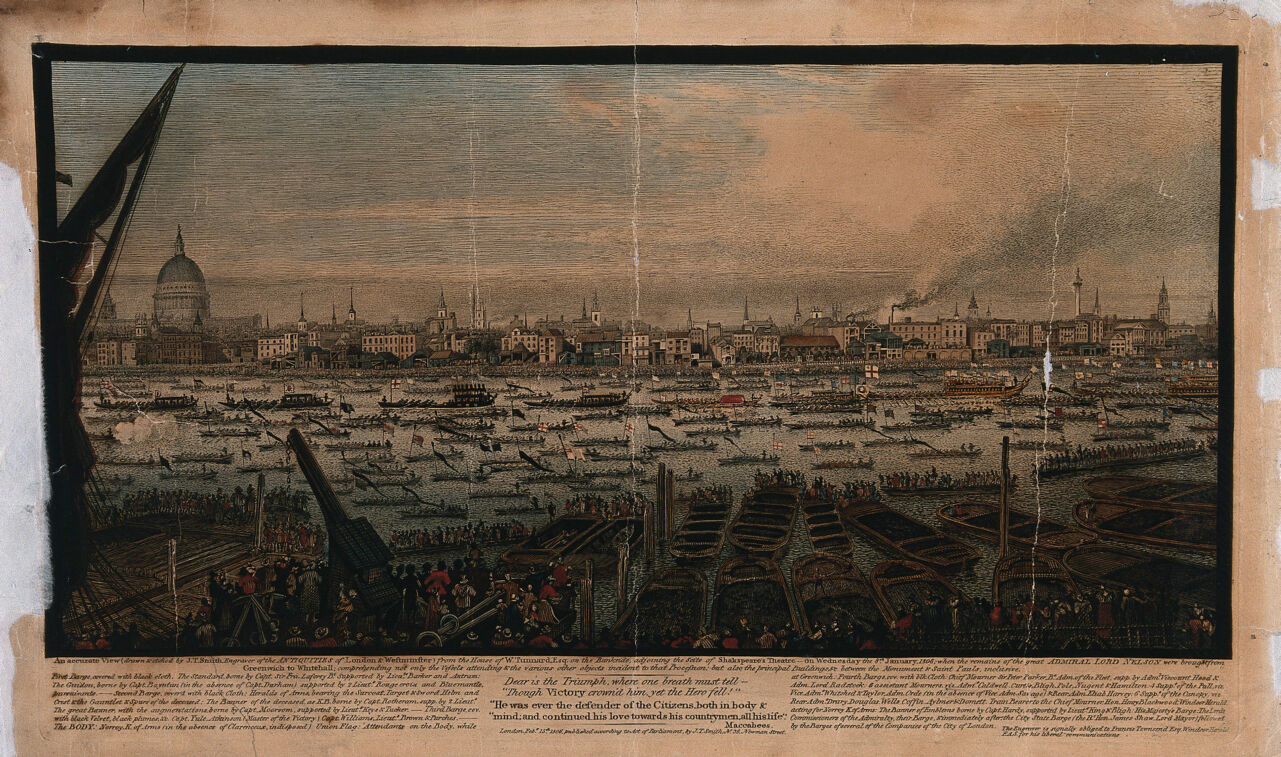
John Thomas Smith was born in the back of a Hackney carriage on 23 June 1766. His mother was returning home to 7 Great Portland Street. He was named John for his grandfather and Thomas after his great uncle, Admiral Thomas Smith. His father Nathaniel Smith was at that time a sculptor working for Joseph Nollekens, but later became a printseller. John Thomas Smith first tried to train as a sculptor with Nollekens, but left to study with John Keyse Sherwin and at the Royal Academy. After three years he left to live off his drawing skills. He gave up his topographical drawing and acting ambitions to compile Antiquities of London and its Environs which was later described as his favourite work. Smith became known as "Antiquity Smith". • Illustration — Smith's portrait of the painter J. M. W. Turner In 1796, the young John Constable was introduced to Smith, and he became Constable's informal artistic mentor. Smith published books of engravings and worked as a drawing master in Edmonton. In 1807, he published Antiquities of Westminster which has been described as his major work. The work had been inspired by paintings found during extension work to the Houses of Parliament on 11 August 1800. Smith and Charles Gower were invited to see the pictures, and Smith was able to obtain permission to sketch them. He had to work early in the morning to avoid the workmen. It is said that they frequently demolished what he had just finished sketching and he kept this work up constantly for six weeks. After this his permission was transferred to an artist from the Society of Antiquaries, but Smith had a complete record by that time. The published book contained over a hundred drawings of antiquities in Westminster that were no longer standing. Smith had a very public row between 1807 and 1809 following a failed partnership with John Hawkins. They had planned to work together on a book, with illustrations by Smith and an accompanying text by Hawkins. However the partners fell out and Hawkins went on to publish the book alone; he included an explanation of Smith's absence. Smith published a reply and this was followed by a refutation by Hawkins. Finally 62 additional pictures were published separately after the publication. • Illustration — An engraving of a blind beggar by Smith Between 1810 and 1815, Smith created drawings and engravings of notable beggars in London and published The Streets of London: Anecdotes of Their More Celebrated Residents. Smith was offered the position of Keeper of the Prints department of the British Museum in September 1816 The position still allowed Smith to sketch and draw. His next publication, Vagabondiana, or Anecdotes of Mendicant Wanderers through the Streets of London, had an introduction by Francis Douce, who had at one time also worked for the British Museum. Douce, Sir William Beechey and Smith were the executors of Joseph Nollekens' will, and it said that Smith was disappointed by the small legacy he received. His next book was a candid biography called Nollekens and His Times. This book was said to be notable for its "malicious candour and vivid detail". The unkind portrait of Nollekens was also accompanied by short biographies of other leading figures that were better received and are a valuable source for art historians. His biography of William Blake was the basis of later biographies as his was one of the first and was drawn from first hand experience as after he met Blake they never lost contact. Smith died from inflammation of the lungs on 8 March 1833 at his home at 22 University Street, off Tottenham Court Road. He left Anna Maria (born Prickett) – whom he had married 45 years previously – unprovided for, and also an adult son and daughter. He was privately interred on 16 March in the burial grounds of St George's Chapel, near Tyburn turnpike. In the years following Smith's demise, his executors issued three posthumous works: Cries of London in 1839, edited by John Nichols, Book for a Rainy Day and Antiquarian Ramble in the Streets of London in 1846, edited by Charles Mackay.
Rule of thirds
Rule of thirds
Smith's 1797 work Remarks on Rural Scenery contains what appears to be the earliest reference to the compositional "rule of thirds".
Works include
Works include
• Remarks on Rural Scenery, 1797 • Antiquities of Westminster, 1807 • The Streets of London: Anecdotes of Their More Celebrated Residents, 1815 • Vagabondiana, or Anecdotes of Mendicant Wanderers through the Streets of London, 1817 • Nollekens and his Times. 2 volumes 1828 Posthumous: • Cries of London (ed. John Bowyer Nichols, 1839) • Antiquarian Ramble in the Streets of London (ed., Charles Mackay, 1846) • A Book for a Rainy Day: or, Recollections of the Events of The Last Sixty-Six Years, 1905
Identity
Identity
John Thomas Smith is recorded with the occupation antiquarian seller. Recorded with the occupation copper engraver. Recorded as painter, printmaker, antiquarian seller, art historian and librarian.
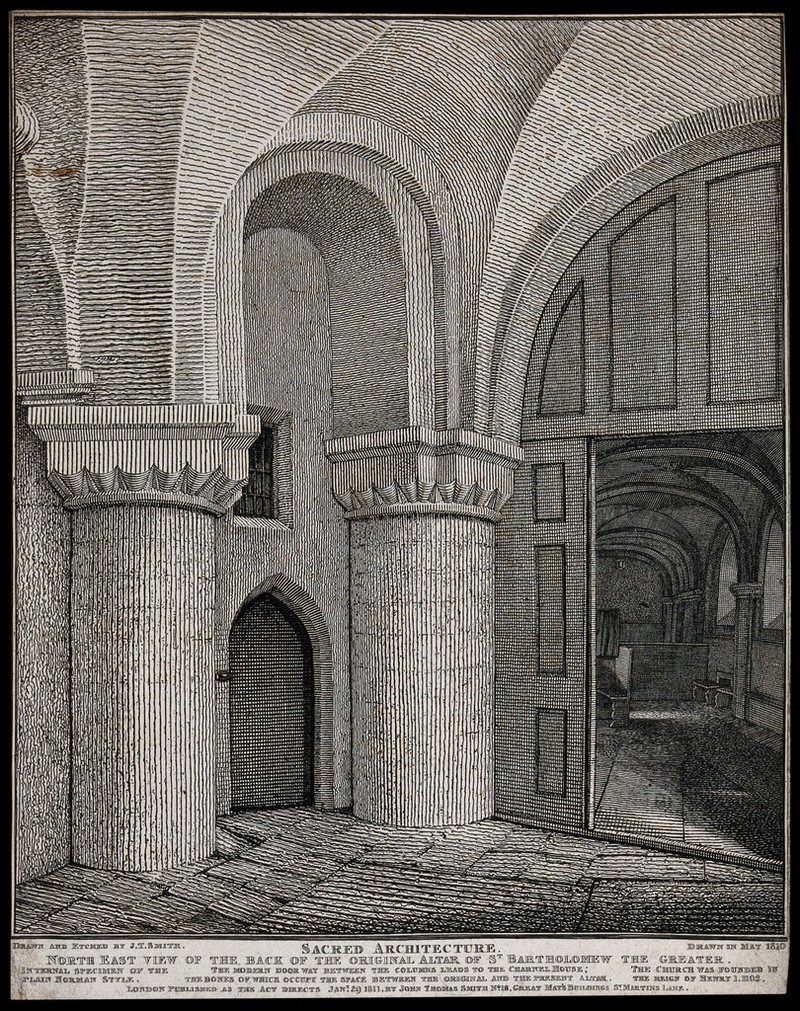
The church of St. Bartholomew the
John Thomas Smith · Wellcome Collection, London · Wellcome Collection
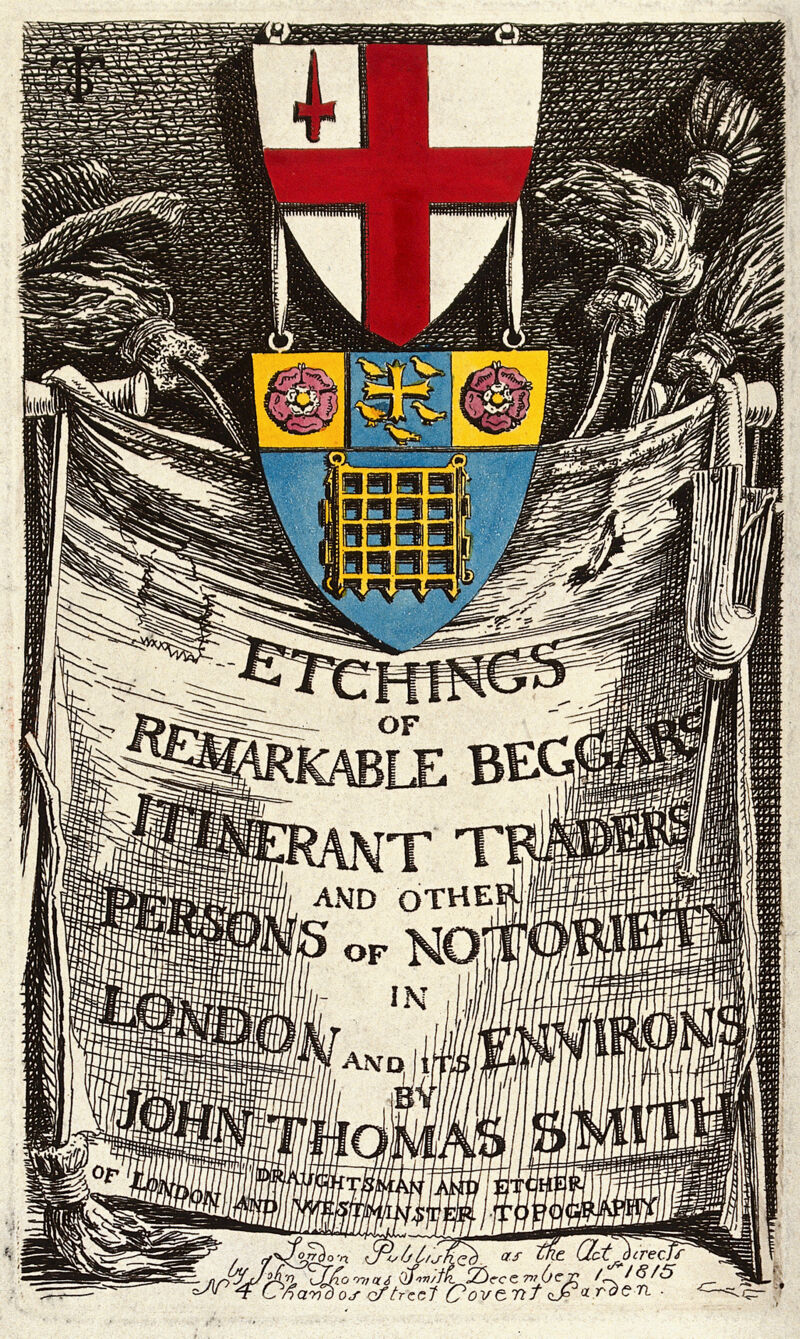
Frontispiece to "Etchings of remarkable beggars itinerant traders and other persons of notoriety in London and its environs by John Thomas Smith". Coloured etching by J.T. Smith, 1815., 1 December 1815, by John Thomas Smith
John Thomas Smith · Wellcome Collection, London · Wellcome Collection
Life and career
Dated record
Life and career
The full dated record · 2 entries
1766
John Thomas Smith was born on 1 January 1766.
1833
John Thomas Smith died on 1 January 1833.
Notes from the source article
Cited by Wikipedia
Notes from the source article
These works are cited by the source article, in its own numbering. They are recorded as its citations, not as sources VALÉORINE has verified.
- 1.John Thomas Smith. A Book for a Rainy Day. BiblioBazaar. October 2008. 978-0-559-19202-9.
- 2.Obituary, Gentleman's Magazine, 1833, accessed August 2010
- 3.The Oxford Dictionary of Art, Ian Chilvers, accessed 27 August 2010
- 4.Smith, John Thomas (1766-1833). Graves. Robert Edmund. Robert Edmund Graves. 53.
- 5.John Thomas Smith, National Portrait Gallery, London, accessed August 2010
- 6.The Cambridge History of English and American Literature in 18 Volumes, (1907–21), Volume XIV. The Victorian Age, Part Two, accessed August 2010
- 7.The poetical works of William Blake; a new and verbatim text from the manuscript engraved and letterpress original, Sampson, 1905, accessed 6 November 2010
- 8.Caplin, Steve. Art and Design in Photoshop. Focal Press. 35. 2008. 9780240811093.
- 9.Remarks on Rural Scenery online on Internet Archive.
- 10.Henry Colburn. Nollekens and his times: comprehending a life of that celebrated sculptor; and memoirs of several contemporary artists, from the time of Roubiliac, Hogarth, and Reynolds, to that of Fuseli, Flaxman, And Blake. 1 of 2. 1828.
References
Citations
References
Each reference names the institution holding it, so a reader may go to the document itself.
authority record
General reference
Further particulars
Held on the record
Further particulars
Open the remaining particulars
Within the Encyclopedia. Connected to 2 other published records in the VALÉORINE Encyclopedia.
The Encyclopedia exists whether or not anything is for sale. Corrections are recorded rather than overwritten, and every version of this record is kept. Published 16 August 2026.
Elsewhere in Prints
4,138 published records in this field, each with its sources named.
- John SwaineEngraver
- John T. HarrisEngraver
- John T. RiddleEngraver
- John Taylor ArmsEngraver
- John ThompsonEngraver
- John WalkerEngraver
- John WallEngraver
- John Ward DunsmoreEngraver
Best supported in this field
For owners
Own a work by John Thomas Smith?
A specialist will read what you send and tell you what the house can establish, what it cannot, and whether the object is suited to sale. There is no charge and no obligation. The object stays with you throughout; nothing is shipped to us unless it is arranged in writing beforehand.