
Claude Vignon
Illustration — Parable of the Unforgiving Servant, 1629 Claude Vignon (19 May 1593 – 10 May 1670) was a French painter, printmaker and illustrator who worked in a wide range of genres.[1] During a period of study in Italy, he became exposed to many new artistic currents, in particular through the works of Caravaggio and his followers, Guercino, Guido Reni and Annibale Caracci. A prolific artist, his work has remained enigmatic, contradictory and hard to define within a single term or style.[2] His mature works are vibrantly coloured, splendidly lit and often extremely expressive. Vignon worked in a fluent technique, resulting in an almost electric brushwork.
Also recorded as Claude I Vignon · Claude, the elder Vignon · Claude, I Vignon · Vignion
Claude Vignon
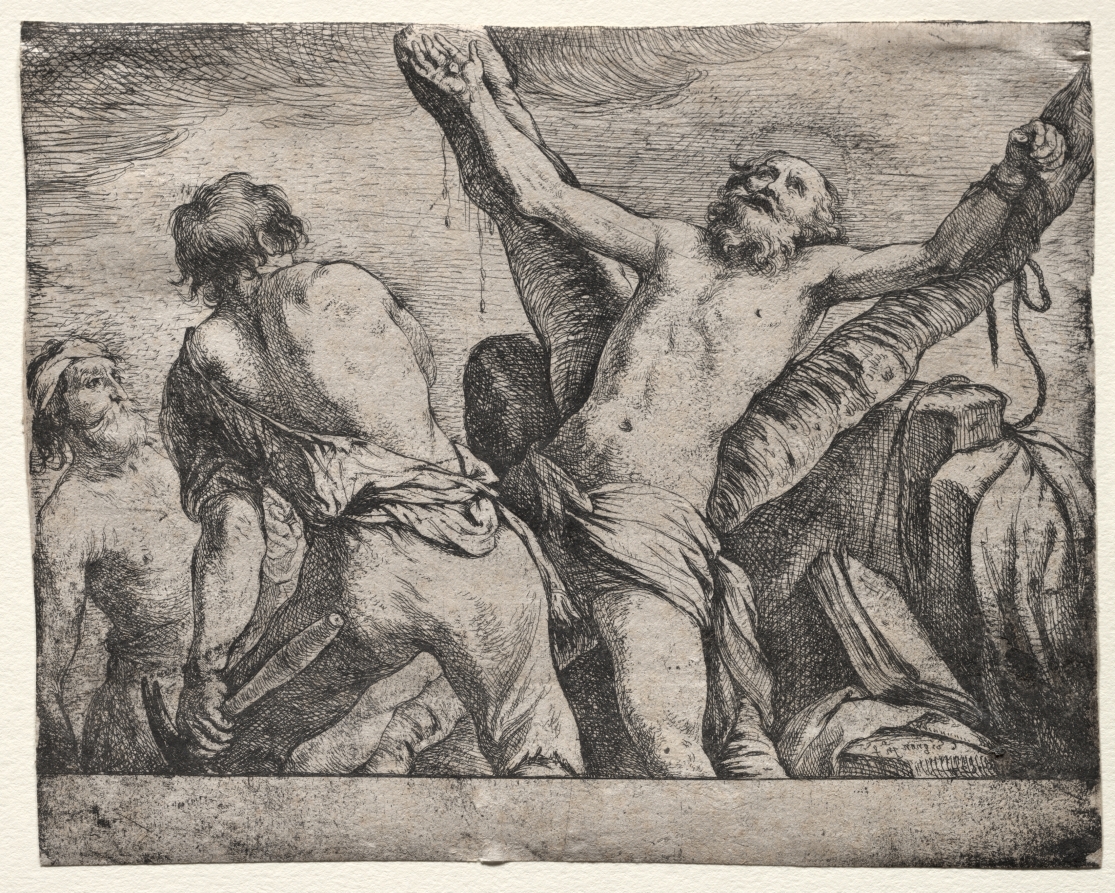
Claude Vignon · The Cleveland Museum of Art · Gift of The Print Club of Cleveland · CC0
- Born
- 1593.
- Died
- 1670.
- Nationality
- Kingdom of France.
- Occupation
- painter, printmaker, draftsperson, etcher and artist.
- Movements
- Baroque.
- Known for
- Christ Instructs Peter to Feed My Sheep, Cleopatra killing herself and The Vision of St Jerome.
VALÉORINE Encyclopedia
VALÉORINE documentary reading
Documentary summary
Illustration — Parable of the Unforgiving Servant, 1629 Claude Vignon (19 May 1593 – 10 May 1670) was a French painter, printmaker and illustrator who worked in a wide range of genres.[1] During a period of study in Italy, he became exposed to many new artistic currents, in particular through the works of Caravaggio and his followers, Guercino, Guido Reni and Annibale Caracci. A prolific artist, his work has remained enigmatic, contradictory and hard to define within a single term or style.[2] His mature works are vibrantly coloured, splendidly lit and often extremely expressive. Vignon worked in a fluent technique, resulting in an almost electric brushwork.
Admitted source layer · organised and presented by VALÉORINE
Note VALÉORINE
No house-authored Note is published until its assertions and sources pass the VALÉORINE evidence contract. The documentary article remains available in full while that enrichment is being consolidated.
Documentary enrichment in progress · no unsupported statement published
Reference Check
Propose documentary evidence for Claude Vignon. A contribution is never written directly as fact: identity, source, rights and evidence gates still decide.
Sign in to contribute
Documentary evidence
Evidence Panel
original value insufficient · checked 25 September 2026
- Identity
- resolved
- Independent source families
- 0
- Admitted assertions
- 0
- Open conflicts
- 0
Authority files
wikidata · Q591684 · wikipedia · Claude Vignon
In this article
Life
Life
He particularly excelled in the rendering of textiles, gold and precious stones.
Claude Vignon was born into a wealthy family in Tours, Touraine, France. He received his initial artistic training in Paris from the Mannerist painter Jacob Bunel, a representative of the Second School of Fontainebleau. Although Vignon is not actually documented in Rome until 1618–19 he was probably based there throughout that decade. He likely travelled to Rome as early as 1609–10. Here he formed part of the French community of painters, including Simon Vouet and Valentin de Boulogne, both prominent members of the Caravaggisti, artists working in a style influenced by Caravaggio.[3] Vignon returned to his home country in 1616 where he became member of the Painter's Guild of Paris in that year. He travelled a second time to Rome the next year. He also visited Spain, where he was reportedly attacked by 8 bandits in Barcelona, one of whom wounded him in the face. • Illustration — Christ among the doctors, 1623 Back in France in 1623, he married in 1624 Charlotte de Leu, the daughter of the engraver Thomas de Leu. Following his return to Paris he became one of the city's most respected, productive and successful artists. His patrons included King Louis XIII and Cardinal Richelieu. He also worked for ecclesiastical patrons as well as for private clients. He became a business associate of the print publisher and art dealer François Langlois. While the great decorative schemes of the day went to other painters such as Simon Vouet who had returned to France in 1627 and Philippe de Champaigne, Vignon continued to enjoy wide patronage and was highly sought after by the circle of the renowned literary salon of the Hôtel de Rambouillet. Anne, Duchesse de Longueville commissioned him to decorate the gallery at the Château du Thorigny between 1651 and 1653. After the death of his first wife he married Geneviève Ballard in 1644. He is said to have fathered 35 children, 24 of whom are documented. Some of his children became painters in their father's workshop: amongst them his sons Claude the Younger (1633–1703) and Philippe (1638–1701) and his daughter Charlotte (1639[4]–?). • Illustration — Banquet scene, 1630s Vignon was admitted to the Académie royale de peinture et de sculpture in 1651. His last dated work is dated 1656.
Work
Work
Vignon painted portraits, genre scenes and religious works. Claude Vignon was a very versatile artist who assimilated elements of various styles from Mannerism to Venetian, Dutch and German art. Important influences on his style were the works of the Venetian Caravaggesque painter Domenico Fetti, the German Adam Elsheimer, and the Dutchmen Jacob Pynas, Pieter Lastman and many others.[5] His style likely owes most to the eccentric style of Leonaert Bramer except that Vignon worked on a much grander scale than typically found in Bramer's paintings. Another important influence was Caravaggio's most direct follower Bartolomeo Manfredi. The multiple influences have made his work enigmatic, contradictory, complex and hard to define within a single term or style. Some art historians regard him as a precursor of Rembrandt. • Illustration — Solomon and the Queen of Sheba, 1624 He started out in a Mannerist style and was then influenced by Carravagism during his stay in Rome. In Rome he is known to have created a number of single figure paintings depicting male saints reading or writing. An example is the St. John the Evangelist (At Christie's on 25 May 2005, New York, lot 38). This composition is particularly Caravaggesque in its representation of the light source, which shines down onto St. John, thus illuminating his face and hands and casting the folds of his cloak into dynamic patterns of light and shadow.[6] By the 1620s his work had started to reflect elements of both Venetian colouring and Jacques Bellange's Northern Mannerist conventions.[7] In the mid-1620s he vacillated between various styles, in some paintings showing a more Caravaggist bent such as in the Christ among the doctors (1623, Museum of Grenoble) or the Vision of St Jerome (1616, Nationalmuseum, Stockholm). Other works are more reserved, while some have a clear Baroque vigor such as the Triumph of St Ignatius (1628, Musée des Beaux-Arts d'Orléans). A pivotal work from this period is the Solomon and the Queen of Sheba (1624, Louvre), which displays his taste for the exotic and for theatrical arrangements and uses a thick, encrusted impasto, shot through with golden highlights and an unusual combination of colours. • Illustration — Pregnant young woman begging justice from a warrior In the period 1630-1640 when the artist worked in Paris his palette became richer. He used rich tonalities, such as pink, blue, gold and bursts of red colour on soft gray background in his compositions. He relied on an original technique by executing his work in two successive stages: first he made a quick outline of the composition and then he painstakingly rendered the fabrics and jewelry, giving the material greater consistency and relief.[8] It was by relying on this technique that Vignon was able to establish a great reputation for the speed at which he painted. It also allowed him to produce the great number of paintings for which he is known. The paintings of this period still hold reminiscences of Vignon's Caravaggesque period but are overlaid with a new decorative sensuality, which reflects a new sensibility emerging in Paris at that time. An example of a work of this period is the Banquet Scene (At Sotheby's on 22 June 2010 in Paris, lot 19). His works of the period 1640–50 are characterised by their rich coloring, bejeweled surface and theatrical mannerism. His compositions are bathed in a strange, sepulchral moonlight and executed in shimmering, encrusted paint which sometimes takes on the appearance of intricately chased silver. It is for these characteristics that Vignon has sometimes been called a 'pre-Rembrandtist' painter. Vignon was active as an etcher throughout his career. He showed the same high level of technical skill in his printed works as in his paintings. He was one of the most prominent printmakers in 17th century France. He also produced illustrations for publications by the French writers of the précieuses literary circle.
Identity and origins
Identity and origins
The authorities additionally record the headings Claude I Vignon, Claude, the elder Vignon, Claude, I Vignon, Vignion and Wignon. His recorded language was French. He married Charlotte de Leu and Geneviève Ballard. 3 children are recorded: Philippe Vignon, Charlotte Vignon and Claude-François Vignon.
Identity
Identity
Claude Vignon is recorded as painter, printmaker, draftsperson and etcher.
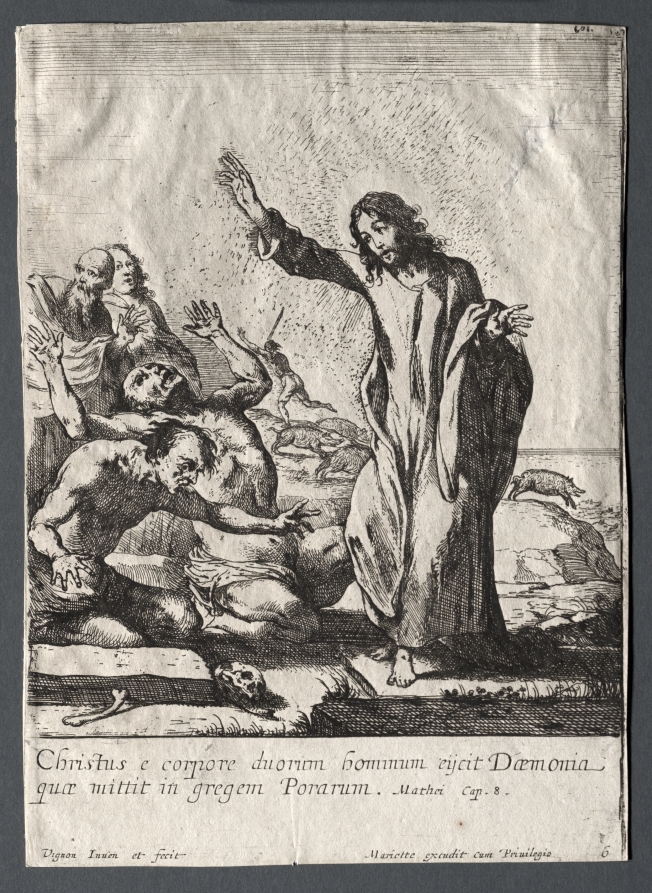
The Miracles of Jesus
Claude Vignon · The Cleveland Museum of Art · John L. Severance Fund
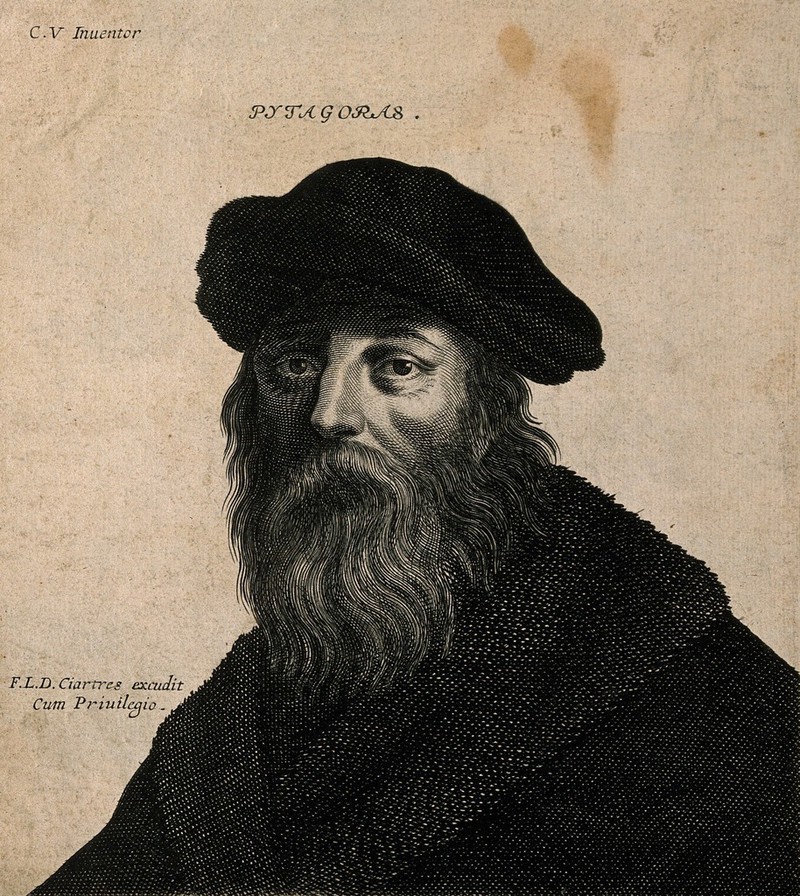
Pythagoras. Engraving attributed to H. David after C. Vignon., 1600-1699, by Claude Vignon
Claude Vignon · Wellcome Collection, London · Wellcome Collection
Life and career
Dated record
Life and career
Explore 1593–1670
The full dated record · 8 entries
1593
Claude Vignon was born in 1593.
1623
The young singer (Collection Motais de Narbonne).
1625
Joseph in prison interprets the dreams of the cupbearer and the baker (Herner Wengraf Ltd).
1627
The Martyrdom of Saint Lawrence is dated 1627.
1630
St Cecilia is dated 1630.
1643
The Repentant Saint Peter is dated 1643.
1650
The Knight's Dream (The Dream of Daphnis) is dated 1650.
1670
Claude Vignon died at Paris.
Primary material
Documents and archives
Institutional database
- Wikidata, structured authority record Q591684: Claude Vignon
Scholarly · Wikimedia Foundation
authority file
reference work
- “Claude Vignon”, English Wikipedia, consulted as further reading
Reputable secondary · Wikipedia
Notes from the source article
Cited by Wikipedia
Notes from the source article
These works are cited by the source article, in its own numbering. They are recorded as its citations, not as sources VALÉORINE has verified.
- 1.Paola Pacht Bassani. "Vignon, Claude." Grove Art Online. Oxford Art Online. Oxford University Press. Web. 2 November 2016
- 2.Claude Vignon, The Repentant Saint Peter at Lempertz
- 3.Claude Vignon, Profile of a man at Sotheby's
- 4.Claude Vignon and workshop, Croesus showing Solon his treasures at Jean Moust
- 5.Claude Vignon, The Knight's Dream (The Dream of Daphnis?) at Christie's
- 6.Claude Vignon, Saint John the Evangelist at Christie's
- 7.Claude Vignon, Saint Luke the Evangelist at Christie's
- 8.Claude Vignon, Scène De Banquet at Sotheby’s
References
Citations
References
Each reference names the institution holding it, so a reader may go to the document itself.
Institutional database
Wikidata, structured authority record Q591684: Claude VignonWikimedia Foundation
Verifiedauthority file
Partially resolvedreference work
Partially resolved
A further 1 witness is held back from this article because the person or object named in it is not yet resolved to this record. They are kept, not discarded, and return once the identity is established.
Further particulars
Held on the record
Further particulars
Open the remaining particulars
He trained under Jacob Bunel. His recorded influences include Caravaggio and Rembrandt. Each of those relationships is stated by the authority record rather than inferred from style.
His work is associated with Baroque. Recorded position is court painter. He worked at Paris, Rome and Barcelona. Work and production. Works recorded as notable number 3: Christ Instructs Peter to Feed My Sheep, Cleopatra killing herself and The Vision of St Jerome.
Career and activity
The Encyclopedia exists whether or not anything is for sale. Corrections are recorded rather than overwritten, and every version of this record is kept. Published 14 August 2026.
Elsewhere in Prints
4,138 published records in this field, each with its sources named.
- Claude MellanEngraver
- Claude Olry de LoriandeEngraver
- Claude ViallatEngraver
- Claude Victor de BoissieuEngraver
- Claude-Louis MasquelierEngraver
- Claudette SchreudersEngraver
- Claudia ComteEngraver
- Claudia HartEngraver
Best supported in this field
For owners
Own a work by Claude Vignon?
A specialist will read what you send and tell you what the house can establish, what it cannot, and whether the object is suited to sale. There is no charge and no obligation. The object stays with you throughout; nothing is shipped to us unless it is arranged in writing beforehand.