
John Kay
John Kay (April 1742 – 21 February 1826) was a Scottish caricaturist and engraver.
Also recorded as John, II Kay
John Kay
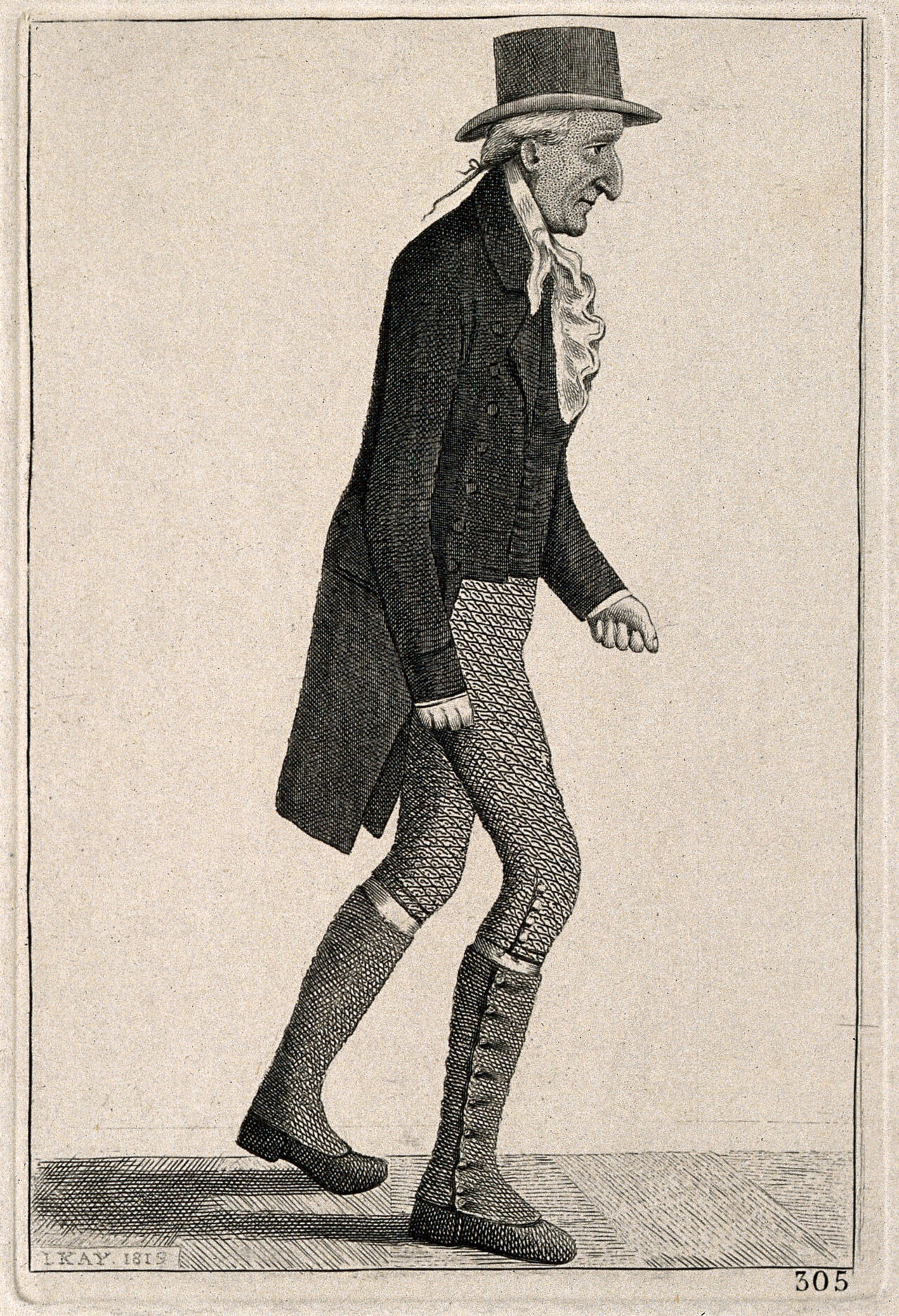
John Kay · Wellcome Collection, London · Wellcome Collection · Public Domain Mark
- Name
- John Kay
- Born
- April 1742
- Birthplace
- Gibraltar Cottage, near Dalkeith, Scotland
- Died
- 21 February 1826
- Place of death
- Edinburgh, Scotland
- Field
- Caricature, engraving, miniature painting
- Training
- Self-taught
- Nationality
- United Kingdom of Great Britain and Ireland.
- Occupation
- caricaturist, printmaker, miniaturist and artist.
- Languages
- English.
VALÉORINE Encyclopedia
VALÉORINE documentary reading
Documentary summary
John Kay (April 1742 – 21 February 1826) was a Scottish caricaturist and engraver.
Admitted source layer · organised and presented by VALÉORINE
Reference Check
Propose documentary evidence for John Kay. A contribution is never written directly as fact: identity, source, rights and evidence gates still decide.
Sign in to contribute
World of VALÉORINE
Documentary connections
Only confirmed graph relationships appear here. Images are shown only when their identity and reuse rights both pass the documentary gate.
Documentary evidence
Documentary basis
Authority files
wikidata · Q1556464
In this article
Key facts
Key facts
• Name — John Kay • Born — April 1742 • Birthplace — Gibraltar Cottage, near Dalkeith, Scotland • Died — 21 February 1826 • Place of death — Edinburgh, Scotland • Field — Caricature, engraving, miniature painting • Training — Self-taught • Works — Caricatures of Edinburgh society • Illustration — 1790 portrait of Adam Smith by Kay • Illustration — A memorial stone to Kay in Greyfriars Kirkyard
Life
Life
John Kay was born in April 1742 in Gibraltar Cottage just south of Dalkeith, Scotland, where his father, John Kay, worked as a mason. His mother, Helen Alexander, owned several properties in Edinburgh and the Canongate and was relatively wealthy. When his father died in 1748, John was sent to live in Leith, the harbour area of Edinburgh, with some of her relatives, who treated him very badly. At age 13 he returned to Dalkeith where he was apprenticed to George Heriot, a barber in the town, whom he served for six years. In 1761, he went to Edinburgh, where he served 7 years as a journeyman but not being an Edinburgh citizen had to purchase the freedom to trade as a barber from the Society of Surgeon-Barbers, which he eventually did in December 1771 at age 29, on payment of £40. He then set up business on the High Street in Edinburgh. He had several high ranking clients and made friends with several, notably William Nisbet of Dirleton who became a constant companion. In 1784, he began engraving his drawings and published his first caricature: James Robertson of Kincraigie, "the daft highland laird". In 1785, induced by the favour which greeted certain attempts of his to etch in aquafortis, he took down his barber's pole and opened a small print shop in Parliament Close. There he continued to flourish, painting miniatures, and publishing at short intervals his sketches and caricatures of local celebrities and oddities, who abounded at that period in Edinburgh society. From 1785 he abandoned his business as barber to concentrate on drawing. This was facilitated by annuities paid to him by Sir Henry Jardine and the estate of William Nisbet. Kay's portraits were collected by Hugh Paton and published under the title A Series of Original Portraits and Caricature Etchings by the Late John Kay, with Biographical Sketches and Illustrative Anecdotes (Edinburgh, 2 vols. 4to, 1838; 8vo ed., 4 vols., 1842; new 4to ed., with additional plates, 2 vols., 1877), forming a unique record of the social life and popular habits of Edinburgh at its most interesting epoch. Kay's famous shop on the Royal Mile was destroyed during the Great Edinburgh Fire of November 1824. He died at 227 High Street in Edinburgh and was buried at the north-west corner of Greyfriars Kirkyard. The British Museum has extensive holdings of his works, including two albums apparently assembled by Kay, both described in the Catalogue of Political and Personal Satires Preserved in the Department of Prints and Drawings in the British Museum.
Family
Family
In 1762, he married Lilly Steven by whom he had ten children all of which died young except for one son, William Kay. Lilly died in 1785 and in 1787 Kay married Margaret Scott (d.1835).
Some persons caricatured by Kay
Some persons caricatured by Kay
• Hugo Arnot • Joseph Black • Hugh Blair • Claud Irvine Boswell • John Brown • James Burnett, Lord Monboddo • Charles Byrne • Alexander Carlyle • James Donaldson • Henry Dundas, 1st Viscount Melville • Robert Dundas, 2nd Viscount Melville • Alexander Gerard • Alexander Gordon, Lord Rockville • John Grieve (Lord Provost) • William "Spread Eagle" Grinly • Francis Grose • Henry Home, Lord Kames • Sir Archibald Hope, 9th Baronet • John Hope • James Hutton • Thomas Jefferson • Vincenzo Lunardi • Sam McDonald • William Nairne, Lord Dunsinane • George Paton • Thomas Fyshe Palmer • William Robertson • Sarah Siddons • Adam Smith • Peter Williamson (Indian Peter) • Alexander ("Lang Sandy") Wood
Works and production
Works and production
The following works and productions are recorded by name or by count. John Kay, 1742 - 1826.
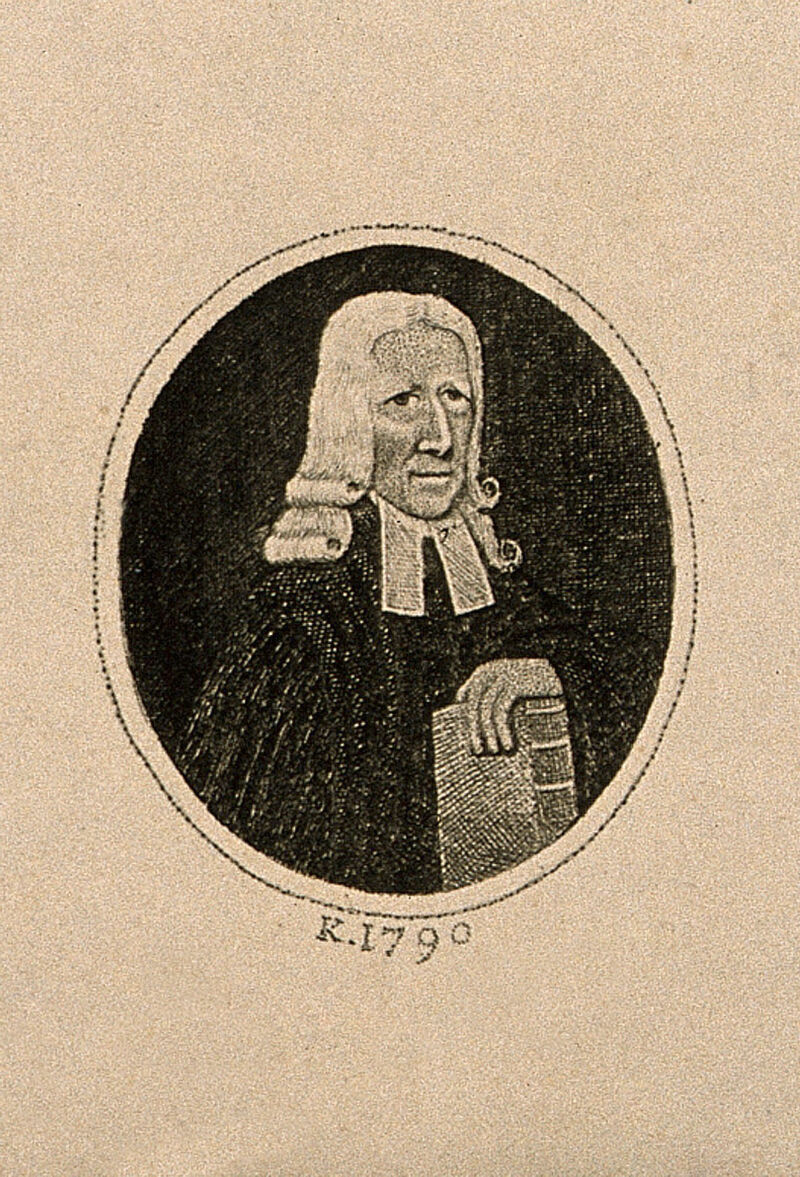
John Wesley. Etching by J. Kay, 1790., 1790, by John Kay
John Kay · Wellcome Collection, London · Wellcome Collection
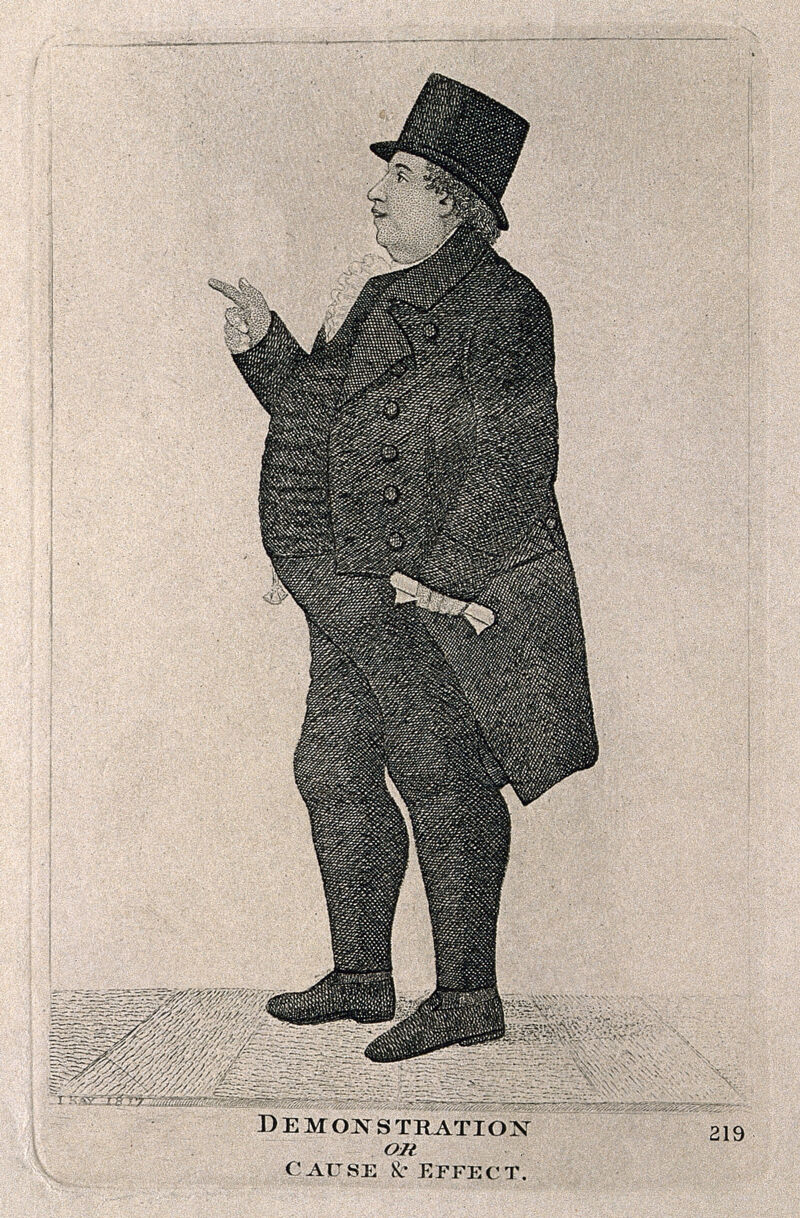
Sir John Leslie. Etching by J. Kay, 1817., by John Kay
John Kay · Wellcome Collection, London · Wellcome Collection
Places
Named by the record
Places
Only places the record itself states, plotted where the house gazetteer settles their coordinates. Nothing is inferred from a name or a nationality.
Dalkeith.
Birth place
Edinburgh.
Death place
Collections and holdings
Where the work is held
Collections and holdings
Institutional holdings are recorded as follows.
Documents and archives
Primary material
Documents and archives
scholarly publication
- Kay, John (1742–1826), Oxford Dictionary of National Biography, 2017
Scholarly · Crossref registry · 2017
- Kay, John, Benezit Dictionary of Artists, 2011
Scholarly · Crossref registry · 2011
authority record
- Wikidata, structured authority record Q1556464: John Kay
General reference · Wikidata
Notes from the source article
Cited by Wikipedia
Notes from the source article
These works are cited by the source article, in its own numbering. They are recorded as its citations, not as sources VALÉORINE has verified.
- 1.Bryant, Mark. Dictionary of British Cartoonists and Caricaturists, 1730-1980. Lund Humphries Publishers Ltd. 129. 1994. 978-0-85967-976-3.
- 2.Hugh Paton. A Series of Original Portraits and Caricature Etchings by the Late John Kay, with Biographical Sketches and Illustrative Anecdotes. 1. 2. 1838.
- 3.Chambers, Robert. Biographical Dictionary of Eminent Scotsmen. Blackie & Son. 415. 1874–1875.
- 4.Grant, James. Cassell's Old and New Edinburgh. Cassell. 1880.
- 5.Kay's Caricatures.
- 6.George, M Dorothy. Catalogue of Political and Personal Satires Preserved in the Department of Prints and Drawings in the British Museum. The British Museum. 1870–1954.
Bibliography printed in the source article · 2
- Evans, Hilary. John Kay of Edinburgh. Paul Harris. 1981. 978-0-901311-28-3.
- Moffat, Sandy. Review of John Kay of Edinburgh by Hilary & Mary Evans. Cencrastus. 6. 43–44. Autumn 1981.
References
Citations
References
Each reference names the institution holding it, so a reader may go to the document itself.
scholarly publication
Kay, John (1742–1826), Oxford Dictionary of National Biography, 2017Crossref registry
Institutional witnessscholarly publication
Kay, John, Benezit Dictionary of Artists, 2011Crossref registry
Institutional witnessauthority record
General reference
The Encyclopedia exists whether or not anything is for sale. Corrections are recorded rather than overwritten, and every version of this record is kept. Published 16 August 2026.
Elsewhere in Prints
4,138 published records in this field, each with its sources named.
- John IngramEngraver
- John Ingvard KjargaardEngraver
- John JacksonEngraver
- John JonesEngraver
- John Keyse SherwinEngraver
- John KirkwoodEngraver
- John KoernerEngraver
- John LandseerEngraver
Best supported in this field
For owners
Own a work by John Kay?
A specialist will read what you send and tell you what the house can establish, what it cannot, and whether the object is suited to sale. There is no charge and no obligation. The object stays with you throughout; nothing is shipped to us unless it is arranged in writing beforehand.