
John Frederick Kensett
John Frederick Kensett (March 22, 1816 – December 14, 1872) was an American landscape painter and engraver born in Cheshire, Connecticut. He was a member of the second generation of the Hudson River School of artists. Kensett's signature works are landscape paintings of New England and New York State, whose clear light and serene surfaces celebrate transcendental qualities of nature, and are associated with Luminism.
Also recorded as John F. Kensett · John Kensett · j.f. kensett · j. f. kensett
John Frederick Kensett
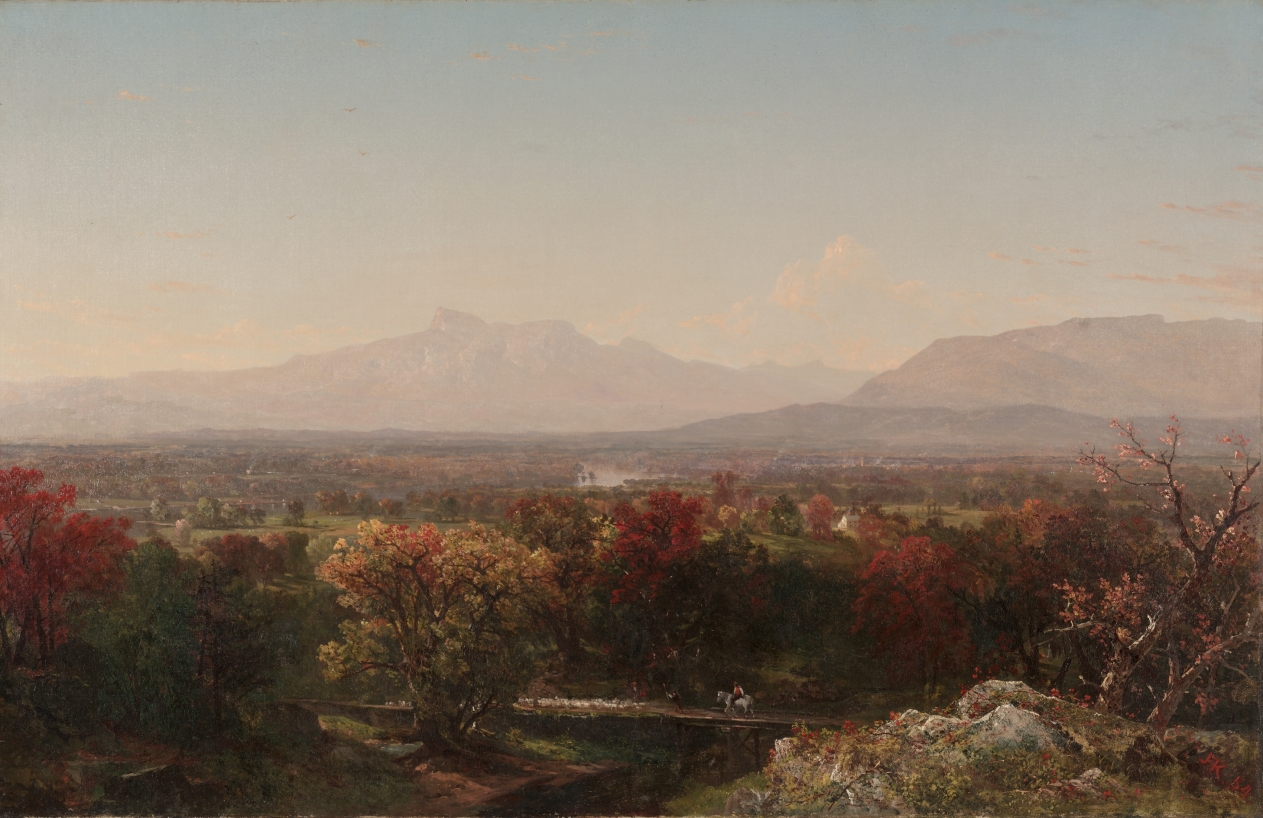
John Frederick Kensett · The Cleveland Museum of Art · John L. Severance Fund and various donors by exchange · CC0
- Name
- John Frederick Kensett
- Born
- 22 March 1816
- Birthplace
- Cheshire, Connecticut
- Died
- 14 December 1872
- Place of death
- New York City
- Field
- Painting, Landscape art, Engraving
- Movement
- Luminism
- Nationality
- United States
- Occupation
- painter
- Fields
- marine · landscape
- Movements
- Hudson River school
- Education
- Cheshire Academy
VALÉORINE Encyclopedia
VALÉORINE documentary reading
Documentary summary
John Frederick Kensett (March 22, 1816 – December 14, 1872) was an American landscape painter and engraver born in Cheshire, Connecticut. He was a member of the second generation of the Hudson River School of artists. Kensett's signature works are landscape paintings of New England and New York State, whose clear light and serene surfaces celebrate transcendental qualities of nature, and are associated with Luminism.
Admitted source layer · organised and presented by VALÉORINE
Note VALÉORINE
No house-authored Note is published until its assertions and sources pass the VALÉORINE evidence contract. The documentary article remains available in full while that enrichment is being consolidated.
Documentary enrichment in progress · no unsupported statement published
Reference Check
Propose documentary evidence for John Frederick Kensett. A contribution is never written directly as fact: identity, source, rights and evidence gates still decide.
Sign in to contribute
World of VALÉORINE
Documentary connections
Only confirmed graph relationships appear here. Images are shown only when their identity and reuse rights both pass the documentary gate.
Documentary evidence
Evidence Panel
not yet certified
- Identity
- resolved
- Independent source families
- 0
- Admitted assertions
- 0
- Open conflicts
- 0
Authority files
wikidata · Q982284 · wikipedia · John Frederick Kensett
In this article
Biography
Biography
Kensett's early work owed much to the influence of Thomas Cole, but was from the outset distinguished by a preference for cooler colors and an interest in less dramatic topography, favoring restraint in both palette and composition. The work of Kensett's maturity features tranquil scenery depicted with a spare geometry, culminating in series of paintings in which coastal promontories are balanced against glass-smooth water. He was a founder of the Metropolitan Museum of Art.
John Frederick Kensett studied at Cheshire Academy. The recorded working language is English. Subjects and genres recorded for the work are marine and landscape. Works named in the authority record are Overlooking the River From the Cliffs. Work by John Frederick Kensett is recorded in the collections of The Nelson-Atkins Museum of Art, Thyssen-Bornemisza Museum, Metropolitan Museum of Art, Bowdoin College Museum of Art and Birmingham Museum of Art.
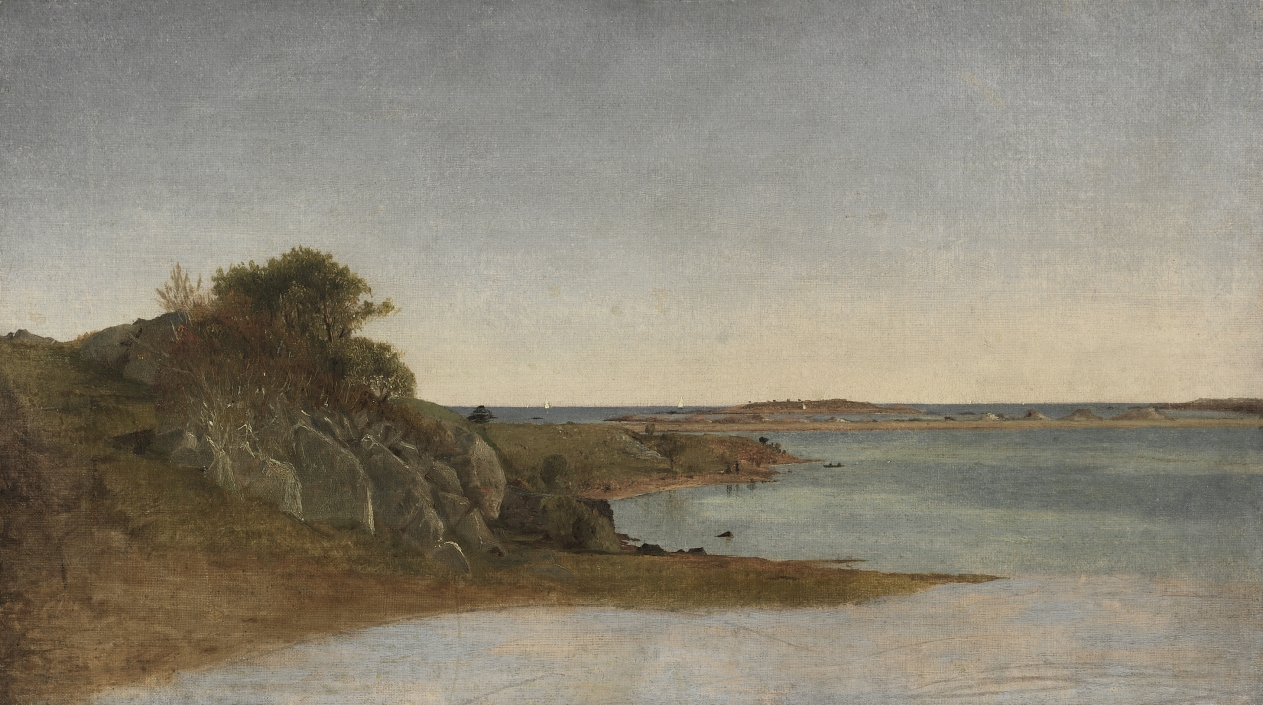
View near Newport, 1860s, by John Frederick Kensett
John Frederick Kensett · The Cleveland Museum of Art · Mr. and Mrs. William H. Marlatt Fund
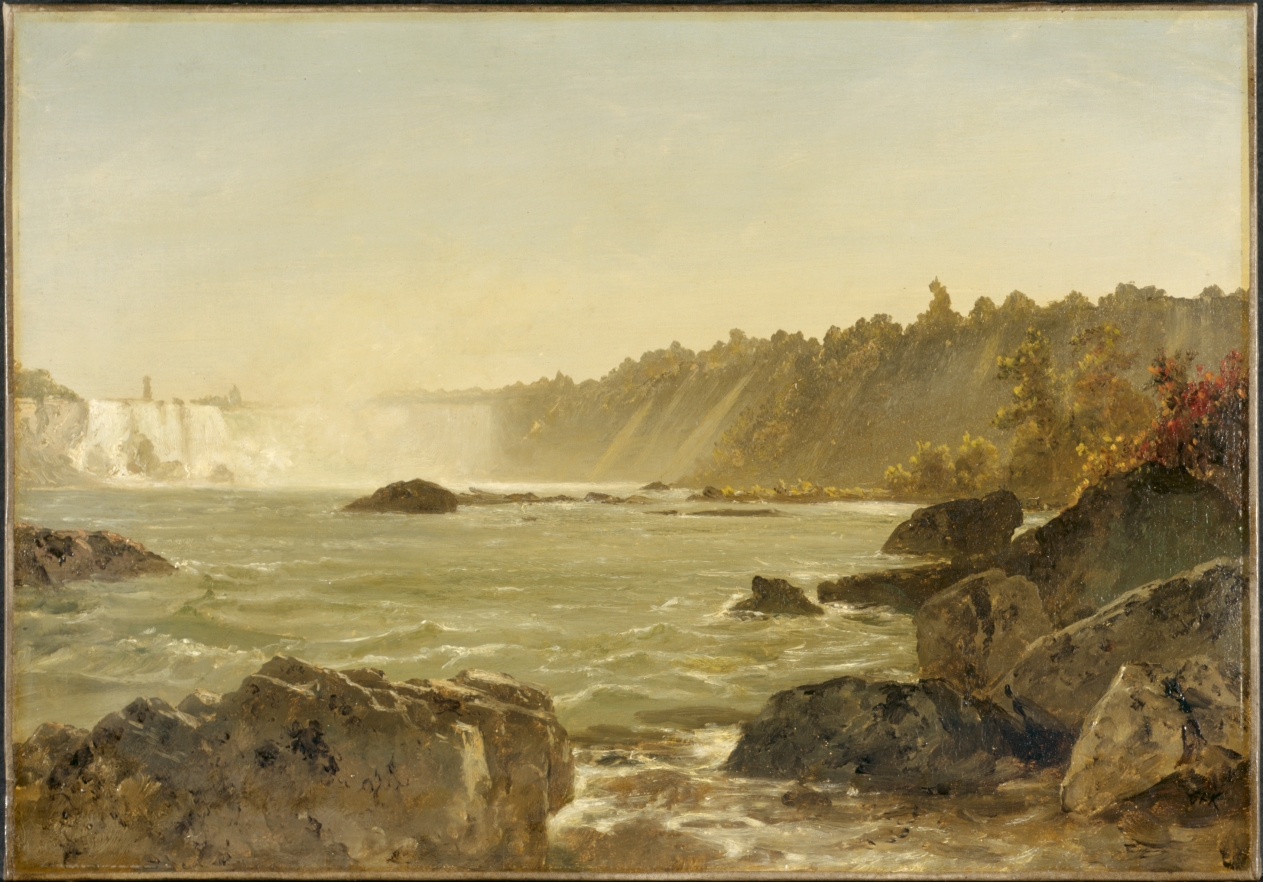
View of Niagara Falls, c. 1851–1852, by John Frederick Kensett
John Frederick Kensett · The Cleveland Museum of Art · Gift in memory of John M. Henderson
Key facts
Key facts
• Name — John Frederick Kensett • Born — 22 March 1816 • Birthplace — Cheshire, Connecticut • Died — 14 December 1872 • Place of death — New York City • Field — Painting, Landscape art, Engraving • Movement — Luminism
Biography
Biography
Born on March 22, 1816, Kensett attended school at Cheshire Academy and studied engraving with his English immigrant father, Thomas Kensett, and later with his uncle, Alfred Daggett. He worked as an engraver in the New Haven area until about 1838, then went to work as a banknote engraver in New York City. In 1840, along with Asher Durand and John William Casilear, Kensett traveled to Europe to study painting. There he met and traveled with Benjamin Champney. The two sketched and painted throughout Europe, refining their talents. During this period, Kensett developed an appreciation and affinity for 17th-century Dutch landscape painting. Kensett and Champney returned to the United States in 1847.
Established studio
Established studio
• Illustration — Kensett painting in his studio, ca. 1866 After establishing his studio and settling in New York, Kensett traveled extensively throughout the Northeast and the Colorado Rockies as well as making several trips back to Europe. Kensett is best known for his landscape of upstate New York and New England and seascapes of coastal New Jersey, Long Island, and New England. He is most closely associated with the "second generation" of the Hudson River School. Along with Sanford Robinson Gifford, Fitz Henry Lane, Jasper Francis Cropsey, Martin Johnson Heade and others, the works of the "Luminists", as they came to be known, were characterized by unselfconscious, nearly invisible brushstrokes used to convey the qualities and effects of atmospheric light. Such effects stemmed from Transcendentalist philosophies of sublime nature and contemplation bringing one closer to spiritual truth. In 1848 he was elected into the National Academy of Design as an Associate member and became a full Academician in 1849. In 1851 Kensett painted a monumental canvas of Mount Washington that has become an icon of White Mountain art. Mount Washington from the Valley of Conway was purchased by the American Art Union, made into an engraving by James Smillie, and distributed to 13,000 Art Union subscribers throughout the country. Other artists painted copies of this scene from the print. Currier and Ives published a similar print in about 1860. This single painting by Kensett helped to popularize the White Mountain region of New Hampshire. • Illustration — Postcard c. 1914, of Contentment Island. By the early 1870s, Kensett was spending considerable time at his home on Contentment Island, on Long Island Sound near Darien, Connecticut. Kensett's style evolved gradually, from the traditional Hudson River School manner in the 1850s into the more refined Luminist style in his later years. By the early 1870s, Kensett was spending considerable time at his home on Contentment Island, on Long Island Sound near Darien, Connecticut. It was during this time that Kensett painted some of his finest works. Many of these were spare and luminist seascapes, the prime example being Eaton's Neck, Long Island (1872) now in the collection of the Metropolitan Museum of Art in New York. The artist was widely acclaimed and financially successful during his lifetime. In turn, he was generous in support of the arts and artists. He was a full member of the National Academy of Design, the founder and president of the Artists' Fund Society, and a founder and trustee of the Metropolitan Museum of Art.
Death
Death
Kensett contracted pneumonia (perhaps during the attempted rescue of Mary Lydia (Hancock) Colyer, the wife of his friend and fellow artist Vincent Colyer in Long Island Sound) and died of heart failure at his New York studio in December 1872. He is interred at Green-Wood Cemetery in Brooklyn, New York. In 1874 Kensett's brother Thomas gave thirty-eight of his paintings to the Metropolitan Museum of Art, of which half remain in the collection.
Places
Named by the record
Places
Only places the record itself states, plotted where the house gazetteer settles their coordinates. Nothing is inferred from a name or a nationality.
Cheshire.
Birth place
New York City.
Death place
Paintings
• Illustration — Trout Fisherman, oil on canvas, 1852. Thyssen-Bornemisza Museum • Illustration — Upper Mississippi, oil on canvas, 1855. St. Louis Art Museum • Illustration — Lake George, c. 1870, Princeton University Art Museum • Illustration — The Old Pine, Darien, Connecticut, c. 1872, Metropolitan Museum of Art, New York City • Illustration — View of the Beach at Beverly, Massachusetts, oil on canvas, 1860. Santa Barbara Museum of Art • Illustration — Lake George, 1860–1869. Thyssen-Bornemisza Museum • Illustration — Mount Washington from the Valley of Conway, 1869, Davis Museum at Wellesley College • Illustration — Lake George – Brooklyn Museum • Illustration — Lake George, oil on canvas, 1869, Metropolitan Museum of Art, New York City, has been called "one of the culminating works of the American tradition that began with Cole and Durand, both of whom had painted the lake." • Illustration — Eaton's Neck, Long Island in New York, 1872, The Metropolitan Museum of Art
Legacy
The first complete biography and factual study of Kensett's work were written by Ellen H. Johnson, published in 1957.
Citations
References
Each reference names the institution holding it, so a reader may go to the document itself.
reference work
Partially resolvedreference work
Partially resolved
The Encyclopedia exists whether or not anything is for sale. Corrections are recorded rather than overwritten, and every version of this record is kept. Published 14 August 2026.
Elsewhere in Paintings
18,717 published records in this field, each with its sources named.
- John FinnieArtist
- John FischerArtist
- John Francis MurphyArtist
- John Francis RigaudArtist
- John GastArtist
- John George BrownArtist
- John GibbArtist
- John GibsonArtist
Best supported in this field
For owners
Own a work by John Frederick Kensett?
A specialist will read what you send and tell you what the house can establish, what it cannot, and whether the object is suited to sale. There is no charge and no obligation. The object stays with you throughout; nothing is shipped to us unless it is arranged in writing beforehand.