
Jean-Baptiste Pillement
Illustration — Jean-Baptiste Pillement - Landscape with cattle (Louvre) Jean-Baptiste Pillement (24 May 1728 – 26 April 1808) was a French painter and designer, known for his exquisite and delicate landscapes, but whose importance lies primarily in the engravings done after his drawings, and their influence in spreading the Rococo style and particularly the taste for chinoiserie throughout Europe.
Also recorded as Jean Pillement · Jean Baptiste Pillemont · J. Pillement · Jean Baptiste Pillement
Jean-Baptiste Pillement

Jean Baptiste Pillement · The Cleveland Museum of Art · Bequest of Muriel Butkin · CC0
- Born
- 1728 · Lyon.
- Died
- 1808 · Lyon.
- Nationality
- France
- Occupation
- painter · etcher
- Movements
- Rococo
- Teachers
- Daniel Sarrabat
- Known for
- Rustic Landscape with Aqueduct and Figures
- Languages
- French
VALÉORINE Encyclopedia
VALÉORINE documentary reading
Documentary summary
Illustration — Jean-Baptiste Pillement - Landscape with cattle (Louvre) Jean-Baptiste Pillement (24 May 1728 – 26 April 1808) was a French painter and designer, known for his exquisite and delicate landscapes, but whose importance lies primarily in the engravings done after his drawings, and their influence in spreading the Rococo style and particularly the taste for chinoiserie throughout Europe.
Admitted source layer · organised and presented by VALÉORINE
Note VALÉORINE
Jean-Baptiste Pillement (1728–1808) was an etcher and painter, of French nationality. The etcher was born and died in Lyon.
Jean-Baptiste Pillement held the position of court painter. The etcher was associated with Rococo.
Among the works is Rustic Landscape with Aqueduct and Figures. Languages used include French. Works are held at Art Institute of Chicago, Minneapolis Institute of Art and Museo del Prado, among others.
Composed from admitted, traceable facts · 01 October 2026
VALÉORINE
Reference Check
Propose documentary evidence for Jean-Baptiste Pillement. A contribution is never written directly as fact: identity, source, rights and evidence gates still decide.
Sign in to contribute
World of VALÉORINE
Documentary connections
Only confirmed graph relationships appear here. Images are shown only when their identity and reuse rights both pass the documentary gate.
Documentary evidence
Documentary basis
Authority files
wikidata · Q374713 · wikipedia · Jean-Baptiste Pillement
In this article
Life
Life
Training under Daniel Sarrabat is recorded. The recorded working language is French. Positions recorded include court painter. Works named in the authority record are Rustic Landscape with Aqueduct and Figures. Work by Jean-Baptiste Pillement is recorded in the collections of Städel Museum, Minneapolis Institute of Art, Museo del Prado, Art Institute of Chicago and The Nelson-Atkins Museum of Art.
• Illustration — Unknown engraver after J. Pillement. Vignette au gout chinois. 1760s. Private collection, Russia Pillement was born and died in Lyon, but had an unusually cosmopolitan career. In 1743, at the age of 15, he moved from Lyon to Paris where he was employed by Jean-Baptiste Oudry as an apprentice designer at the "Manufacture de Beauvais". In 1745 he left for Madrid, where he remained for five years. There he found employment in various cities as both a designer and painter. A landscape dated 1748 reveals rustic themes he was to repeat often: sun-bathed shepherds leading their goats and sheep to a cascading stream, a water mill, rocky elevations covered in lush vegetation, and the poeticized relics of an ancient bridge. In 1750, at the age of 22, he moved to Lisbon, where he enjoyed continuing success. The lure of travel compelled him to decline an offer to become court painter to King Joseph of Portugal, and he worked at Queluz (Sintra) for Jan Gildemeester. In 1754 he left Lisbon for London, only one year before the Lisbon Earthquake. Pillement then spent eight years in England, fully exploiting the English taste for (Dutch) landscapes. There he was inspired by the paintings of, among others, Nicolaes Berchem. During this period he became acquainted with David Garrick, the famous actor, and his Austrian wife Eva Maria Weigel, who became avid collectors of his work. In 1763 Pillement then traveled to Vienna, where he was employed at the Imperial Court of Maria Theresa and Francis I and worked at one of the Laxenburg castles. In 1765 he left Vienna for Warsaw, where his many projects included decorating the Royal Castle in Warsaw and the Ujazdowski Castle, his largest project, commissioned by King Stanisław II Augustus, an admirer of his work. He then settled in Saint Petersburg, the Piedmont, Milan, Rome, and Venice. In 1768-1780 Pillement moved to Versailles, where he produced decorations for Marie Antoinette in the Petit Trianon. In 1780-1789 he was in Switzerland (Basel), once again on the Iberian Peninsula (Cadiz), and in 1789 moved to Pézenas in the Languedoc. In 1800 he returned to Lyon, where he continued to paint while also designing for the silk industry and giving lessons in the Academy founded by Napoleon. He remained in his native Lyon until his death in 1808.
Works
Works
• Illustration — Drawing "Chinoiserie Fantasy" Pillement's illustrations are a mixture of fantastic birds, flora & fauna, large human figures and chinoiserie. He often worked with printmakers such as Anne Allen, who would become his wife. His designs were used by several engravers and decorators on porcelain and pottery, but also on textiles, wallpaper and silver. Pillement had discovered in 1764 a new method of printing on silk with fast colours (recorded in his Memoirs). One of his prime vehicles was the single print marketed independently of an album. He published many albums, one is: Œùvre de fleurs, ornements, cartouches, figures et sujets chinois (1776).
Identity and origins
Identity and origins
The authorities additionally record the headings Jean Pillement, Jean Baptiste Pillemont, J. Pillement, Jean Baptiste Pillement and Jean Baptiste Pilliment. His recorded language was French. He was the child of Paul Pillement. He married Anne Allen. One child is recorded: Victor Pillement. Recognition and collections.
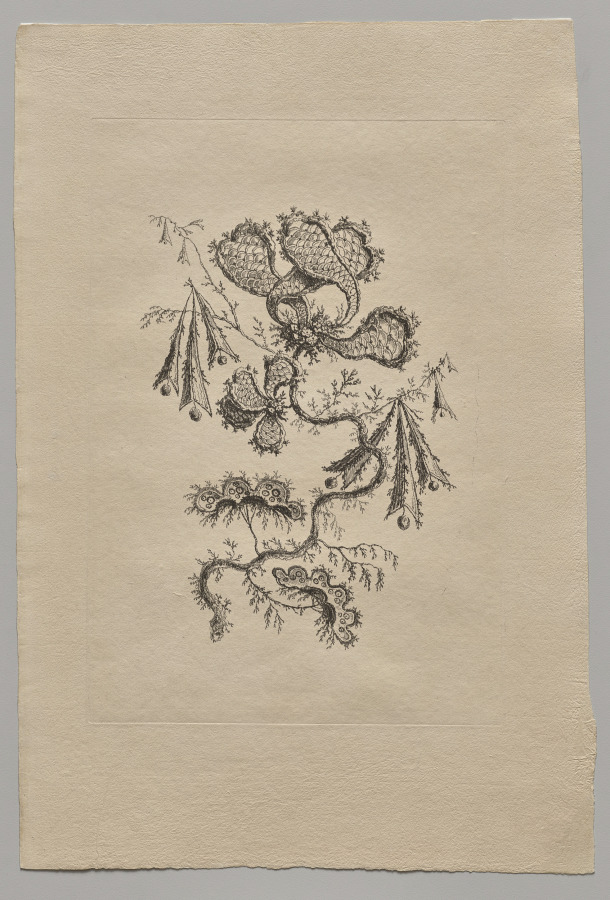
Persian Flowers, 1755, by Jean-Baptiste Pillement
Jean Baptiste Pillement · The Cleveland Museum of Art · Carole W. and Charles B. Rosenblatt Endowment Fund
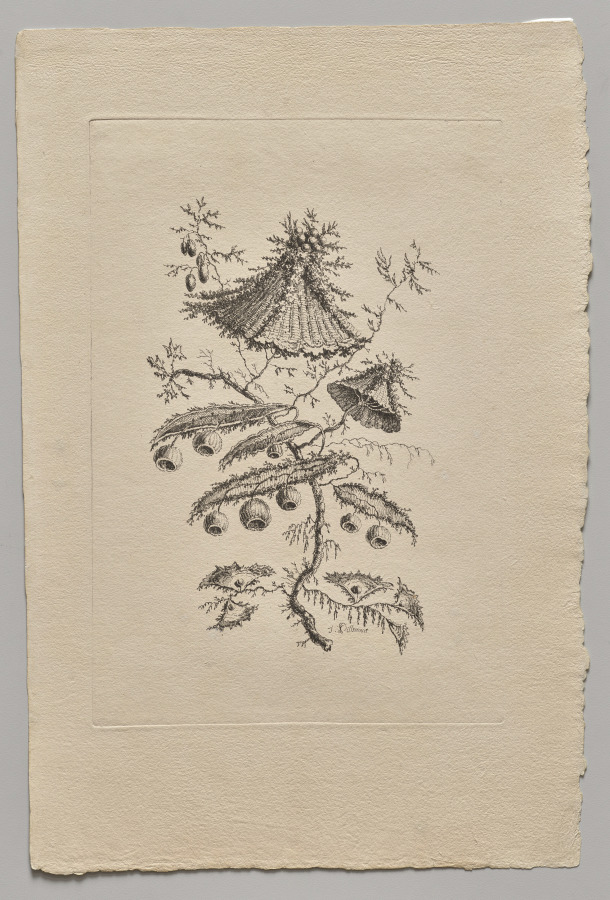
Persian Flowers, 1755, by Jean-Baptiste Pillement
Jean Baptiste Pillement · The Cleveland Museum of Art · Carole W. and Charles B. Rosenblatt Endowment Fund
Life and career
Dated record
Life and career
The full dated record · 2 entries
1728
Jean-Baptiste Pillement born at Lyon.
1808
Jean-Baptiste Pillement died at Lyon.
Collections
• Art Institute of Chicago • Art Gallery of Greater Victoria (British Columbia) • British Museum • Cleveland Museum of Art • Courtauld Institute of Art (London) • Getty Museum • Honolulu Museum of Art • Indiana University Art Museum (Bloomington, Indiana) • Metropolitan Museum of Art (New York City) • Museum der bildenden Künste (Leipzig, Germany) • Museum of Fine Arts, Boston • National Gallery of Art (Washington D.C.) • Palazzo Pitti (Florence) • Gulbenkian Museum (Lisbon, Portugal) • Philadelphia Museum of Art • Château du Grand Lucé, France • National Gallery of Ireland • Museu de Artes Decorativas Portuguesas (Lisboa, Portugal)
Notes from the source article
Cited by Wikipedia
Notes from the source article
These works are cited by the source article, in its own numbering. They are recorded as its citations, not as sources VALÉORINE has verified.
- 1.12 Women Artists Who Revolutionized Print-Making. HuffPost Canada. 2015-10-27.
- 2.Jean Baptiste Pillement. The Art Institute of Chicago.
- 3.Collections Online British Museum. www.britishmuseum.org.
- 4.Length of Brocaded Silk. Cleveland Museum of Art. 31 October 2018.
- 5.Jean-Baptiste Pillement (French, 1728 - 1808) (Getty Museum). The J. Paul Getty in Los Angeles.
- 6.Landscape. www.metmuseum.org.
Bibliography printed in the source article · 2
- Gruber, A. (1992) The History of Decorative Arts, Classicism and the Baroque in Europe, p. 249.
- Gordon-Smith, Maria. (2006) PILLEMENT. (Monograph, edited by Michael Lederer and Joanna Wolanska.)https://artibusethistoriae.org/book9.html
References
Citations
References
Each reference names the institution holding it, so a reader may go to the document itself.
reference work
Secondary witnessreference work
Secondary witness
The Encyclopedia exists whether or not anything is for sale. Corrections are recorded rather than overwritten, and every version of this record is kept. Published 17 August 2026.
Elsewhere in Paintings
18,623 published records in this field, each with its sources named.
- Jean-Baptiste OliveArtist
- Jean-Baptiste PaterArtist
- Jean-Baptiste Paulin GuérinArtist
- Jean-Baptiste PerronneauArtist
- Jean-Baptiste RegnaultArtist
- Jean-Baptiste RobieArtist
- Jean-Baptiste SanterreArtist
- Jean-Baptiste van LooArtist
Best supported in this field
For owners
Own a work by Jean-Baptiste Pillement?
A specialist will read what you send and tell you what the house can establish, what it cannot, and whether the object is suited to sale. There is no charge and no obligation. The object stays with you throughout; nothing is shipped to us unless it is arranged in writing beforehand.