
Jacopo Bellini
Jacopo Bellini (c. 1400 – c. 1470) was one of the founders of the Renaissance style of painting in Venice and northern Italy.
Also recorded as Bellini · Jacobo Bellini · Jacobo Bellini padre · Iacopo Bellino
Jacopo Bellini
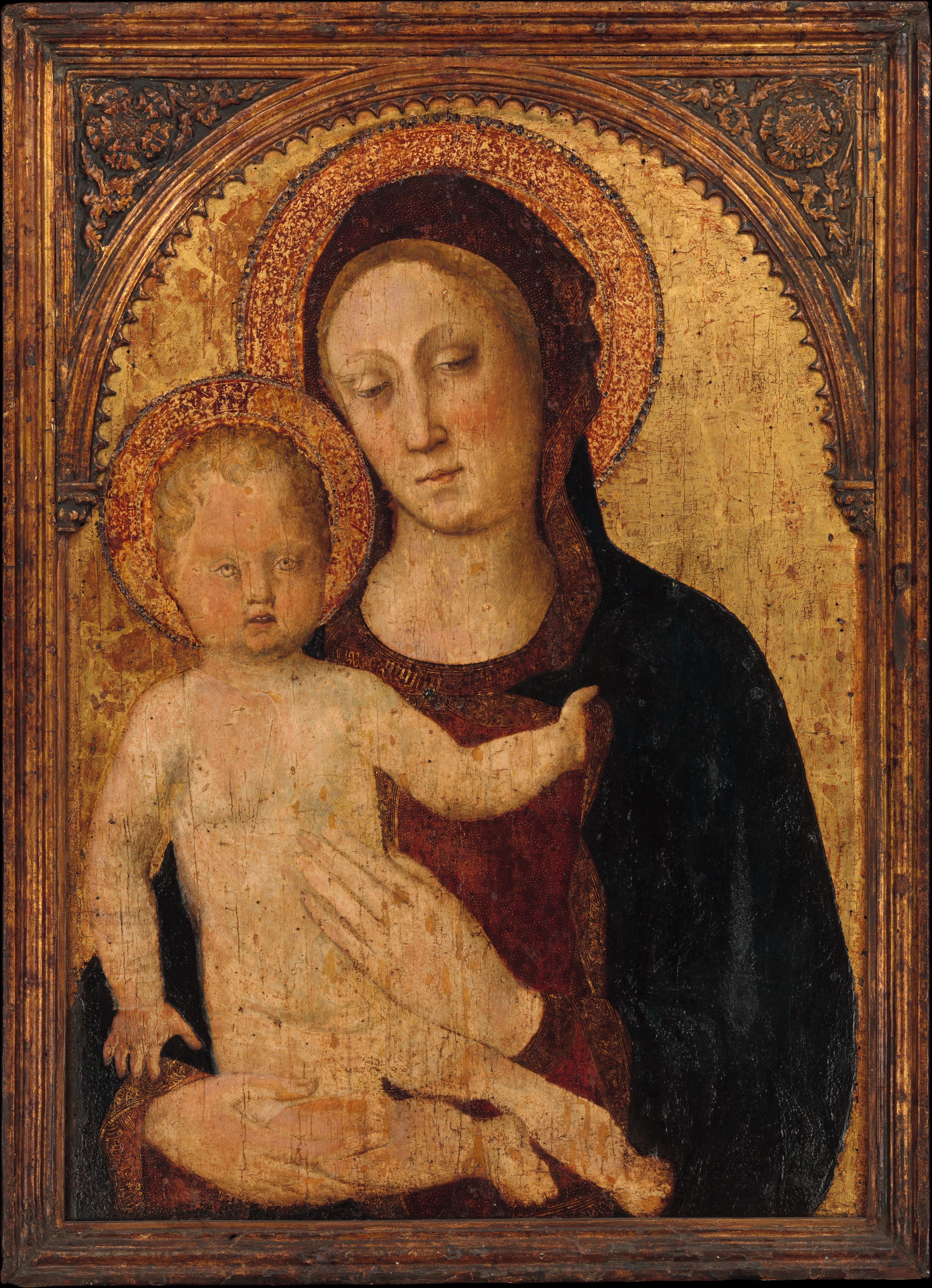
Jacopo Bellini · The Metropolitan Museum of Art, New York · Gift of Irma N. Straus, 1959 · Public domain (CC0, Met Open Access)
- Born
- c. 1400.
- Died
- 1470.
- Nationality
- Republic of Venice.
- Occupation
- painter and draftsperson.
- Movements
- Renaissance.
- Known for
- Madonna and Child, The Madonna of Humility Adored by a Prince of the House of Este, Adoration of the Magi and Madonna and Child.
VALÉORINE Encyclopedia
VALÉORINE documentary reading
Documentary summary
Jacopo Bellini (c. 1400 – c. 1470) was one of the founders of the Renaissance style of painting in Venice and northern Italy.
Admitted source layer · organised and presented by VALÉORINE
Reference Check
Propose documentary evidence for Jacopo Bellini. A contribution is never written directly as fact: identity, source, rights and evidence gates still decide.
Sign in to contribute
Documentary evidence
Documentary basis
Authority files
wikidata · Q313310 · wikipedia · Jacopo Bellini
In this article
Biography
Biography
His sons Gentile and Giovanni Bellini, and his son-in-law Andrea Mantegna, were also famous painters. Few of Bellini's paintings still exist, but his surviving sketch-books (one in the British Museum and one in the Louvre) show an interest in landscape and elaborate architectural design and are his most important legacy. His surviving works show how he accommodated linear perspective to the decorative patterns and rich colours of Venetian painting.
Born in Venice, Jacopo had probably been a pupil of Gentile da Fabriano, who was then in Venice. In 1411–1412, he was in Foligno, where with Gentile, he worked at the Palazzo Trinci frescoes. In 1423 Bellini was in Florence, where he knew the new works by Brunelleschi, Donatello, Masolino da Panicale and Masaccio. In 1424, he opened a workshop in Venice, which he ran right up until his death, and which trained his sons and other artists. Many of his greatest works, including the enormous Crucifixion in the cathedral of Verona (1436), have disappeared. From c. 1430 is the panel with Madonna and Child, in the Accademia Carrara, once attributed to Gentile da Fabriano. In 1441, at Ferrara, where he was at the service of Leonello d'Este together with Leon Battista Alberti, he executed a portrait of that Marquess, now lost. Of this period survives the Madonna dell'Umiltà, probably commissioned by one of the brothers of Leonello. The influence from Masolino da Panicale towards more modern, early Renaissance themes is visible in the Madonna with Child (dated 1448) in the Pinacoteca di Brera: for the first time, perspective is present and the figures are more monumental. Later, he contributed with works now lost to the Venetian churches of San Giovanni Evangelista (1452) and St. Mark (1466). From 1459 is a Madonna with Blessing Child in the Gallerie dell'Accademia. Later, he sojourned in Padua, where he trained a young Andrea Mantegna in perspective and classicist themes and where, in 1460, he finished a portrait of Erasmo Gattamelata, now lost. Of his late phase, a ruined Crucifix in the Museum of Verona and an Annunciation in the church of Sant'Alessandro of Brescia remain. Giovanni Fontana showed Bellini a treatise on perspective.
Life and career
Dated record
Life and career
The full dated record · 2 entries
1396
Jacopo Bellini was born in 1396.
1470
Jacopo Bellini died at Venice.
Primary material
Documents and archives
reference work
- Wikidata, structured authority record Q313310: Jacopo Bellini
Reputable secondary · Wikidata
- “Jacopo Bellini”, English Wikipedia, consulted as further reading
Reputable secondary · Wikipedia
scholarly publication
- Bellini, Jacopo (Active C. 1424–1471), Historical Dictionary of Renaissance Art, 2016
Scholarly · Crossref registry · 2016
Notes from the source article
Cited by Wikipedia
Notes from the source article
These works are cited by the source article, in its own numbering. They are recorded as its citations, not as sources VALÉORINE has verified.
- 1.Vopi, Caterina. "Mantegna, Andrea", Treccani, 2006
- 2.A.C. Sparavigna. Giovanni de la Fontana, engineer and magician. Cornell University Library. 2013.
Bibliography printed in the source article · 1
- C. Eisler, The genius of Jacopo Bellini: the complete paintings and drawings (London, The British Museum Press, 1989)
References
Citations
References
Each reference names the institution holding it, so a reader may go to the document itself.
scholarly publication
Bellini, Jacopo (Active C. 1424–1471), Historical Dictionary of Renaissance Art, 2016Crossref registry
Institutional witnessreference work
Secondary witnessreference work
Secondary witness
The Encyclopedia exists whether or not anything is for sale. Corrections are recorded rather than overwritten, and every version of this record is kept. Published 14 August 2026.
Elsewhere in Paintings
19,261 published records in this field, each with its sources named.
- Jacometto VenezianoArtist
- Jacopino ScipioniArtist
- Jacopo AmigoniArtist
- Jacopo BassanoArtist
- Jacopo BertoiaArtist
- Jacopo BorboneArtist
- Jacopo ChiavistelliArtist
- Jacopo CoppiArtist
Best supported in this field
For owners
Own a work by Jacopo Bellini?
A specialist will read what you send and tell you what the house can establish, what it cannot, and whether the object is suited to sale. There is no charge and no obligation. The object stays with you throughout; nothing is shipped to us unless it is arranged in writing beforehand.