
Hippolyte Flandrin
Jean-Hippolyte Flandrin (23 March 1809 – 21 March 1864) was a French Neoclassical painter. His most celebrated work, Jeune Homme Nu Assis au Bord de la Mer (1836) is held in the Louvre.
Also recorded as Jean Hippolyte Flandrin · Hippolyte-Jean Flandrin · Hippolyte Jean Flandrin · Jean-Hippolyte Flandrin
Hippolyte Flandrin
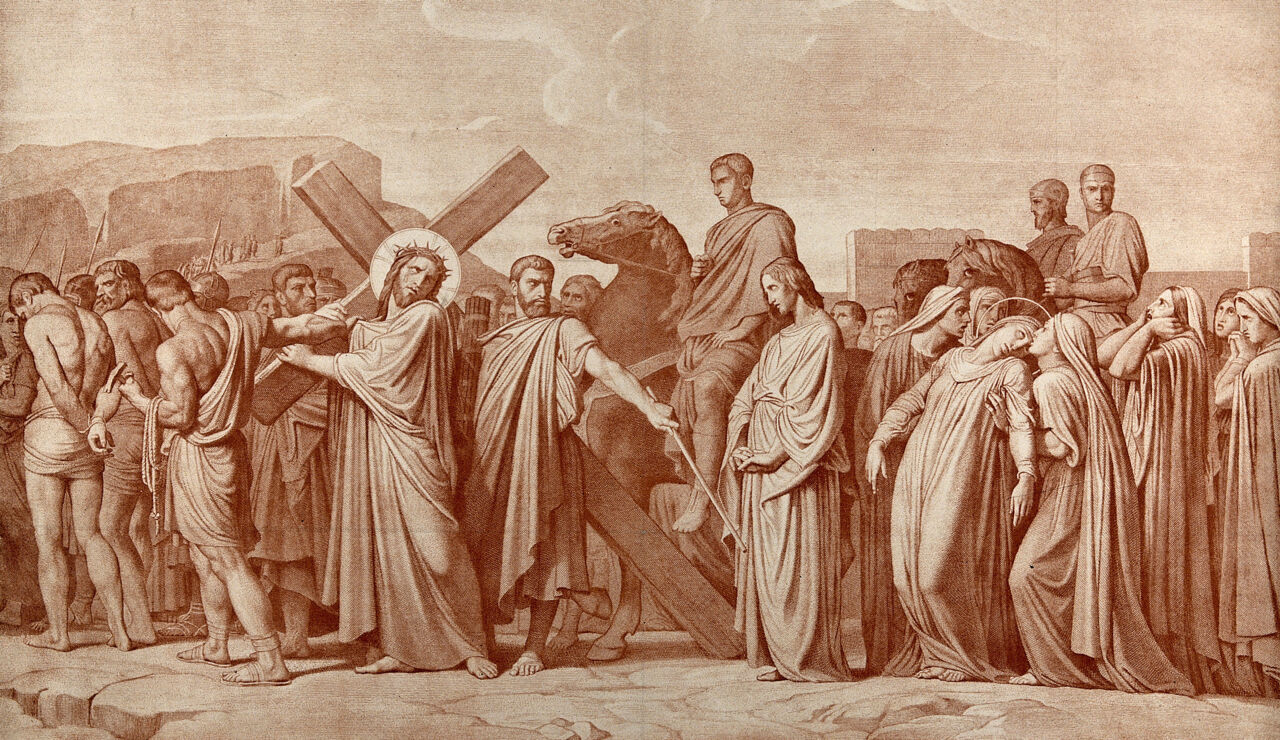
Hippolyte. Flandrin · Wellcome Collection, London · Wellcome Collection · Public Domain Mark
- Name
- Hippolyte Flandrin
- Born
- 23 March 1809
- Birthplace
- Lyon, France
- Died
- 21 March 1864
- Place of death
- Rome, Italy
- Known for
- Painting
- Training
- Pupil of Louis Hersent and Jean-Auguste-Dominique Ingres
- Movement
- Neoclassicism
- Awards
- Prix de Rome (1832)
- Nationality
- France
- Occupation
- painter · draftsperson
- Fields
- history · portrait
VALÉORINE Encyclopedia
VALÉORINE documentary reading
Documentary summary
Jean-Hippolyte Flandrin (23 March 1809 – 21 March 1864) was a French Neoclassical painter. His most celebrated work, Jeune Homme Nu Assis au Bord de la Mer (1836) is held in the Louvre.
Admitted source layer · organised and presented by VALÉORINE
Reference Check
Propose documentary evidence for Hippolyte Flandrin. A contribution is never written directly as fact: identity, source, rights and evidence gates still decide.
Sign in to contribute
World of VALÉORINE
Documentary connections
Only confirmed graph relationships appear here. Images are shown only when their identity and reuse rights both pass the documentary gate.
Documentary evidence
Documentary basis
Authority files
wikidata · Q472235 · wikipedia · Hippolyte Flandrin
In this article
Biography
Biography
Hippolyte Flandrin studied at École nationale supérieure des beaux-arts de Lyon and French Academy in Rome. Training under Louis Hersent and Jean-Auguste-Dominique Ingres is recorded. Edgar Degas, James Tissot and Pierre Grivolas are recorded as having studied under Hippolyte Flandrin. The recorded working language is French. Subjects and genres recorded for the work are history and portrait. Places of work recorded in the authority are Rome. Employment is recorded with Beaux-Arts de Paris. Works named in the authority record are Jeune Fille and Madame Hippolyte Flandrin. Work by Hippolyte Flandrin is recorded in the collections of Städel Museum, Finnish National Gallery, Metropolitan Museum of Art, National Galleries Scotland and Musée de l'Histoire de France. Distinctions recorded are Prix de Rome, Knight of the Legion of Honour, Officer of the Legion of Honour and Pour le Mérite for Sciences and Arts order.
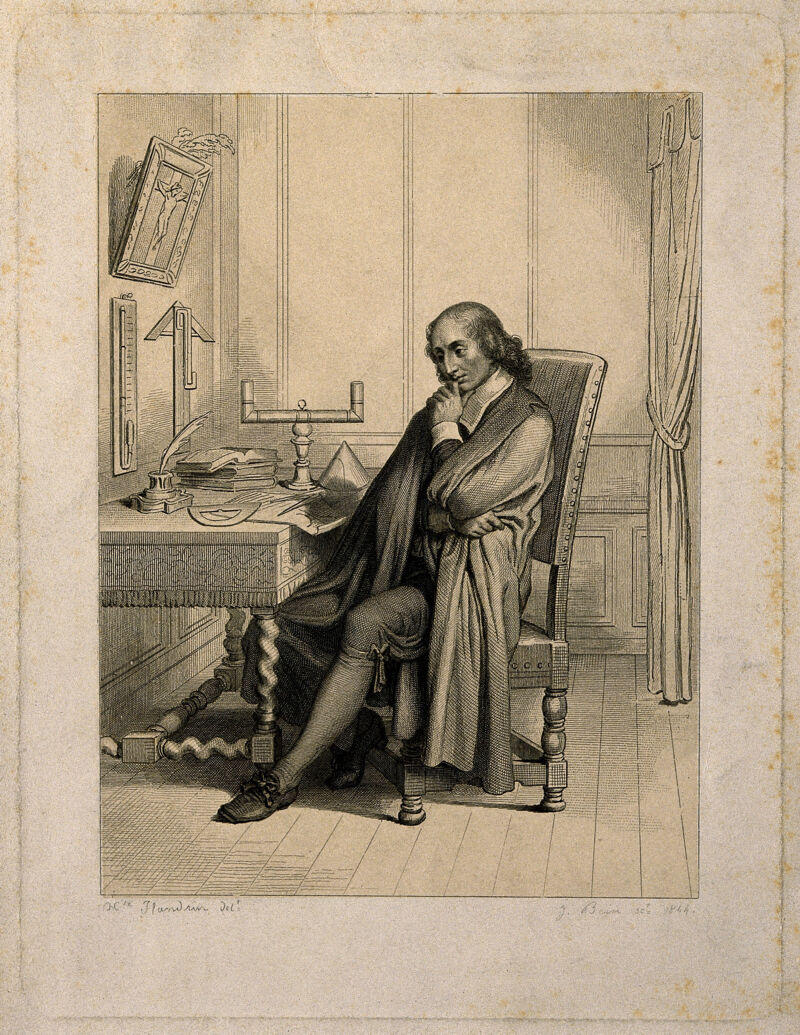
Blaise Pascal, seated at his desk. Line engraving by J. Bein, 1844, after H. Flandrin., 1844, by Hippolyte Flandrin
Hippolyte. Flandrin · Wellcome Collection, London · Wellcome Collection
Key facts
Key facts
• Name — Hippolyte Flandrin • Born — 23 March 1809 • Birthplace — Lyon, France • Died — 21 March 1864 • Place of death — Rome, Italy • Known for — Painting • Training — Pupil of Louis Hersent and Jean-Auguste-Dominique Ingres • Movement — Neoclassicism • Notable Works — Jeune Homme Nu Assis au Bord de la Mer (1836) • Awards — Prix de Rome (1832)
Early life
Early life
From an early age, Flandrin showed interest in the arts and a career as a painter. He was the second of three sons, all of whom were painters. Auguste, his older brother, spent most of his life as a professor at Lyon and later died there. Paul, his younger brother, was a painter of portraits and religious imagery. Hippolyte and Paul spent some time at Lyon, saving to leave for Paris in 1829 and study under Louis Hersent. Eventually, they settled in the studio of Jean-Auguste-Dominique Ingres, who became not only their instructor but their friend for life. In 1832, he won the Prix de Rome for his painting Recognition of Theseus by his Father. This prestigious art scholarship meant that he was no longer limited by his poverty.
Career
Career
The Prix de Rome allowed him to study for five years in Rome. While there, he created several paintings, increasing his celebrity both in France and Italy. His painting St. Clair Healing the Blind was created for the Nantes Cathedral, and years later, it also brought him a medal of the first class at the exhibition of 1855; this painting was destroyed in the fire which took place at Nantes Cathedral on 18 July 2020. Jesus and the Little Children was given by the government to the town of Lisieux. Dante and Virgil visiting the Envious Men struck with Blindness and Euripides writing his Tragedies are now in the Museum of Fine Arts in Lyon. In 1853, Flandrin was elected to the Académie des Beaux-Arts. On 4 April 1856, he assisted in the founding of the Œuvre des Écoles d'Orient, better known as L'Œuvre d'Orient; he was a member of its first general council on 25 April 1856. Upon his return to Paris in 1856, Flandrin received a commission from the chapel of St John in the church of St Séverin. As a result, his reputation became even more impressive, virtually guaranteeing him continuous employment for the rest of his life. In addition to these works, Flandrin also painted a great number of portraits, including Portrait of Napoleon III, who was not very well received by the sitter. However, he is much more known today for his monumental decorative paintings. The most notable of these are found in the following locations: • in the sanctuary, choir, and nave of St Germain des Prés at Paris (1842–1861) • in the church of St Paul at Nîmes (1848–1849) • of St Vincent de Paul at Paris (1850–1854) • in the church of St-Martin-d'Ainay at Lyon (1855)
Personal life and death
Personal life and death
In 1843 Flandrin married Aimée-Caroline Ancelot (1822–1882). Their son Paul Hippolyte Flandrin (1856–1921) became a painter of sacred art, portraitist and decorator. In 1863, Flandrin's failing health, made worse by his hard work and extended exposure to the damp and draughts of churches, induced him to visit Italy again, where he died of smallpox in Rome on 21 March 1864.
Main works
Main works
• Portrait of Madame Oudiné, 1840 (Musée des Beaux-Arts de Lyon). • Study (Young Male Nude Seated Beside the Sea), 1836 (Louvre Museum) • Dante in Hell, 1835 (Musée des beaux-arts de Lyon). • Seated Young Shepherd, 1834 (Musée des beaux-arts de Lyon).
Gallery
Gallery
• Illustration — Polites, Son of Priam, Watching the Greek Movements (1833–34) • Illustration — Ambroise Thomas (1834) • Illustration — Pietà (c. 1842) • Illustration — Madame Hippolyte Flandrin (1846) • Illustration — Countess of Goyon (1853) • Illustration — Mademoiselle Mathilde Maison (1858) • Illustration — Melchizedek Blesses Abraham (1859) • Illustration — Joseph Charles Paul Bonaparte (1860) • Illustration — Christ with the Virgin, Saint Blandine, Saint Clotilde, Saint Michael the Archangel, Saint Pothin, and Saint Martin (1855) Basilica of Saint-Martin d'Ainay, Lyon. • Illustration — Saint Badulphe • Illustration — Apsidiole
Identity and origins
Identity and origins
His recorded language was French. He married Aimée Ancelot. One child is recorded: Paul-Hippolyte Flandrin.
Identity
Identity
Hippolyte Flandrin is recorded as having studied at École nationale supérieure des beaux-arts de Lyon and French Academy in Rome.
Life and career
Dated record
Life and career
Explore 1809–1864
The full dated record · 3 entries
1809
Hippolyte Flandrin born at Lyon.
1836
Saint Clair healing the blind is dated 1836.
1864
Hippolyte Flandrin died at Rome.
Places
Named by the record
Places
Only places the record itself states, plotted where the house gazetteer settles their coordinates. Nothing is inferred from a name or a nationality.
Lyon.
Birth place
Rome.
Death place
Where the work is held
Recognition and collections
Hippolyte Flandrin received Prix de Rome, Knight of the Legion of Honour, Officer of the Legion of Honour and Pour le Mérite for Sciences and Arts order.
Notes from the source article
Cited by Wikipedia
Notes from the source article
These works are cited by the source article, in its own numbering. They are recorded as its citations, not as sources VALÉORINE has verified.
- 1.Flandrin, Jean Hippolyte. 10. 480.
- 2.Nantes Cathedral fire started in three different places, say French police. the Guardian. 20 July 2020.
References
Citations
References
Each reference names the institution holding it, so a reader may go to the document itself.
reference work
Wikidata, structured authority record Q472235: Hippolyte FlandrinWikimedia Foundation
Secondary witnessreference work
Secondary witness
Further particulars
Held on the record
Further particulars
Open the remaining particulars
Hippolyte Flandrin studied at École nationale supérieure des beaux-arts de Lyon and French Academy in Rome. He trained under Louis Hersent and Jean-Auguste-Dominique Ingres. Each of those relationships is stated by the authority record rather than inferred from style.
His work is associated with Neoclassicism. He was employed by Beaux-Arts de Paris. He belonged to Académie des beaux-arts. He worked at Rome. Work and production. His recorded genres are history and portrait.
Career and activity
The Encyclopedia exists whether or not anything is for sale. Corrections are recorded rather than overwritten, and every version of this record is kept. Published 14 August 2026.
Elsewhere in Paintings
18,717 published records in this field, each with its sources named.
- Hippolyte BellangéArtist
- Hippolyte BerteauxArtist
- Hippolyte Camille DelpyArtist
- Hippolyte DaeyeArtist
- Hippolyte Jean-Baptiste GarnerayArtist
- Hippolyte LazergesArtist
- Hippolyte LecomteArtist
- Hippolyte PetitjeanArtist
Best supported in this field
For owners
Own a work by Hippolyte Flandrin?
A specialist will read what you send and tell you what the house can establish, what it cannot, and whether the object is suited to sale. There is no charge and no obligation. The object stays with you throughout; nothing is shipped to us unless it is arranged in writing beforehand.