
Henry Bright
Henry Bright (5 June 1810 – 21 September 1873), was a distinguished English landscape painter associated with the Norwich School of painters. • Illustration — On the Norfolk Broads (c.1855), Yale Center for British Art
Also recorded as Bright · h. bright
Henry Bright
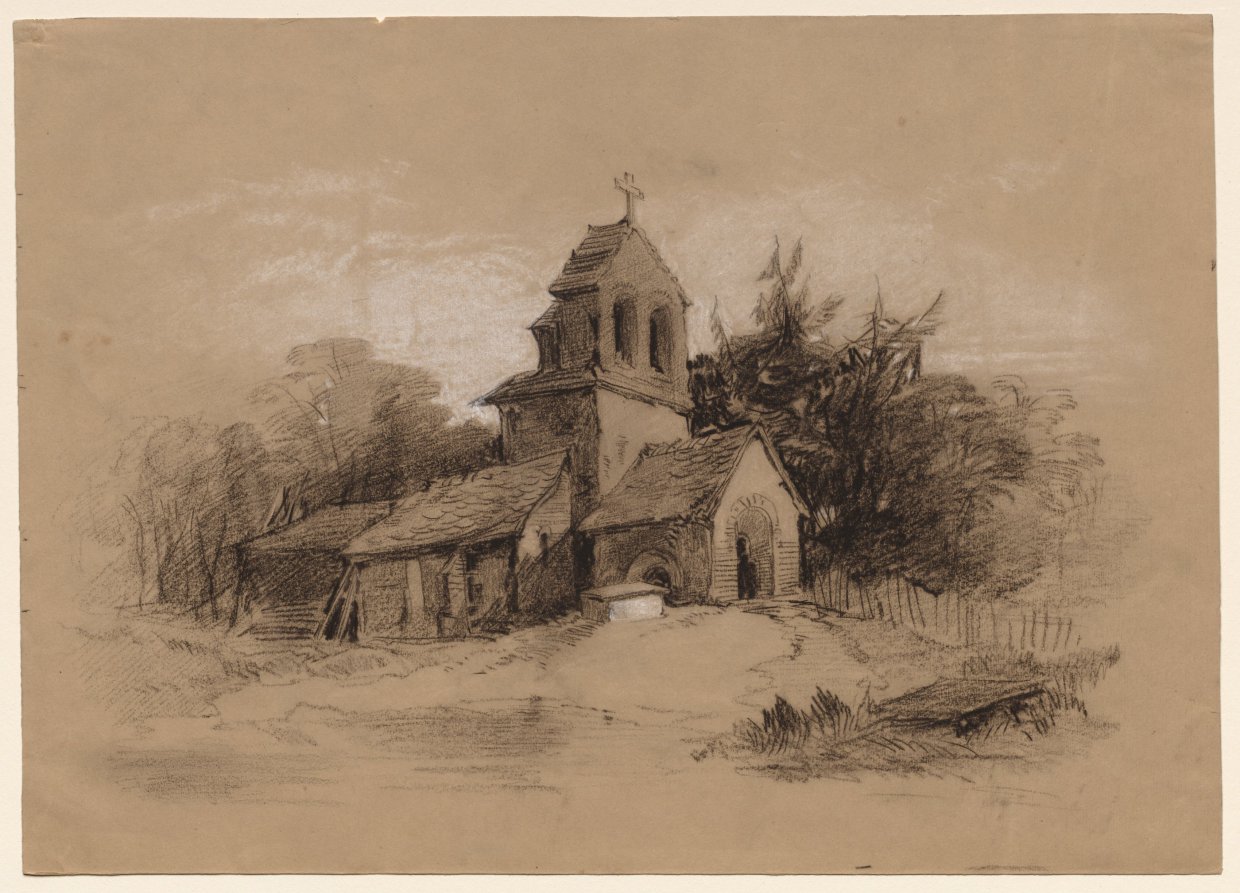
Henry Bright · The Cleveland Museum of Art · The Norweb Collection · CC0
- Name
- Henry Bright
- Born
- 5 June 1810
- Birthplace
- Saxmundham, Suffolk
- Died
- 21 September 1873
- Place of death
- Ipswich, Suffolk
- Education
- trained by Alfred Stannard and John Berney Crome
- Known for
- landscape painting
- Movement
- Norwich School of painters
- Spouse
- Eliza Brightley
- Nationality
- United Kingdom
- Occupation
- painter · draftsperson
- Languages
- English
Reference Check
Propose documentary evidence for Henry Bright. A contribution is never written directly as fact: identity, source, rights and evidence gates still decide.
Sign in to contribute
World of VALÉORINE
Documentary connections
Only confirmed graph relationships appear here. Images are shown only when their identity and reuse rights both pass the documentary gate.
Documentary evidence
Documentary basis
Authority files
wikidata · Q5718611
In this article
Biography
Biography
The recorded working language is English. Places of work recorded in the authority are Norwich, Netherlands and Rotterdam. Work by Henry Bright is recorded in the collections of Tate, Norfolk Museums Collections, Yale Center for British Art, Manchester Art Gallery and Abbot Hall Art Gallery.
Key facts
Key facts
• Name — Henry Bright • Born — 5 June 1810 • Birthplace — Saxmundham, Suffolk • Died — 21 September 1873 • Place of death — Ipswich, Suffolk • Education — trained by Alfred Stannard and John Berney Crome • Known for — landscape painting • Movement — Norwich School of painters • Spouse — Eliza Brightley
Life
Life
Henry Bright was born on 5 June 1810 in Saxmundham, Suffolk, the third son of some nine children of Jerome Bright (1770–1846), a clockmaker, and Susannah Denny, of Alburgh in Norfolk, who were married on 28 June 1790. Jerome and Susannah Bright attended services in the Congregational chapel at Rendham, a few miles from Saxmundham. • Illustration — Cottages at Oxford (undated), Yale Center for British Art • Illustration — Trees with felled timber Bright was apprenticed by his family to a chemist in Woodbridge, Suffolk, but was then transferred to a Norwich chemist, Paul Squires. During this apprenticeship, or perhaps afterwards, he became a dispenser at the Norfolk and Norwich Hospital. During this period he is said to have spent all his free time sketching. His obvious artistic talents were finally recognised and he became a pupil of Alfred Stannard. He is also said to have been trained by John Berney Crome and John Sell Cotman, both of whom were members of the Norwich Society of Artists. About 1833 Bright returned to Saxmundham to marry a local girl, Eliza Brightley, on 8 May. Two of their children are known to have survived into adulthood. Bright moved with his family to Paddington in 1836. In 1848, the year they moved to Ealing, his wife Eliza died. By 1854, Bright was living in St John's Wood, but left London in 1858 because of health reasons and settled with his daughters in his brother's house in Saxmundham. Bright continued to visit London for business reasons and to view exhibitions. From 1860, he lived at Redhill in Surrey. He also spent some time in Maidstone. He died in Ipswich in 1873.
Works
Works
Bright painted in various locations in England, Scotland, Wales and across Europe, working in oils, watercolour, chalk and pencil. During a few of these sketching expeditions he was accompanied by J. M. W. Turner, with whom he had struck up a friendship. Bright's work was also highly regarded by John Ruskin. • Illustration — Effect after rain Bright's first major exhibition was at the British Institution, London in 1836. He exhibited at the Liverpool Academy exhibition that year as "Draughtsman in crayons to her Royal Highness the Langravine of Hesse Hamberg". He became a member of the New Society of Painters in Watercolours in 1839, where he exhibited until 1844. Although his obituary in The Art Journal stated that he did not exhibit in oils until the Royal Academy exhibition of 1845, this is not known for certain. Bright developed friendships with other leading artists, including Samuel Prout, Henry Jutsum, David Cox, George Lance, William Collingwood Smith, William Leighton Leitch and James Duffield Harding. He was influenced by Harding's oil and pencil technique and, like him, issued a number of drawing-books in the 1840s. His use of chalk and stump on buff paper is similar to that of Robert Leman (1799–1863), while John Middleton strongly influenced his use of watercolour, particularly in around 1847. Bright's name was also associated with the manufacture of coloured crayons. He established a profitable career teaching the titled and well-to-do, many of whom became his patrons. In 1844 Queen Victoria purchased Bright's Entrance to an Old Prussian Town (London, Royal Collection) from the New Society of Painters in Watercolours. He also received several commissions from the Grand Duchess Marie of Russia. His professional success extended to working collaboratively with other artists, including John Frederick Herring and William Shayer, where Bright usually contributed the background. Throughout his career in London, Bright maintained links with the artists of the Norwich School of painters.
Life and career
Dated record
Life and career
The full dated record · 2 entries
1810
Henry Bright born at Saxmundham.
1873
Henry Bright died at Ipswich.
Places
Named by the record
Places
Only places the record itself states, plotted where the house gazetteer settles their coordinates. Nothing is inferred from a name or a nationality.
Saxmundham.
Birth place
Ipswich.
Death place
Public collections
There is an extensive collection of Bright's paintings at the Norwich Castle Museum. He is also represented at major art galleries in London, Boston and San Francisco.
Text attribution
Licensing
Text attribution
Part of the biographical narrative on this page reuses licensed material. Its origin, revision and licence are recorded here.
The biographical narrative on this page is based on the Wikipedia article Henry Bright (painter), revision 1364708602 (EN edition), by its contributors. VALÉORINE has edited that text and built its own documentary record around it. The reused material is available under CC BY-SA 4.0, and this page's reuse of it is offered under the same licence. Everything else on this page — the chronology, the holdings, the evidence, the plates and the connections — is VALÉORINE's own record. Sources and licences.
References
Citations
References
Each reference names the institution holding it, so a reader may go to the document itself.
reference work
Secondary witness
People, houses and institutions
Knowledge graph
People, houses and institutions
Teachers, collaborators, publishers and institutions recorded against this person, each on a stated basis.
Died at
1- IpswichPlace
Established from a fact already recorded on a verified source.
The Encyclopedia exists whether or not anything is for sale. Corrections are recorded rather than overwritten, and every version of this record is kept. Published 18 August 2026.
Elsewhere in Paintings
19,456 published records in this field, each with its sources named.
- Henry BenbridgeArtist
- Henry Bernard ChalonArtist
- Henry BoneArtist
- Henry BotkinArtist
- Henry Brown FullerArtist
- Henry Bryan ZieglerArtist
- Henry Caro-DelvailleArtist
- Henry CasselliArtist
Best supported in this field
For owners
Own a work by Henry Bright?
A specialist will read what you send and tell you what the house can establish, what it cannot, and whether the object is suited to sale. There is no charge and no obligation. The object stays with you throughout; nothing is shipped to us unless it is arranged in writing beforehand.