
Henry Bone
Henry Bone (6 February 1755 – 17 December 1834) was an English enamel painter. He was elected a Royal Academician and produced the largest enamel paintings ever seen up to that time.
Also recorded as Henry R. Bone · henry bone · H P Bone
Henry Bone
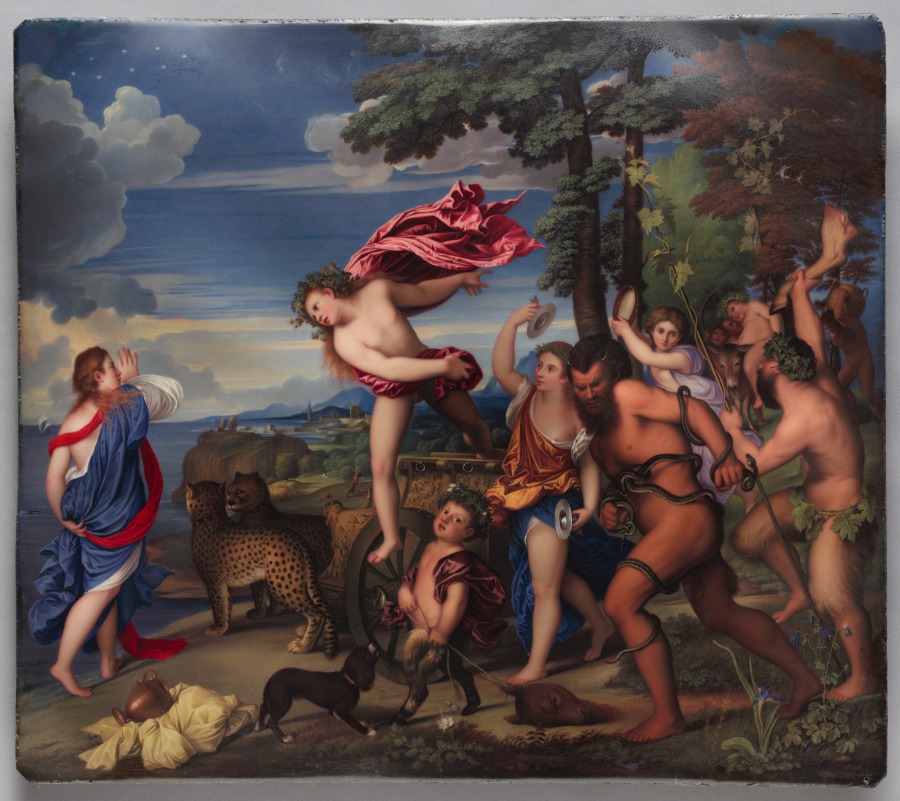
Henry Bone · The Cleveland Museum of Art · Severance and Greta Millikin Trust · CC0
- Name
- Henry Bone
- Born
- 6 February 1755
- Birthplace
- Truro, Cornwall, England, Kingdom of Great Britain
- Died
- 17 December 1834
- Spouse
- Elizabeth Vandermeulen
- Known for
- oil portraits; enamel
- Nationality
- United Kingdom of Great Britain and Ireland · Kingdom of Great Britain · England
- Occupation
- painter
- Fields
- portrait
- Languages
- English
VALÉORINE Encyclopedia
VALÉORINE documentary reading
Documentary summary
Henry Bone (6 February 1755 – 17 December 1834) was an English enamel painter. He was elected a Royal Academician and produced the largest enamel paintings ever seen up to that time.
Admitted source layer · organised and presented by VALÉORINE
Note VALÉORINE
Henry Bone (1755–1834) was an English and British painter and porcelain painter. Born in Truro, the painter died in London. Henry Bone was a member of Royal Academy of Arts and held the position of court painter.
Genres include portrait. Languages used include English. Works by the painter are held at Carnegie Museum of Art, Cincinnati Art Museum and Cleveland Museum of Art, among others.
Composed from admitted, traceable facts · 30 September 2026
VALÉORINE
Reference Check
Propose documentary evidence for Henry Bone. A contribution is never written directly as fact: identity, source, rights and evidence gates still decide.
Sign in to contribute
World of VALÉORINE
Documentary connections
Only confirmed graph relationships appear here. Images are shown only when their identity and reuse rights both pass the documentary gate.

Documentary evidence
Documentary basis
Authority files
wikidata · Q5196210 · wikipedia · Henry Bone
In this article
Biography
Biography
The recorded working language is English. Subjects and genres recorded for the work are portrait. Positions recorded include court painter. Work by Henry Bone is recorded in the collections of The Nelson-Atkins Museum of Art, Metropolitan Museum of Art, Carnegie Museum of Art, Cincinnati Art Museum and Cleveland Museum of Art.
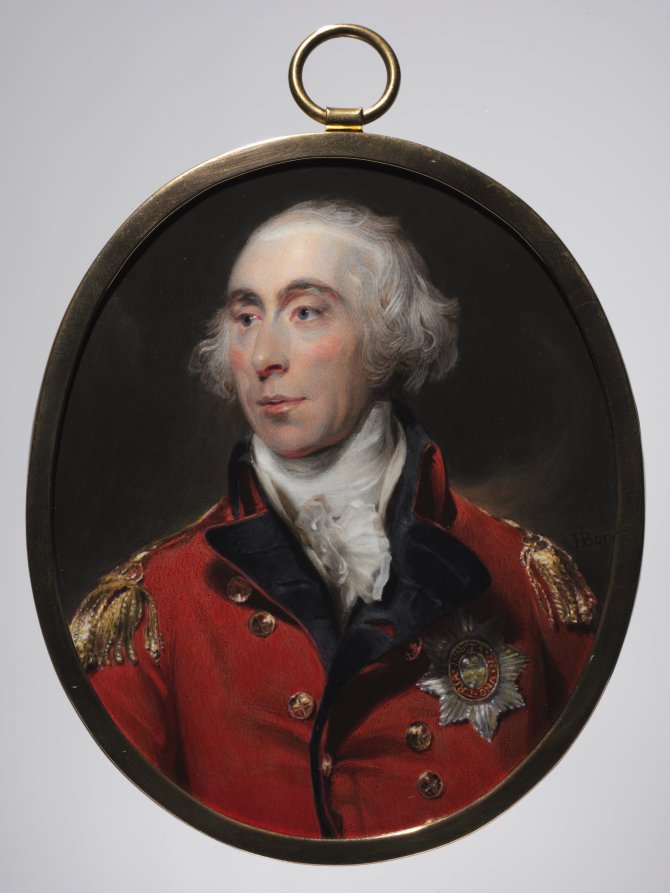
Portrait of General Sir Charles Grey, later 1st Earl Grey, 1794, by Henry Bone
Henry Bone · The Cleveland Museum of Art · The Edward B. Greene Collection
![A man on his deathbed. Drawing attributed to H. Bone., [between 1800 and 1809?], by Henry Bone](https://iiif.wellcomecollection.org/image/L0073317/full/800,/0/default.jpg)
A man on his deathbed. Drawing attributed to H. Bone., [between 1800 and 1809?], by Henry Bone
Henry Bone · Wellcome Collection, London · Wellcome Collection
Key facts
Key facts
• Name — Henry Bone • Born — 6 February 1755 • Birthplace — Truro, Cornwall, England, Kingdom of Great Britain • Died — 17 December 1834 • Spouse — Elizabeth Vandermeulen • Known for — oil portraits; enamel • Patrons — * George III • George IV • William IV • Children — Henry Pierce Bone Robert Trewick Bone Several others
Life and work
Life and work
• Illustration — Francis Drake • Illustration — Self-portrait by Bone, 1791 Henry Bone was born in Truro, Cornwall. His father was a cabinet maker and carver of unusual skill. In 1767, Bone's family moved to Plymouth in neighbouring Devon, where Henry was employed, in 1771, by William Cookworthy, the founder of the Plymouth porcelain works and the first manufacturer of Hard-paste porcelain in England. Later in the same year Bone moved with the factory to Bristol, where then factory was under the management of Richard Champion of Bristol. In 1772, Bone was apprenticed to Champion, not to Cookworthy as often repeated. He remained for six years, working from 6 a.m. to 6 p.m., and studying drawing at night. His china decoration can be assumed to be of high merit, and is said by one Victorian writer to have been marked with the figure "1" in addition to the factory-mark, a small cross. This attribution is speculative, however, as are a number of alternative suggestions for what work he carried out at Bristol. On the failure of the Bristol works in 1778, Bone came to London with one guinea of his own in his pocket, and five pounds borrowed from a friend. He first found employment enameling watches and fans, and afterwards in making enamel and watercolour portraits. He became a friend of John Wolcot who would also encourage the talents of portraitist John Opie, for many years Bone's neighbour in Berners Street, London. On Wolcot's advice, Bone made professional tours in Cornwall, from where Opie also hailed. Wolcot had been a visitor often at the house of William Cookworthy, and in 1780 Opie painted Cookworthy. On 24 January 1779, just four days after the expiry of his apprenticeship deed, Bone married Elizabeth Vandermeulen, a descendant of the distinguished battle-painter Adam Frans van der Meulen. The couple went on to have ten children, moving regularly to accommodate their growing family. In 1781 he exhibited his first picture at the Royal Academy, a portrait of his wife, an unusually large enamel for the period. He then gave himself up entirely to enamel-painting, and continued frequently to exhibit at the Academy, initialing most of his works. • Illustration — Henry Gawler (1766–1852) and his brother John Bellenden Ker (1765–1842) (after Joshua Reynolds) In 1789, he exhibited "A Muse and Cupid", the largest enamel painting ever executed up to that time. In 1800 he was appointed enamel painter to the Prince of Wales; in 1801 he was made an associate of the Royal Academy (ARA) and enamel painter to George III, continuing to hold the appointment during the reigns of George IV and William IV. On 15 April 1811 he was elected a royal academician (RA), and shortly afterwards produced a still larger enamel (eighteen inches by sixteen), after Titian's Bacchus and Ariadne. More than 4000 people saw the work at Bone's house. The picture was sold to Mr. G. Bowles of Cavendish Square for 2,200 guineas, whilst the original Titian, borrowed by Bone for copying, was only insured for £1500. The price was paid (either wholly or partly) by a cheque drawn on Fauntleroy's Bank. Bone cashed the cheque on his way home, apparently just in time, as it is said that the next day financial difficulties caused the bank to suspend payments! Bone initially used a subcontractor, Mr. Long, to created the copper plates upon which his works were created. Subsequently he decided to take over this task himself, and in learning to prepare his large plates, he was assisted by Edward Wedlake Brayley, who was by then already a distinguished antiquary, but had trained as an enameller. Bone's next great works were a series of historical portraits from the time of Elizabeth I, a series of "Cavaliers distinguished in the Civil War", and a series of portraits of the Russell family. Some say that the Elizabethan series did not prove a financial success, but they were painted over a 20 year period with time set aside each year to borrow and make preparatory drawings from original paintings. It may thus have been regarded by Bone as a legacy project and at the time of his death 85 remained at his house at 15 Berners Street. In 1832 his eyesight failed, and after having lived at Berners Street for 31 years, he moved in that year to a smaller property in Somers Town, reluctantly applying for, and receiving, a Royal Academy pension. He died on 17 December 1834, not without complaining of the neglect with which he had latterly been treated. He is said to have been "a man of unaffected modesty and generosity; friendship and integrity adorned his private life". Francis Chantrey carved a bust of him, and John Opie, John Jackson, and George Harlow all painted his portrait. In 1819, Bone had attended the funeral of Harlow alongside their friend Sir William Beechey. Richard Dagley was another friend.
Family
Family
Two of his sons, Henry Pierce Bone and William Bone, were also notable enamellists and Robert Trewick Bone, an oil painter. Another son, Thomas Bone, was a midshipman who was wrecked and drowned during the attempted rescue of sailors from the sloop called Racehorse off the Isle of Man, while yet another, Peter Bone, was a lieutenant in the 36th Regiment, who was wounded at the Battle of Toulouse and died soon after returning to England. A sixth son was called to the bar. Four of Bone's grandchildren followed their father, Henry Pierce Bone and became artists, the most notable being Charles Richard Bone who exhibited enamel and other miniatures at the Royal Academy more than 40 times.
Gallery
Gallery
• Illustration — Henry Philip Hope (1802) • Illustration — Duchess of Kent and Victoria (1824/5) after the 1821 painting by William Beechey • Illustration — Sophia Lady Burrell as Hebe (1804) • Illustration — Hope nursing Love (1808) • Illustration — King George IV when Prince Regent (1762-1830), after Lawrence
Life and career
Dated record
Life and career
The full dated record · 2 entries
1755
Henry Bone was born in 1755 at Truro.
1834
Henry Bone died in 1834 at London.
Places
Named by the record
Places
Only places the record itself states, plotted where the house gazetteer settles their coordinates. Nothing is inferred from a name or a nationality.
Truro.
Birth place
London.
Death place
Catalogued output
Catalogued works
A Catalogue of Miniature Portraits in Enamel by Henry Bone. In the Collection of the Duke of Bedford at Woburn Abbey.
Legacy
Some time before his death Bone offered his collections, which had been valued at £10,000, to the nation for £4,000, but the offer was declined, and on 22 April 1836 they were sold by auction at Christie's, and so dispersed. Other major sales of his works took place in 1846, 1850, 1854, and 1856. Today the largest collections of Bone's work are to be found in three principal locations. The Royal Collection houses many portraits, the largest number from a series of Monarchs started by Bone and finished by his son Henry Pierce Bone, are housed at Hillsborough Castle near Belfast. Portraits of the Russell family are at Woburn (currently closed) and a significant number of the historical portraits are at Kingston Lacey, Dorset, a National Trust property. Bone has been called the "Prince of Enamelers". J. Jope Rogers published a large catalogue of 1,063 works of the Bone family in the Journal of the Royal Institution of Cornwall, No. XXII, for March 1880 - half of which was taken up by works by Henry Bone. This list is reproduced in the recent book (Panes, 2025, see below) The 1951 Festival of Britain saw a number of Bone's enamels lent by King George VI and others to the museum in Truro for an exhibition of Bone's miniatures alongside the portraits of his friend John Opie. The two men were neighbours in Berners Street, London and hailed from the Cornwall region. The Royal Institution of Cornwall presented portraiture from the two artists which were "gathered from all over the country" with the King also loaning his Opie portraits to the museum for the exhibition. Henry Bone remains the only enameller to have been appointed a full member of the Royal Academy.
Primary material
Documents and archives
authority record
- Wikidata, structured authority record Q5196210: Henry Bone
General reference · Wikidata
reference work
- “Henry Bone”, English Wikipedia, consulted as further reading
Reputable secondary · Wikipedia
Literature
Literature
Literature
Bone, Henry, Benezit Dictionary of Artists, 2011
Bone, Henry Thomas, Benezit Dictionary of Artists, 2011
Bone, Henry Pierce, Benezit Dictionary of Artists, 2011
Bone, Henry (1755–1834), Oxford Dictionary of National Biography, 2018
Bone, Henry Pierce (1779–1855), Oxford Dictionary of National Biography, 2018
Scholarly footprint
Literature
Scholarly footprint
A count of publications is evidence of attention, not of standing, and is given here only as a measure.
Notes from the source article
Cited by Wikipedia
Notes from the source article
These works are cited by the source article, in its own numbering. They are recorded as its citations, not as sources VALÉORINE has verified.
- 1.Speel, E. Painted Enamels. Lund Humphries. 240. 2008. 978-0-85331-935-1.
- 2.Copyright Philip Mould Ltd. Henry Bone RA (1755-1834).
- 3.Panes, Nicholas. Henry Bone (1755-1834) - The Kings' Enameller. Nicholas Panes. 9. February 2025. 9780956226723.
- 4.Owen, Hugh. Two centuries of Ceramic Art in Bristol. Bell and Daldy. 1873.
- 5.Connoisseur. The Connoisseur Year Book. 66. 1957.
- 6.Literary Gazette and Journal of the Belles Lettres. Bone's Obituary. 36. 1836.
- 7.Coombs, Katherine. Dagley, Richard.
- 8.Cunningham, A. The Lives of the Most Eminent British Painters, Sculptors. John Murray, London. 244. 1837.
- 9.The West Briton and Royal Cornwall Gazette. Men of Genius - Work of Famous Cornish Artists. 4. 19 July 1951.
- 10.Hemstreet, C. Nooks and Corners of Old London. Digicat. 2022.
References
Citations
References
Each reference names the institution holding it, so a reader may go to the document itself.
authority record
Secondary witnessreference work
Secondary witness
The Encyclopedia exists whether or not anything is for sale. Corrections are recorded rather than overwritten, and every version of this record is kept. Published 16 August 2026.
Elsewhere in Paintings
19,183 published records in this field, each with its sources named.
- Henry BannarnArtist
- Henry BauchauArtist
- Henry BenbridgeArtist
- Henry Bernard ChalonArtist
- Henry BotkinArtist
- Henry BrightArtist
- Henry Brown FullerArtist
- Henry Bryan ZieglerArtist
Best supported in this field
For owners
Own a work by Henry Bone?
A specialist will read what you send and tell you what the house can establish, what it cannot, and whether the object is suited to sale. There is no charge and no obligation. The object stays with you throughout; nothing is shipped to us unless it is arranged in writing beforehand.