
Groupe des Six
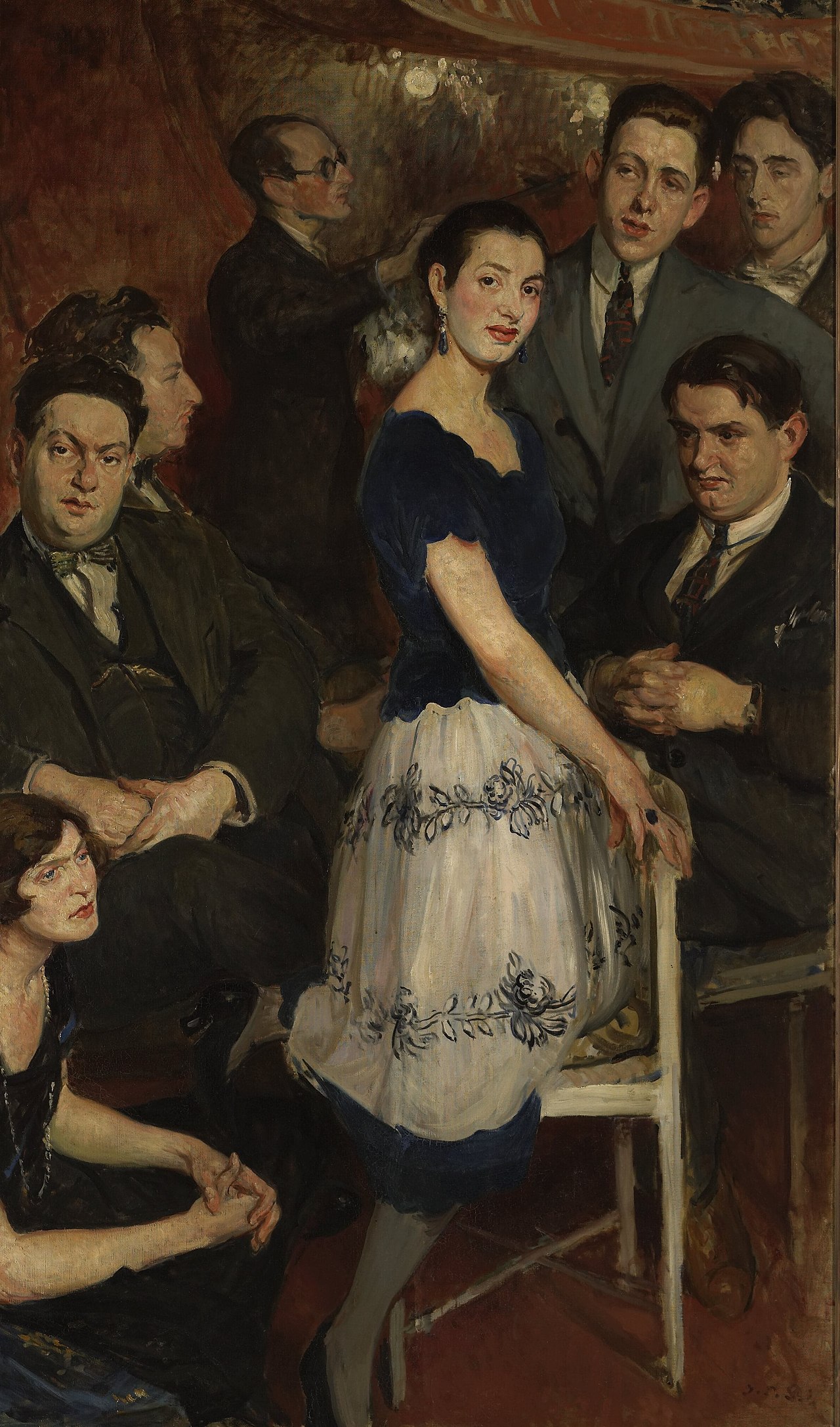
Illustration — Le Groupe des six, 1922, painting by Jacques-Émile Blanche. In this painting of eight people, only five of Les Six are represented; Louis Durey was not present. In the centre: pianist Marcelle Meyer.
Also recorded as Les Six · Groupe des 6
Groupe des Six
Jacques-Émile Blanche · Cropped from the file found here · Public domain
- Region
- France
VALÉORINE Encyclopedia
VALÉORINE documentary reading
Documentary summary
Illustration — Le Groupe des six, 1922, painting by Jacques-Émile Blanche. In this painting of eight people, only five of Les Six are represented; Louis Durey was not present. In the centre: pianist Marcelle Meyer.
Admitted source layer · organised and presented by VALÉORINE
Reference Check
Propose documentary evidence for Groupe des Six. A contribution is never written directly as fact: identity, source, rights and evidence gates still decide.
Sign in to contribute
World of VALÉORINE
Documentary connections
Only confirmed graph relationships appear here. Images are shown only when their identity and reuse rights both pass the documentary gate.
Documentary evidence
Documentary basis
Authority files
gnd · 3063642-5 · wikidata · Q841212
In this article
Les nouveaux jeunes
Les nouveaux jeunes
On the left, from bottom to top: Germaine Tailleferre, Darius Milhaud, Arthur Honegger, Jean Wiener. On the right, standing Francis Poulenc, Jean Cocteau; and seated Georges Auric. "Les Six" (lang) is a name given to a group of six composers, five of them French and one Swiss, who lived and worked in Montparnasse. The name has its origins in two 1920 articles by composer and critic Henri Collet in Comœdia (see Bibliography). Their music is often seen as a neoclassic reaction against both the musical style of Richard Wagner and the Impressionist music of Claude Debussy and Maurice Ravel. The members were Georges Auric (1899–1983), Louis Durey (1888–1979), Arthur Honegger (1892–1955), Darius Milhaud (1892–1974), Francis Poulenc (1899–1963), and Germaine Tailleferre (1892–1983).
In 1917, when many theatres and concert halls were closed because of World War I, Blaise Cendrars and the painter Moïse Kisling decided to put on concerts at 6 rue Huyghens, the studio of the painter Émile Lejeune (1885–1964). For the first of these events, the walls of the studio were decorated with canvases by Picasso, Matisse, Léger, Modigliani, and others. Music by Erik Satie, Honegger, Auric, and Durey was played. This concert gave Satie the idea of assembling a group of composers around himself to be known as Les nouveaux jeunes, forerunners of Les Six. Soon after, Honegger suggested that Milhaud should be a part of the group, and a famous Spanish pianist named Ricardo Viñes introduced Poulenc to the group. Later, Germaine Tailleferre was slowly incorporated into the group thus establishing the Les Six.
Les Six
Les Six
According to Milhaud: And according to Poulenc: But, that is only one reading of how the Groupe des Six originated. Other authors, like Ornella Volta, stressed the manoeuvrings of Jean Cocteau to become the leader of an avant-garde group devoted to music, like the cubist and surrealist groups which had sprung up in visual arts and literature shortly before, with Pablo Picasso, Guillaume Apollinaire, and André Breton as their key representatives. The fact that Satie had abandoned the Nouveaux jeunes less than a year after starting the group, was the "gift from heaven" that made it all come true for Cocteau: his 1918 publication, Le Coq et l'Arlequin, is said to have kicked it off. After World War I, Jean Cocteau and Les Six began to frequent a bar known as "La Gaya" which became Le Bœuf sur le toit (The Ox on the Roof) when the establishment moved to larger quarters. As the famous ballet by Milhaud had been conceived at the old premises, the new bar took on the name of Milhaud's ballet. On the renamed bar's opening night, pianist Jean Wiéner played tunes by George Gershwin and Vincent Youmans while Cocteau and Milhaud played percussion. Among those in attendance were impresario Serge Diaghilev, artist Pablo Picasso, filmmaker René Clair, singer Jane Bathori, and actor and singer Maurice Chevalier. Another frequent guest was the young American composer Virgil Thomson whose compositions in subsequent years were influenced by members of Les Six.
Collaborations
Collaborations
Although the group did not exist to work on compositions collaboratively, there were six occasions, spread over 36 years, on which at least some members of the group did work together on the same project. On only one of these occasions was the entire Groupe des Six involved; in some others, composers from outside the group also participated. Auric and Poulenc were involved in all six of these collaborations, Milhaud in five, Honegger and Tailleferre in three, but Durey in only one.
1920: L'Album des Six
1920: L'Album des Six
In 1920 the group published an album of piano pieces together, known as L'Album des Six. This was the only work in which all six composers collaborated. • Prélude (1919) – Auric • Romance sans paroles, Op. 21 (1919) – Durey • Sarabande, H 26 (1920) – Honegger • Mazurka (1914) – Milhaud • Valse in C, FP 17 (1919) – Poulenc • Pastorale, Enjoué (1919) – Tailleferre
1921: Les mariés de la tour Eiffel
1921: Les mariés de la tour Eiffel
In 1921, five of the members jointly composed the music for Cocteau's ballet Les mariés de la tour Eiffel, which was produced by the Ballets suédois, the rival to the Ballets Russes. Cocteau had originally proposed the project to Auric, but as Auric did not finish rapidly enough to fit into the rehearsal schedule, he then divided the work up among the other members of Les Six. Durey, who was not in Paris at the time, chose not to participate. The première was the occasion of a public scandal rivalling that of Le sacre du printemps in 1913. In spite of this, Les mariés de la tour Eiffel was in the repertoire of the Ballets suédois throughout the 1920s. • Overture (14 July) – Auric • Marche nuptiale – Milhaud • Discours du General (Polka) – Poulenc • La Baigneuse de Trouville – Poulenc • La Fugue du Massacre – Milhaud • La Valse des Depeches – Tailleferre • Marche funèbre – Honegger • Quadrille – Tailleferre • Ritournelles – Auric • Sortie de la Noce – Milhaud
1927: L'éventail de Jeanne
1927: L'éventail de Jeanne
In 1927, Auric, Milhaud and Poulenc, along with seven other composers who were not part of Les Six, jointly composed the children's ballet L'éventail de Jeanne. • Fanfare – Maurice Ravel • Marche – Pierre-Octave Ferroud • Valse – Jacques Ibert • Canarie – Alexis Roland-Manuel • Bourrée – Marcel Delannoy • Sarabande – Albert Roussel • Polka – Milhaud • Pastourelle – Poulenc • Rondeau – Auric • Finale: Kermesse-Valse – Florent Schmitt
1949: Mouvements du coeur
1949: Mouvements du coeur
In 1949, Auric, Milhaud and Poulenc, along with three other composers, jointly wrote Mouvements du coeur: Un hommage à la mémoire de Frédéric Chopin, 1810–1849, a suite of songs for baritone or bass and piano on words of Louise Lévêque de Vilmorin in commemoration of the centenary of the death of Frédéric Chopin. • Prélude – Henri Sauguet • Mazurka – Poulenc • Valse – Auric • Scherzo impromptu – Jean Françaix • Étude – Léo Preger • Ballade nocturne – Milhaud • Postlude: Polonaise – Henri Sauguet
1952: La Guirlande de Campra
1952: La Guirlande de Campra
In 1952, Auric, Honegger, Poulenc, Tailleferre and three other composers collaborated on an orchestral work called La Guirlande de Campra. • Toccata – Honegger • Sarabande et farandole – Daniel Lesur • Canarie – Alexis Roland-Manuel • Sarabande – Tailleferre • Matelote provençale – Poulenc • Variation – Henri Sauguet • Écossaise – Auric
1956: Variations sur le nom de Marguerite Long
1956: Variations sur le nom de Marguerite Long
In 1956, Auric, Milhaud, Poulenc and five other composers created an orchestral suite in honour of the pianist Marguerite Long, called Variations sur le nom de Marguerite Long • Hymne solennel – Jean Françaix • Variations en forme de Berceuse pour Marguerite Long – Henri Sauguet • La Couronne de Marguerites ("The Crown of Daisies"), Valse en forme de rondo – Milhaud • Nocturne – Jean Rivier • Sérénades – Henri Dutilleux • Intermezzo – Daniel Lesur • Bucolique, FP. 160 – Poulenc • ML (Allegro: Finale) – Auric
Selected music by individual members of Les Six
Selected music by individual members of Les Six
• Salade by Milhaud; premiered 1924 in a production of Count Etienne de Beaumont • La nouvelle Cythère by Tailleferre; written in 1929 for the Ballets Russes and unproduced because of Diaghilev's sudden death • Cinq bagatelles by Auric • Les biches, ballet (1922/23) by Poulenc • Le Bal Masqué, cantate profane sur des poèmes de Max Jacob (Baritone, ensemble) (1932) by Poulenc • Scaramouche by Milhaud • Le Bœuf sur le toit by Milhaud • Sonate pour violon seul by Honegger • Danse de la chèvre (Dance of the Goat) for solo flute by Honegger • Sonate champêtre for Oboe, Clarinet, Bassoon and Piano by Tailleferre
Places
Named by the record
Places
Only places the record itself states, plotted where the house gazetteer settles their coordinates. Nothing is inferred from a name or a nationality.
- France
Named but not plotted · 1
Groupe des Six is associated with France.
Country
Primary material
Documents and archives
authority file
- Gemeinsame Normdatei 3063642-5, Groupe des Six.
General reference · Deutsche Nationalbibliothek
institutional register
- Internet Archive holdings naming Groupe des Six
General reference · Internet Archive
authority record
- Wikidata, structured authority record Q841212: Groupe des Six
General reference · Wikidata
Literature
Literature
Literature
„Le Groupe des Six” in Berlin, Österreichische Musikzeitschrift, 1952.
La Musique et les arts dans la collaboration du Groupe des Six avec les Ballets Suédois (1920-1925)
Des compositeurs de musique viennent au cinéma: le « Groupe des Six », 1895, 2002
Le Groupe des Six et ses amis: 70e anniversaire, Notes, 1992
Jean Cocteau, Guillaume Apollinaire, Paul Claudel et le Groupe des Six: Rencontres poetico-musicales autour des melodies et des chansons (review), Notes, 2004
Scholarly footprint
Literature
Scholarly footprint
A count of publications is evidence of attention, not of standing, and is given here only as a measure.
Notes from the source article
Cited by Wikipedia
Notes from the source article
These works are cited by the source article, in its own numbering. They are recorded as its citations, not as sources VALÉORINE has verified.
- 1.Bialek, Mireille. Jacques-Émile Blanche et le Groupe des Six. La Gazette des Amis des Musées de Rouen et du Havre. 15. 7. December 2012.
- 2.Collet, Henri. La Musique chez soi (XII): Un livre de Rimsky et un livre de Cocteau – Les Cinq russes, les Six français, et Erik Satie. Comœdia. 2. 16 January 1920.
- 3.Collet, Henri. La Musique chez soi (XIII): "Les 'Six' français – Darius Milhaud, Louis Durey, Georges Auric, Arthur Honegger, Francis Poulenc et Germaine Tailleferre. Comœdia. 2. 23 January 1920.
- 4.Chang, Xuewei. Resonating Reflections: A Critical Review of Ethnosymbolic Dynamics in Les Six's Music Nationalism Movement. Arts. 13. 2. 75. April 22, 2024. 2076-0752.
- 5.Darius Milhaud, Notes Without Music: An Autobiography, translated by Donald Evans, New York: Alfred A. Knopf, 1953, p. 97.
- 6.Hurard-Viltard, Eveline. Jean Cocteau et la musique à travers "Le Coq et l'Arlequin". Revue de l’Université de Bruxelles. Université Libre de Bruxelles. 85ff. 1989.
- 7.Roger Stéphane, "Portrait souvenir de Jean Cocteau" (transcript of a French television interview in 1963 by the author and the subject) (Tallandier, 1964), pp. 63–67, .
- 8.Virgil Thomson: Virgil Thomson (New York: Library of America & Penguin Random House, 2016), , p. 135–136; Virgil Thomson and Le Boeuf sur le Toit on https://books.google.com
- 9.Alex Ross: The Rest is Noise. Listening to the Twentieth Century (New York: Picador, 2007), , p. 110; Virgil Thomas describes Le Boeuf sur le Toit on https://books.google.com
- 10.Lee Stacey & Lol Henderson (eds): Encyclopedia of Music in the 20th Century (New York: Routledge, 2013), p. 631; Virgil Thomson on Google Books
- 11.Encyclopedia Britannica Virgil Thomson on www.britannica.com.
- 12.Cocteau, Satie & Les Six
- 13.Carl B. Schmidt, The Music of Francis Poulenc (1899-1963): A Catalogue. Retrieved 17 May 2016
Bibliography printed in the source article · 11
- Jean Cocteau: Le Coq et l'Arlequin: Notes autour de la musique (Paris: Éditions de la Sirène, 1918).
- Henri Collet: "La Musique chez soi (XII): Un livre de Rimsky et un livre de Cocteau – Les Cinq russes, les Six français, et Erik Satie", in: Comœdia, 16 January 1920, p. 2.
- Henri Collet: "La Musique chez soi (XIII): "Les 'Six' français – Darius Milhaud, Louis Durey, Georges Auric, Arthur Honegger, Francis Poulenc et Germaine Tailleferre", in: Comœdia, 23 January 1920, p. 2.
- Eveline Hurard-Viltard: Le Groupe des Six ou le matin d’un jour de fête. (Paris: Méridiens Klincksieck, 1987) .
- Fondation Erik Satie (ed.): Le Groupe des Six et ses amis: 70e anniversaire (Paris: Placard, 1990), .
- Ornella Volta: Satie/Cocteau. Les Malentendus d'une entente (Bègles: Le Castor Astral, 1993), .
- Benjamin Ivry: Francis Poulenc (London: Phaidon Press, 1996), .
- Roger Nichols: The Harlequin Years: Music in Paris 1917–1929 (London: Thames & Hudson, 2002), .
- Robert Shapiro: Les Six: The French Composers and their Mentors Jean Cocteau and Erik Satie (London/Chicago: Peter Owen, 2011), .
- Jane F. Fulcher: The Composer as Intellectual. Music and Ideology in France, 1914–1940 (New York: Oxford University Press, 2005).
- Barbara L. Kelly: Music and Ultra-Modernism in France, a Fragile Consensus, 1913–1939 (Woodbridge: Boydell Press, 2013).
References
Citations
References
Each reference names the institution holding it, so a reader may go to the document itself.
authority file
Gemeinsame Normdatei 3063642-5, Groupe des Six.Deutsche Nationalbibliothek
Secondary witnessinstitutional register
Internet Archive holdings naming Groupe des SixInternet Archive
Secondary witnessauthority record
General reference
The Encyclopedia exists whether or not anything is for sale. Corrections are recorded rather than overwritten, and every version of this record is kept. Published 16 August 2026.
Elsewhere in Terminology
620 published records in this field, each with its sources named.
- Gong'an schoolMovement
- Gothic artMovement
- Greek academic art of the 19th centuryMovement
- Groupe de Recherche d’Art VisuelMovement
- Grupo MontparnasseMovement
- Gustavian styleMovement
- Hague SchoolMovement
- hallucinatory realismMovement
Best supported in this field
For owners
Own an object connected with Groupe des Six?
A specialist will read what you send and tell you what the house can establish, what it cannot, and whether the object is suited to sale. There is no charge and no obligation. The object stays with you throughout; nothing is shipped to us unless it is arranged in writing beforehand.