
François Lemoyne
François Lemoyne or François Le Moine (1688 – 4 June 1737) was a French rococo painter. He was a winner of the Prix de Rome, professor of the Académie royale de peinture et de sculpture, and Premier peintre du Roi to Louis XV. He was tutor to Charles-Joseph Natoire and François Boucher. Throughout his career, Lemoyne sought to be seen as the heir to Charles Le Brun and the leading painter of his generation, titles also vied for by his rival Jean-François de Troy (1679–1752).
Also recorded as François Le Moyne · Francois Lemoyne · Francois Le Moyne · François De Maine
François Lemoyne
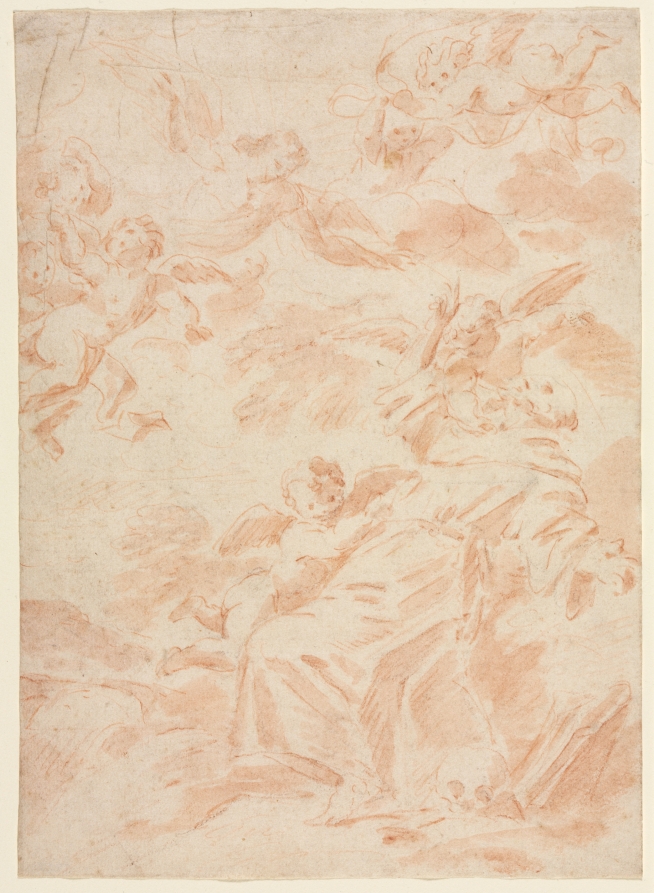
François Lemoyne · The Cleveland Museum of Art · The Norweb Collection · CC0
- Name
- François Lemoyne
- Born
- 1688
- Birthplace
- Paris, France
- Died
- 4 June 1737
- Field
- Painting
- Training
- Académie de peinture et de sculpture
- Movement
- Rococo
- Nationality
- France.
- Occupation
- painter, lecturer, lawyer and teacher.
- Fields
- painting and pedagogue.
- Movements
- Rococo.
- Education
- Académie royale de peinture et de sculpture.
VALÉORINE Encyclopedia
VALÉORINE documentary reading
Documentary summary
François Lemoyne or François Le Moine (1688 – 4 June 1737) was a French rococo painter. He was a winner of the Prix de Rome, professor of the Académie royale de peinture et de sculpture, and Premier peintre du Roi to Louis XV. He was tutor to Charles-Joseph Natoire and François Boucher. Throughout his career, Lemoyne sought to be seen as the heir to Charles Le Brun and the leading painter of his generation, titles also vied for by his rival Jean-François de Troy (1679–1752).
Admitted source layer · organised and presented by VALÉORINE
Reference Check
Propose documentary evidence for François Lemoyne. A contribution is never written directly as fact: identity, source, rights and evidence gates still decide.
Sign in to contribute
World of VALÉORINE
Documentary connections
Only confirmed graph relationships appear here. Images are shown only when their identity and reuse rights both pass the documentary gate.

Documentary evidence
Documentary basis
Authority files
wikidata · Q732468 · wikipedia · François Lemoyne
In this article
Biography
Biography
Lemoyne's work and talent, notably plied in Versailles, earned him the esteem of his contemporaries and the name of the "new Le Brun". He collaborated with or worked alongside other artists of the era, including Donat Nonnotte, Gilles Dutilleul, Charles de La Fosse, and Coypel. He killed himself in 1737, at the height of his career.
François Lemoyne studied at Académie royale de peinture et de sculpture. Training under Louis Galloche is recorded. Charles-Joseph Natoire, Charles-Michel-Ange Challe and Donat Nonnotte are recorded as having studied under François Lemoyne. The recorded working language is French. The field of work recorded is painting and pedagogue. Subjects and genres recorded for the work are history. Places of work recorded in the authority are Paris and Montreal. Positions recorded include Premier peintre du Roi. Work by François Lemoyne is recorded in the collections of Städel Museum, Nationalmuseum, Palace of Versailles, Museum of Fine Arts of Nancy and Philadelphia Museum of Art. Distinctions recorded are Prix de Rome.
Key facts
Key facts
• Name — François Lemoyne • Born — 1688 • Birthplace — Paris, France • Died — 4 June 1737 • Field — Painting • Training — Académie de peinture et de sculpture • Movement — Rococo • Illustration — Venus and Adonis, 1729, Nationalmuseum • Illustration — Time Saving Truth from Falsehood and Envy (1737) Completed on the day before the artist's suicide.
Biography
Biography
Lemoyne was born in Paris in 1688 and studied under Louis Galloche until 1713. In 1711, Lemoyne won the Prix de Rome and travelled to Italy to continue his studies. After his return to Paris, Lemoyne was accepted as a full member of the Académie de peinture et de sculpture in 1718 and later elected as a professor in 1733. In 1723, Lemoyne returned to Italy for a second trip. In 1727, the duc d'Antin (Louis-Antoine de Pardaillan de Grondin), serving as the director of the Bâtiments du Roi, held an art competition in the hopes of reviving history painting among members of the Académie. Only one Salon had been held since 1704 (in 1725), so this offered a rare opportunity for public exhibition of paintings. Twelve paintings were submitted in all, by artists including Charles-Antoine Coypel and Noel-Nicholas Coypel. Opinion was widely divided, with critical opinion favoring the paintings by the two Coypels, but in the end the first place prize of 5,000 livres was jointly awarded to Lemoyne and de Troy, a compromise which frustrated them both. In 1728, Lemoyne was awarded a royal commission to paint the ceiling of the Salon d’Hercule at Versailles, which he worked on from 1733 to 1736. He had seen similar paintings in Italy (such as Pietro da Cortona’s in the Palazzo Barberini), and sought to prove that the French could excel at à ciel ouvert as much as the Italians. When the work was complete, he received "unanimous praise," including accolades from Voltaire and Cardinal Fleury. His career was at its peak in 1736, when he was appointed Premier peintre du Roi. The following year, 1737, Lemoyne committed suicide in Paris. The reasons for this are not known, though excess of work, court intrigue at Versailles, the death of his wife, temperamental instability, and frustration at his inability to attain artistic perfection have been submitted. He chose death by sword, stabbing himself a total of nine times in the chest and throat. This was six months after finishing the ceiling painting "L'apothéose d'Hercule" in the Salon d'Hercule in the grand appartement du roi, and the day after completing the painting Time Saving Truth from Falsehood and Envy for his friend and patron François Berger. Lemoyne has been characterized by David Wakefield as "industrious, painstaking and serious."
Style
Style
Lemoyne's early studies in Rome instilled in him knowledge of the works of the Old Masters, Raphael, Correggio, and Titian, though his strongest influence was undoubtedly Rubens (particularly in his use of color). During his second trip in 1723, Lemoyne admired the ceiling of the Palazzo Barberini and found inspiration in the works of the Venetians, particularly Paolo Veronese. Over the course of his career, Lemoyne's style shifted more in favor of the Italian influence. Pierre Rosenberg describes Lemoyne's style as "refined and introverted." Philip Conisbee refers to Lemoyne's paintings as having a "sensuous beauty" similar to works by Correggio.
Works
Works
• Ruth and Booz (1711), the painting he won the Prix de Rome with. • St Jean dans le Désert, in Nantes Cathedral. • Hercules and Cacus (1718) • Tancred Surrendering Arms to Clorinda (1722), commissioned by Berger. • Perseus and Andromeda (1723), currently at the Wallace Collection, London. • Hercules and Omphale (1724), currently in the Louvre, Paris. • Continence of Scipio (1727), the painting he displayed at the 1727 competition. • Louis XV donnant la Paix à l'Europe, Salon de la Paix in Versailles (1727) • The Annunciation (1727), at Winchester College, previously on loan to the National Gallery • Narcissus (1728) • Venus and Adonis (1729) • Ceiling of the Salon d'Hercule in Versailles (1736) • Arch of the Church of Saint-Thomas-d'Aquin in Paris • Diane chasseresse • Les Nymphes • He also worked at Saint-Sulpice and at the Abbey of Saint-Germain-des-Prés • Time Saving Truth from Falsehood and Envy (1737), currently at the Wallace Collection, London.
Life and career
Dated record
Life and career
Explore 1688–1737
The full dated record · 3 entries
1688
François Lemoyne born at Paris.
1726
Continence of Scipio by François Lemoyne (Museum of Fine Arts of Nancy).
1737
François Lemoyne died at Paris.
References
Citations
References
Each reference names the institution holding it, so a reader may go to the document itself.
reference work
Wikidata, structured authority record Q732468: François LemoyneWikimedia Foundation
Secondary witnessreference work
Secondary witness
People, houses and institutions
Knowledge graph
People, houses and institutions
Teachers, collaborators, publishers and institutions recorded against this person, each on a stated basis.
Further particulars
Held on the record
Further particulars
Open the remaining particulars
François Lemoyne studied at Académie royale de peinture et de sculpture. He trained under Louis Galloche. Each of those relationships is stated by the authority record rather than inferred from style.
The authorities additionally record the headings François Le Moyne, Francois Lemoyne, Francois Le Moyne, François De Maine and François LeMoyne. His recorded language was French. Lemoyne worked in painting and pedagogue. His work is associated with Rococo. Recorded position is Premier peintre du Roi. He belonged to Faculté de droit de l'Université de Montréal. He worked at Paris and Montreal. Lemoyne received Prix de Rome.
Identity and origins
Career and activity
Recognition and collections
Work by François Lemoyne is
Städel Museum, Nationalmuseum, Palace of Versailles and Museum of Fine Arts of Nancy
The Encyclopedia exists whether or not anything is for sale. Corrections are recorded rather than overwritten, and every version of this record is kept. Published 14 August 2026.
Elsewhere in Paintings
18,717 published records in this field, each with its sources named.
- François Joseph HeimArtist
- François KinsonArtist
- François Langlois dit ChartresArtist
- François LanziArtist
- François Martin-KavelArtist
- François MulardArtist
- François MusinArtist
- François NardiArtist
Best supported in this field
For owners
Own a work by François Lemoyne?
A specialist will read what you send and tell you what the house can establish, what it cannot, and whether the object is suited to sale. There is no charge and no obligation. The object stays with you throughout; nothing is shipped to us unless it is arranged in writing beforehand.