
Francesco Xanto Avelli
Francesco Xanto Avelli (Rovigo, c. 1487? – c. 1542?) was an Italian ceramicist.
Also recorded as Francesco Xanto-Avelli · Rovigo da Urbino Fra Xanto · Rovigo da Urbino) · Francesco Xanto Avelli da Rovigo
Francesco Xanto Avelli

James Grantham Turner · "Eros Visible: Art, Sexuality and Antiquity in Renaissance Italy" New Haven: Yale University Press 2017 · Public domain
- Field
- maiolica
- Born
- 1480 · Rovigo.
- Died
- 1540 · Urbino.
- Nationality
- Italy
- Occupation
- ceramicist · painter · artist · poet · faience maker
- Fields
- maiolica · ceramic · poetry
- Known for
- Maiolica by Francesco Xanto Avelli
VALÉORINE Encyclopedia
VALÉORINE documentary reading
Documentary summary
Francesco Xanto Avelli (Rovigo, c. 1487? – c. 1542?) was an Italian ceramicist.
Admitted source layer · organised and presented by VALÉORINE
Reference Check
Propose documentary evidence for Francesco Xanto Avelli. A contribution is never written directly as fact: identity, source, rights and evidence gates still decide.
Sign in to contribute
World of VALÉORINE
Documentary connections
Only confirmed graph relationships appear here. Images are shown only when their identity and reuse rights both pass the documentary gate.
Documentary evidence
Documentary basis
Authority files
wikidata · Q1643071 · wikipedia · Francesco Xanto Avelli
In this article
Biography
Biography
He is best known for his painted maiolica works.
The field of work recorded is maiolica, ceramic and poetry. Places of work recorded in the authority are Urbino. Works named in the authority record are Maiolica by Francesco Xanto Avelli. Work by Francesco Xanto Avelli is recorded in the collections of Art Institute of Chicago, J. Paul Getty Museum, National Gallery of Victoria, Metropolitan Museum of Art and Cleveland Museum of Art.
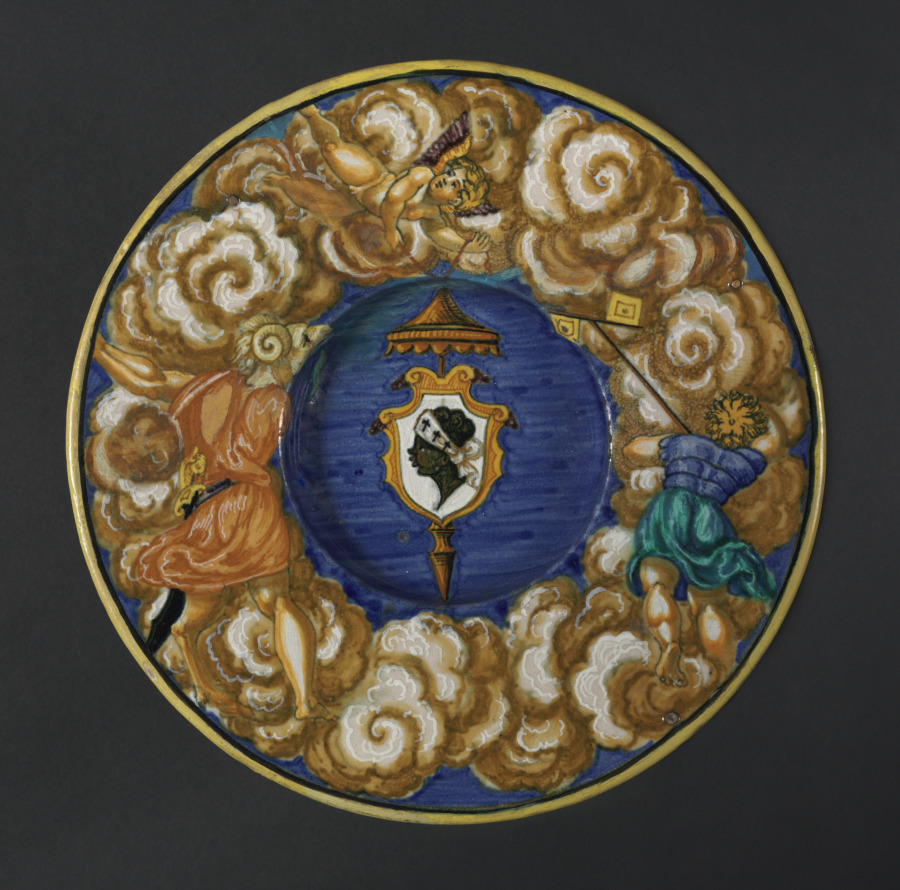
Plate with the Arms of the Pucci Family, 1532, by Francesco Xanto Avelli
Francesco Xanto Avelli · The Cleveland Museum of Art · Bequest of John L. Severance
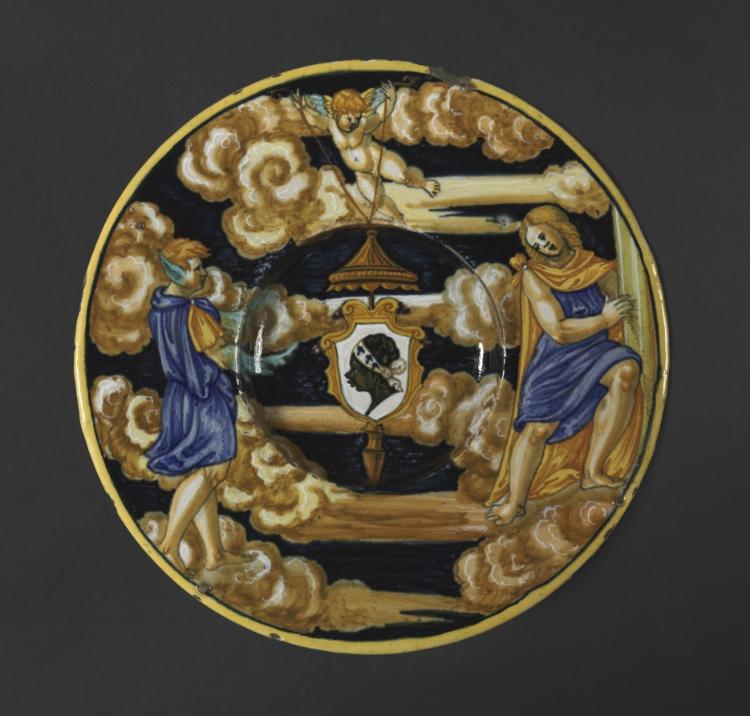
Plate with Arms of the Pucci Family, 1532, by Francesco Xanto Avelli
Francesco Xanto Avelli · The Cleveland Museum of Art · Bequest of John L. Severance
Key facts
Key facts
• Field — maiolica • Illustration — Francesco Xanto Avelli, "Broad-rimmed bowl with Neptune raping Theophane; arms of Pucci with an 'ombrellino'", 1532
Life
Life
Xanto Avelli was born in Rovigo, in the Veneto, sometime in the late 1480s. Nothing at all is known of his origins, his teaching, or his early years; he is first recorded as working in Urbino in 1530, when he is mentioned in a notarial document describing attempts by a group of pottery workers, or interlaboratores artis figuli, to form an early trade union for the purpose of raising wages. 1530 is also the date on his earliest signed piece, a plate commemorating the coming new year. It is signed.f.X.A.R., and is further marked î Urbino. At around this time Xanto married a woman called Finalissa, also in Urbino. Over the five years following he produced a large body of work; each piece was signed in various manners, and was dated and marked as a product of Urbino. Such consistency in signing his work was unusual at the time; there is some suggestion that the artist was blacklisted after the labor troubles of 1530, and that his choice to sign his works might be in some way related to his difficulties. After 1535, Xanto seems to have become less prolific; his works, if signed, are marked in more cursory fashion. He also had a number of associates and followers working with him regularly, basing their style on his. The last documentary record of him comes in 1541, when he is known to have taken on two assistants; that year he also initialed a piece from the workshop of Francesco de Silvano. What later became of him is unknown.
Work
Work
It is not certain whether or not any of Xanto's earlier work has survived, as no unambiguously signed works bearing his signature have been found dating earlier than 1530. General scholarly opinion holds that a number of works dating back to 1524 are also by his hand. No tangible evidence exists suggesting their point of origin, although both Faenza and Urbino have been proposed by historians. Xanto's signed works all date from between 1530 and 1542. Each bears his name and the date of the piece; many also were given ambitious tags explaining their meanings. The surviving pieces appear to be similar in nature, with the exception of the signatures, to most other maiolica ware produced in Urbino at the time. Xanto signed his works with a number of different variants of his own name; besides those with his full name, pieces signed fra Xanto in his hand are known to exist. Besides being a ceramicist, Xanto was also a poet; in the 1530s he wrote a sequence of sonnets in praise of Francesco Maria I della Rovere, then duke of Urbino. An elegant fair copy survives in the Vatican Library.
Places
Named by the record
Places
Only places the record itself states, plotted where the house gazetteer settles their coordinates. Nothing is inferred from a name or a nationality.
Rovigo.
Birth place
Urbino.
Death place
Primary material
Documents and archives
authority record
- Wikidata, structured authority record Q1643071: Francesco Xanto Avelli
General reference · Wikidata
reference work
- “Francesco Xanto Avelli”, English Wikipedia, consulted as further reading
Reputable secondary · Wikipedia
Notes from the source article
Cited by Wikipedia
Notes from the source article
These works are cited by the source article, in its own numbering. They are recorded as its citations, not as sources VALÉORINE has verified.
- 1.These dates are put forth in the biography provided by the J. Paul Getty Museum; they appear, however, to be highly conjectural.
References
Citations
References
Each reference names the institution holding it, so a reader may go to the document itself.
authority record
Secondary witnessreference work
Secondary witness
The Encyclopedia exists whether or not anything is for sale. Corrections are recorded rather than overwritten, and every version of this record is kept. Published 16 August 2026.
Elsewhere in Ceramics
1,104 published records in this field, each with its sources named.
- Frances SerberArtist
- Francesco Antonio Xaverio GrueArtist
- Francesco GrueArtist
- Francesco NagarArtist
- Francis PlaceArtist
- Francisco BrennandArtist
- Franco GentiliniArtist
- Frank de MirandaArtist
Best supported in this field
For owners
Own a work by Francesco Xanto Avelli?
A specialist will read what you send and tell you what the house can establish, what it cannot, and whether the object is suited to sale. There is no charge and no obligation. The object stays with you throughout; nothing is shipped to us unless it is arranged in writing beforehand.