
Eugenio Montale
Eugenio Montale (lang; 12 October 1896 – 12 September 1981) was an Italian poet, prose writer, editor and translator. In 1975, he was awarded the Nobel Prize in Literature "for his distinctive poetry which, with great artistic sensitivity, has interpreted human values under the sign of an outlook on life with no illusions."
Eugenio Montale

Kaj Hagman. · Undated clipping from Vasabladet. The caption says the picture was taken in 1965. · Public domain
- Name
- Eugenio Montale
- Born
- 12 October 1896
- Birthplace
- Genoa, Kingdom of Italy
- Died
- 12 September 1981
- Place of death
- Milan, Italy
- Occupation
- Poet, writer, editor, translator, politician
- Nationality
- Italy · Kingdom of Italy
- Known for
- Ossi di seppia · Le occasioni · La bufera e altro · Satura · Xenia · Dinard butterfly · Auto da fé
- Honours
- Nobel Prize in Literature · Grand Officer of the Order of Merit of the Italian Republic · Knight Grand Cross of the Order of Merit of the Italian Republic · Golden Wreath · honorary doctorate from the University of Nice-Sophia Antipolis · Feltrinelli Prize
- Languages
- Italian
VALÉORINE Encyclopedia
VALÉORINE documentary reading
Documentary summary
Eugenio Montale (lang; 12 October 1896 – 12 September 1981) was an Italian poet, prose writer, editor and translator. In 1975, he was awarded the Nobel Prize in Literature "for his distinctive poetry which, with great artistic sensitivity, has interpreted human values under the sign of an outlook on life with no illusions."
Admitted source layer · organised and presented by VALÉORINE
Reference Check
Propose documentary evidence for Eugenio Montale. A contribution is never written directly as fact: identity, source, rights and evidence gates still decide.
Sign in to contribute
World of VALÉORINE
Documentary connections
Only confirmed graph relationships appear here. Images are shown only when their identity and reuse rights both pass the documentary gate.

Documentary evidence
Documentary basis
Authority files
wikidata · Q83174 · wikipedia · Eugenio Montale
In this article
Biography
Biography
The recorded working language is Italian. Places of work recorded in the authority are Rome. Employment is recorded with Gabinetto Vieusseux. Positions recorded include Italian senator for life. Works named in the authority record are Ossi di seppia, Le occasioni, La bufera e altro, Satura, Xenia and Dinard butterfly. Distinctions recorded are Nobel Prize in Literature, Grand Officer of the Order of Merit of the Italian Republic, Knight Grand Cross of the Order of Merit of the Italian Republic and Golden Wreath.
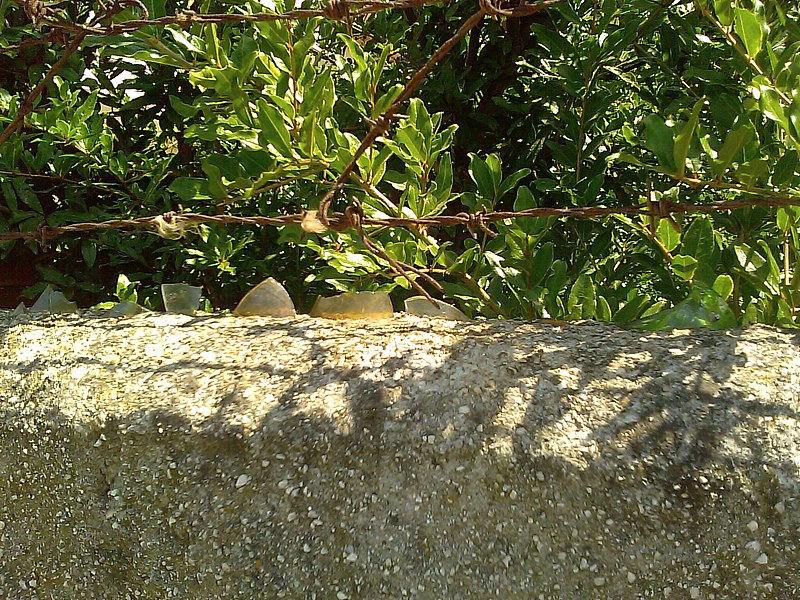
... a sun-blazed garden wall... with jagged glass set along its rim.
Paulox

Firenze, vari siti (vedi filename e categorie)
Sailko
Key facts
Key facts
• Honorific Prefix — Senator for life • Name — Eugenio Montale • Office — Member of the Senate of the Republic • Term Label — Life tenure • President — Giuseppe Saragat • Term Start — 13 June 1967 • Term End — 12 September 1981 • Born — 12 October 1896 • Birthplace — Genoa, Kingdom of Italy • Died — 12 September 1981 • Place of death — Milan, Italy • Party — Action Party (1945–1947) Independent (1963–1972; 1976–1977) Italian Liberal Party (1972–1976) Italian Republican Party (1977–1981) • Occupation — Poet, writer, editor, translator, politician
Early years
Early years
Montale was born in Genoa, the son of Giuseppina Ricci and Domenico Montale, a businessman who ran a chemical products company. Montale was the youngest of six children, including five brothers and a sister. Montale attended elementary school in Genoa. The Montale family spent their summers at their villa in Monterosso al Mare, and the landscapes of the Ligurian region would go on to inspire his poetry. In 1911, he was enrolled at a technical college and graduated with a diploma in accountancy in 1915. In the same year, he began taking music lessons with baritone Ernesto Sivori. However, his time as an infantryman in World War I and the death of Sivori in 1923 caused him to abandon his career in music and turn to poetry instead. Montale was largely self-taught. Growing up, his imagination was caught by several writers, including Dante Alighieri, and by the study of foreign languages (especially English).
Poetic works
Poetic works
Montale wrote more than ten anthologies of short lyrics, a journal of poetry translation, plus several books of prose translations, two books of literary criticism, and one of fantasy prose. Alongside his imaginative work he was a constant contributor to Italy's most important newspaper, the Corriere della Sera, for which he wrote a huge number of articles on literature, music, and art. He also wrote a foreword to Dante's "The Divine Comedy", in which he mentions the credibility of Dante, and his insight and unbiased imagination. In 1925 he was a signatory to the Manifesto of the Anti-Fascist Intellectuals. Montale's own politics inclined toward the liberalism of Piero Gobetti and Benedetto Croce. He contributed to Gobetti's literary magazine Il Baretti. Montale's work, especially his first poetry collection Ossi di seppia ("Cuttlefish Bones"), which appeared in 1925, shows him as an antifascist who felt detached from contemporary life and found solace and refuge in the solitude of nature.
Anticonformism of the new poetry
Anticonformism of the new poetry
Montale moved to Florence in 1927 to work as an editor for the publisher Bemporad. Florence was the cradle of Italian poetry of that age, with works like the Canti orfici by Dino Campana (1914) and the first lyrics by Ungaretti for the review Lacerba. Other poets like Umberto Saba and Vincenzo Cardarelli had been highly praised. In 1929 Montale was asked to be chairman of the Gabinetto Vieusseux Library, a post from which he was expelled in 1938 by the fascist government. By this time Montale's poetry was a reaction against the literary style of the fascist regime. He collaborated with the magazine Solaria, and (starting in 1927) frequented the literary café Le Giubbe Rosse ("Red Jackets") on the Piazza Vittoria (now Piazza della Repubblica). Visiting the café often several times a day, he became a central figure among a group of writers there, including Carlo Emilio Gadda, Arturo Loria and Elio Vittorini (all founders of the magazine). He wrote for almost all the important literary magazines of the time. Though hindered by financial problems and the literary and social conformism imposed by the authorities, in Florence, Montale published his finest anthology, Le occasioni ("Occasions", 1939). From 1933 to 1938 he had a love relationship with Irma Brandeis, a Jewish-American scholar of Dante who occasionally visited Italy for short periods. After falling in love with Brandeis, Montale represented her as a mediatrix figure like Dante's Beatrice. Le occasioni contains numerous allusions to Brandeis, here called Clizia (a senhal). Franco Fortini judged Montale's Ossi di seppia and Le occasioni the high-water mark of 20th century Italian poetry. T.S. Eliot, who shared Montale's admiration for Dante, was an important influence on his poetry at this time; in fact, the new poems of Eliot were shown to Montale by Mario Praz, then teaching in Manchester. The concept of the objective correlative used by Montale in his poetry, was probably influenced by T. S. Eliot. In 1948, for Eliot's sixtieth birthday, Montale contributed a celebratory essay titled "Eliot and Ourselves" to a collection published to mark the occasion.
Disharmony with the world
Disharmony with the world
From 1948 to his death, Montale lived in Milan. After the war, he was a member of the liberal Partito d'Azione. As a contributor to the Corriere della Sera he was music editor and also reported from abroad, including Israel, where he went as a reporter to follow Pope Paul VI's visit there. His works as a journalist are collected in Fuori di casa ("Out of Home", 1969). La bufera e altro ("The Storm and Other Things") was published in 1956 and marks the end of Montale's most acclaimed poetry. Here his figure Clizia is joined by La Volpe ("the Fox"), based on the young poet Maria Luisa Spaziani with whom Montale had an affair during the 1950s. However, this volume also features Clizia, treated in a variety of poems as a kind of bird-goddess who defies Hitler. These are some of his greatest poems. His later works are Xenia (1966), Satura (1971) and Diario del '71 e del '72 (1973). Montale's later poetry is wry and ironic, musing on the critical reaction to his earlier work and on the constantly changing world around him. Satura contains a poignant elegy to his wife Drusilla Tanzi. He also wrote a series of poignant poems about Clizia shortly before his death. Montale's fame at that point had extended throughout the world. He had received honorary degrees from the Universities of Milan (1961), Cambridge (1967), Rome (1974), and had been named Senator-for-Life in the Italian Senate. In 1973 he was awarded the Golden Wreath of the Struga Poetry Evenings in Struga, SR Macedonia. In 1975 he received the Nobel Prize for Literature. Montale died in Milan in 1981. In 1996, a work appeared called Posthumous Diary (Diario postumo) that purported to have been 'compiled' by Montale before his death, with the help of the young poet Annalisa Cima; the critic Dante Isella thinks that this work is not authentic. Joseph Brodsky dedicated his essay "In the Shadow of Dante" to Eugenio Montale's lyric poetry.
List of works
List of works
Each year links to its corresponding "[year] in literature" or "[year] in poetry" article: • 1925: Ossi di seppia ("Cuttlefish Bones"), first edition; second edition, 1928, with six new poems and an introduction by Alfredo Gargiulo; third edition, 1931, Lanciano: Carabba • 1932: La casa dei doganieri e altre poesie, a chapbook of five poems published in association with the award of the Premio del Antico Fattore to Montale; Florence: Vallecchi • 1939: Le occasioni ("The Occasions"), Turin: Einaudi • 1943: Finisterre, a chapbook of poetry, smuggled into Switzerland by Gianfranco Contini; Lugano: the Collana di Lugano (24 June); second edition, 1945, Florence: Barbèra • 1948: Quaderno di traduzioni, translations, Milan: Edizioni della Meridiana • 1948: La fiera letteraria poetry criticism • 1956: La bufera e altro ("The Storm and Other Things"), a first edition of 1,000 copies, Venice: Neri Pozza; second, larger edition published in 1957, Milan: Arnaldo Mondadore Editore • 1956: Farfalla di Dinard, stories, a private edition • 1962: Satura, poetry, published in a private edition, Verona: Oficina Bodoni • 1962: Accordi e pastelli ("Agreements and Pastels"), Milan: Scheiwiller (May) • 1966: Il colpevole • 1966: Auto da fé: Cronache in due tempi, cultural criticism, Milan: Il Saggiatore • 1966: Xenia, poems in memory of Mosca, first published in a private edition of 50 • 1969: Fuori di casa, collected travel writing • 1971: Satura (1962–1970) (January) • 1971: La poesia non esiste, prose; Milan: Scheiwiller (February) • 1973: Diario del '71 e del '72, Milan: Arnoldo Mondadori Editore (a private edition of 100 copies was published in 1971) • 1973: Trentadue variazioni, an edition of 250 copies, Milan: Giorgio Lucini • 1977: Quaderno di quattro anni, Milan: Mondadori • 1977: Tutte le poesie, Milan: Mondadori • 1980: L'opera in versi, the Bettarini-Contini edition; published in 1981 as Altri verse e poesie disperse, publisher: Mondadori • Translated in Montale's lifetime • 1966: Ossi di seppia, Le occasioni, and La bufera e altro, translated by Patrice Angelini into French; Paris: Gallimard • 1978: The Storm & Other Poems, translated by Charles Wright into English (Oberlin College Press), • Posthumous • 1981: Prime alla Scala, music criticism, edited by Gianfranca Lavezzi; Milan: Mondadori • 1981: Lettere a Quasimodo, edited by Sebastiano Grasso; publisher: Bompiani • 1982: The Second Life of Art: Selected Essays, trans. Jonathan Galassi (Ecco), • 1983: Quaderno genovese, edited by Laura Barile; a journal from 1917, first published this year; Milan: Mondadori • 1987: Trans. William Arrowsmith, The Occasions (Norton, New York & London). • 1990: The Coastguard's House / La casa dei doganieri: Selected Poems (Bloodaxe Books, Newcastle-upon-Tyne). • 1991: Tutte le poesie, edited by Giorgio Zampa. Jonathan Galassi calls this book the "most comprehensive edition of Montale's poems". • 1996: Diario postumo: 66 poesie e altre, edited by Annalisa Cima; Milan: Mondadori • 1996: Il secondo mestiere: Arte, musica, società and Il secondo mestierre: Prose 1929–1979, a two-volume edition including all of Montale's published writings; edited by Giorgio Zampa; Milan: Mondadori • 1998: Satura: 1962–1970 / trans. with notes, by William Arrowsmith (New York, Norton). • 1999: Collected Poems, trans. Jonathan Galassi (Carcanet) (Oxford-Weidenfeld Translation Prize) • 2004: Selected Poems, trans. Jonathan Galassi, Charles Wright, & David Young (Oberlin College Press), • 2016: Xenia (Arc Publications). pbk; hbk; e-book:. Bilingual version, translated by Mario Petrucci, winner of the 2016 PEN Translates Award, shortlisted for 2018 John Florio Prize. • 2017: Montale's Essential: The Poems of Eugenio Montale in English, translated by Alessandro Baruffi (Literary Joint Press),
Work and production
Work and production
Works recorded as notable number 7: Ossi di seppia, Le occasioni, La bufera e altro, Satura, Xenia, Dinard butterfly and Auto da fé.
Identity
Identity
Eugenio Montale is recorded as having received Nobel Prize in Literature, Grand Officer of the Order of Merit of the Italian Republic and Knight Grand Cross of the Order of Merit of the Italian Republic.
Life and career
Dated record
Life and career
The full dated record · 2 entries
1896
Eugenio Montale born at Genoa.
1981
Eugenio Montale died at Milan.
Places
Named by the record
Places
Only places the record itself states, plotted where the house gazetteer settles their coordinates. Nothing is inferred from a name or a nationality.
Genoa.
Birth place
Milan.
Death place
Where the work is held
Recognition and collections
Eugenio Montale received Nobel Prize in Literature, Grand Officer of the Order of Merit of the Italian Republic, Knight Grand Cross of the Order of Merit of the Italian Republic, Golden Wreath, honorary doctorate from the University of Nice-Sophia Antipolis and Feltrinelli Prize.
Notes from the source article
Cited by Wikipedia
Notes from the source article
These works are cited by the source article, in its own numbering. They are recorded as its citations, not as sources VALÉORINE has verified.
- 1.Nobel Prize.
- 2.Montale, Eugenio. Tutte Le Poesie. Mondadori. 64. 2023. 9788835723509.
- 3.Gazzola, Giuseppe. Montale, the Modernist. Casa Editrice Leo S. Olschki s.r.l. 1–14. 2016.
- 4.Villa Montale in Monterosso.
- 5.Eugenio Montale – Facts. NobelPrize.org.
- 6.Eugenio Montale. Poetry Foundation.
- 7.Sarti, Roland. Italy: A Reference Guide from the Renaissance to the Present. Infobase Publishing. 417. 2009.
- 8.Ceallachain, Eanna. Eugenio Montale: The Poetry of the Later Years. Routledge. 2017.
- 9.Ersilia Alessandrone Perona. The Anti-Fascism of a "Liberal Revolutionary": Piero Gobetti (1901–1926). Totalitarismus und Demokratie. 18. 86. 2021. 10.13109/tode.2021.18.1.73.
- 10.Eco, Umberto. Ur-Fascism. The New York Review of Books. 22 June 1995.
- 11.Eugenio Montale, Collected Poems 1920–1954, translated and edited by Jonathan Galassi, New York: Farrar, Straus and Giroux, 1998,
- 12.Montale 1948, pp. 190–195.
- 13.Cambon, Glauco. Eugenio Montale's Poetry: A Dream in Reason's Presence. Princeton University Press. 189. 2014.
- 14.Eugenio Montale | Струшки вечери на поезијата.
- 15.Article of G. Raboni on Corriere della Sera (archiviostorico.corriere.it)
- 16.Tesio, Giovanni. Raffaele Baldini: La felicità di vivere in un mondo strambo. La Stampa. 5. 2 April 1998.
Bibliography printed in the source article · 2
- Montale, Eugenio. "Eliot and Ourselves." In T. S. Eliot: A Symposium, edited by Richard March and Meary James Thurairajah Tambimuttu, 190–195. London: Editions Poetry London, 1948.
- Pietro Montorfani, "'Il sogno del prigioniero': testo e parafrasi", in Sacra doctrina, (55) 2010, pp. 185–196.
References
Citations
References
Each reference names the institution holding it, so a reader may go to the document itself.
reference work
Secondary witnessreference work
Secondary witness
The Encyclopedia exists whether or not anything is for sale. Corrections are recorded rather than overwritten, and every version of this record is kept. Published 17 August 2026.
Elsewhere in Books
38,988 published records in this field, each with its sources named.
- Eugenio FloritAuthor
- Eugenio Gerardo LoboAuthor
- Eugenio María de Hostos y BoñillaAuthor
- Eugenio MicciniAuthor
- Eugenió MontejoAuthor
- Eugenio ScalfariAuthor
- Eugénio TavaresAuthor
- Eugenio Trías SagnierAuthor
Best supported in this field
For owners
Own a work by Eugenio Montale?
A specialist will read what you send and tell you what the house can establish, what it cannot, and whether the object is suited to sale. There is no charge and no obligation. The object stays with you throughout; nothing is shipped to us unless it is arranged in writing beforehand.