
Étienne Carjat
Étienne Carjat (28 March 1828 – 8 March 1906) was a French journalist, caricaturist and photographer. He co-founded the magazine Le Diogène, and founded the review Le Boulevard. He is best known for his numerous portraits and caricatures of political, literary and artistic Parisian figures.
Also recorded as Etienne Carjat · Etiénne Carjat
Étienne Carjat

Étienne Carjat · The Cleveland Museum of Art · John L. Severance Fund · CC0
- Name
- Étienne Carjat
- Born
- 28 March 1828
- Birthplace
- Fareins, France
- Died
- 8 March 1906
- Place of death
- Paris, France
- Occupation
- * Journalist
- Nationality
- France.
- Fields
- journalism, art of drawing and photography.
- Languages
- French.
Reference Check
Propose documentary evidence for Étienne Carjat. A contribution is never written directly as fact: identity, source, rights and evidence gates still decide.
Sign in to contribute
World of VALÉORINE
Documentary connections
Only confirmed graph relationships appear here. Images are shown only when their identity and reuse rights both pass the documentary gate.
Documentary evidence
Documentary basis
Authority files
wikidata · Q2442116 · wikipedia · Étienne Carjat
VALÉORINE Encyclopedia
The documentary record
Statements marked “Documentary record” are set in the article beside the passage they confirm. Each is read from the authority records of the institutions named here; select “Prove” to see the record it was read from, where in that record, and when.
Institutions cited
Bibliothèque nationale de France · Deutsche Nationalbibliothek · Getty Union List of Artist Names
Complete reading chain (JSON)In this article
Biography
Biography
His best-known work is the iconic portrait of Arthur Rimbaud which he took in October 1871. The location of much of his photography is untraceable after being sold to a Mr. Roth in 1923.
The recorded working language is French. The field of work recorded is journalism, art of drawing and photography. Subjects and genres recorded for the work are caricature. Places of work recorded in the authority are rue Laffitte, rue Jean-Baptiste-Pigalle and rue Notre-Dame-de-Lorette. Work by Étienne Carjat is recorded in the collections of National Gallery of Victoria, Minneapolis Institute of Art, National Gallery of Canada, International Institute of Social History and Museum of Modern Art.
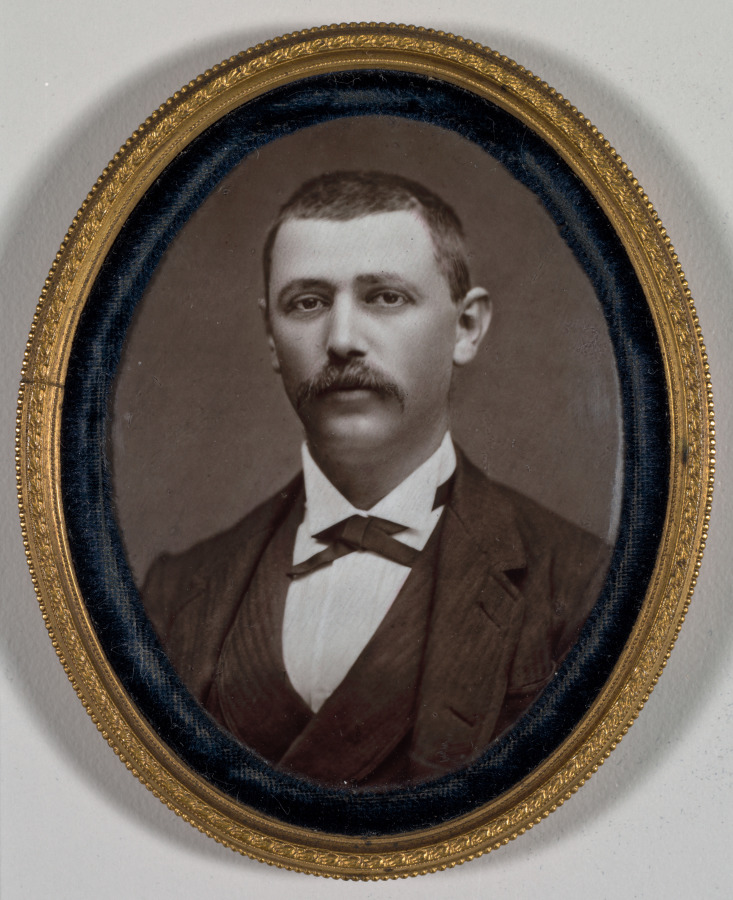
Untitled (Portrait of a Man), 1879, by Étienne Carjat
Etienne Carjat · The Cleveland Museum of Art · John Cook Memorial Fund
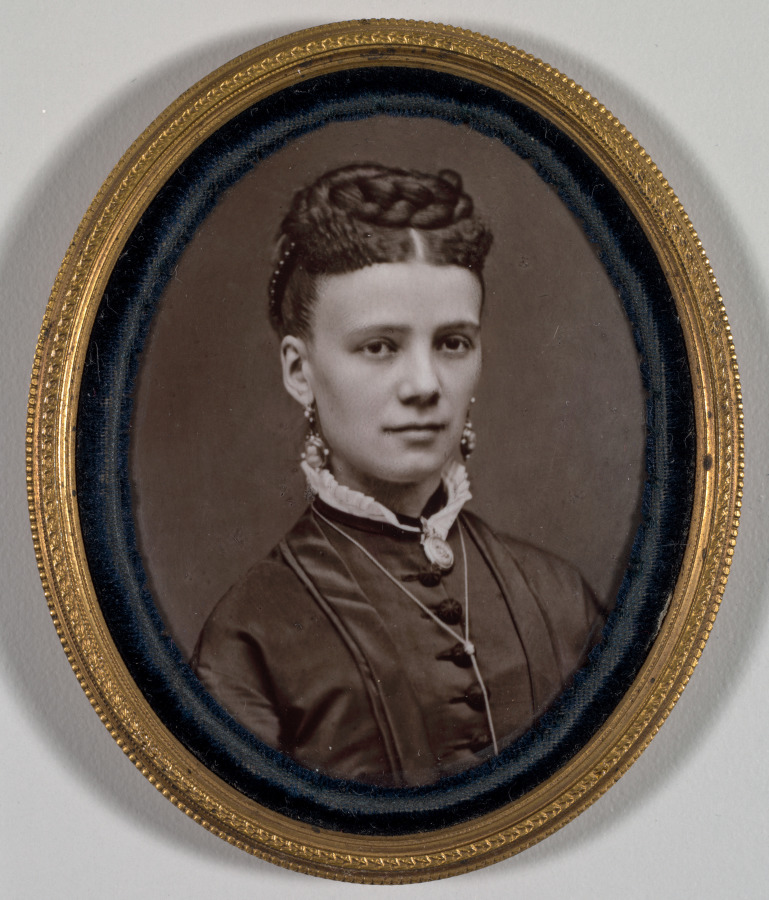
Untitled (Portrait of a Woman), 1879, by Étienne Carjat
Etienne Carjat · The Cleveland Museum of Art · John Cook Memorial Fund
Key facts
Key facts
• Name — Étienne Carjat • Born — 28 March 1828 • Birthplace — Fareins, France • Died — 8 March 1906 • Place of death — Paris, France • Occupation — * Journalist • caricaturist • photographer
Documentary record
Étienne Carjat (1828 – 1906) is described as an author, writer, caricaturist, draughtsman, illustrator, painter and photographer in the authority records of the Bibliothèque nationale de France, the Deutsche Nationalbibliothek and the Getty Union List of Artist Names. The birth of Étienne Carjat is recorded in 1828, and the death in 1906.
Biography
Biography
Carjat was born in Fareins, a commune in the Ain department in eastern France. When he was ten, his family moved to Paris, and in 1841, at the age of thirteen, he was apprenticed to Mr. Cartier, a silk manufacturer. At first he was employed in mundane activities, but he came to the attention of the chief designer, M. Henry, who was pleased with drawings he had made to amuse children and he was transferred to the design department. He remained there for three years. Interested in the theatre, in 1854 Carjat published a series of lithographic caricatures of Parisian actors, each being accompanied by a comic verse. These proved popular and Carjat later used reproductions to make cartes de visite, and the photographer Pierre Petit produced enlarged versions. In 1858, Carjat learned the profession of photography from Pierre Petit, and in 1861, he moved into his own workshop at number 56 Rue Laffitte in Paris. This was the same location as the offices of the newspaper Le Boulevard, which he founded, and which was run by his friend Alphonse de Launay. The poet Charles Baudelaire contributed to this weekly magazine. Carjat's photographic skills developed and he produced numerous portraits of celebrity subjects, his photographs being distinguished by the absence of the elaborate ornamentation that other photographers favoured. His photographs captured the spirit of his subjects by their dramatic postures and expressions. His work was recognised internationally, and he received awards in Paris (1863 and 1864), in Berlin (1867), and at the Paris Exposition Universelle (1867). Portrait photography may have been his main interest at this time, but he continued with his editing activities and publishing cartoons in the popular press. In 1865, he sold his workshop to Légé and Bergeron. From 1866 to 1869, he moved to number 62 Rue Jean-Baptiste-Pigalle, then to 10 Rue Notre-Dame-de-Lorette. He was a friend of the painter Gustave Courbet; (like Courbet) he supported the Paris Commune in 1871, and published political poems in their newspaper La Commune. He continued in his work as a caricaturist, published in particular in the newspaper Le Diogène of which he was the co-founder. He also published a book, Artiste et citoyen, in 1883. One of his best-known photographs is a portrait of Arthur Rimbaud, taken in October 1871. Paul Verlaine, Rimbaud and Carjat were part of Vilains Bonshommes, a group created in 1869, which brought together poets and artists like André Gill, Théodore de Banville and Henri Fantin-Latour. In January 1872, a quarrel broke out during a dinner organized by this group, and Rimbaud injured Étienne Carjat with the cane-sword of Albert Mérat. In reaction, Étienne Carjat erased the photographic plates corresponding to the portraits he had taken of Rimbaud, and only eight prints of the original photographs survive. Another well-known photograph is a brooding portrait of the poet Charles Baudelaire.
Documentary record
Étienne Carjat was born in Fareins, according to the Bibliothèque nationale de France and the Deutsche Nationalbibliothek. The Bibliothèque nationale de France records the fuller form Fareins (Ain). Étienne Carjat died in Paris, France, according to the Bibliothèque nationale de France and the Deutsche Nationalbibliothek.
Life and career
Dated record
Life and career
Explore 1828–1906
The full dated record · 3 entries
1828
Étienne Carjat born at Fareins.
1870
Etienne Carjat (1870) is digitised and catalogued by Internet Archive.
1906
Étienne Carjat died at 10ᵗʰ arrondissement of Paris.
Places
Named by the record
Places
Only places the record itself states, plotted where the house gazetteer settles their coordinates. Nothing is inferred from a name or a nationality.
Fareins.
Birth place
10ᵗʰ arrondissement of Paris.
Death place
Publications
• Croquis biographiques (1858) • Les Mouches vertes, satire (1868) • Peuple, prends garde à toi! Satire électorale (1875) • Artiste et citoyen: poésies; précédées d'une lettre de Victor Hugo (1883)
Photographs and caricatures
• Illustration — Charles Baudelaire • Illustration — Louis Émile Benassit • Illustration — Hector Berlioz • Illustration — Georges Bizet • Illustration — Louis Blanc • Illustration — Alexandre Dumas • Illustration — Alexandre Dumas • Illustration — Victor Hugo • Illustration — Arthur Rimbaud • Illustration — Gioachino Rossini
Text attribution
Licensing
Text attribution
Part of the biographical narrative on this page reuses licensed material. Its origin, revision and licence are recorded here.
The biographical narrative on this page is based on the Wikipedia article Étienne Carjat, revision 1371905896 (EN edition), by its contributors. VALÉORINE has edited that text and built its own documentary record around it. The reused material is available under CC BY-SA 4.0, and this page's reuse of it is offered under the same licence. Everything else on this page — the chronology, the holdings, the evidence, the plates and the connections — is VALÉORINE's own record. Sources and licences.
Notes from the source article
Cited by Wikipedia
Notes from the source article
These works are cited by the source article, in its own numbering. They are recorded as its citations, not as sources VALÉORINE has verified.
- 1.How Arthur Rimbaud became the blueprint for outsider teen fashion. Document Journal. 28 March 2019.
- 2.Hannavy. Encyclopedia of Nineteenth-Century Photography. Routledge. 272–274. 16 December 2013. 9781135873264.
- 3.Flood, Alison. Baudelaire dismissed Victor Hugo as 'an idiot' in unseen letter. The Guardian. 18 June 2014. 0261-3077.
- 4.Champsaur, Félicien. Etienne Carjat. A. Cinqualbre. 2–3. 1879.
- 5.National Gallery of Art. Étienne Carjat.
- 6.Fallaize, Elizabeth. Etienne Carjat and " Le Boulevard " (1861-1863). Slatkine. 36. 1987. 9782051008037.
- 7.Tillier, Bertrand. La Commune de Paris, révolution sans images?: politique et représentations dans la France républicaine (1871-1914). Champ Vallon. 82. 2004. 9782876733909.
- 8.Jeancolas, Claude. Passion Rimbaud: l'album d'une vie. Textuel. 83. 1998. 9782909317663.
- 9.The Metropolitan Museum of Art. Charles Baudelaire. Heilbrunn Timeline of Art History.
References
Citations
References
Each reference names the institution holding it, so a reader may go to the document itself.
reference work
Wikidata, structured authority record Q2442116: Étienne CarjatWikimedia Foundation
Secondary witnessreference work
Secondary witness
Further particulars
Held on the record
Further particulars
Open the remaining particulars
The authorities additionally record the headings Etienne Carjat and Etiénne Carjat. His recorded language was French. Career and activity. Étienne Carjat worked in journalism, art of drawing and photography. He belonged to Vilains Bonshommes and Société française de photographie. He worked at rue Laffitte, rue Jean-Baptiste-Pigalle and rue Notre-Dame-de-Lorette.
Identity and origins
Recognition and collections
Work by Étienne Carjat is
National Gallery of Victoria, Minneapolis Institute of Art, National Gallery of Canada and International Institute of Social History
Arthur Rimbaud
1872
The Encyclopedia exists whether or not anything is for sale. Corrections are recorded rather than overwritten, and every version of this record is kept. Published 14 August 2026.
Elsewhere in Paintings
19,456 published records in this field, each with its sources named.
- Ethel WalkerArtist
- Étienne AllegrainArtist
- Étienne AubryArtist
- Étienne BuffetArtist
- Étienne ColaudArtist
- Étienne DelessertArtist
- Étienne DumonstierArtist
- Étienne JeauratArtist
Best supported in this field
For owners
Own a work by Étienne Carjat?
A specialist will read what you send and tell you what the house can establish, what it cannot, and whether the object is suited to sale. There is no charge and no obligation. The object stays with you throughout; nothing is shipped to us unless it is arranged in writing beforehand.