
Ernst Fries
Illustration — Self-portrait (c.1830), lithograph by Franz Hanfstaengl Ernst Fries (22 June 1801, Heidelberg – 11 October 1833, Karlsruhe) was a German painter, draftsman, watercolourist, etcher, printmaker, and lithograph. Besides Karl Philipp Fohr and Carl Rottmann, he was the youngest of the so-called triumvirate of Heidelberg Romanticism. His works represent a transition from Romanticism to Realism.
Also recorded as Adam Friedrich Carl Ernst Fries · e. fries · fries ernst
Ernst Fries

After Ernst Fries / Franz Hanfstaengl · Public domain
- Born
- 1801 · Heidelberg.
- Died
- 1833 · Karlsruhe.
- Nationality
- Grand Duchy of Baden
- Occupation
- painter · draftsperson · graphic artist
- Education
- Academy of Fine Arts and Munich
- Languages
- German
VALÉORINE Encyclopedia
VALÉORINE documentary reading
Documentary summary
Illustration — Self-portrait (c.1830), lithograph by Franz Hanfstaengl Ernst Fries (22 June 1801, Heidelberg – 11 October 1833, Karlsruhe) was a German painter, draftsman, watercolourist, etcher, printmaker, and lithograph. Besides Karl Philipp Fohr and Carl Rottmann, he was the youngest of the so-called triumvirate of Heidelberg Romanticism. His works represent a transition from Romanticism to Realism.
Admitted source layer · organised and presented by VALÉORINE
Reference Check
Propose documentary evidence for Ernst Fries. A contribution is never written directly as fact: identity, source, rights and evidence gates still decide.
Sign in to contribute
World of VALÉORINE
Documentary connections
Only confirmed graph relationships appear here. Images are shown only when their identity and reuse rights both pass the documentary gate.
Documentary evidence
Documentary basis
Authority files
wikidata · Q326338 · wikipedia · Ernst Fries
In this article
Life and work
Life and work
Ernst Fries studied at Academy of Fine Arts, Munich. The recorded working language is German. Positions recorded include court painter. Work by Ernst Fries is recorded in the collections of Städel Museum, Bavarian State Painting Collections, Staatliche Kunstsammlungen Dresden, Galerie Neue Meister and Lenbachhaus.
• Illustration — View of Amalfi He was one of fifteen children born to Christian Adam Fries, a banker, dye maker, and art collector, and his wife Luisa Christina née Heddaeus (1781–1858), daughter of Philipp Christian Heddaeus, a church administrator. His family's affluence allowed him to travel freely and receive a thorough artistic education, without financial concerns. His much younger brothers, Wilhelm (1819–1878) and Bernhard, also became painters. Beginning in 1810, he received together with Karl Philipp Fohr and Carl Rottmann lessons from Friedrich Rottmann, an engraver and designer who was known as the "University Sign Master" (Universitätszeichenmeister). After 1815, he studied with the landscape painter, Carl Kuntz, in Karlsruhe. He continued his studies in Munich for a short time then, in 1818, went to Darmstadt, where he took private lessons in perspective and architectural drawing from Georg Moller and simultaneously enrolled a study course in optics and perspective. In the spring of 1819, he started hiking through the surroundings of Darmstadt and the Odenwald, followed by a large series of tours through the valleys of the River Rhine and the River Neckar, the Bergstraße, and the mountain range of the Swabian Jura. Sketchbook after sketchbook was filled in these years, mostly with landscape drawings, like Malerische Ansichten des Rheins, der Mosel, des Haardt, und Taunusgebürges [sic] (ca. 1820) or Malerische Reise an der Mosel von Coblenz bis Trier. Nach der Natur gezeichnet von Fries…. (1821). At this point, he slowly came to prefer landscape painting and, from 1820 to 1821, enrolled in courses at the Academy of Fine Arts Munich. He continued travelling extensively, throughout the Rheinland and the Tyrol, then undergoing the classical Grand Tour to Italy. From 1823 to 1827, he lived in Rome, where he created some of his most accomplished works. In Rome he came in contact to the Deutsch-Römer group of painters and met Josef Anton Koch and Friedrich Overbeck. In 1826 he started working with the French painter Camille Corot and "re-discovered" with the German writer August Kopisch the Blue Grotto (Capri) near Naples, a tour which was described in Kopisch's book Entdeckung der blauen Grotte auf der Insel Capri (Discovery of the Blue Grotto on the Isle of Capri) in 1838. Fries' numerous trips through the Roman Campagna and further regions of Italy are documented meticulously (with maps) by Sigrid Wechssler in her recent monography and catalogue raisonné. Upon returning to Germany, he settled in Heidelberg, and married, in 1829, Louise Stockhausen (1804–1857) in Neckargemünd; the couple had four daughters. 1830 Fries was in Munich, but relocated to Karlsruhe in 1831, when he received an appointment as grand-ducal court painter of Baden there. During his brief tenure, he painted a large number of vedute; both paintings and engravings. He committed suicide by slitting his wrists in 1833, apparently while in a manic state, related to scarlet fever. His works may be seen at most of the major museums in Germany, although the Kurpfälzisches Museum in Heidelberg has the largest collection, with around 180 paintings and engravings. Many of his works are also in a large private collection, owned by one of his collateral descendants.
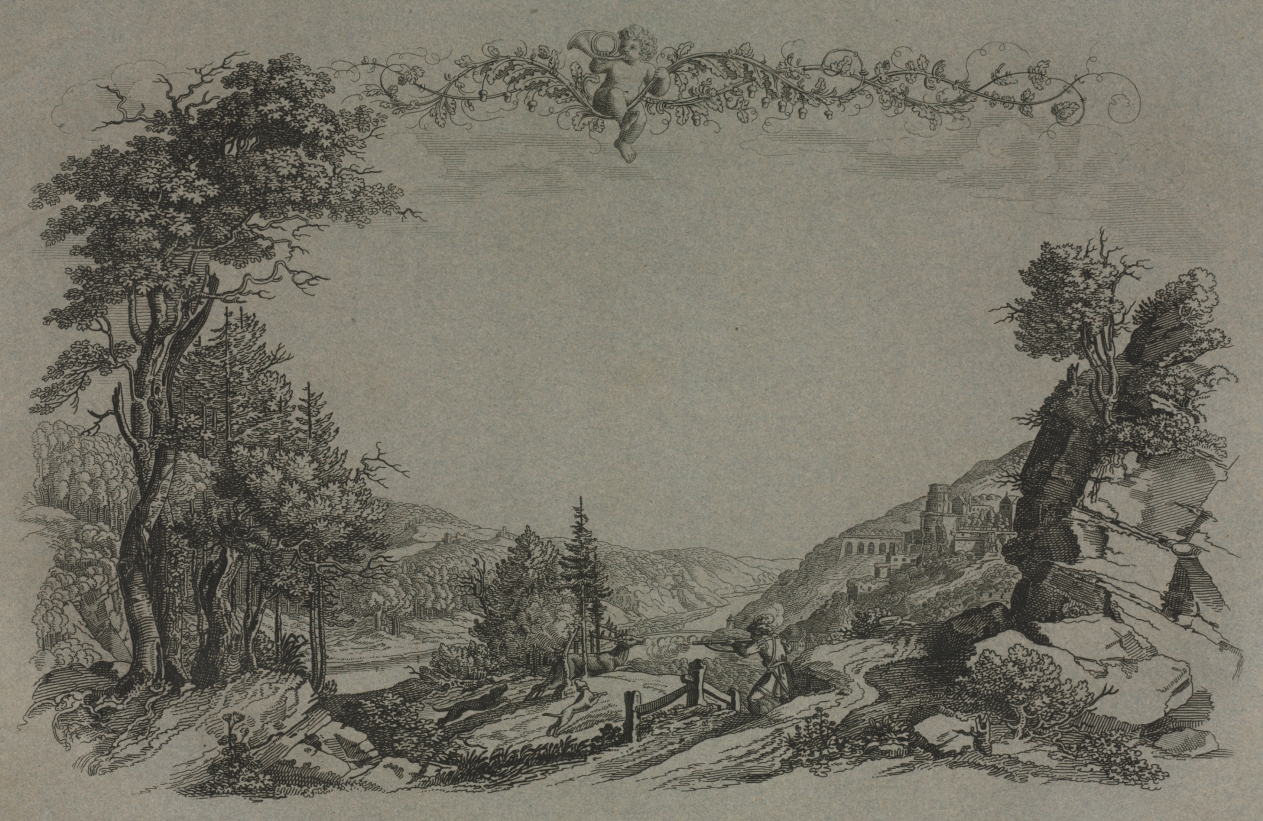
Six Views of Heidelberg
Ernst Fries · The Cleveland Museum of Art · Prints & Drawings Sundry Art Purchase and Dudley P. Allen Fund
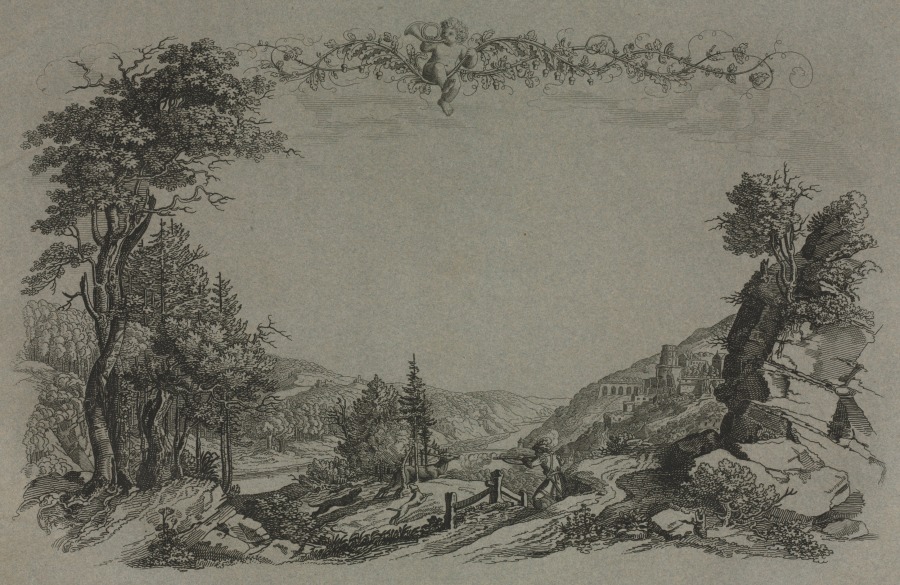
Six Views of Heidelberg Castle, 1820, by Ernst Fries
Ernst Fries · The Cleveland Museum of Art · Prints & Drawings Sundry Art Purchase and Dudley P. Allen Fund
Places
Named by the record
Places
Only places the record itself states, plotted where the house gazetteer settles their coordinates. Nothing is inferred from a name or a nationality.
Heidelberg.
Birth place
Karlsruhe.
Death place
Primary material
Documents and archives
reference work
- “Ernst Fries”, English Wikipedia, consulted as further reading
Reputable secondary · Wikipedia
authority record
- Wikidata, structured authority record Q326338: Ernst Fries
General reference · Wikidata
Citations
References
Each reference names the institution holding it, so a reader may go to the document itself.
reference work
Secondary witnessauthority record
General reference
The Encyclopedia exists whether or not anything is for sale. Corrections are recorded rather than overwritten, and every version of this record is kept. Published 17 August 2026.
Elsewhere in Paintings
19,183 published records in this field, each with its sources named.
- Ernst DegerArtist
- Ernst Erwin OehmeArtist
- Ernst EwaldArtist
- Ernst Ferdinand OehmeArtist
- Ernst Hodel juniorArtist
- Ernst Joachim FörsterArtist
- Ernst JordanArtist
- Ernst JosephsonArtist
Best supported in this field
For owners
Own a work by Ernst Fries?
A specialist will read what you send and tell you what the house can establish, what it cannot, and whether the object is suited to sale. There is no charge and no obligation. The object stays with you throughout; nothing is shipped to us unless it is arranged in writing beforehand.