
Jan Boeckhorst
Jan Boeckhorst or Johann Bockhorst (c. 1604 – 21 April 1668) was a German-born Flemish Baroque painter and draughtsman who worked most of his career in Antwerp. He was a versatile artist who produced history paintings, genre scenes and portraits in a style influenced by the trio of leading Antwerp painters Peter Paul Rubens, Anthony van Dyck and Jacob Jordaens.
Also recorded as Lange Jan Boeckhorst · Langjan · Johann Boeckhorst · Jan. Boeckhorst
Jan Boeckhorst
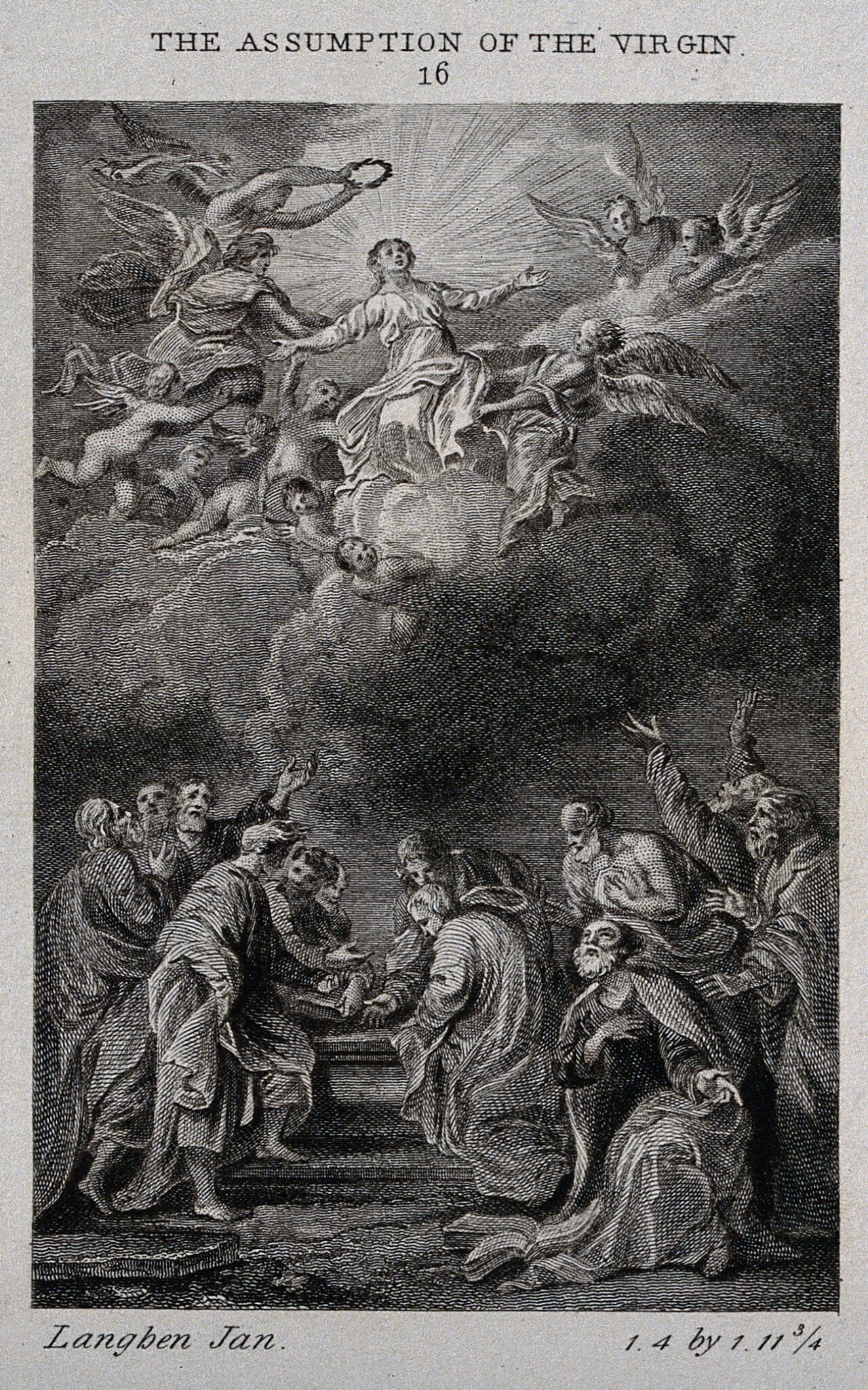
Jan Boeckhorst · Wellcome Collection, London · Wellcome Collection · Public Domain Mark
- Name
- Jan Boeckhorst
- Birth Name
- Johann Bockhorst
- Born
- circa 1604
- Birthplace
- Münster, Westphalia
- Died
- 21 April 1668
- Place of death
- Antwerp
- Field
- Painting
- Movement
- Baroque
- Nationality
- Germany · Habsburg Netherlands
- Occupation
- painter
- Fields
- history
- Teachers
- Peter Paul Rubens
VALÉORINE Encyclopedia
VALÉORINE documentary reading
Documentary summary
Jan Boeckhorst or Johann Bockhorst (c. 1604 – 21 April 1668) was a German-born Flemish Baroque painter and draughtsman who worked most of his career in Antwerp. He was a versatile artist who produced history paintings, genre scenes and portraits in a style influenced by the trio of leading Antwerp painters Peter Paul Rubens, Anthony van Dyck and Jacob Jordaens.
Admitted source layer · organised and presented by VALÉORINE
Note VALÉORINE
Jan Boeckhorst (died 1668) was a painter and a national of Germany and the Habsburg Netherlands. Born in Münster, the painter died in Antwerp.
Jan Boeckhorst was a member of Bentvueghels and worked in Antwerp. The painter was associated with Baroque.
Genres include history painting. Languages used include German.
Composed from admitted, traceable facts · 01 October 2026
VALÉORINE
Reference Check
Propose documentary evidence for Jan Boeckhorst. A contribution is never written directly as fact: identity, source, rights and evidence gates still decide.
Sign in to contribute
World of VALÉORINE
Documentary connections
Only confirmed graph relationships appear here. Images are shown only when their identity and reuse rights both pass the documentary gate.
Documentary evidence
Documentary basis
Authority files
gnd · 10184390-2 · wikidata · Q71728 · wikipedia · Jan Boeckhorst
In this article
Biography
Biography
Boeckhorst also worked as a designer of cartoons for tapestries.
Training under Peter Paul Rubens is recorded. The recorded working language is German. Subjects and genres recorded for the work are history. Places of work recorded in the authority are Antwerp. Work by Jan Boeckhorst is recorded in the collections of Städel Museum, Art Institute of Chicago, J. Paul Getty Museum, National Gallery of Victoria and National Gallery of Canada.
Key facts
Key facts
• Name — Jan Boeckhorst • Birth Name — Johann Bockhorst • Born — circa 1604 • Birthplace — Münster, Westphalia • Died — 21 April 1668 • Place of death — Antwerp • Field — Painting • Movement — Baroque
Life
Life
Jan Boeckhorst was born in Münster, Westphalia as the second-oldest of twelve children. His family belonged to Münster’s highly respected citizens (Honoratioren) and his father Heinrich was for a while the mayor of Münster. Jan Boeckhorst became a canon in the Jesuit order at age 17. He only started his artistic study when he was about twenty-two years of age. • Illustration — Allegory of Africa In the mid 1620s Boeckhorst moved to Antwerp apparently to study with Peter Paul Rubens. There is no firm evidence that Boeckhorst actually studied under Rubens, only a statement by Rubens’ nephew Philip to that effect. However, a close relationship between the artists during the 1630s is documented. Boeckhorst likely also briefly trained with Jordaens during Rubens' stay in London in the late 1620s. In Antwerp, Boeckhorst was known as Lange Jan (Tall John) because of his tall stature. • Illustration — Ceres, Allegory of Summer From 1626 to 1635 Boeckhorst worked on a commission paid for by the devout merchant Lodewijk De Roomer to complete 26 works for a chapel in the Falcon monastery in central Antwerp (or for St. Joseph’s chapel in the Antwerp convent of St. Augustine). These works on which he collaborated with Jan Wildens are now lost. Between 1627 and 1632 he likely worked closely with Anthony van Dyck who was during that period back in Antwerp after a long stay abroad. The two artists collaborated on individual works of art while Boeckhorst also produced copies after van Dyck. Boeckhorst became a master in the Antwerp Guild of Saint Luke in 1633–1634. He was a regular collaborator with Rubens in the mid 1630s. He first worked on the decorations for the 1635 Joyous Entry (the so-called 'Pompa Introitus') into Antwerp of the new governor of the Habsburg Netherlands Cardinal-Infante Ferdinand. Rubens was in overall charge of this project. For the Pompa Introitus Broeckhorst contributed architectural elements on the 'Arch of Isabella' and the figures of 'Securitas' and 'Salus publica' in collaboration with Gerard Seghers and Jan Borchgraef. • Illustration — Achilles amongst the Daughters of Lycomedes Boeckhorst traveled to Italy in 1635. He returned to Antwerp and in the period 1636–1638 he collaborated with Rubens’ workshop on a large commission to make mythological decorations for the hunting pavilion Torre de la Parada of the Spanish king Philip IV near Madrid. For this project Jan Boeckhorst painted decorations after oil sketches by Rubens. In 1639 Boeckhorst traveled to Italy again where he resided in Rome. In Rome he likely joined the circle of Dutch and Flemish artists in Rome known as the Bentvueghels. It was the custom among the Bentvueghels to adopt a nickname. Boeckhorst's nickname was possibly Doctor Faustus. The date of his return to Antwerp is not known with certainty and estimates vary from 1639 to 1649. It is known that he completed a few unfinished works of Rubens' after Rubens' death in 1640. After his return to Antwerp he received multiple commissions from religious institutions in Flanders including for the Saint James Church in Bruges and the Saint Michael's Church and Saint James Church in Ghent. • Illustration — Peasants on their way to the market Jan Boeckhorst died on 21 April 1668 in Antwerp where he was buried in the Saint James Church. His large collection was sold after his death in a sale which lasted six days and raised the considerable sum of 6,026 guilders. His collection included a complete set of early drawings of Rubens.
General
General
Boeckhorst was a versatile painter who produced history paintings on religious and mythological subjects, allegorical works, genre scenes and portraits. Boeckhorst also worked as a designer of cartoons for tapestries. He is known to have designed eight tapestries on the myths of Apollo. The Musée Mont-de-Piété in Bergues preserves 8 preliminary drawings for this Apollo series of tapestries. Boeckhorst also provided designs for the Antwerp publishers. In the early 1650s he provided several designs for the Breviarium Romanum and 9 border decorations for the Missale Romanum, all engraved by Cornelis Galle the Younger and published by the Plantin Press in Antwerp. File:Sibylle phrygienne (Boeckhorst).jpg • Illustration — The Sibyl of Phrygia There only exist three signed and dated paintings (dated between 1646 and c. 1660) and five that are dated only from 1659–1666. The first signed painting, a Madonna and Child with Saint John is dated 1646, about 20 years after his arrival in Antwerp. Because of the few number of signed paintings it has been difficult to attribute works to Boeckhorst with certainty and some attributions are contested among art historians.
Collaborations
Collaborations
As was common practice among Antwerp painters, Boeckhorst often collaborated as a figure painter on compositions with landscape painters Jan Wildens and Jan Brueghel the Younger and still life painter Frans Snyders. An example is the Peasants going to the market (Rubenshuis, Antwerp) on which he collaborated with Frans Snyders. This genre scene, which also acts as an allegory of the four elements, is of a monumentally large scale at 217.5 cm in height and 272.5 cm in width. The work shows the influence of Jordaens' genre paintings. • Illustration — Mercury beholds Herse Boeckhorst may have collaborated on devotional garland paintings. Garland paintings are a special type of still life developed in Antwerp by Jan Brueghel the Elder in collaboration with the Italian cardinal Federico Borromeo at the beginning of the 17th century. The genre was initially connected to the visual imagery of the Counter-Reformation movement and typically involved a collaboration between a figure painter and a still life painter. No collaborations with Boeckhorst on garland paintings have been attributed with certainty. Boeckhorst is believed to have made changes to works by Rubens. He did so with a tronie painted by Rubens around 1613 called King David playing the Harp (Städel, Frankfurt am Main). The second Rubens tronie of c. 1616/17, which Boeckhorst transformed around 1640/41 into a bust-length format was the Head of a bearded man in profile holding a bronze figure (Christie’s, London, 2 July 2013, lot 30). He possibly also enlarged Rubens’ Rise of the Blessed at the request of Jan Wildens in order to form a pendant with the Fall of the Damned then in Wildens’ own collection. After the late 1630s Boeckhorst's collaborations appear to have ceased.
Portraits
Portraits
• Illustration — Head study of a young woman with a pearl earring Boeckhorst's portraits are influenced by Anthony van Dyck and Cornelis de Vos, the two leading portrait painters in the first half of the 17th century. He occasionally painted lively group portraits. Central in his group portraits is the emphasis on the virtue of strong family bonds, the so-called 'Concordia familiae'. Boeckhorst was skilled in depicting his models in a spontaneous and lively manner. His portraits are of an informal character. He also used backdrop draperies, which in imitation of Jordaens, were represented very vividly.
Later works
Later works
His later works from the 1650s and 1660s include numerous altarpieces for churches throughout Flanders and designs of cartoons for tapestries. The expressiveness of van Dyck's figures and use of colors, such as in Ulysses discovers Achilles dressed up as a girl (Alte Pinakothek, Munich), is also noticeable in works from this period.
Life and career
Dated record
Life and career
Explore 1604–1668
The full dated record · 8 entries
1604
Jan Boeckhorst born at Münster.
1635
Peasants on the Way to the Market. (Rubenshuis).
1635
Christ expiring on the cross.
1643
God commands the angel of wrath to stop after David has shown remorse (2 Samuel 24:16) is dated 1643.
1643
Drunken Silenus with his followers.
1650
Double portrait of a man and woman (Schloss Weißenstein).
1650
Lady with a rose in her hair.
1668
Jan Boeckhorst died at Antwerp.
Places
Named by the record
Places
Only places the record itself states, plotted where the house gazetteer settles their coordinates. Nothing is inferred from a name or a nationality.
Münster.
Birth place
Antwerp.
Death place
Primary material
Documents and archives
authority file
- Gemeinsame Normdatei 10184390-2, Ausstellung Fokus auf Peter Paul Rubens und Jan Boeckhorst: König David Spielt die Harfe, um 1616, Ende der 1640er Jahre Erweitert (Inv. Nr. 1043) (2007-2008 : Frankfurt, Main).
General reference · Deutsche Nationalbibliothek
- VIAF cluster 8186811 for Jan Boeckhorst, aggregating national library name authorities.
General reference · OCLC
reference work
- “Jan Boeckhorst”, English Wikipedia, consulted as further reading
Reputable secondary · Wikipedia
authority record
- Wikidata, structured authority record Q71728: Jan Boeckhorst
General reference · Wikidata
Literature
Scholarly footprint
A count of publications is evidence of attention, not of standing, and is given here only as a measure.
Notes from the source article
Cited by Wikipedia
Notes from the source article
These works are cited by the source article, in its own numbering. They are recorded as its citations, not as sources VALÉORINE has verified.
- 1.Alternative names: Johan Boekhorst, Johan Boeckhorst, Johann Boeckhorst, Boichorst, Bronckhorst, van Boeckhorst, nicknames: Lange Jan, Langen Jan, Langhiano and Langian as well as Doctor Faustus
- 2.Jan Boeckhorst at the Netherlands Institute for Art History
- 3.In the past it was believed he might possibly have been born in Rees
- 4.Anne-Marie Logan, Review of: Maria Galen, Johann Boeckhorst. Gemälde und Zeichnungen. Hamburg: Baar-Verlag 2012 at historian of netherlandish art
- 5.Jan Boeckhorst at National Gallery of Art
- 6.Matthias Depoorter, Jan Boeckhorst at Barok in Vlaanderen
- 7.Anne-Marie S. Logan, Sir Peter Paul Rubens, Michiel Plomp, Peter Paul Rubens: The Drawings, Metropolitan Museum of Art (New York, N.Y.), Metropolitan Museum of Art, 2005, p. 40
- 8.Guy Delmarcel, Flemish Tapestry from the 15th to the 18th Century, Lannoo Uitgeverij, 1999, p. 240
- 9.Jan Brueghel II (Antwerp 1601–1678) and Jan Boeckhorst (Münster/Rees 1604–1668 Antwerp) , Sleeping Nymphs observed by Satyrs, at Dorotheum
- 10.Vlieghe, Hans (1998). Flemish art and architecture, 1585-1700. Pelican history of art. New Haven: Yale University Press. , pp. 76; 171.
- 11.David Freedberg, "The Origins and Rise of the Flemish Madonnas in Flower Garlands, Decoration and Devotion", Münchener Jahrbuch der bildenden Kunst, xxxii, 1981, pp. 115–150.
- 12.Hans Vlieghe. "Boeckhorst, Jan." Grove Art Online. Oxford Art Online. Oxford University Press. Web. 1 October 2014
- 13.Vlieghe (1998), pp. 95–97.
References
Citations
References
Each reference names the institution holding it, so a reader may go to the document itself.
authority file
Gemeinsame Normdatei 10184390-2, Ausstellung Fokus auf Peter Paul Rubens und Jan Boeckhorst: König David Spielt die Harfe, um 1616, Ende der 1640er Jahre Erweitert (Inv. Nr. 1043) (2007-2008 : Frankfurt, Main).Deutsche Nationalbibliothek
Secondary witnessauthority file
Secondary witnessreference work
Secondary witnessauthority record
General reference
Further particulars
Held on the record
Further particulars
Open the remaining particulars
Those registers additionally record the forms Jan Boeckhorst, péintéir, Jan Boeckhorst, 1605-1668, Jan Boeckhorst, flamandzki malarz, Jan Boeckhorst, Duits kunstschilder, Jan Boeckhorst, německý a italský malíř and Jan Boeckhorst, painter.
His recorded language was German.
Identity and origins
Boeckhorst and Longjean
Recognition and collections
Work by Jan Boeckhorst is
Städel Museum, Art Institute of Chicago, J. Paul Getty Museum and National Gallery of Victoria
The Encyclopedia exists whether or not anything is for sale. Corrections are recorded rather than overwritten, and every version of this record is kept. Published 17 August 2026.
Elsewhere in Paintings
18,792 published records in this field, each with its sources named.
- Jan Baptist van DeynumArtist
- Jan Baptist van HeilArtist
- Jan Baptist van MeunincxhoveArtist
- Jan Baptist WeenixArtist
- Jan BohuszewiczArtist
- Jan BoudolfArtist
- Jan Brueghel the ElderArtist
- Jan Brueghel the YoungerArtist
Best supported in this field
For owners
Own a work by Jan Boeckhorst?
A specialist will read what you send and tell you what the house can establish, what it cannot, and whether the object is suited to sale. There is no charge and no obligation. The object stays with you throughout; nothing is shipped to us unless it is arranged in writing beforehand.