
Dosso Dossi
Giovanni di Niccolò de Luteri, better known as Dosso Dossi (c. 1489–1542) was an Italian Renaissance painter who belonged to the School of Ferrara, painting in a style mainly influenced by Venetian painting, in particular Giorgione and early Titian. From 1514 to his death, he was court artist to the Este Dukes of Ferrara and of Modena, whose small court valued its reputation as an artistic centre.
Also recorded as Giovanni di Niccolò de Lutero · Dosi da Ferrara · Giovanni Di Lutero Dossi · Luteri Dossi
Dosso Dossi
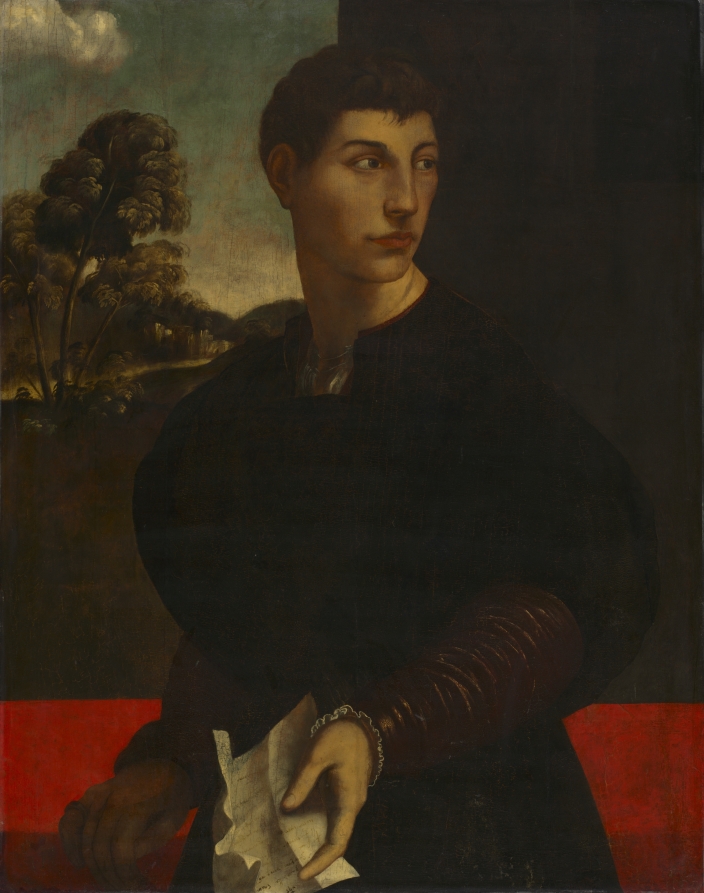
Dosso Dossi · The Cleveland Museum of Art · Holden Collection · CC0
- Name
- Dosso Dossi
- Born
- c. 1489
- Birthplace
- San Giovanni del Dosso, Mantua
- Died
- 1542 (aged c. 53)
- Place of death
- Ferrara, Este
- Known for
- Painting
- Training
- Lorenzo Costa
- Movement
- Italian Renaissance
- Occupation
- painter
- Movements
- Italian Renaissance · School of Ferrara
- Languages
- Italian
VALÉORINE Encyclopedia
VALÉORINE documentary reading
Documentary summary
Giovanni di Niccolò de Luteri, better known as Dosso Dossi (c. 1489–1542) was an Italian Renaissance painter who belonged to the School of Ferrara, painting in a style mainly influenced by Venetian painting, in particular Giorgione and early Titian. From 1514 to his death, he was court artist to the Este Dukes of Ferrara and of Modena, whose small court valued its reputation as an artistic centre.
Admitted source layer · organised and presented by VALÉORINE
Note VALÉORINE
Dosso Dossi (1480–1542) was a painter. Born in Mirandola, the painter died in Ferrara.
Dosso Dossi held the position of court painter and worked in Ferrara, Milan and Trento. The painter was active in painting. Dosso Dossi was associated with Italian Renaissance and School of Ferrara.
Works include A Man embracing a Woman, Allegory of Music, An Allegory of Fortune and Holy Family, among others. Genres include history and landscape. Languages used include Italian. Works by the painter are held at Museo del Prado, National Gallery of Canada and National Gallery of Victoria, among others.
Composed from admitted, traceable facts · 27 September 2026
VALÉORINE
Reference Check
Propose documentary evidence for Dosso Dossi. A contribution is never written directly as fact: identity, source, rights and evidence gates still decide.
Sign in to contribute
World of VALÉORINE
Documentary connections
Only confirmed graph relationships appear here. Images are shown only when their identity and reuse rights both pass the documentary gate.
Documentary evidence
Evidence Panel
not yet certified
- Identity
- resolved
- Independent source families
- 0
- Admitted assertions
- 0
- Open conflicts
- 0
Authority files
gnd · 1024496538 · wikidata · Q356777 · wikipedia · Dosso Dossi
In this article
Biography
Biography
He often worked with his younger brother Battista Dossi, who had worked under Raphael. He painted many mythological subjects and allegories with a rather dream-like atmospheres, and often striking disharmonies in colour. His portraits also often show rather unusual poses or expressions for works originating in a court.
The recorded working language is Italian. The field of work recorded is painting. Subjects and genres recorded for the work are history and landscape. Giorgione is recorded as an influence. Places of work recorded in the authority are Ferrara, Trento and Milan. Positions recorded include court painter. Works named in the authority record are Jupiter, Mercury and Virtue, An Allegory of Fortune, Allegory of Music, A Man embracing a Woman, Madonna and Child and Holy Family. Work by Dosso Dossi is recorded in the collections of Städel Museum, Museo del Prado, Thyssen-Bornemisza Museum, J. Paul Getty Museum and National Gallery of Victoria.
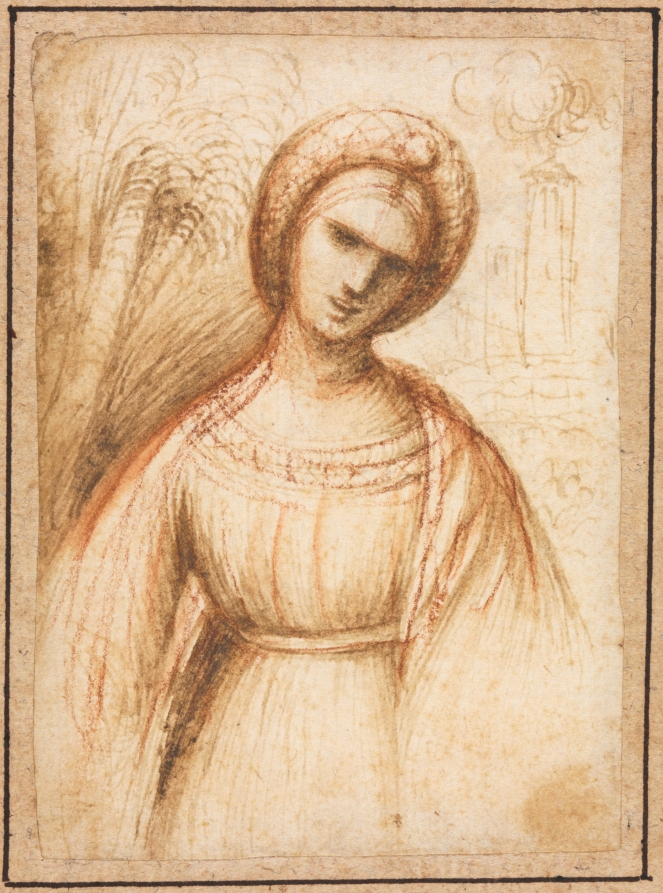
Lady in a Landscape (recto), c. 1521, by Dosso Dossi
Dosso Dossi · The Cleveland Museum of Art · Purchase from the J. H. Wade Fund
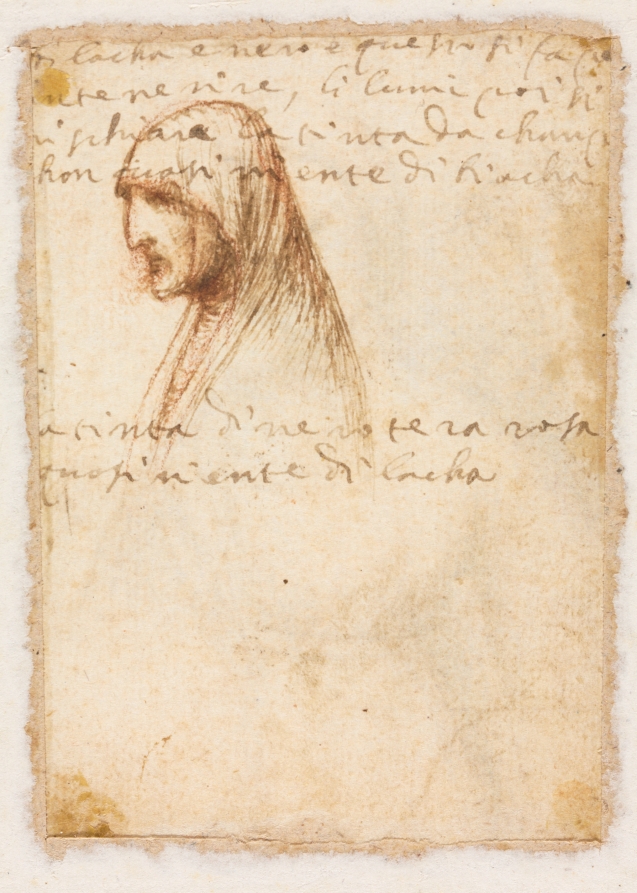
Bust-Length Profile of an Old Woman (verso), c. 1521, by Dosso Dossi
Dosso Dossi · The Cleveland Museum of Art · Purchase from the J. H. Wade Fund
Key facts
Key facts
• Name — Dosso Dossi • Born — c. 1489 • Birthplace — San Giovanni del Dosso, Mantua • Died — 1542 (aged c. 53) • Place of death — Ferrara, Este • Known for — Painting • Training — Lorenzo Costa • Movement — Italian Renaissance • Patrons — Alfonso I d'Este, Duke of Ferrara, Ercole II d'Este, Duke of Ferrara
Biography
Biography
Dossi was born in San Giovanni del Dosso, a village in the province of Mantua. His early training and life are not well documented; his father, originally of Trento, was a bursar (spenditore or fattore) for the Dukes of Ferrara. He may have had training locally with Lorenzo Costa or in Mantua, where he is known to have been in 1512. By 1514, he would begin three decades of service for dukes Alfonso I and Ercole II d'Este, becoming principal court artist. Dosso worked frequently with his brother Battista Dossi, who had trained in the Roman workshop of Raphael. The works he produced for the dukes included the ephemeral decorations of furniture and theater sets. He is known to have worked alongside il Garofalo in the Costabili polyptych. One of his pupils was Giovanni Francesco Surchi (il Dielai). Dosso Dossi is known less for his naturalism or attention to design, and more for cryptic allegorical conceits in paintings around mythological themes, a favored subject for the humanist Ferrarese court (see also Cosimo Tura and the decoration of the Palazzo Schifanoia). Dossi employed eccentric distortions of proportion, which may appear caricature-like or even 'primitivist'. The art historian Sydney Freedberg sees this characteristic as an expression of the Renaissance aesthetic of sprezzatura (i.e. "studied carelessness", or artistic nonchalance). Dossi is also known for the atypical choices of bright pigment for his cabinet pieces. Some of his works, such as the Deposition have lambent qualities that suggest some of Correggio's works. Most of his works feature Christian and Ancient Greek themes and use oil painting as a medium. The painting Aeneas in the Elysian Fields was part of the Camerino d'Alabastro of Alfonso I in the Este Castle, decorated with canvases depicting bacchanalia and erotic subjects including Feast of the Gods by Giovanni Bellini and Venus Worship by Titian. The frieze paintings were based on the Aeneid; this scene by Dossi is book 6, lines 635–709, wherein Aeneas is guided over the bridge into the Elysian Fields by the Cumaean Sibyl. Orpheus with the lyre flits in the forest; in the background are the ghostly horses of dead warriors. In Hercules and the Pygmies, Hercules has fallen asleep after defeating Antaeus, and is set upon by an army of thumb-size pygmies, whom he defeats. He gathers them in his lion skin. Paintings depicting a powerful Hercules were commonly made for the then-ruler Duke Ercole II d'Este. The subjects of the Mythological Scene and Tubalcain are unknown. • Illustration — Portrait of a Youth, now claimed to be a portrait of Lucrezia Borgia by Dosso Dossi, National Gallery of Victoria. Recently, "Portrait of a Youth" at the National Gallery of Victoria, has been identified by the museum as a portrait of Lucrezia Borgia by Dosso Dossi, having previously been regarded as the portrait of an unknown young male by an unknown painter. In Ferrara, among his pupils were Gabriele Cappellini, Jacopo Panicciati, and Giovanni Surchi.
Selected works
Selected works
• Illustration — Jupiter Painting Butterflies, Mercury and Virtue, c. 3rd decade of the 16th century, Lanckoroński Collection, Wawel Castle • Illustration — Portrait of Alfonso I d'Este. с. 1530, Galleria Estense, Modena • Illustration — Circe and her Lovers in a Landscape, at the National Gallery of Art, Washington, D.C. • Holy Family with Donors (1514, Philadelphia Museum of Art) • Aeneas in the Elysian Fields, (1518–1521, National Gallery of Canada, Ottawa) • The Virgin Appearing to Sts John the Baptist and John the Evangelist (1520s, Uffizi Gallery, Florence) • Jupiter painting Butterflies, Mercury and the Virtue, (1524, Wawel Castle, Kraków) • Mythological Scene, c.1524; oil on canvas, 164 × 145 cm, J. Paul Getty Museum, Los Angeles • Allegory of Music, (1530s, Museo Horne, Florence) • Allegory of Fortune, c.1530; oil on canvas, 178 × 216.5 cm, J. Paul Getty Museum, Los Angeles • Portrait of a Woman, 1530–1535; oil on canvas, Musée Condé • Virgin of the Assumption and St. Michael the Archangel, c.1533–34, Galleria nazionale di Parma • Three Ages of Man or Rustic Idyll; 77.5 × 11.8 cm, Metropolitan Museum of Art • Aeneas, Barber Institute, Birmingham • Hercules and the Pygmies Alte Galerie of the Joanneum Graz • Tubalcain (Allegory of Music) Museo Horne • Witchraft Stregoneria (Choice of Hercules between Vice and Virtue) Galleria degli Uffizi • Saint Michael (Staatliche Kunstsammlungen, Dresden) • Saint George and the Dragon (Staatliche Kunstsammlungen, Dresden) • Portrait of a Warrior, Uffizi Gallery, Florence • Portrait of a Youth, portrait of Lucrezia Borgia, National Gallery of Victoria • The stoning of Saint Stephen, Thyssen-Bornemisza Museum, Madrid, on loan to the MNAC Barcelona.
Work and production
Work and production
Works recorded as notable number 8: Jupiter, Mercury and Virtue, An Allegory of Fortune, Allegory of Music, A Man embracing a Woman, Madonna and Child, Holy Family, Jesus Christ on the Mount of Olives and Madonna and Child with Saint George and Michael the Archangel. His recorded genres are history and landscape.
Life and career
Dated record
Life and career
Explore 1480–1542
The full dated record · 4 entries
1480
Dosso Dossi born at Mirandola.
1486
The Holy Family is dated 1486.
1524
Venus and Cupid is dated 1524.
1542
Dosso Dossi died at Ferrara.
Places
Named by the record
Places
Only places the record itself states, plotted where the house gazetteer settles their coordinates. Nothing is inferred from a name or a nationality.
Mirandola.
Birth place
Ferrara.
Death place
Context
Primary material
Context
The circumstances in which Dosso Dossi stands. Associated with Italian Renaissance. Associated with School of Ferrara.
Documents and archives
Primary material
Documents and archives
reference work
- “Dosso Dossi”, English Wikipedia, consulted as further reading
Reputable secondary · Wikipedia
authority record
- Wikidata, structured authority record Q356777: Dosso Dossi
Unverified · Wikidata
Notes from the source article
Cited by Wikipedia
Notes from the source article
These works are cited by the source article, in its own numbering. They are recorded as its citations, not as sources VALÉORINE has verified.
- 1.From: Battista Dossi
- 2.Hartt, 617
- 3.Hartt, 617
- 4.Brisbane Times. NGV's Renaissance mystery woman revealed.
- 5.Hobbes, James R. Picture collector's manual adapted to the professional man, and the amateur. T&W Boone. 77. 1849.
- 6.Web Gallery of Art. The Virgin Appearing to Sts John the Baptist and John the Evangelist. Retrieved September 23, 2008.
- 7.J. Paul Getty Museum. Mythological Scene. Retrieved September 23, 2008.
- 8.J. Paul Getty Museum. Allegory of Fortune. Retrieved September 23, 2008.
- 9.Infamous Renaissance woman subject of mystery portrait – Australian Broadcasting Corporation 26 November 2008, retrieved on 26 November 2008.
- 10.Gallery unveils portrait of infamy – The Sydney Morning Herald, 26 November 2008, retrieved on 26 November 2008.
- 11.The Stoning of Saint Stephen. Museo Nacional Thyssen-Bornemisza.
References
Citations
References
Each reference names the institution holding it, so a reader may go to the document itself.
reference work
Partially resolvedauthority record
Unverified
A further 1 witness is held back from this article because the person or object named in it is not yet resolved to this record. They are kept, not discarded, and return once the identity is established.
Further particulars
Held on the record
Further particulars
Open the remaining particulars
The authorities additionally record the headings Giovanni di Niccolò de Lutero, Dosi da Ferrara, Giovanni Di Lutero Dossi, Luteri Dossi and Giovanni. His recorded language was Italian. Dossi worked in painting. His work is associated with Italian Renaissance and School of Ferrara. Recorded position is court painter. He worked at Ferrara, Trento and Milan.
Identity and origins
Career and activity
Recognition and collections
Work by Dosso Dossi is
Städel Museum, Museo del Prado, Thyssen-Bornemisza Museum and J. Paul Getty Museum
The Encyclopedia exists whether or not anything is for sale. Corrections are recorded rather than overwritten, and every version of this record is kept. Published 14 August 2026.
Elsewhere in Paintings
18,717 published records in this field, each with its sources named.
- Dorothy Weir YoungArtist
- Dorrit BlackArtist
- Dorry Kahn-WeylArtist
- Dorte DahlinArtist
- Douglas ChandorArtist
- Douglas HaynesArtist
- Douglas Houghton CampbellArtist
- Douwe de HoopArtist
Best supported in this field
For owners
Own a work by Dosso Dossi?
A specialist will read what you send and tell you what the house can establish, what it cannot, and whether the object is suited to sale. There is no charge and no obligation. The object stays with you throughout; nothing is shipped to us unless it is arranged in writing beforehand.